When a patrol car’s lights flash in your rearview mirror, it can feel as if your entire life is suddenly under scrutiny. What happens next, though, is shaped by far more than how fast you were driving or whether your tail light works. Research shows that hidden forces, from local politics to neighborhood demographics, quietly influence who gets stopped, who gets searched, and who gets sent on their way.
To understand your odds in that roadside encounter, you have to look beyond the citation line on the ticket. The stakes go well past inconvenience, because routine stops can open the door to searches, arrests, or even violence, often in ways that track race and place more than actual public safety risk.
Why so many stops have little to do with safety
Many people assume most stops are about keeping dangerous drivers in check. Research on modern traffic enforcement, however, shows that traffic laws often serve as a flexible tool for broader crime control. Since the expansion of vehicle codes, police have used minor violations to stop, detain, and search people they believe are involved in other criminal activity, especially Black drivers and other people of color, as detailed in one public safety analysis.
This approach helps explain why officers pull over drivers for things like an air freshener on a mirror or a rolling stop, even though those behaviors rarely signal serious danger. These low-level encounters consume time and resources yet, according to policy researchers, seldom uncover weapons or major contraband. When you are the one in the driver’s seat, you are on the front line of a strategy built less around crash prevention and more around discretionary investigation.
How darkness reveals racial bias
One of the clearest windows into unseen bias comes from what researchers call the “veil of darkness.” By comparing stops of drivers before and after daylight fades, analysts can see how much officers rely on visual cues like race when deciding whom to pull over. A team using this method found that Black drivers were stopped at higher rates in daylight, when their race was visible, and that those disparities shrank after dark, when it was harder to see a driver’s race before initiating a stop, as explained in a veil of darkness.
The “VOD” approach, first designed by VOD methodology creators Grogger and Ridgeway, offers a way to see how bias can operate even when everyone insists they are just enforcing the law. If you are a Black or Latino driver, this pattern means your odds of being stopped can rise or fall with something as simple as the sunset, which has nothing to do with how safely you drive.
Race, place, and context at the curb
Once you are pulled over, what happens next depends on more than your individual behavior. Political scientists studying “race, place, and context” have shown that race effects in traffic stop outcomes persist even after controlling for situational details and local demographics. In one analysis of stop data, the authors found that race continued to shape outcomes like searches and citations despite accounting for neighborhood characteristics and other contextual factors, as outlined in At the Intersection.
For a Black driver in a heavily policed neighborhood, that can mean a compounded risk: officers may already associate your area with crime, and your race can still influence how much scrutiny you receive. The interaction at your window is not just about you and the officer; it is also about the political climate, local crime narratives, and how residents in your community are generally perceived.
What officers say, and do not say, during a stop
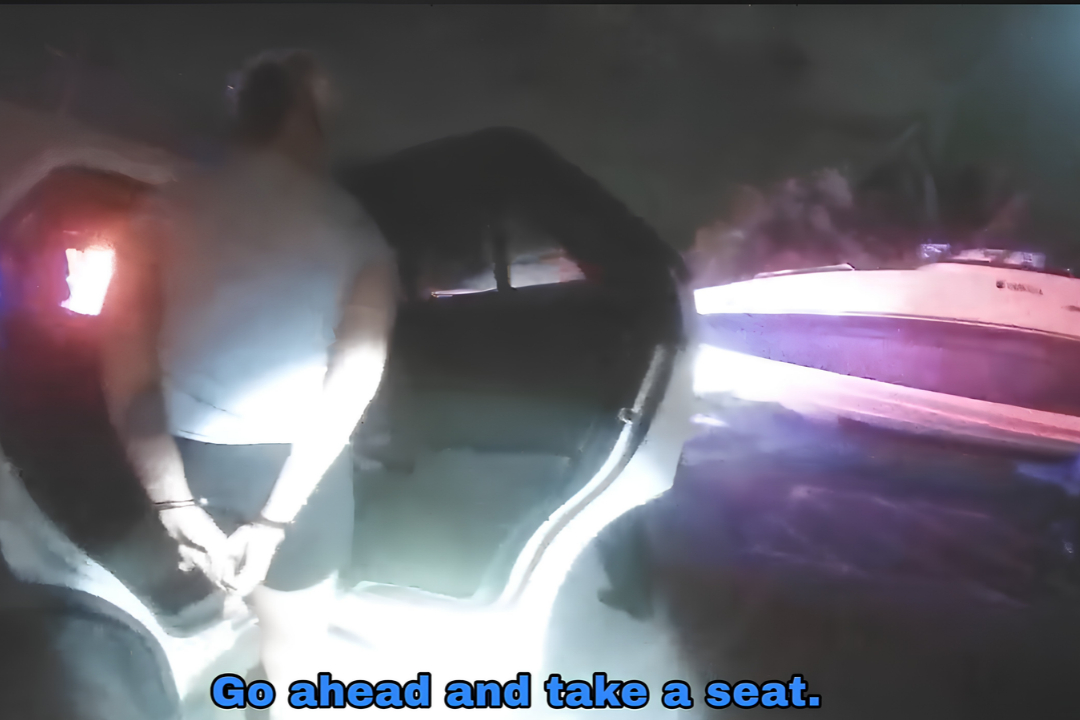
When an officer walks up to your car, the first few sentences can set the tone. A study of body camera footage found that officers in escalated encounters were far less likely to explain themselves. In those cases, officers were 2.5 times more likely not to provide a reason for the stop, with 38% of escalated stops lacking an explanation compared with 15% of routine ones, according to However, officers.
If you have ever sat gripping the steering wheel while an officer launched directly into commands without saying why you were stopped, you have felt how that silence can heighten fear and confusion. The same research found that officers who did not give reasons were more likely to issue commands and show less respect. For you, that can translate into a sense that the encounter is already out of your hands before you can even ask a question.
How local bias shapes officer behavior
It is tempting to think of traffic stops as purely individual decisions made by individual officers. Psychologists examining nationwide stop data, however, have found that officer behavior often mirrors local racial attitudes. One study concluded that “Uncovering the reasons” for racial gaps in stops requires looking at how community-level bias shapes what officers perceive as suspicious, as described in Uncovering the.
If you drive through a town where residents hold stronger negative stereotypes about Black people, the data suggest that officers there may be more likely to stop and search Black drivers, even if the formal rules are the same as in a neighboring city. Your experience at a traffic stop is therefore partly a reflection of the social climate around you, not just the letter of the law.
Pretext, low-level violations, and your risk
Another hidden factor is how often officers use small violations as a doorway into broader investigations. These pretextual stops happen when you are pulled over for something minor, like a broken license plate light, but the real goal is to look for drugs, guns, or outstanding warrants. The Policing Project has described how officers in the United States conduct more than 20 million stops each year and how many of those encounters are pretextual, with The Problem Police finding that such stops rarely help solve serious crimes.
Some jurisdictions have started to pull back. In one city, Fayetteville paired limits on low-level stops with a requirement that officers obtain written consent for vehicle searches, as described in an analysis of Fayetteville reforms. If you live in a place that has adopted similar rules, your chances of a minor infraction spiraling into a full-blown criminal investigation may be lower than in a city that still leans heavily on pretext.
Gender, warnings, and who gets a break
Even when a stop does not escalate, the outcome can vary in subtle ways. National data show that female drivers made up 46% of stopped drivers, and that gender can affect the likelihood of receiving a ticket or warning, according to figures beginning with “There” and “Female” in one federal summary. Among those who did face enforcement, white drivers were more likely to receive a warning, with 49% getting that more lenient outcome compared with higher ticket rates for drivers of color, as shown in data starting with “Among” in a related enforcement breakdown.
State-level reviews echo these patterns. A Massachusetts report found that motorists in the Other race category were most likely to receive a warning, followed by White motorists, while Black motorists were least likely to receive one, as detailed under “Other” and “White” in the state analysis. For you, that means the difference between a warning and a costly citation can hinge on demographic factors that have nothing to do with how you drove that day.
What reforms can change your experience
Some agencies are beginning to recognize how these unseen factors shape outcomes. A traffic stop study in Douglas County used Multivariate Analyses, explicitly “Using” a multivariate analytical approach, and concluded that race and ethnicity were not statistically significant predictors of certain outcomes once other factors were considered, according to the Douglas County report. In Pennsylvania, a statewide review found that the strongest predictors of post-stop outcomes were legal factors such as the initial reason for the stop, observed evidence of impairment, and any criminal history, according to a state police analysis.
More from Fast Lane Only