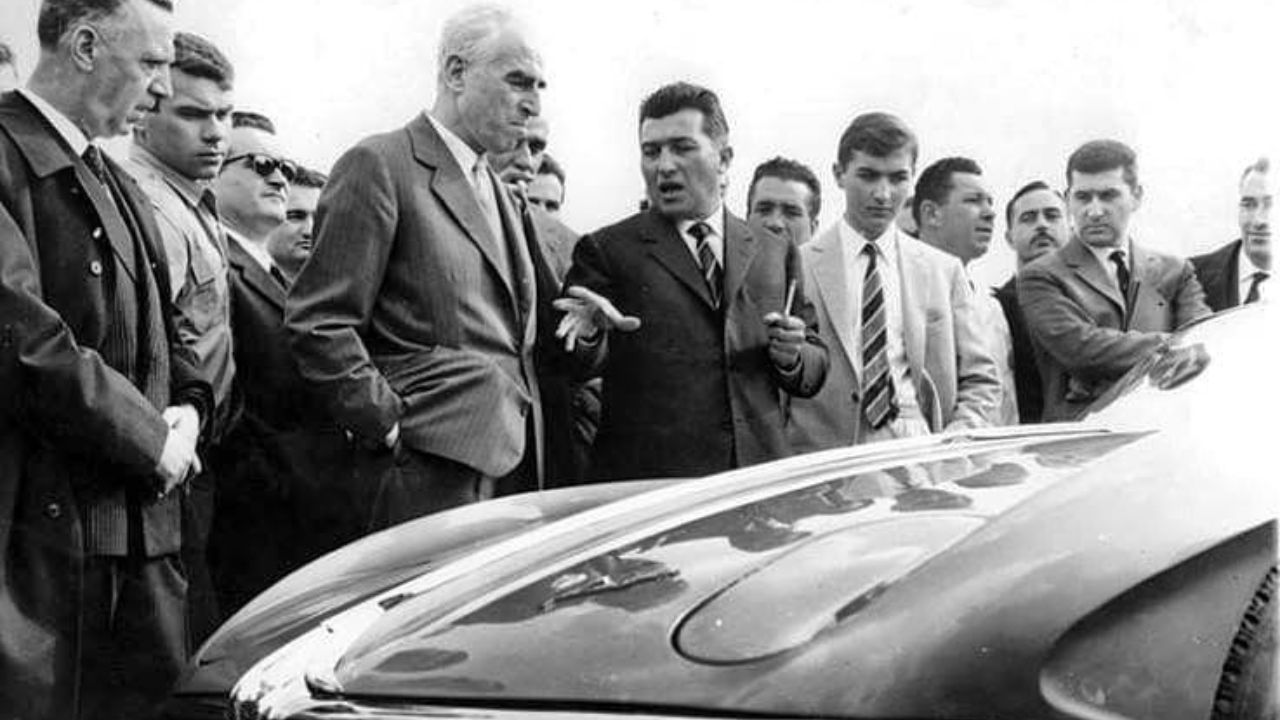
Ferruccio Lamborghini’s rivalry with Ferrari is a tale rooted in ambition, innovation, and audacity. His unconventional methods and strategies not only challenged Ferrari’s dominance in the luxury sports car market but also reshaped the automotive landscape forever.
The Genesis of Lamborghini’s Vision
Ferruccio Lamborghini was born in 1916 in Cento, Italy, to a family of grape farmers. His early exposure to machinery sparked a lifelong interest in engineering. After serving in the Italian Air Force during World War II, he founded a successful business manufacturing tractors, which thrived in the post-war economic boom. In 1963, leveraging his wealth and experience, Lamborghini established Automobili Lamborghini in Sant’Agata Bolognese, Italy, with a vision to create luxury sports cars that would rival Ferrari.
Initially, Lamborghini focused on producing high-quality tractors, which provided the financial foundation for his automotive ambitions. His background in engineering and manufacturing allowed him to envision sports cars that were not only fast but also luxurious and comfortable. This unique combination set the stage for the birth of a new competitor in the automotive industry.
The Birth of Competition
The rivalry between Lamborghini and Ferrari ignited when Ferruccio Lamborghini experienced dissatisfaction with his Ferrari 250 GT. He believed that the car, while powerful, lacked the comfort and practicality that he desired. Frustrated with the customer service he received from Ferrari, Lamborghini took a bold step: he decided to create a car that would outperform Ferrari in both performance and comfort. This pivotal moment marked the beginning of a fierce competition between the two automotive giants.
Lamborghini’s philosophy emphasized the importance of designing cars for the everyday driver rather than solely for track-focused performance. He aimed to create vehicles that combined raw power with everyday usability, appealing to a broader demographic. This approach was a significant departure from Ferrari’s focus on racing pedigree and exclusivity, marking a turning point in the luxury sports car market.
Understanding the Market Dynamics
In the 1960s, the luxury car market was dominated by a few key players, with Ferrari at the forefront. However, there were gaps in Ferrari’s offerings that Ferruccio Lamborghini was keen to exploit. He recognized that while Ferrari catered to the elite with their racing heritage, there was a burgeoning market for high-performance cars that also provided comfort and accessibility. This understanding of market dynamics allowed Lamborghini to position his brand uniquely.
Lamborghini’s approach contrasted sharply with Ferrari’s elitist branding. By introducing the concept of a luxury sports car that was both practical and powerful, Lamborghini aimed to attract customers who sought excitement without sacrificing comfort. This strategy not only differentiated Lamborghini but also tapped into a growing desire among consumers for vehicles that could serve dual purposes—both as a status symbol and a daily driver.
Engineering a Masterpiece: The Miura
The launch of the Lamborghini Miura in 1966 was a watershed moment in automotive history. With its revolutionary design and engineering feats, the Miura is often credited with creating the modern supercar segment. The vehicle featured a mid-engine layout, which provided superior handling and performance, a stark contrast to the front-engine designs prevalent at the time.
Collaboration was key to the Miura’s success. Lamborghini enlisted the talents of renowned designers and engineers, such as Giampaolo Dallara and Marcello Gandini, whose innovative ideas transformed the Miura into an icon. The car’s sleek lines and aggressive stance captured the imagination of car enthusiasts worldwide, forever changing the perception of what a sports car could be.
Marketing and Branding Innovations
Ferruccio Lamborghini understood that to challenge Ferrari effectively, he needed to employ unconventional marketing strategies. Instead of relying on traditional advertising, Lamborghini focused on creating a buzz through exclusive events and celebrity endorsements. This approach allowed him to cultivate a distinct brand identity that set Lamborghini apart from Ferrari.
The role of media coverage cannot be overstated. Lamborghini’s cars frequently made headlines, captivating the public with their audacious designs and impressive performance. By embracing the media landscape of the time, Lamborghini was able to build a brand that resonated with a new generation of car enthusiasts, further solidifying his place in the luxury automotive market.
Cultivating a New Audience
One of Lamborghini’s most astute moves was targeting a different demographic than Ferrari’s traditional clientele. While Ferrari marketed primarily to wealthy racing enthusiasts, Lamborghini positioned itself as a symbol of rebellion and freedom. This messaging appealed to a younger audience looking for excitement and exclusivity in their automotive choices.
Through high-profile events, such as the introduction of the Countach in 1974, Lamborghini showcased its commitment to innovation and flair. The Countach’s radical design and performance captured the imagination of the public, further solidifying Lamborghini’s reputation as a brand for the avant-garde. These strategic efforts helped Lamborghini gain traction in the market and fostered a dedicated following among car enthusiasts.
The Legacy of Rivalry: Ferrari vs. Lamborghini
The rivalry between Lamborghini and Ferrari has been marked by key moments that defined both brands. From the Miura’s debut to the introduction of the Ferrari Daytona, the competition spurred innovation on both sides. Lamborghini’s focus on comfort and everyday usability prompted Ferrari to rethink its strategies, leading to more customer-centric designs in their product lineup.
The cultural impact of this rivalry extends beyond the automotive world. It has become a symbol of passion, ambition, and the relentless pursuit of excellence. Automotive enthusiasts often delve into the history of this rivalry, celebrating the engineering marvels produced by both manufacturers and the fierce competition that drove them to new heights.
The Impact of Lamborghini’s Challenge on Ferrari
As Lamborghini rose to prominence, Ferrari was compelled to adapt in response to the fierce competition. The introduction of models like the Ferrari 308 in the mid-1970s showcased a shift toward more practical performance vehicles. This evolution was a direct result of Lamborghini’s challenge, pushing Ferrari to create cars that maintained their racing heritage while appealing to a broader audience.
The long-term effects of this rivalry are evident in the automotive industry today. Both manufacturers have continued to innovate and set benchmarks for performance, luxury, and design. The legacy of Lamborghini’s challenge has not only redefined Ferrari’s approach but has also influenced how other luxury car manufacturers market and develop their vehicles.
The Enduring Fascination with the Rivalry
The Lamborghini-Ferrari rivalry has fascinated car enthusiasts for decades, becoming a beloved subject in popular culture. Documentaries, films, and books have chronicled this epic tale, ensuring that the story of these two automotive titans continues to inspire new generations. From the thrilling races to the luxurious designs, the rivalry represents the pinnacle of automotive achievement.
Today, the rivalry is more relevant than ever, as both manufacturers continue to push the boundaries of performance and innovation. Events such as the annual Pebble Beach Concours d’Elegance showcase the latest models from both brands, drawing attention from enthusiasts and collectors alike. The Lamborghini-Ferrari rivalry remains a testament to the relentless pursuit of excellence in the automotive world, a narrative that will undoubtedly endure for years to come.
More from Fast Lane Only