What should have been a subtle styling flourish on a family crossover has instead turned into a rolling legal headache. The refreshed Tesla Model Y “Juniper” taillight, designed to glow through reflected light rather than a conventional illuminated bar, is drawing police attention, confusing officers, and leaving owners arguing roadside over whether their cars are actually street legal. With some drivers now joking that a single rear light treatment is worth “60,000” in tickets and hassle, the dispute is exposing how fragile the relationship is between design innovation and the letter of traffic law.
At the center of the controversy is a basic question with high stakes: when a brake light looks different but still meets the technical rules, who decides what counts as safe and compliant, the engineers who certify it or the officer who pulls the car over at night? As Tesla leans on software, unconventional optics, and a history of lighting recalls, the Juniper taillight has become a test case for how far a carmaker can push the boundaries before regulators, police, and drivers push back.
How a reflective light bar became a roadside argument
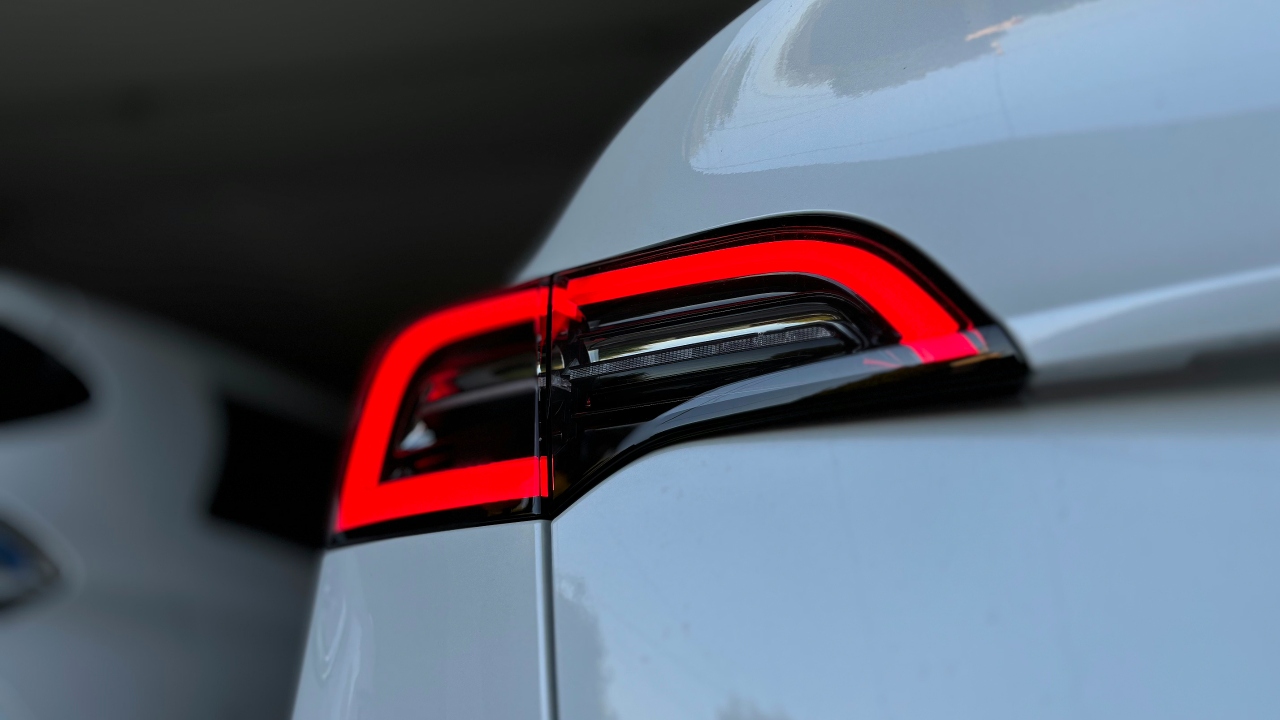
The refreshed Tesla Model Y Juniper uses a rear light setup that departs sharply from the familiar glowing red bar many drivers expect. Instead of shining directly outward, the main horizontal element reflects light downward inside the housing, creating a band that appears lit through reflection rather than a traditional lens. From a design standpoint, this approach gives the rear of the vehicle a clean, unbroken look while still projecting red light across the width of the car, a concept some commentators have described as a significant taillight innovation that changes what other motorists “See” and “All” they perceive from behind.
On paper, that reflected glow is intended to satisfy the same functional requirements as any other rear lamp: visibility, color, and coverage. Tesla’s engineers have framed the approach as a way to remain compliant with lighting rules while still delivering a distinctive signature, a strategy that fits into a broader pattern of the company using unconventional solutions such as its Reflective Lighting Trigger concept to create a glowing effect without obvious bulbs. Yet the more the design leans on optical tricks, the more it depends on everyone on the road, including police, instantly recognizing that what they are seeing is in fact a legal taillight and not a malfunction.
Drivers pulled over for lights that are technically on
The gap between engineering intent and street-level perception has become painfully clear for some Juniper owners. One Tesla Model Y driver in Indiana reported being stopped after an officer believed the rear lights were not illuminated, even though the car’s systems indicated that everything was functioning normally. The officer misread the reflective bar as a styling element rather than an active lamp, treating the vehicle as if it were traveling without proper rear lighting, a scenario that turned a routine drive into a tense roadside discussion over what the law actually requires of a “Tesla Model” in Indiana.
Another owner, identified as Steven, described a similar stop that left him baffled when the officer insisted the taillights were off despite the car’s illuminated status indicators. Steven’s experience raised the question of whether the vehicle was doing anything wrong from a legal standpoint or whether the confusion stemmed entirely from the unconventional optics. Accounts like his have prompted some Tesla advocates to advise drivers to remain calm, request clarification, and, if necessary, ask for a supervisor or badge number when confronted with an officer who does not accept that the reflective bar is the active lamp. These incidents are feeding the perception that the Juniper’s rear design is less a styling flourish and more a “Reflective Lighting Trigger” for police intervention.
From clever design to “60,000” ticket magnet
As stories of confusing traffic stops circulate, the Juniper taillight has acquired a reputation that goes well beyond its physical dimensions. Commentators have framed it as a “60,000” ticket magnet, a shorthand for the idea that a single design decision can generate an outsized volume of citations, warnings, and legal disputes. The phrase captures a growing frustration among owners who feel they are paying for a premium vehicle only to become unwilling participants in a rolling debate over lighting regulations every time they drive at night or in poor weather.
Critics argue that Tesla has turned a simple taillight into a roadside legal debate by prioritizing a futuristic look over a cohesive and easily understood lighting identity. Instead of a clear, instantly recognizable pattern, the rear of the Juniper can appear ambiguous to those unfamiliar with its reflective behavior, especially from certain angles or distances. Supporters counter that the design still meets the technical standards and that the real problem lies in inconsistent enforcement and a patchwork of officer expectations. Either way, the result is the same for drivers: a higher likelihood of being pulled over, questioned, and potentially cited for a system that is working exactly as designed.
A history of Tesla lighting recalls complicates the picture
The controversy around the Juniper’s taillights does not exist in isolation. Tesla has a documented history of lighting related recalls that shapes how regulators and the public interpret any new design. In one major case, Tesla recalled over “320,000” vehicles after discovering a software glitch that could cause taillights to go off intermittently, a defect that directly affected rear visibility and prompted a broad safety campaign. In another instance, the company issued an over the air update to address a separate tail light issue, a move that highlighted both the flexibility of Tesla’s software driven approach and the seriousness with which lighting failures are treated.
More recently, Tesla recalled “63,619” Cybertrucks in the United States because front park lights were deemed too bright, a decision documented by “NHTSA” and tied to concerns that excessive brightness could create glare or confusion. The company has also faced scrutiny over reverse lighting, with “Tesla, Inc” recalling certain 2026 Model Y vehicles after discovering that “Reverse Lights May Fail” to “Illuminate” in compliance with “FMVSS” “108”, and a related campaign that covered “260 M” Model Y units “Over Reverse Lights” where the defect stemmed from wiring inconsistencies in the rear fascia harness assembly. Each of these episodes reinforces a narrative that Tesla’s lighting systems, while often innovative, sit on a fine line between cutting edge and problematic, which in turn colors how officers and regulators view a new, unconventional taillight that relies on reflection rather than direct illumination.
Legal gray zones and what owners can realistically do
For owners caught in the middle, the Juniper taillight saga is less about design philosophy and more about practical risk. Traffic laws in the United States typically require that rear lamps be red, visible from a specified distance, and active whenever the vehicle is operating in low light, but they rarely spell out how that light must be generated or styled. This leaves room for interpretation on the roadside, where an officer’s split second judgment can override the engineering certifications that allowed the car to be sold. When a Tesla driver is told that their lights are off even as the car’s systems show them as on, they are effectively being asked to defend the legality of a factory configuration in real time.
More from Fast Lane Only