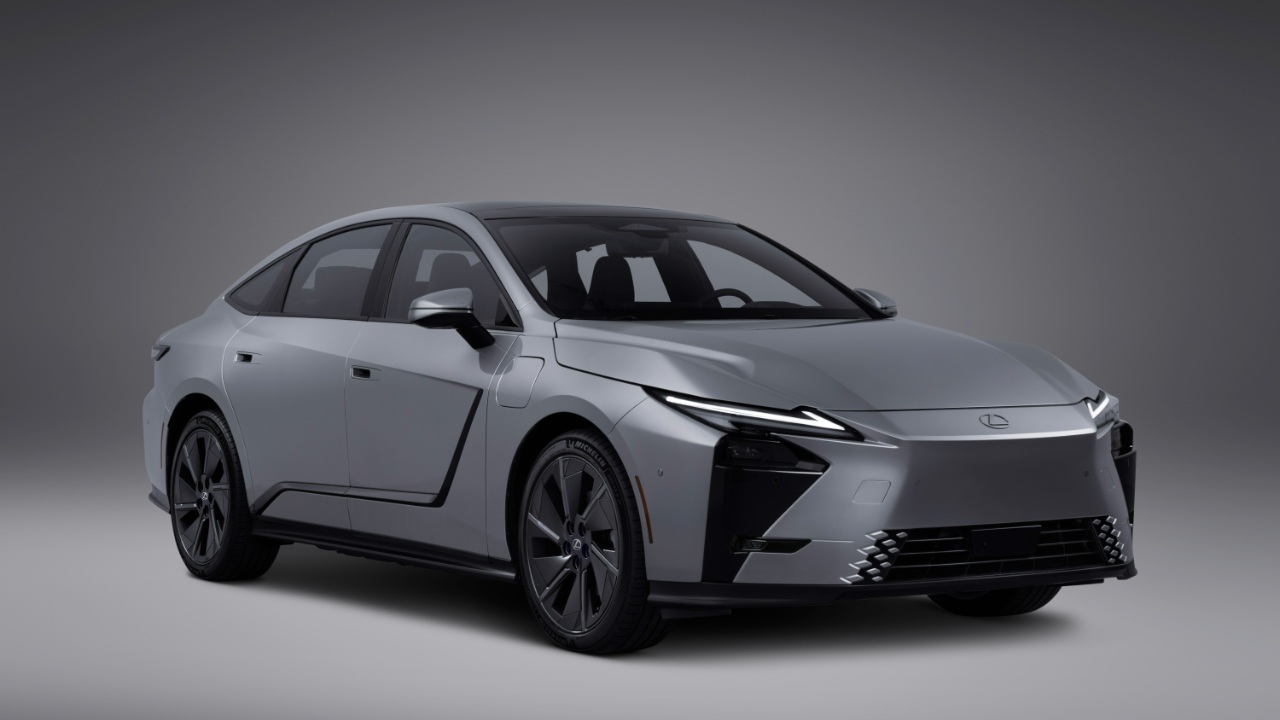
The most efficient Lexus on sale in 2026 is not a futuristic plug‑in or a battery‑electric experiment, but a quietly refined hybrid sedan that treats fuel like a precious resource. The Lexus ES 300h now sits at the top of the brand’s mileage charts, delivering standout efficiency without asking drivers to change their routines or hunt for a charging station. That combination of conventional usability and standout economy is what makes its miles per gallon figure feel almost outrageous in a market still dominated by thirsty crossovers and trucks.
Yet the ES 300h does not exist in isolation. It is the headline act in a broader Lexus strategy that stretches from compact hybrid SUVs to plug‑in crossovers and high‑MPGe flagships, all calibrated to squeeze more distance from every drop of fuel or kilowatt of energy. Understanding why this particular sedan leads the pack means looking at how Lexus has tuned its hybrids, how its SUVs compare, and how the brand’s most efficient vehicles stack up against one another.
The Lexus ES 300h and the new MPG benchmark
Lexus has long treated the ES as its quiet achiever, and in 2026 the Lexus ES 300h has become the brand’s efficiency standard bearer. It is the most fuel‑efficient Lexus available in the United States that does not require a plug or a rethink of daily driving habits, which places it in a rare position among luxury cars that still rely on traditional refueling. Rather than chasing headline acceleration figures, the ES 300h leans on a carefully tuned hybrid system and a streamlined sedan body to deliver the kind of mileage that would have sounded implausible in a mid‑size luxury car only a few years ago.
That efficiency story is about more than a single number on a window sticker. The ES 300h shows how Lexus has refined its hybrid technology so that the electric motor and gasoline engine work together with minimal friction, allowing the car to glide through city traffic and highway commutes while keeping fuel use remarkably low. In practice, that means drivers can enjoy the familiar comfort and quiet of a Lexus ES while visiting fuel stations far less often than owners of comparable gasoline sedans, a trade that resonates strongly as fuel prices fluctuate and environmental scrutiny intensifies.
Hybrid SUVs: where efficiency meets family duty
While the ES 300h leads the brand’s non‑plug‑in mileage story, Lexus has been just as aggressive in pushing efficiency into its SUVs, where weight and aerodynamics typically work against frugality. The NX 350h, part of The NX lineup, pairs a hybrid system with either FWD or AWD to deliver both improved fuel economy and usable performance. Its hybrid powertrain produces 240 horsepower, and Lexus cites a 6.0 second 0 to 60 time, which means this compact crossover does not force drivers to choose between brisk acceleration and sensible consumption. By combining D4‑S fuel injection with a hybrid electric system, the NX 350h illustrates how the brand is trying to normalize efficiency in segments that once treated it as an afterthought.
The broader SUV range reinforces that direction. Lexus lists a hybrid SUV category with a model that is Starting at $38,250, Designed for exploration, inside and out, and built around a Standard Powertrain that is Hybrid. That vehicle delivers 196 net combined horsepower and a 43-MPG combined rating, a figure that would have been associated with compact sedans not long ago. By embedding that 43-MPG capability into a practical, family‑friendly SUV, Lexus signals that high mileage is no longer reserved for niche eco‑specials but is becoming a baseline expectation across its utility lineup.
Plug‑in power: NX 450h+ and the AWD efficiency race
For buyers willing to plug in, Lexus has created a different kind of efficiency champion in the NX 450h+ plug‑in hybrid. This model sits within the NX family as a bridge between conventional hybrids and full battery‑electric vehicles, using a larger battery and stronger electric motors to cover daily driving on electricity while keeping a gasoline engine in reserve. In the crowded field of all‑wheel‑drive crossovers, the NX 450h+ has emerged as a Runner in the race for the best gas mileage among AWD SUVs, with reporting that highlights its total efficiency of 84 MPGe. That figure reflects how effectively the plug‑in system converts both fuel and electricity into distance, especially for drivers who charge regularly.
The NX 450h+ also benefits from the same platform that underpins the broader NX range, which means its efficiency does not come at the expense of practicality. Official specifications for the NX lineup show that NX Hybrid models are engineered to help drivers go farther, and the plug‑in variant builds on that promise with an electric‑first driving character. Within the NX family, the 350 grade, listed with AWD, Gas, a $46,120 STARTING PRICE, a 275-horsepower turbo in‑line 4 engine, 24 combined MPG estimate, and Premium trim options, demonstrates how Lexus layers performance and efficiency across different powertrains. The plug‑in NX 450h+ then pushes that formula further, using its AWD layout and electrified hardware to deliver both traction and standout MPGe in a segment that usually prioritizes size and speed over thrift.
RX and the luxury‑efficiency balance
Above the NX, the Lexus RX continues to serve as the brand’s core luxury SUV, and its latest generation shows how Lexus is threading the needle between comfort, power, and fuel economy. The 2026 Lexus RX 350 is specified with a 275 horsepower turbo in‑line 4 engine and a rating of 22/29/25 MPG, figures that place it among the more efficient mid‑size luxury SUVs that still rely on a conventional gasoline engine. In AWD form, the RX 350 is listed as 350, AWD, Gas, $52,775, with that same 275 horsepower turbo in‑line 4, which underscores how Lexus is trying to keep fuel use in check even as it delivers the elevated seating position and plush interior that RX buyers expect.
For those who want to push efficiency further without leaving the RX nameplate, hybrid and plug‑in variants step in. Historical data on The Best MPG Lexus Cars Ever highlights how the Lexus RX has been central to the brand’s efficiency narrative, with the Lexus RX 450h+ achieving a Gas Mileage figure of 213.8 m and using a 2.5 liter engine. That 213.8 m metric, tied to plug‑in operation, shows how far Lexus can stretch a gallon equivalent when the vehicle is driven in a way that maximizes electric running. The RX 450h+ also carries labels such as Add and Save in that ranking context, reflecting its role as both a performance and efficiency leader within the RX family. Together, the gasoline RX 350 and the electrified RX 450h+ illustrate the spectrum Lexus now offers, from respectable MPG in a traditional setup to standout MPGe in a plug‑in configuration.
How the NX range frames Lexus’s efficiency strategy
Looking across the NX lineup provides a clear snapshot of how Lexus is structuring its efficiency ladder. Official specifications for the 2026 Lexus NX show Fuel Economy figures that range from 24 to 40 combined mpg, depending on powertrain, with Horsepower outputs spanning from 181 to 275 hp and 0 to 60 times between 6 and 8.2 seconds. Curb Weight varies from 3,945 to 4,475 pounds, which helps explain why the most powerful versions cannot match the lightest hybrids on raw mileage. Within that spread, the NX 350h hybrid and NX 450h+ plug‑in hybrid stand out as the efficiency‑oriented choices, while the 350 gasoline model caters to buyers who prioritize straightforward power.
More from Fast Lane Only