NASCAR’s rules for 1969 said a factory race car had to be a car the public could buy, and Ford had to build at least 500 of them. Torino Talladega production answered that rule in a hurry. Ford turned out about 750 of the long-nosed fastbacks in January and February 1969, then sent the shape racing.
The Talladega was not a styling exercise. Its changes were aimed at stock car racing, and it even took its name from a new Alabama superspeedway. As a result, the street cars were really a ticket to the race track, and the numbers tell that story better than any brochure.
Here is what Ford built, how fast it built it, and what the cars did once they reached the track. Every figure below comes from the registry that tracks these cars, Hagerty, or an auction catalog.
Why NASCAR needed 500 street cars

Homologation is the rule that ties a race car to a production car. In 1969, NASCAR wanted proof that a body shape was a real showroom model, not a one-off built for speed. According to Hagerty, each manufacturer had to build at least 500 examples and sell them to the public.
The Talladega and Spoiler Registry, which tracks the Ford and the Mercury Cyclone Spoiler II, describes the same rule. On its page on the first production Talladega, the registry says NASCAR required a minimum of 500 of these specially modified cars to be produced for sale. So the street car came first, at least on paper.
That rule shaped everything about the project. Ford could not just modify a few race cars in a shop. Instead, it had to put a special body on hundreds of cars, give them dealer paperwork and get them into customers’ hands.
How Torino Talladega production ran in two months
Ford chose its Atlanta plant for the job. According to the registry, “In January and February of 1969 Ford used its Atlanta plant to produce between 740 and 750 cars.” Hagerty gives a matching picture, saying that by February 1969 Ford had built around 750 Talladegas.
The exact total depends on who is counting. An Australian auction house, Shannons, put the figure at 754 in its catalog for a 1969 car it offered in 2016. Meanwhile, Hagerty notes that the registry has identified 738 production Talladegas.
A 2021 feature from Silodrome breaks the count down another way. It lists 736 homologation production cars, plus nine prototypes and five pilot cars. In other words, “about 750” is the honest round number, and it cleared NASCAR’s minimum by a wide margin.
Silodrome also says the cars came together over a few weeks in January and February. That fits the registry’s two-month window. Hagerty adds that Holman-Moody’s metalcrafters in Atlanta cut and welded a body seam on the cars, so the job also involved outside specialists.
What made a Talladega different from a Torino
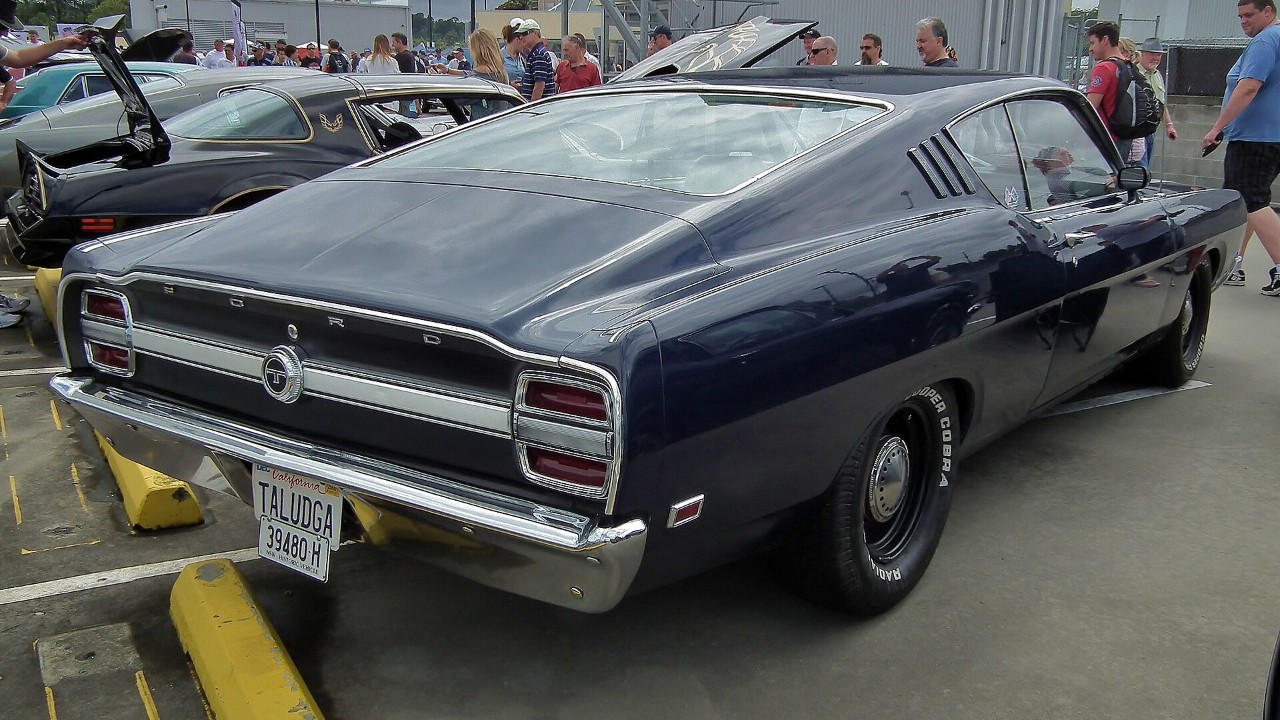
The nose is the giveaway. According to Hagerty, the Talladega wore a nose six inches longer than the regular car’s. Its plain grille sat flush with the headlights, and a rubber gasket sealed it for cleaner airflow. Shannons’ catalog also describes the extended nose and flush grille, and it gives the same six-inch figure.
Ford also changed the bumper. Hagerty describes ultra-short chrome bumpers that worked as small spoilers on their own. In addition, reshaped lower rocker panels let the body sit an inch lower to the ground than before, Hagerty says.
Hagerty puts a number on the payoff, too. It says the aerodynamic changes were worth the equivalent of a 75-hp gain on the track. For a stock car running flat out on a superspeedway, that was a big step for a few inches of sheet metal.
The engine and the price
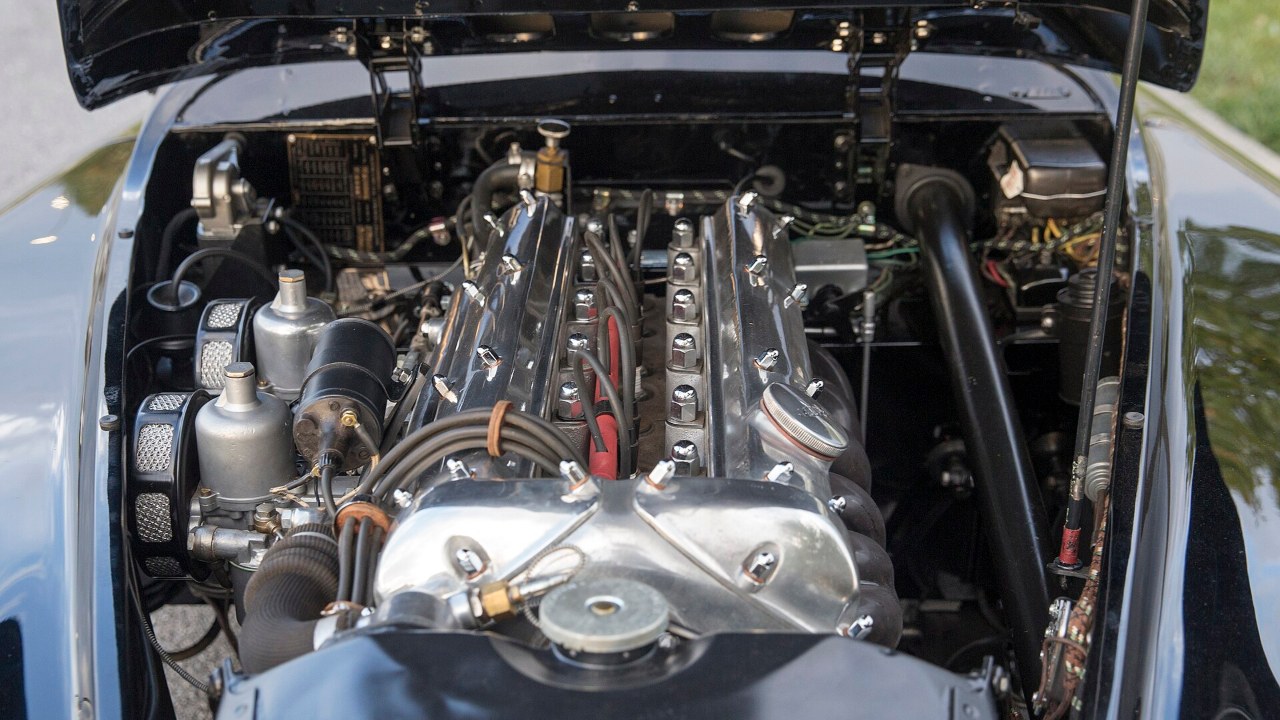
Under the hood, the street cars kept things simple. According to Hagerty, all street-bound Talladegas came with the 428 Cobra Jet V8, rated at 335 hp. Shannons gives the same 335-hp rating for the 428 Cobra Jet in its catalog.
The race cars were a different matter. Hagerty notes that Ford also homologated a new Boss 429 engine for racing. However, the customer cars that made the program legal kept the 428.
As for cost, Hagerty says the Talladega started at $3,456 on the showroom floor. The registry also lists three production colors: Royal Maroon, Wimbledon White and Presidential Blue.
What the Talladega did on the track
The shape worked. According to Hagerty, Ford won 26 Grand National races in 1969, along with the Manufacturer’s Cup. David Pearson also took the season championship that year. Richard Petty, who had moved to Ford for 1969, won the season opener at Riverside, Hagerty says.
Silodrome adds that Petty finished second in the championship. It also says Ford took first, second and fourth place in the final standings that season.
The name came from the track. Hagerty says the car took its name from the brand-new Alabama superspeedway. Even so, the race there did not go Ford’s way. At the Talladega 500 on Sept. 14, 1969, Hagerty notes, a Dodge won at the track the Ford was named for.
The Talladega’s run at the top was short. By 1970, Hagerty says, Plymouth had lured Petty back with the Superbird, and the aero war moved on.
How many Talladegas the registry can find
Ford built the cars to satisfy a rule, but they outlived it. Today the Talladega and Spoiler Registry keeps the records. According to Hagerty, the registry has identified 738 production Talladegas, the car-by-car count behind the “about 750” Ford built in Atlanta in early 1969.
More from Fast Lane Only
- Unboxing the WWII Jeep in a Crate
- 15 rare Chevys collectors are quietly buying
- 10 underrated V8s still worth hunting down
- Police notice this before you even roll window down
This article was created with the help of AI and was reviewed and edited by Fast Lane Only editors before publication.