A stuck truck is bad enough. A Ford F-250 stuck somewhere no tow truck will go is worse. Every call ends the same way, and your only vehicle just sits in the mud while the days pass.
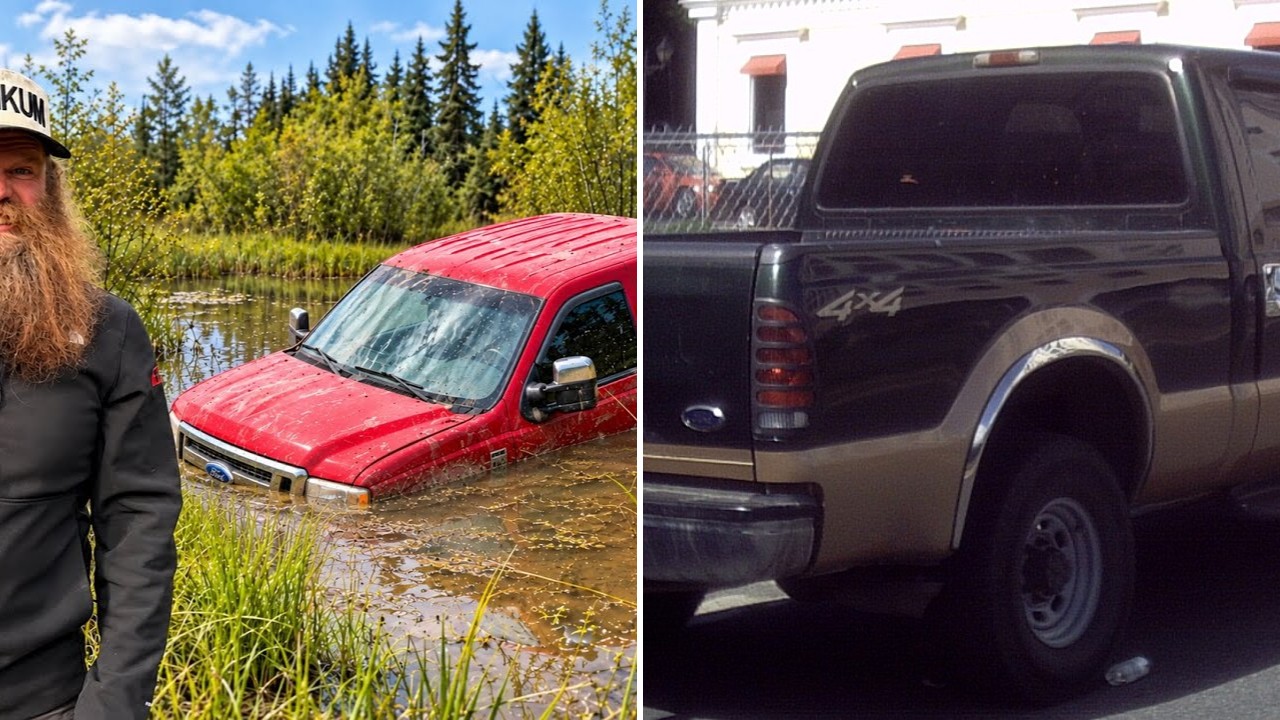
That was the situation outside Fairbanks, Alaska, when an active-duty soldier’s Ford F-250 diesel ended up buried in a creek bed at the end of a narrow wooded trail. The call went to Wrecker Rick, the recovery operator behind @MURPHYSDIESEL. He and his wife got on a plane for the job.
Rick says the flight covered about 3,600 miles and took about eight hours. The video’s description says he did the recovery free of charge. Once they landed, they picked up their Alaska truck, a Ram 2500, and borrowed a rope kit from a friend nearby.
Why Nobody Else Would Take The Call
At the site, the soldier’s friends met Rick and explained what had happened. He says they called multiple towing companies. One never showed, and another wanted a small fortune just to come out. The friends had already spent about eight hours digging out the back of the truck.
When Rick walked down the trail, he understood the reluctance. The F-250 sat sunk to its frame in a soft creek bed, with trees close on both sides and no room to bring in a big wrecker. The truck had held water in the cab earlier, and the exhaust was full of water too.
“We might be pulling this thing out dead, folks.”
A Tree As An Anchor
Rick’s Ram weighs about the same as the stuck truck, so pulling directly would only drag his own pickup toward the creek. Instead, he ran his front winch line through a snatch block and anchored it to a tree, a setup recovery crews call a dead man.
Then the pulling started, a few feet at a time. The F-250 came up out of the hole, but the winch kept giving Rick trouble. Under heavy load, its free-spool lever kept kicking out, and at one point he had to hold it in place with a pry bar. He added a second snatch block to ease the strain and moved the anchor more than once to steer the truck past the trees.
Finally, the truck sat on firmer ground where the crew could work on it.
Oil, Ether And A Hammer For The Ford F-250
Next, Rick wanted the F-250 running so it could drive out on its own instead of on the end of a cable. Rick found no oil showing on the dipstick, so he topped it up first, since he says these engines may not start when the oil is too low. Then came jumper cables and a shot of ether.
The starter did nothing. Rick suspected its brushes were sticking after the truck sat in water, so one person tapped on it with a hammer while another cranked. On the next attempt, the diesel caught and ran.
It was not pretty. Rick pointed out an oil leak at the filter housing, a noisy alternator bearing and a headlight full of water. Still, the truck drove up the trail on its own power.
What To Know Before You Head Off-Road Alone
- Scout the ground on foot before driving into a creek bed or soft spot.
- Know how deep water is before you cross it. Water in the exhaust or intake can stop a diesel cold.
- If your truck bogs down, stop spinning the tires. Digging deeper makes the recovery harder.
- Ask a recovery service whether it can reach your location before it heads out.
- After a vehicle sits in water, check the oil, the starter and the electrical system before trying to drive it far.
Where Things Stand
The F-250 is out of the creek. A friend of Rick’s planned to pick it up and take it back to the yard. Rick and his wife, exhausted after a long day, headed back to catch their flight home.
More from Fast Lane Only