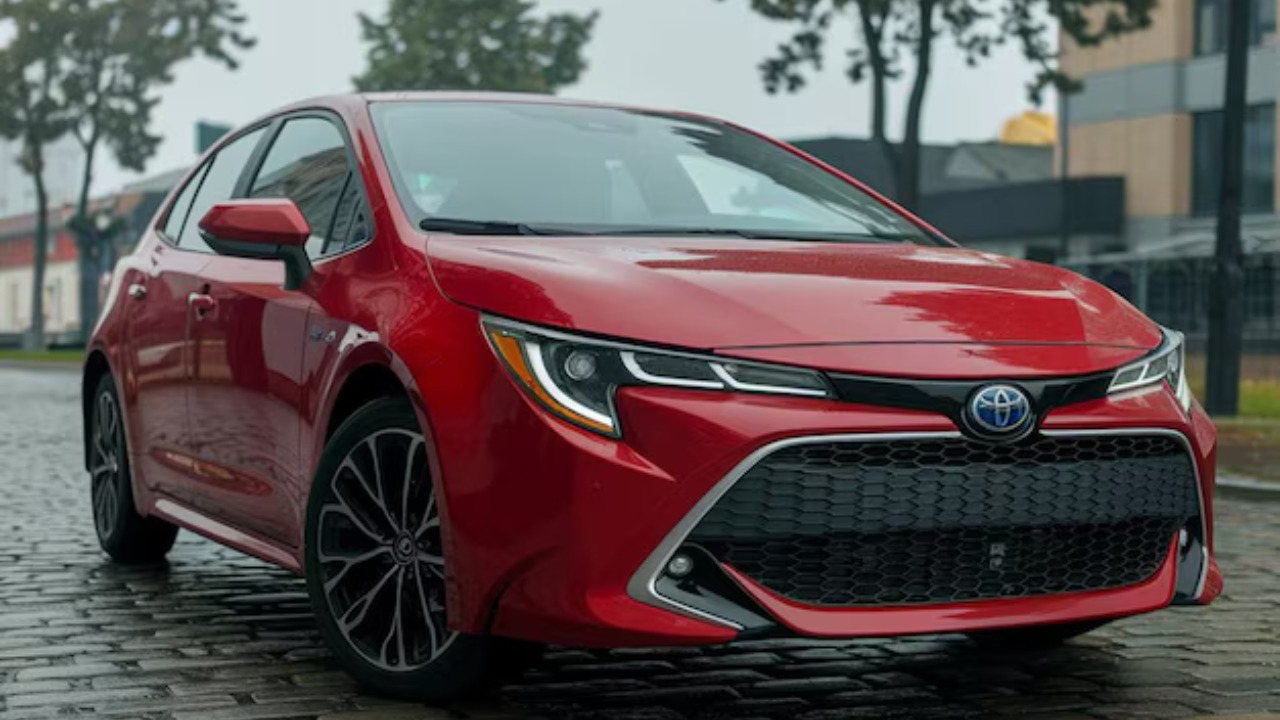
The price of a new Toyota Corolla in Japan has raced ahead of household pay packets, turning what was once a default family car into a far tougher purchase decision. Over roughly a decade, the model’s sticker price has climbed far faster than average earnings, sharpening a broader debate over who can still afford to own a car in one of the world’s most mature auto markets.
That imbalance between vehicle costs and wage growth is now reshaping buying habits, especially among younger drivers who see the Corolla as a symbol of how far their salaries lag behind key life purchases. The numbers behind that shift reveal not only a model in transition but also a Japanese economy where headline growth masks persistent pressure on real incomes.
Corolla sticker shock versus stagnant pay
At the heart of the story is a simple comparison that many Japanese households can recite from experience. Reporting on the domestic market shows that the Toyota Corolla’s price has increased by almost 40%, while salaries in Japan have risen by only 10 percent over the same period. One summary describes this gap with the phrase that the Toyota Corolla price has increased by almost 40 percent while salaries in Japan have risen by only 10 percent, a formulation that captures how car ownership has outpaced household income growth.
Other data points reinforce how the Corolla has drifted away from its budget roots. Data from Japan’s official statistics show that the entry-level Corolla’s domestic price climbed from 1.45 m yen in 2015 to 2.28 m yen in the mid 2020s, a jump that far exceeds the growth in average pay packets. Analysts who track the broader market describe how the Toyota Corolla price has increased against a backdrop in which Japanese real wages have contracted for four consecutive years, with one assessment by Norbert Gehrke noting that Japanese real wages have been squeezed by weak growth and persistent inflationary pressure, even as policymakers hope for a rebound in 2026, a view reflected in Japanese wage data.
From national workhorse to aspirational purchase
The Corolla has long been marketed as a practical, attainable car for Japanese families, yet the recent trajectory suggests a shift toward a more aspirational positioning. One detailed look at the domestic market explains that Japanese car prices keep climbing, with the Toyota Corolla up 60% over 10 years, and that this surge has pushed compact models out of reach for many buyers. The same reporting notes that expensive parts, tighter safety standards, and advanced technology have all contributed to the price escalation, turning what was once a default choice into a more considered, sometimes postponed, purchase.
Evidence from broader Japanese car pricing trends underlines how the Corolla’s experience fits into a wider pattern. According to one analysis, kei cars in Japan became 33% more expensive between 2015 and 2025, reaching 1.76 m yen, which is described as the equivalent of $11,200, a figure cited in a report that states that, according to the data, kei cars in Japan became 33% more expensive, reaching 1.76 m yen ($11,200) over that decade, as detailed in Mar coverage. Over the same period, compact passenger car prices increased by 31% to 2.39 m yen, which another summary translates as approximately 105,000 yuan, a comparison that appears in a report noting that during the same period, compact passenger car prices increased by 31% to 2.39 m yen (approximately 105,000 yuan), as described in the summary.
Why car prices are racing ahead
Behind the showroom numbers sits a web of structural cost pressures that leave manufacturers with limited room to absorb increases. One detailed breakdown of the industry explains that parts costs, including for labor and materials, are rising at a time when safety standards revisions and fuel economy regulations are pushing automakers to add more technology to every new model, a dynamic described in a report that highlights how parts costs, including for labor and materials, are rising alongside tighter rules, as set out in Feb analysis. For the Corolla, that means advanced driver assistance systems, upgraded safety structures, and more efficient powertrains that all add to the cost base.
Broader macroeconomic conditions have also created a backdrop in which consumer prices have moved ahead of wages. One economic outlook notes that steady growth is expected to continue in 2026, led by domestic demand, and that the Japanese economy is projected to expand further as inflation moderates due to slowing food prices, a forecast summarized as Steady growth to continue in 2026 with domestic demand leading the way in Jan projections. Yet wage data and services inflation show that Japanese households have not fully caught up, with one assessment of services prices stating that Japanese services inflation remains steady and signals wage-driven price pressure as the central bank aims to keep inflation near its 2 percent target, a situation described in coverage that attributes the trend to wage-driven price pressure in Japan analysis.
Household choices and global ripple effects
The widening gap between car prices and pay is already visible in how Japanese consumers behave. One report that draws on Nikkei Asian Review findings notes that owning a car of their own is becoming increasingly difficult for young people, with Gelonghui summarizing that, according to Nikkei Asian Review, the rising cost of vehicles is deterring many potential car buyers, a conclusion captured in a summary that states that Gelonghui, March 3, according to Nikkei Asian Review, finds that higher prices are deterring many potential car buyers, as set out in Mar Gelonghui. For many households, the choice is no longer between trim levels but between car ownership at all and alternatives such as public transport or car sharing.
More from Fast Lane Only