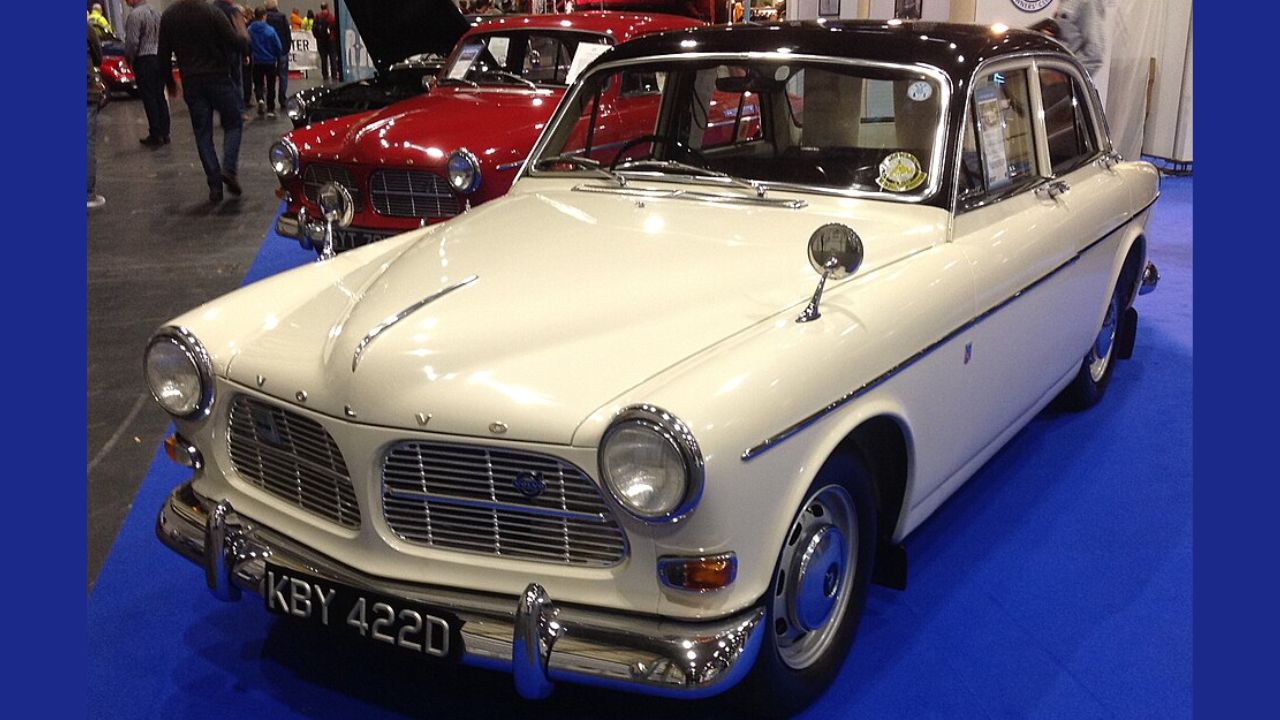
You can measure the 1976 Cadillac Fleetwood Brougham in feet and inches, but you really feel it in the way it shrugs off the outside world. At a time when fuel economy and downsizing were starting to creep into the American vocabulary, this car doubled down on size, softness, and silence, turning comfort into a kind of rolling manifesto. If you want to understand unapologetic luxury in the 1970s, you start with this twenty-foot land yacht and work outward.
Slip into one today and you are not just driving an old Cadillac, you are stepping into a carefully staged vision of status, ease, and effortlessness. The Fleetwood Brougham does not ask you to justify its bulk or its thirst, it simply invites you to sink into its cushions, let the big V8 murmur in the distance, and let the rest of the world catch up later.
The long, low statement of 1970s American prestige
Before you even touch the door handle, the 1976 Cadillac Fleetwood Brougham tells you what it is about with its sheer footprint. Period accounts describe it as roughly 20 feet of sheet metal and chrome, a car so long that modern compact crossovers look almost toy-like beside it, and contemporary coverage has leaned into that “20ft of malaise magnificence” description to underline just how vast it really is. One detailed look at the model notes that the Fleetwood Brougham stretches to the point where you could reasonably consider delegating driving duties to a chauffeur, a reminder that this was built as much for the back seat as for the person behind the wheel, and that sense of scale is reinforced in modern write ups that marvel at how the car dominates a driveway or a lane of traffic 20ft.
That length is not just excess for its own sake, it is part of a very deliberate visual language. The wide chrome grille, hidden windshield wipers, and long, unbroken body lines give the car a stately, almost ceremonial presence, the kind of thing you would expect to see gliding up to a theater or a country club entrance. Contemporary enthusiasts describe the 1976 Cadillac Fleetwood Brougham as a pinnacle of American luxury and style, pointing to those bold proportions and the way the Cadillac crest sits proudly at the front as a symbol of success from the American boom years Cadil.
Inside, comfort as a full-contact experience
Open the door and you move from spectacle to sanctuary. The standard Fleetwood Brougham already wrapped you in thickly padded seats, deep carpets, and door panels that felt more like living room furniture than automotive trim, but Cadillac went even further with the Fleetwood Talisman package. In that configuration, the entire interior was upholstered in Medici crushed velour, turning the cabin into a plush cocoon where every surface you touched was soft, textured, and deliberately indulgent, a detail that period observers still single out as the ultimate expression of personal luxury and comfort in the line Medici.
Even if you never saw a Talisman, the regular car made its priorities clear the moment you settled into the front bench. Controls were light, the steering overboosted by modern standards, and the suspension tuned to filter out the world rather than communicate every ripple in the pavement. Owners and historians alike describe the 1976 Cadillac Fleetwood Brougham as the ultimate symbol of a luxury cruiser from the American market, a car that traded sharp reflexes for a serene, almost floating ride that let you arrive at your destination as relaxed as when you left Its.
The d’Elegance touch and the culture of excess
If the standard Fleetwood Brougham was luxurious, the d’Elegance trim turned the volume up another notch. Enthusiasts who focus on this specific variant describe the 1976 Cadillac Fleetwood Brougham d’Elegance as the pinnacle of 1970s American luxury, massive, refined, and unapologetically opulent, with extra attention paid to seat tufting, trim details, and color combinations that made the interior feel even more like a private lounge. In enthusiast circles, you will see the d’Elegance name invoked as shorthand for the moment when Cadillac still believed that bigger, softer, and richer was the surest path to prestige in the American market Elegance.
That same language appears again and again when owners share photos of their cars. In dedicated groups, the Cadillac Fleetwood Brougham d’Elegance is praised as the pinnacle of 1970s American luxury, with hashtags that call out its status as a land yacht and an opulent ride, and those posts often highlight the 500 V8 under the hood as part of the overall excess. The way fans talk about these cars today, you can hear how the d’Elegance package has become a kind of shorthand for the era’s willingness to prioritize comfort and presence over restraint or efficiency Cadillac Fleetwood Brougham.
Power, ride, and the art of effortless cruising
Under all that sheet metal, Cadillac relied on one of the most talked about engines of its time. The 500 cubic inch (8.2 liter) V8 was the largest production engine ever fitted to a passenger car from General Motors, and contemporary technical commentary emphasizes that this giant was tuned for smooth torque delivery, not outright speed. In other words, the 500 and its 8.2 liters of displacement were there so you could waft away from a stoplight with barely a murmur, climb highway grades without downshifting, and carry a full load of passengers and luggage without the engine ever feeling strained 500.
That mechanical philosophy matched the chassis tuning perfectly. Reports on surviving examples note how the suspension soaks up imperfections and isolates you from the road, a trait that some modern drivers might call floaty but that fits the car’s mission as a luxury cruiser. When enthusiasts describe the 1976 Cadillac Fleetwood Brougham as a pinnacle of luxury and style from the American market, they are not just talking about chrome and velour, they are also pointing to the way the drivetrain and chassis work together to make speed feel almost incidental, as if the car is more interested in maintaining your comfort than in broadcasting how fast you are going Jan.
Details, heritage, and why it still turns heads
Look closely at a well preserved car and the small details reinforce the larger story. Period descriptions of the Fleetwood line highlight touches like whitewall tires with turbine style wheel covers, elements that give the car a classic luxury character that few modern designs can replicate. Enthusiasts who document these cars today point out how those whitewall tires, the long hood capped by the Cadillac crest, and the subtle body side moldings all work together to create a sense of occasion every time you walk up to the car, even if you are just heading to the grocery store Whitewall.
The Fleetwood Brougham’s place in Cadillac history also gives it a certain weight. Detailed retrospectives on the model line describe how the Fleetwood Talisman sat at the very top as the ultimate in personal luxury and comfort, with Medici crushed velour and extra interior appointments, while the broader Fleetwood Brougham range carried the brand’s flag in the backs of Lincoln and Chrysler rivals. One account of a particular ’76 Fleetwood Brougham at the Misselwood Concours d’Elegance notes how Its presence on the show field underscored just how far Cadillac once went to outdo its competitors in size, finish, and sheer visual drama, and that context helps explain why the car still draws a crowd today 76.More from Fast Lane Only