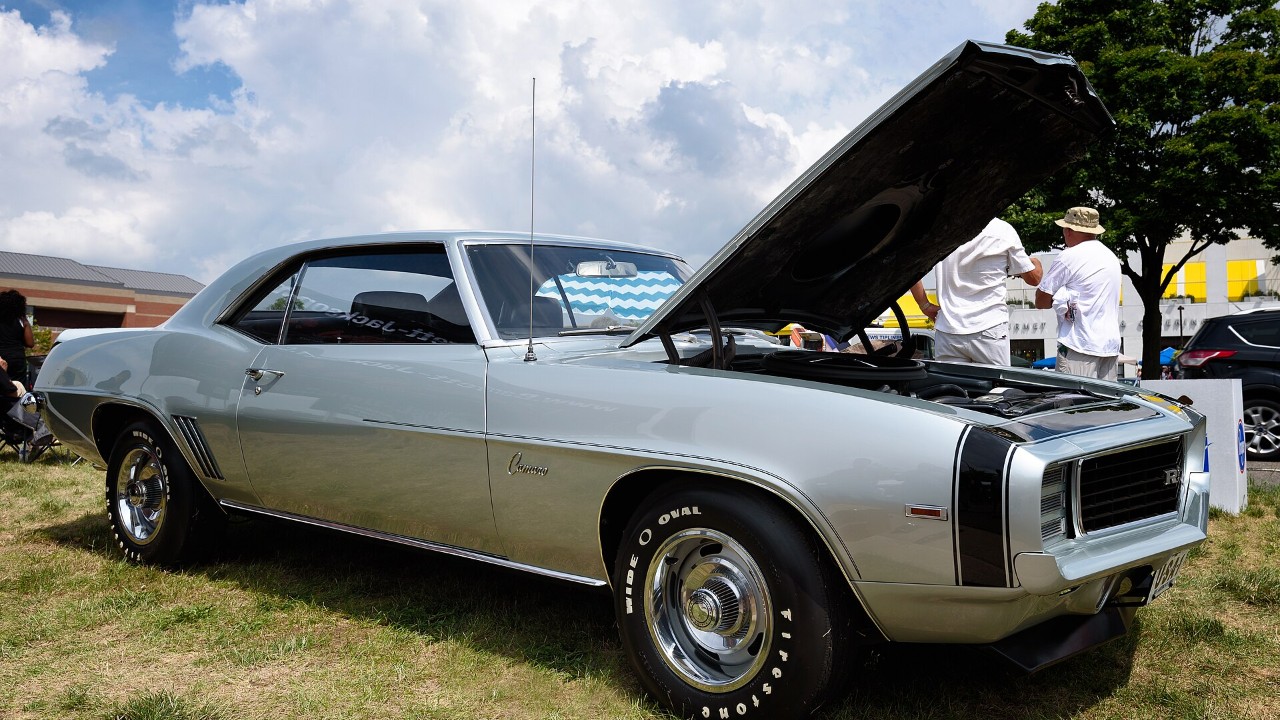
Chevrolet built just 69 examples of the 1969 Camaro ZL1, each with an all-aluminum 427 under the hood. Most people know the name, though. Far fewer have stood next to one, because the cars that survive tend to live in collections, museums and auction tents.
That’s true of a lot of muscle cars. Dealers and factories built some of the wildest ones in tiny numbers for drag racing, homologation or a single model year. Meanwhile, others came in body styles that almost nobody ordered. Then decades of street racing, rust and engine swaps thinned the herd even further.
These 12 are our picks for muscle cars you’d be lucky to spot at a weekend show. The selection is our opinion. The production counts, engine ratings and prices, though, come from factory figures, marque histories, period road tests and auction reports. Where a source didn’t give a number, we left it out.
1. 1969 Chevrolet Camaro COPO 9560 ZL1
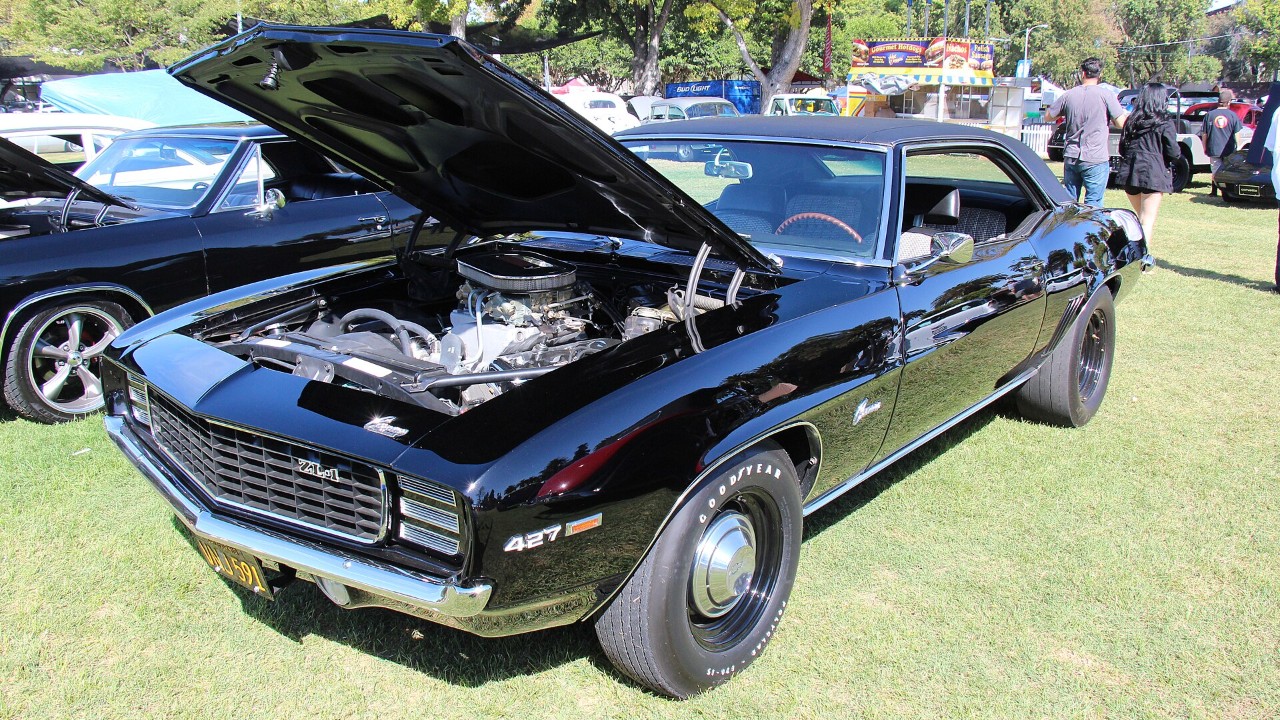
The ZL1 started as a drag-racing plan. Dealer Fred Gibb of La Harpe, Illinois, worked with Chevrolet’s Vince Piggins to create it for NHRA Super Stock. Gibb then agreed to take the full 50-car minimum order that racing eligibility required. Drag racer Dick Harrell also helped shape the idea.
The heart of the car was Chevrolet’s all-aluminum ZL1 427, a big-block with aluminum heads. Chevrolet then rated it at 430 hp at 5,200 rpm. According to Sports Car Market’s profile of the first ZL1, the car listed at $7,269 new. That was a steep price for a Camaro, since the engine alone cost more than an entire base V8 car.
Today the 1969 Camaro ZL1 is a six-figure car. The first one built sold for $424,000 with premium at Mecum’s Original Spring Classic on May 12, 2012, as Sports Car Market reported. Our take: with only 69 made, most enthusiasts will see one only behind a rope. If you ever get the chance, take a long look. Its real secret sits under the hood, in aluminum that few street cars ever wore.
2. 1970 Buick GSX
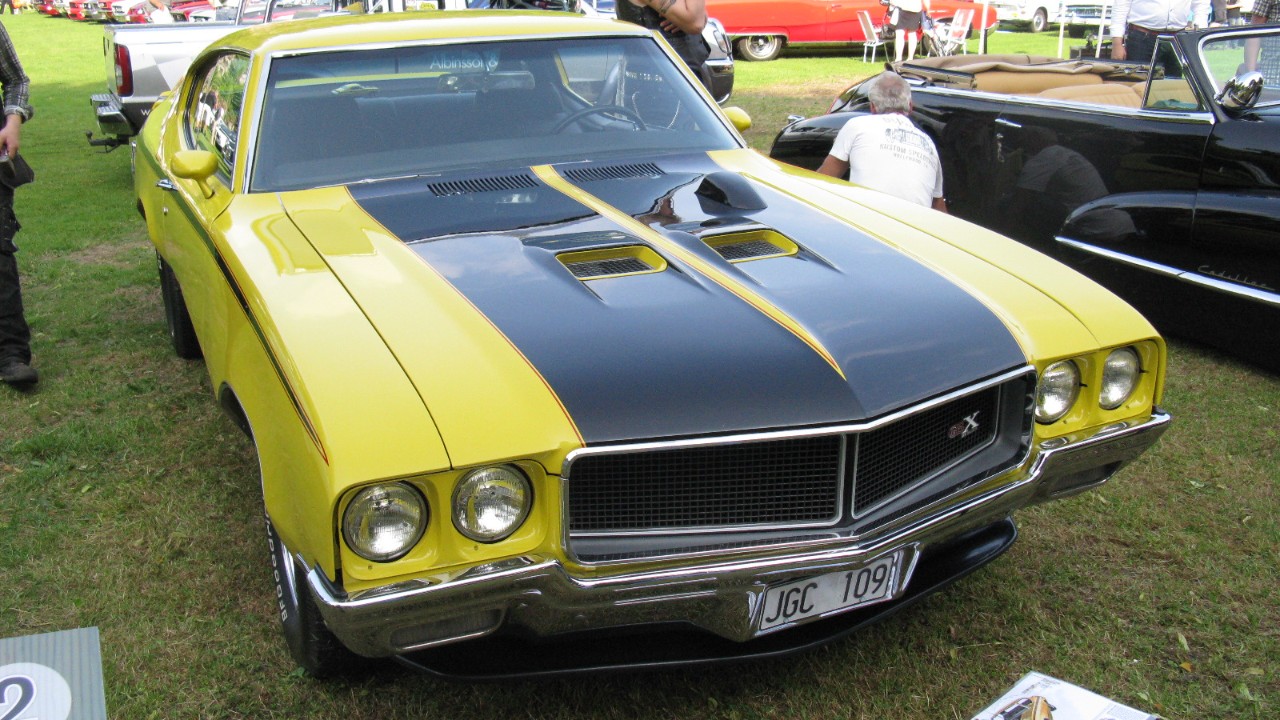
Buick launched the GSX in the second half of the 1970 model year, and it built only 678. It came in just two colors, Saturn Yellow and Apollo White. That alone makes a real one easy to spot, if you’re lucky enough to find it.
The GSX package itself was an $1,100 option on the GS 455. Of the 678 cars, 278 kept the standard 455. Meanwhile, the other 400 buyers added the Stage 1 package. That engine carried a rating of 360 bhp SAE gross at 4,600 rpm. More importantly, it produced 510 lb-ft of torque at just 2,800 rpm, which is the figure Buick fans love to quote.
Our take: the GSX shows how a quiet brand could build one of the hardest-hitting cars of its era. It also shows how few buyers took the gamble. In our view, a Stage 1 GSX is the one to want. Any real one should come with build paperwork, so ask for it first. For more on that point, read our piece on why the 1970 Buick GSX never needed huge sales.
3. 1969 AMC-Hurst SC/Rambler
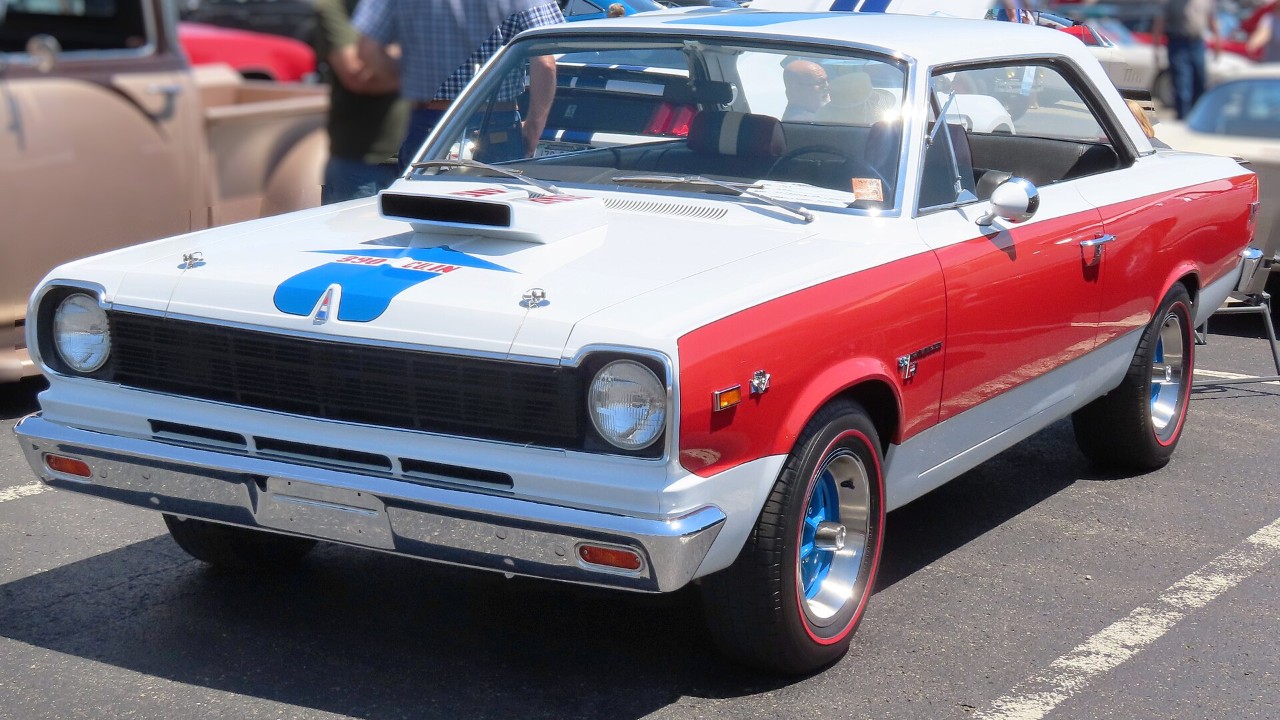
AMC took its compact Rambler American and dropped in the 390-cubic-inch V8 from the AMX. The result had an advertised 315 hp at 4,600 rpm. According to Old Cars Weekly, Hurst came up with the idea, AMC bought it and Hurst supplied the shifter.
Eventually, AMC built 1,512 of them. The first 500 wore red body sides with thick blue stripes over the hood, roof and deck. Later, a second batch went mostly white with narrow red and blue stripes. After that, the third batch returned to the first look. On top sat a big ram-air hood scoop with “AIR” and the engine size on it, plus a blue arrow pointing the way.
The performance matched the paint. Road Test magazine ran 14.4 seconds at 100.44 mph in the quarter-mile. AMC’s own estimate had been low 14-second runs at 98 mph, so the magazine car beat the factory’s promise. Meanwhile, the price was about $2,998. Our take: few muscle cars this loud came from a compact this sensible, and that’s the charm. If you find one, check that the paint scheme matches its build batch, because that detail matters to collectors.
4. 1970 Mercury Cyclone Spoiler 429
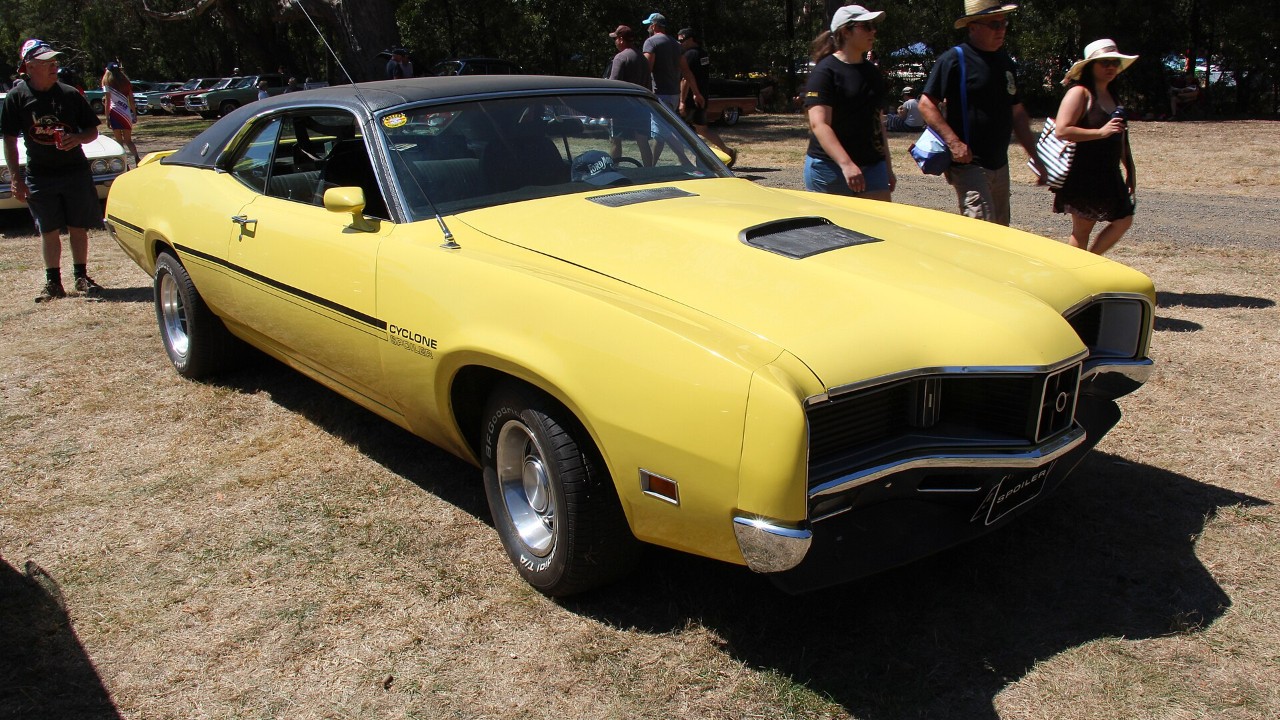
Mercury built 1,631 Cyclone Spoilers for 1970, against 10,170 Cyclone GTs. So the Spoiler was the rare top rung. Mercury also built 1,695 base Cyclones, which made the Spoiler the scarcest of the three. Its standard engine was the 429 Cobra Jet with Ram Air. Buyers who wanted more could order the Drag Pack, which brought the 429 Super Cobra Jet rated at 375 hp gross. However, its net rating was 335 hp, a reminder of how generous gross figures could be.
The equipment list read like a racing brochure. There were front and rear spoilers, plus a functional hood scoop for ram-air induction. Inside, a 140-mph speedometer and an 8,000-rpm tachometer sat in a four-gauge cluster. Bucket seats, dual racing mirrors and a competition suspension rounded it out.
Why is it so hard to find? The production number says most of it, since Mercury built more than six GTs for every Spoiler. In our view, Mercury’s muscle cars also lived in the Ford Torino’s shadow, so fewer people saved them. If you shop for one, verify the engine code and the Drag Pack paperwork, since both have a big effect on value.
5. 1963 Ford Galaxie 500 lightweight 427
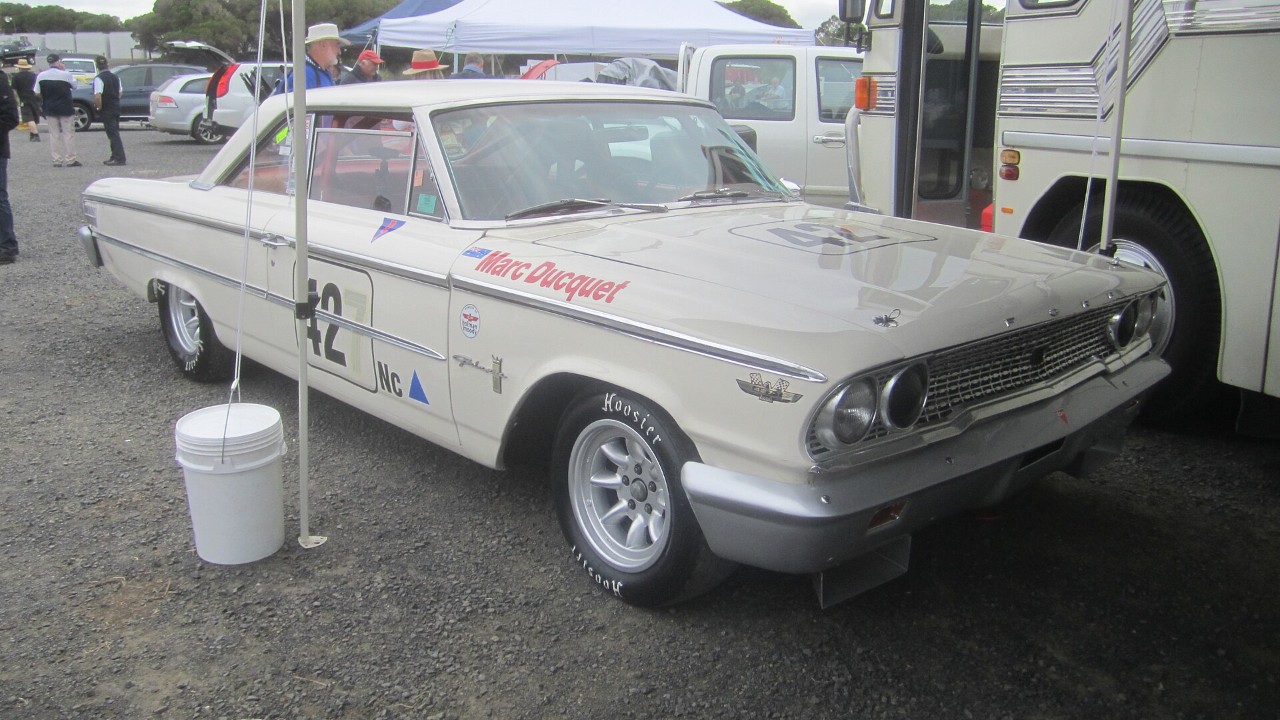
Ford wanted to win at the drag strip with its biggest car, so it put the Galaxie on a diet. The lightweight cars got fiberglass hoods, trunk lids, front fenders and fender aprons. The first 20 cars even had fiberglass doors, though Ford later dropped them for safety. In addition, aluminum bumpers, brackets, transmission case and bellhousing cut more weight.
Under the hood sat the R-code 427 with two four-barrel Holley carburetors and a solid-lifter camshaft. Ford rated it at 425 hp gross. The cars used the sleek Sport Special Tudor fastback roof that Ford added in mid-1963 to cut drag and lift for NASCAR. Every one came in Corinthian White with a red vinyl interior, at a list price of about $4,200.
Our take: most people picture a Galaxie as a family car with chrome. This one was a factory drag racer wearing a family car’s body. Because these cars lived hard lives at the strip, original survivors are scarce. If you see one, look for the fiberglass panels and the lightweight parts, since those separate a real car from a tribute.
6. 1966 Ford Fairlane GTA
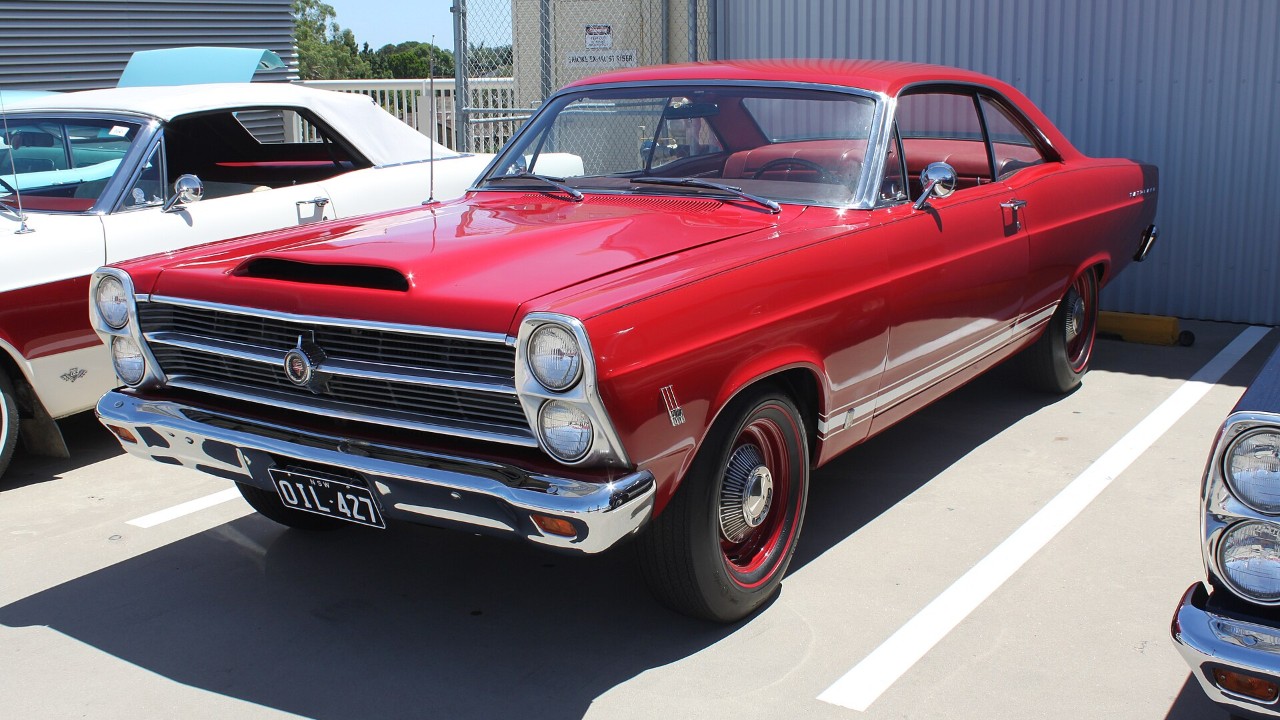
The 1966 Fairlane GT came standard with Ford’s 390-cubic-inch FE V8. Ford raised the compression and added a four-barrel carburetor, and it rated the engine at 335 bhp. The GTA was the same car with an automatic, the new SportShift Cruise-O-Matic. That “A” on the badge told everyone which transmission you’d picked.
The 1966 Fairlane also had a wilder sibling. In the middle of the model year, Ford built 57 special Fairlane 500 hardtops with the 427. Those cars also used the R-code engine rated at 425 bhp and a Top Loader four-speed. That R-code engine also made 480 lb-ft of torque at 3,700 rpm. They also wore fiberglass hoods with a forward-facing scoop. Ford built them to qualify the combination for NHRA and IHRA Super Stock racing.
Our take: the GTA is the Fairlane for people who wanted big-block muscle without a clutch pedal. It rarely gets the attention of the 427 cars, which is a shame. In our view, a documented GTA with its original 390 is a great entry into 1960s Ford muscle. Check the data plate for the transmission code before you buy.
7. 1970 Dodge Coronet R/T convertible
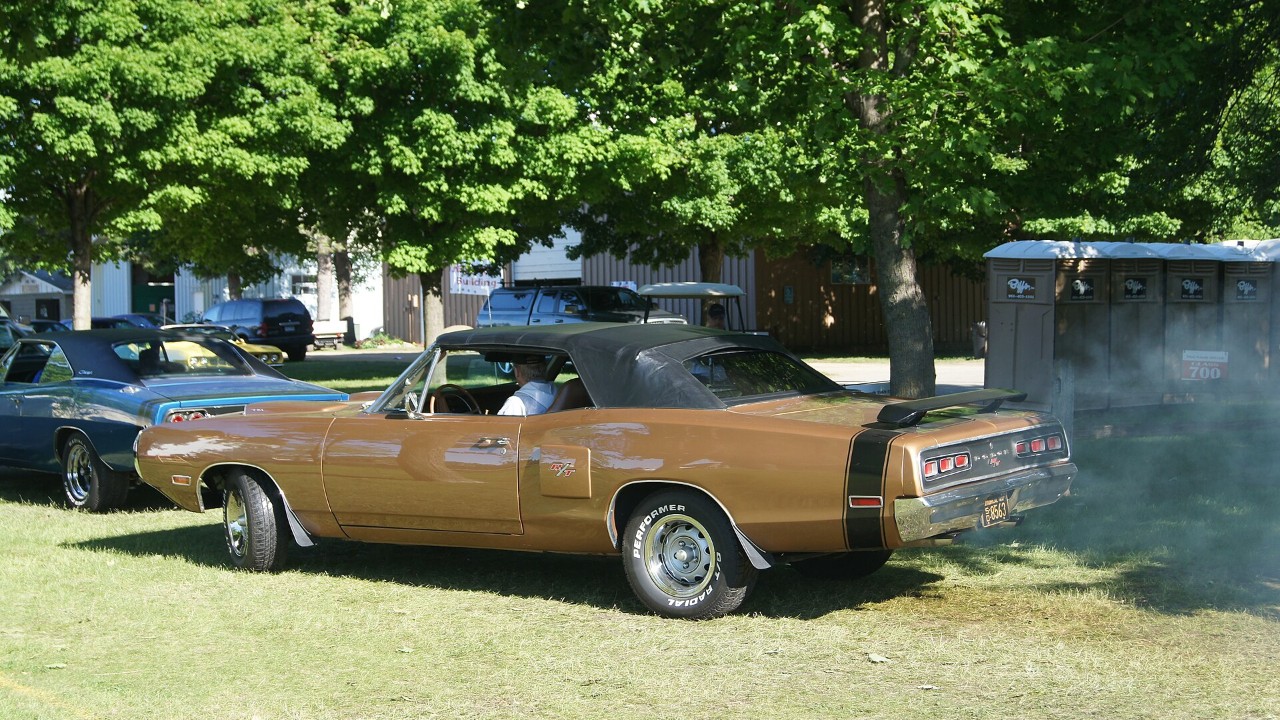
Dodge built 2,615 Coronet R/Ts for 1970. Of those, only 296 were convertibles, according to Street Muscle’s look at the 1970 R/T convertible. That made the open car roughly one in nine.
The base engine was the 440 Magnum four-barrel V8. Buyers could step up to the 440 Six-Pack, rated at 390 hp, or the Hemi. Almost nobody chose the Hemi, though. Hagerty’s list of the rarest Hemi muscle cars says Dodge built only two Hemi Coronet R/T convertibles that year. One had a four-speed and the other an automatic. Hagerty counts only 14 Hemi R/T hardtops for 1970, so even the closed Hemi cars were scarce. The 1970 front end was distinctive too, with twin oval grilles that fans call “Bumblebee Wings.”
Our take: the Charger and Challenger stole the 1970 spotlight, and the Coronet R/T convertible got lost behind them. That’s exactly why it belongs here. With fewer than 300 built, many people have never seen one at all. If you find one, check the fender tag and broadcast sheet, because they prove what the car left the factory as.
8. 1970 Mercury Cougar Eliminator
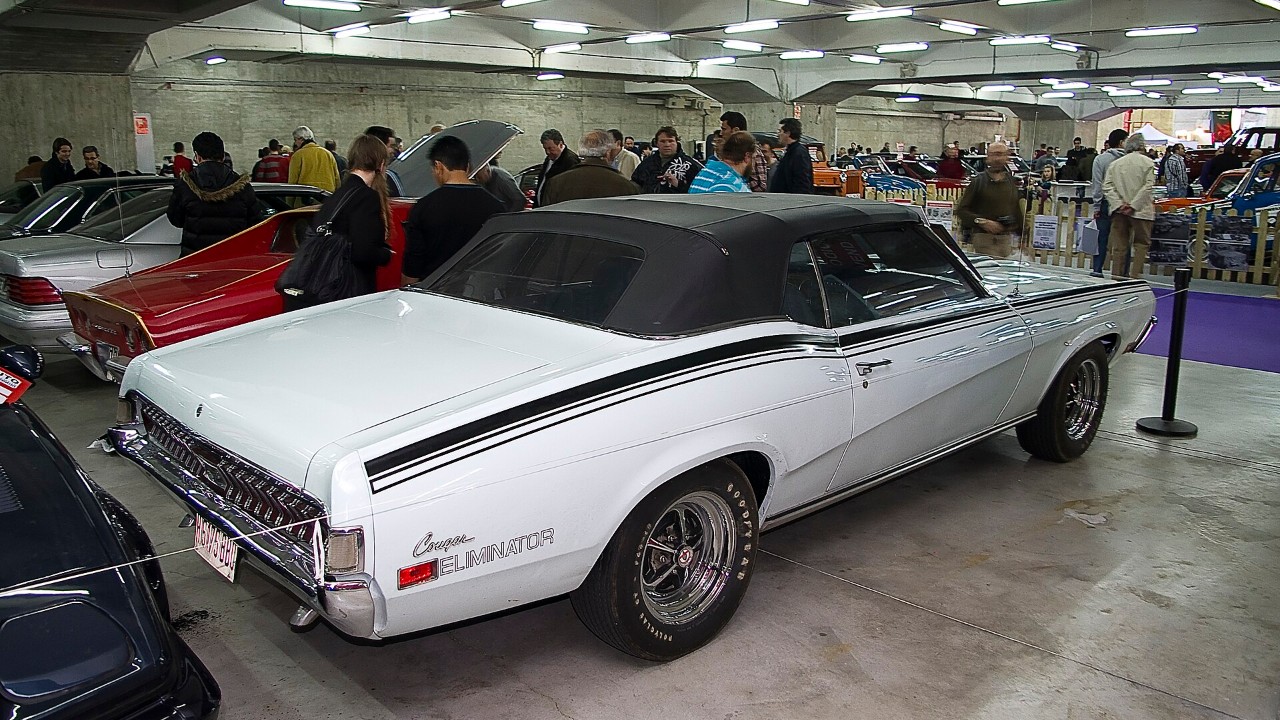
The Eliminator was Mercury’s performance Cougar. It came only as a standard Cougar hardtop, never as a convertible or an XR-7. For 1970, Mercury built 2,268 of them. The 1969 car reached 2,250, so the two years together total only about 4,500.
The 1970 car’s standard engine was the 351 Cleveland four-barrel. Buyers could also order the 428 Cobra Jet or Super Cobra Jet, with or without Ram Air. However, the rarest choice was the Boss 302, which Mercury offered in the Eliminator alone. Factory colors included bright Competition shades of orange, yellow, blue, gold and green. A few Special Paint Order cars exist in single-digit numbers, too.
Our take: the Eliminator gives you Boss-level hardware in a more grown-up Mercury body. In our view, a Boss 302 Eliminator is the one to chase, since nothing else in the Cougar line had it. We looked at the earlier car in how the 1969 Cougar Eliminator balanced muscle and refinement. Be careful with open cars, though. Since Mercury never built an Eliminator convertible, any drop-top you see is a tribute.
9. 1970 Ford Torino King Cobra
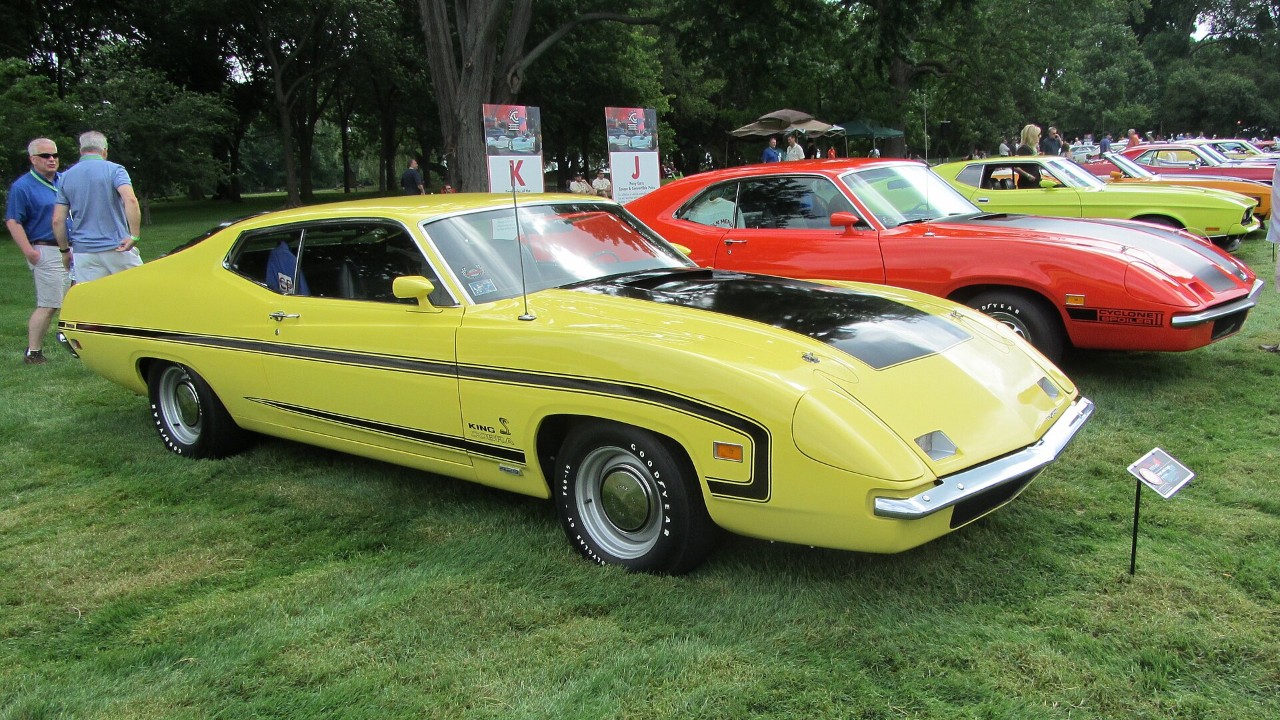
Ford built the King Cobra to counter Mopar in NASCAR. It never got the chance. According to Hagerty’s look at a surviving King Cobra, Ford built only three prototypes. Then new Ford president Lee Iacocca cut 75 percent of the 1970 racing budget.
Meanwhile, the rules changed too. NASCAR raised its minimum from 500 to 3,000 public-production cars, which made a low-volume aero special far harder to justify. The car’s nose sloped sharply, with the headlamps set in scooped cut-outs on the fenders. In testing, that front end made so much downforce that the car got loose in corners. The three prototypes carried different engines: a Boss 429, a 429 Super Cobra Jet and a 429 Cobra Jet. Not one ever raced or reached a showroom.
Our take: with just three in existence, this is the definition of a car most people will never see. Hagerty reported in 2013 that a Tennessee owner kept the yellow car, while a North Carolina dealer offered the red one for $599,000. Our list of Torino models that deserve another look covers the production cars around it.
10. 1970 Chevrolet Yenko Nova
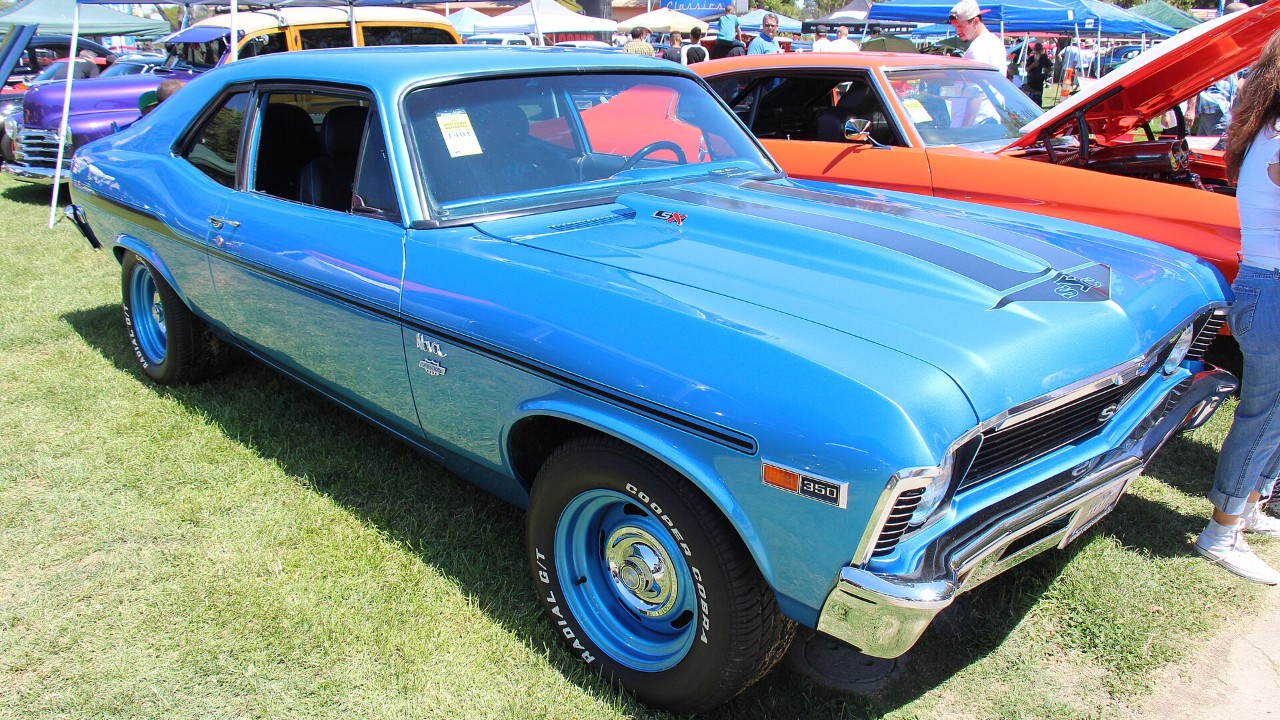
Don Yenko’s 1969 Novas carried 427 big-blocks. For 1970, he went the other way. Rising insurance costs pushed him toward a smaller engine, so he ordered Novas under COPO code 9010 with the 350-cubic-inch LT-1, rated at 360 hp. Fans call the result the Yenko Deuce. COPO ordering was the same route Yenko had used for his 1969 Camaros. That LT-1 was the same high-output small-block found in the Z/28 Camaro and the LT1 Corvette.
According to Sports Car Market’s Yenko Deuce profile, Yenko built just 175 for 1970. Buyers could choose a Muncie M21 four-speed or a Turbo-Hydramatic 400 automatic, both with special race shifters. In other words, it was a small-block car built to dodge the insurance man while still running hard.
Our take: the Deuce proves you didn’t need a big-block to build a serious muscle car. It also has the numbers to back that up at auction. One sold for $126,500 with premium on RM Sotheby’s online sale on November 6, 2024, according to the same profile. If you’re shopping, insist on Yenko documentation before you pay Yenko money.
11. 1969 Chevrolet Nova SS 396
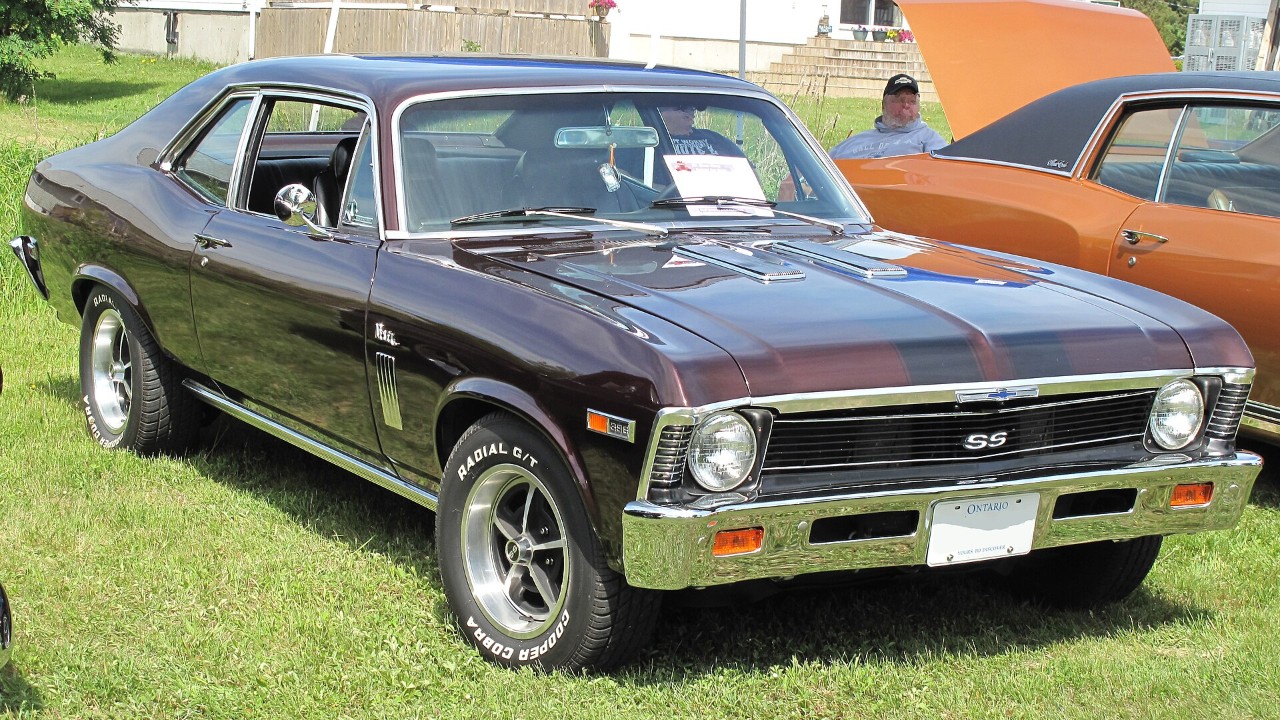
Chevrolet built 251,900 Novas for 1969, and only a small share were SS cars. However, the SS package opened the door to the 396 big-block in two strengths. Chevrolet rated one at 350 hp and the other at 375 hp, and both made 415 lb-ft of torque. By comparison, the standard SS 350 small-block made 300 hp that year.
According to OldRide’s 1969 Nova guide, Chevrolet built 5,262 Nova SS cars with the 375-hp 396 that year. Meanwhile, roughly 1,950 more had the 350-hp version. That compares with 17,654 Nova SS cars in all. So big-block cars made up well under half of SS production. Buyers could pair either engine with the Turbo Hydra-Matic 400 automatic. The SS package itself cost just $280 over a base coupe priced at a little over $2,200.
Our take: a big-block in a compact body is the classic muscle-car formula, and the Nova did it cheaply. In our view, an original 375-hp car is the one to find. Check the engine codes and the cowl tag before you buy, since those tell you which 396 it got.
12. 1970 Plymouth GTX 440
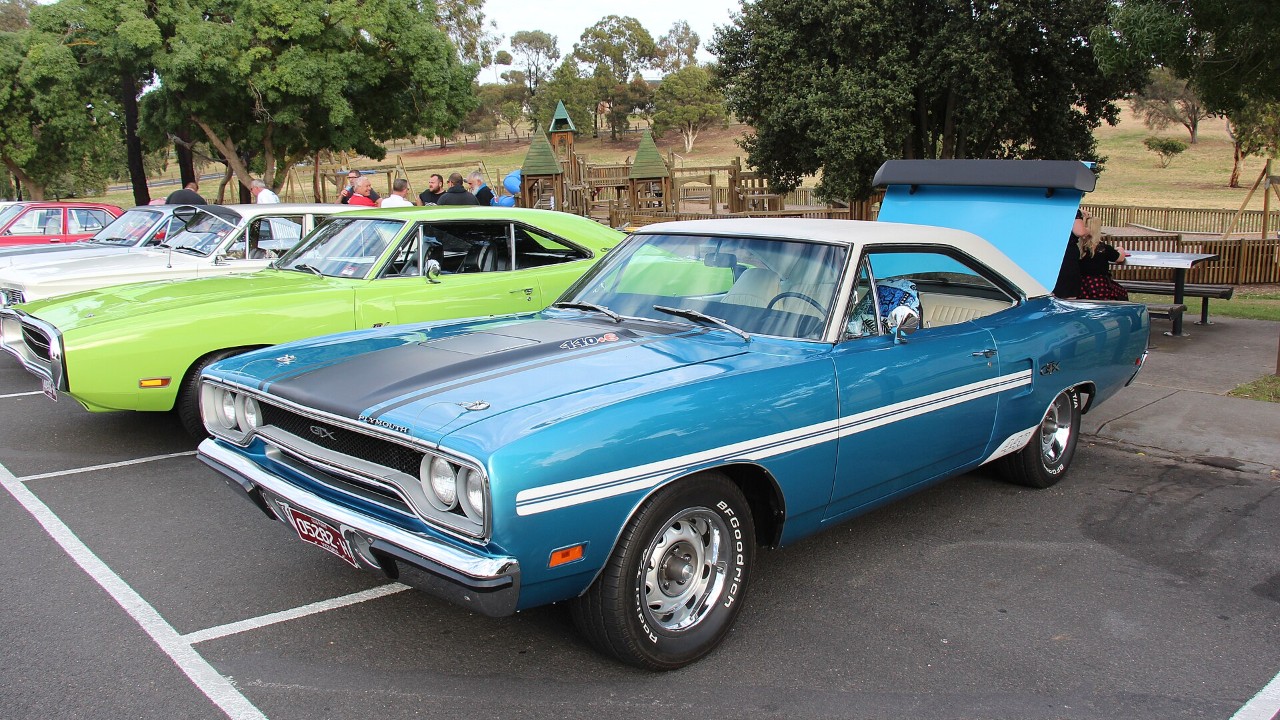
The GTX was Plymouth’s big-engine intermediate. For 1970, its standard engine was the 440 rated at 375 hp and 480 lb-ft. Buyers could step up to the 440 with three two-barrel carburetors, rated at 390 hp, or to the 426 Hemi at 425 hp.
The 1970 car also got a new hood. Plymouth brought back the Air Grabber, now with a single functional scoop on the power bulge. That setup also replaced the two side openings from 1969. The six-barrel 440 was a 1970-only rating in the GTX, with 490 lb-ft of torque. Meanwhile, the Hemi option ran from 1968 through 1970. Plymouth rated it at 425 hp and 490 lb-ft. Across 1967 to 1971, Plymouth built 44,178 GTXs in all.
Our take: the GTX gets overlooked next to the Road Runner, its better-known sibling. Yet in our view, a 440 car is the sweet spot of the range, with serious torque and none of the Hemi’s price. A 1970 car with the Air Grabber hood is a great find. Verify the engine with the fender tag before you pay a premium.
More from Fast Lane Only