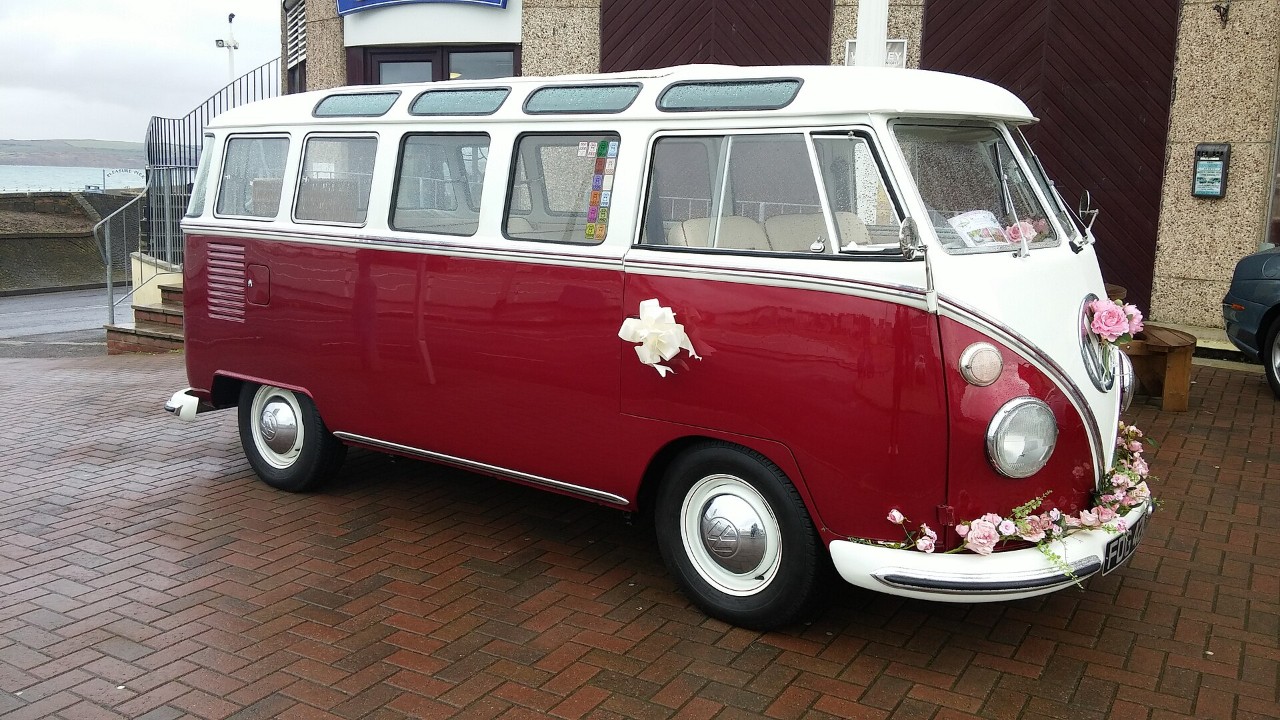
A Dutch importer named Ben Pon sketched the idea for a Volkswagen van in a doodle dated 23 April 1947, and that sketch now hangs in the Rijksmuseum. Three years later the van went on sale, and its fanciest version became the Volkswagen Type 2 Samba. Few people in 1950 would have guessed that a plain delivery van would end up in a national museum.
That is the funny thing about Volkswagens. For decades they were the sensible choice, cheap to buy and simple to fix. However, many of those once-ordinary models now draw crowds at shows, and the good ones are getting harder to find.
These are our picks for nine Volkswagens that won’t stay cheap much longer. The verdict is our opinion, not a price forecast, so you won’t find values quoted here. Instead, every year, engine and production fact comes from model histories, period reporting and auction catalog descriptions.
1. 1958 Volkswagen Type 2 Samba 23-window
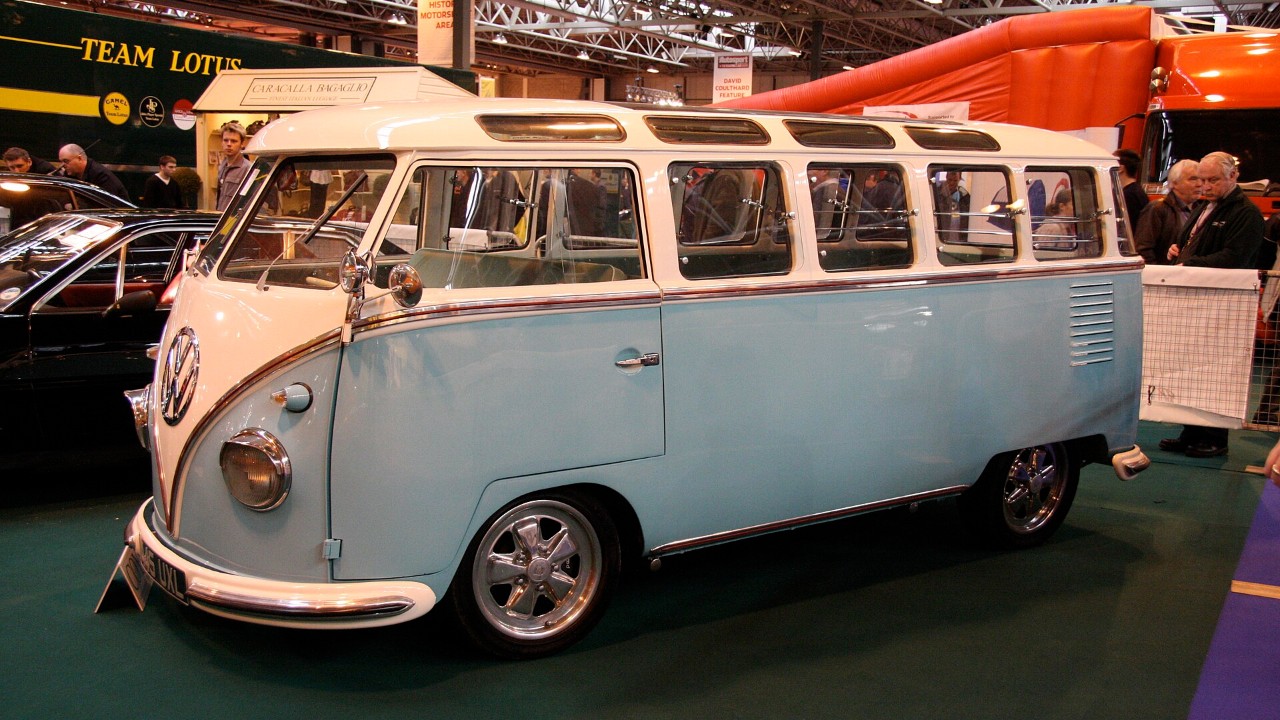
The Samba was the most luxurious version of the first-generation Type 2. Production began in 1951, and in the home market Volkswagen renamed it the Sondermodell in 1952. American buyers knew it as the Microbus Deluxe or Sunroof Deluxe.
The famous count comes from the glass. Eight small skylight windows lined the roof edges, and curved windows wrapped the rear corners, which made it the 23-window model. Buyers could also order a large fabric sunroof. Standard paint was two-tone, usually with white upper bodywork and a decorative strip between the colors.
Our take: the Volkswagen Type 2 Samba is the bus everyone pictures, even if they have never seen one. For 1964 Volkswagen dropped the curved rear corner windows, so the 23-window layout belongs only to the earlier vans. That limited window, in our view, is exactly why the early ones will keep pulling away from later buses.
2. 1969 Volkswagen Karmann Ghia Type 34
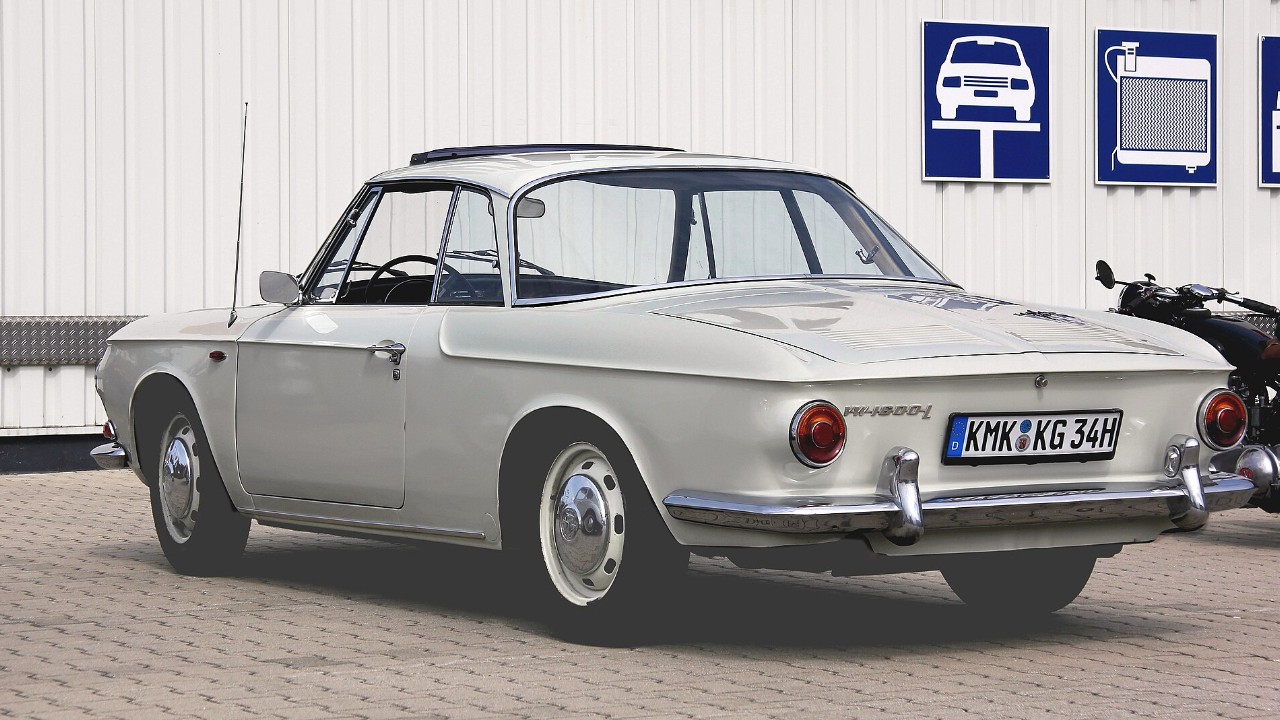
Most people think of one Karmann Ghia, but Volkswagen built two. The Type 34 arrived in 1961 on the bigger Type 3 platform, with sharper styling from Sergio Sartorelli at Ghia. Volkswagen also offered an electrically operated sliding steel sunroof as an option from 1962.
Sales never took off. According to The Truth About Cars’ history of the Type 34, Volkswagen built about 42,500 before production ended in 1969. That was less than 10 percent of the 445,238 Type 14 Karmann Ghias. Early cars used a 1,493 cc flat-four with about 53 hp, and a 1967 update brought a 1,584 cc engine with 66 hp and front disc brakes.
In our view, the 1969 car is the one to want because it is the final year of the line. Volkswagen never sold the Type 34 in the United States. As a result, the American supply has always been thin.
3. 1971 Volkswagen Type 3 1600 Notchback
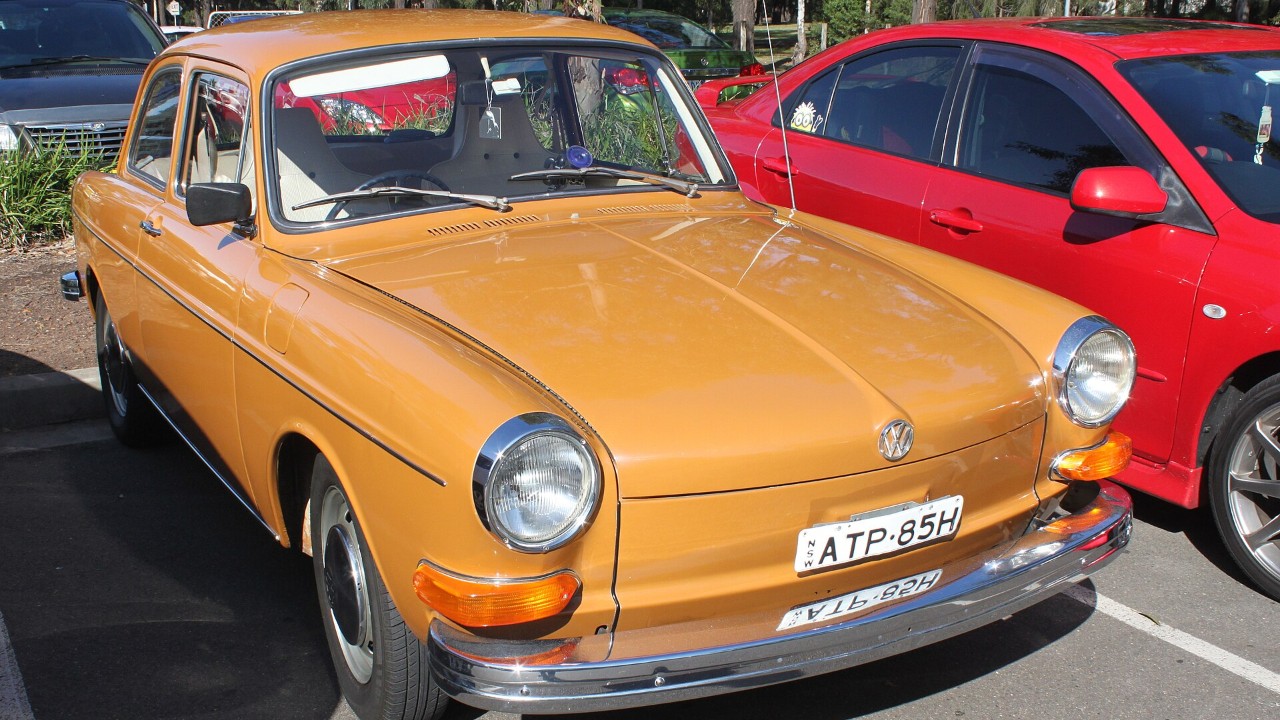
The Type 3 debuted at the 1961 Frankfurt show as the Volkswagen 1500. Its trick was the engine. Moving the cooling fan to the crankshaft lowered the flat-four so much that owners nicknamed it the “pancake” or “suitcase” engine, and that freed up more cargo room.
The 1600 cc engine arrived in August 1965 for the 1966 model year. Then, for 1968, the 1600 TE and LE models offered Bosch D-Jetronic electronic fuel injection. A 1970 facelift followed, and Volkswagen built roughly 2.54 million Type 3s between 1961 and 1973.
Our take: the Notchback is the scarce body in America for a simple reason. Volkswagen of America sold the Squareback and Fastback from 1966 but never imported the Notchback. So every American Notchback arrived some other way, and that rarity is what we expect buyers to chase. Volkswagen kept testing new ideas after the Type 3, too, as our story on the 1971 Volkswagen K70 shows.
4. 1972 Volkswagen 1302 Cabriolet
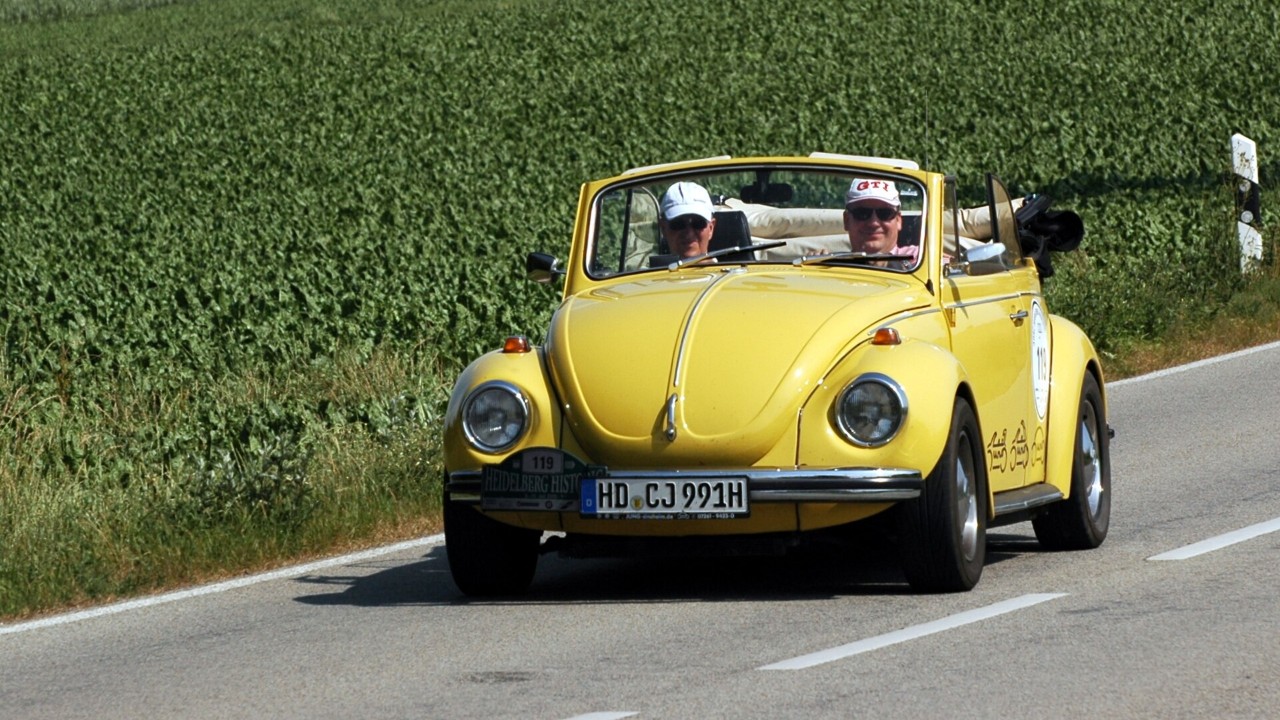
The 1302 debuted in August 1970 for the 1971 model year, and it was more than a facelift. Volkswagen gave it MacPherson strut front suspension and moved the spare wheel flat under a cover. As a result, the front trunk capacity doubled.
The name itself has a story. A Simca trademark pushed Volkswagen to call it 1302 instead of 1301. The stronger 1302S used a twin-port cylinder head for 50 PS, which Autocar called “very modest for the size of the engine.” Karmann built the Beetle convertibles in Osnabrück, and the last one left the line on 10 January 1980.
In our view, the 1302 Cabriolet is the short-run Beetle convertible worth hunting. The 1303 range replaced the 1302 in August 1972. That makes a 1972 car one of the last of a design that lasted only two model years.
5. 1973 Volkswagen Type 181 Thing
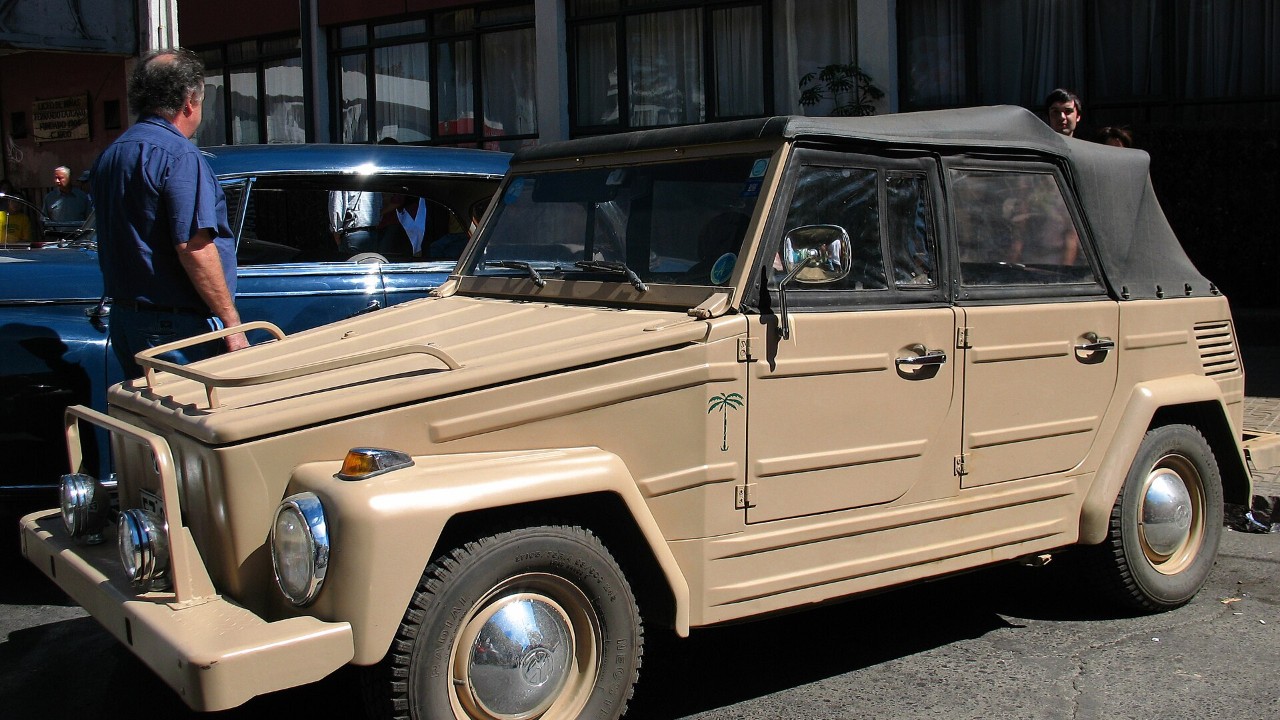
Volkswagen developed the Type 181 for the West German Army as a replacement for the DKW Munga. Production ran from 1968 to 1983, and civilian versions arrived in 1971. In West Germany it was the Kurierwagen, while British buyers knew a right-hand-drive version as the Trekker.
Americans got it as the Thing, but only briefly. Volkswagen sold it in the United States and Canada for 1973 and 1974. Then it left the American lineup for 1975 because it failed to meet stricter US safety standards. The body is a four-door convertible with removable doors, a removable roof and a windshield that folds flat.
Our take: two model years of US sales is a tiny window for a car this much fun. A flat-four of 1.5 or 1.6 liters sits in the back. That simplicity, plus the short US run, is why we think clean 1973 cars will keep climbing.
6. Volkswagen Golf Mk1 Cabriolet Sportline
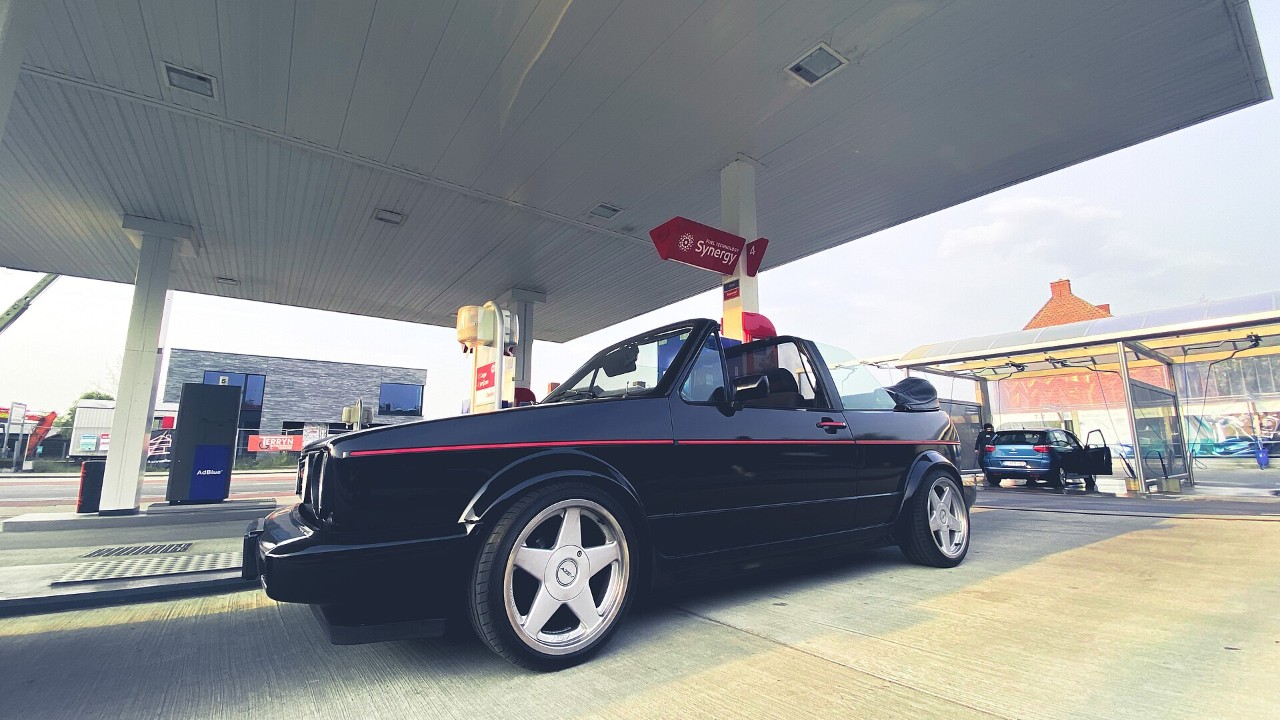
Volkswagen introduced the production Golf Cabriolet, designated Type 155, in 1979. Karmann built it entirely at its own factory, while Volkswagen supplied the engines, suspension and interior trim. In the US and Canada it was the Rabbit Convertible until the 1984 model year.
To make an open Golf stiff enough, Karmann reinforced the body and added a transverse roll-over bar. That hoop became the car’s signature look. Production then continued until April 1993.
In our view, the Sportline is the version to look for. It was one of many special editions Volkswagen offered on the Cabriolet over that long run. Still, we’d hold out for one with its special-edition trim intact.
7. Volkswagen Golf Rallye
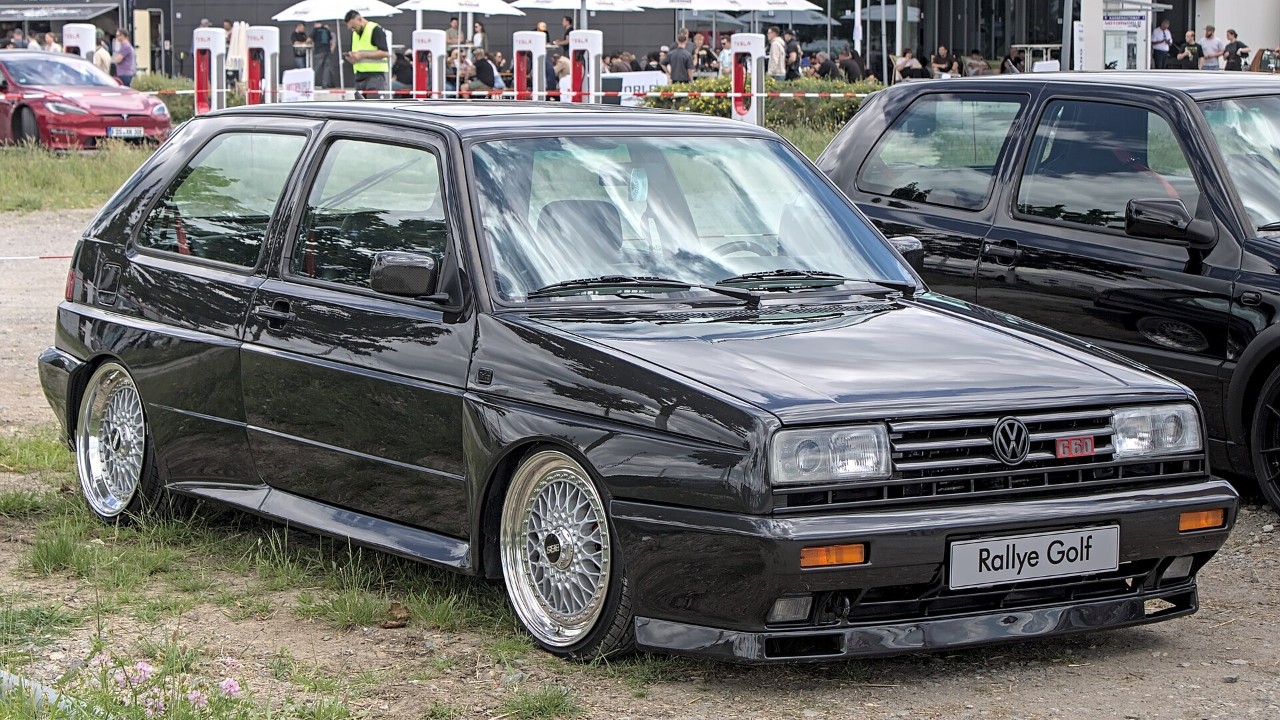
The Golf Rallye was a 1989 homologation special for Group A rallying. Volkswagen trimmed the supercharged G60 engine to 1,763 cc, just under the usual 1,781 cc. That small cut let the car compete in the under-3-liter class. It made 160 PS and drove all four wheels through Syncro.
Box-flared fenders and rectangular projector headlamps set it apart from a GTI. Volkswagen built roughly 5,000 at its plant in Brussels, Belgium, and homologation came through on 1 December 1989.
Our take: homologation cars rarely stay affordable once enthusiasts find them, and the Rallye has plenty of fans. If you want one, we’d buy the best-documented car you can find.
8. Volkswagen Vanagon Syncro Westfalia
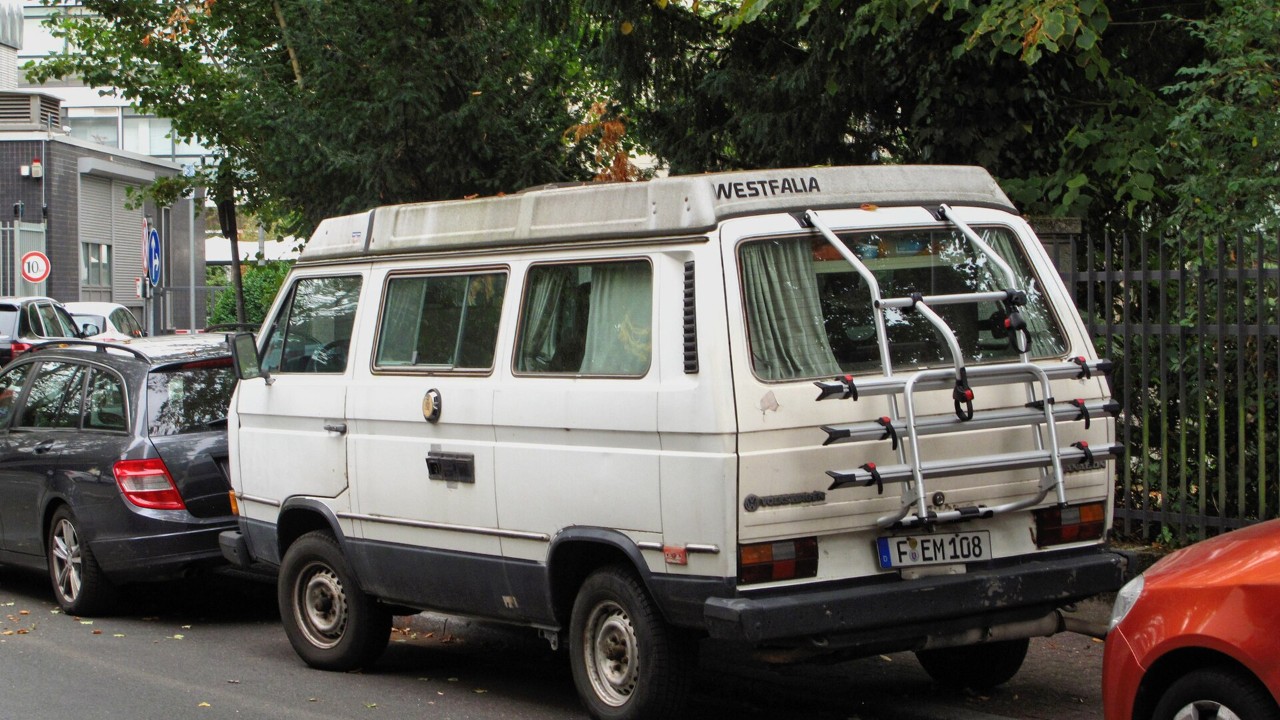
In the US the third-generation Transporter was the Vanagon, a blend of van and station wagon. Volkswagen switched it to water-cooled “Wasserboxer” engines in the middle of 1983. Then came Syncro four-wheel drive, which made its official debut at the Brussels show in January 1985.
Steyr-Daimler-Puch built the Syncro system in Graz, Austria. The RM Sotheby’s catalog for a 1990 Vanagon Syncro Westfalia describes a 2.1-liter fuel-injected engine and a four-speed manual. It also lists a pop-up roof, a refrigerator, a two-burner stove, a stainless sink and 13 gallons of water storage.
In our view, this is the camper that turned van life into a hobby with real buying competition. Syncro models were built in limited numbers through 1992. Because of that, the four-wheel-drive Westfalia is the one we would want most.
9. 1993 Volkswagen Corrado SLC
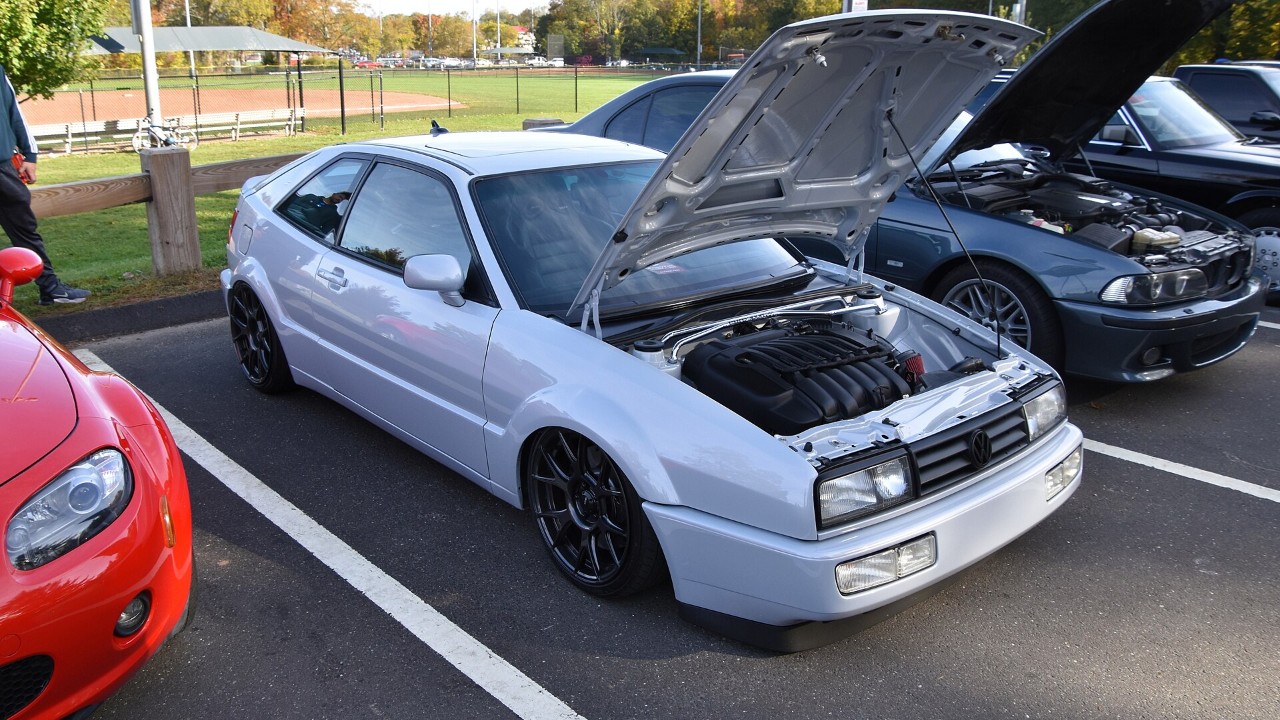
Karmann built the Corrado in Osnabrück, and Volkswagen sold it from 1988 to 1995. For the US and Canada, the SLC, short for Sport Luxury Coupe, carried a 2.8-liter VR6 rated at 178 hp. That narrow-angle six is a story on its own, and our explainer on how the VR6 fit six cylinders under one head breaks it down.
The Corrado also had a clever active rear spoiler. In North America it raised itself at 45 mph and dropped again at low speed, and drivers could also raise it by switch.
Our take: the Corrado SLC is the modern classic on this list that still looks like a bargain next to its rivals. We doubt that lasts, because the supply was never large. Volkswagen built 97,521 Corrados in seven years.
More from Fast Lane Only