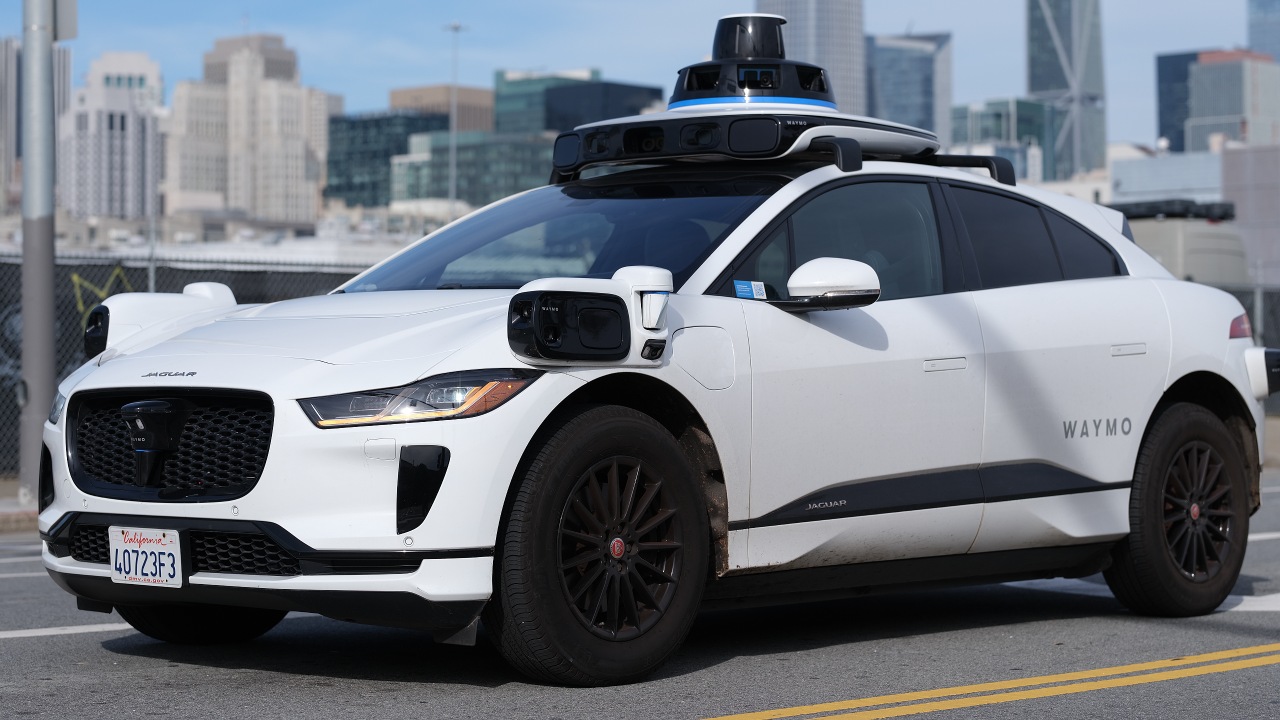
Waymo’s electric Jaguar I-Pace robotaxis have begun circulating on London streets with little fanfare, signaling a quiet but consequential start to United Kingdom trials. The low‑key rollout marks the first visible phase of a broader plan to introduce a commercial driverless ride‑hailing service in the capital and, ultimately, across Europe.
What looks like a familiar premium SUV is in fact a rolling test bed for a new kind of urban transport, one that replaces the human driver with a software stack known as The Waymo Driver. The early trials are designed to validate that system in dense, historic streets before paying passengers are invited on board.
From secretive test runs to a European debut
Waymo has been preparing its London move for some time, positioning the city as the launchpad for its first international robotaxi service. The company has already set out plans to begin commercial operations in London in 2026, describing the project as a Historic Launch that would extend its robotaxis beyond the United States for the first time. That roadmap explains why, over recent months, residents have started spotting branded vehicles in central districts, including sightings of a WAYMO Self driving car on Oxford Street, as the company validates its technology on public roads.
The vehicles in question are Jaguar I-Pace sport utility vehicles that have been adapted into fully autonomous prototypes through a long‑running collaboration between Waymo and Jaguar Land Rover. That partnership created what the companies describe as the first all‑electric self‑driving vehicle, pairing the I-Pace’s battery platform with Waymo’s hardware and software. The current UK trials build directly on that work, with the same basic vehicle architecture now navigating London’s complex mix of buses, cyclists, and pedestrians as part of a structured test program.
How the Jaguar I-Pace became a robotaxi
At first glance, the Jaguar Ipace used in these trials resembles any other high‑end electric Jaguar, but the similarities end once a passenger steps inside. The cabin has been reconfigured around screens, microphones, and controls that allow riders to start trips, adjust routes, and contact remote support, while the traditional driver’s role is assumed by The Waymo Driver. Externally, the roofline and bodywork carry an array of sensor housings that distinguish the robotaxis from standard production cars and enable the vehicle to perceive its surroundings in all directions.
The Waymo Driver relies on a combination of sensor technologies, including cameras mounted around the Car, along with other instruments that allow the system to detect road users, read traffic signals, and interpret lane markings in real time. According to the company’s own technical descriptions, these inputs feed into a software stack that follows a Sense, Solve, Go process, in which the vehicle first builds a detailed model of the environment, then predicts how other road users will move, and finally selects a safe path. In the UK trials, that process is being tested against London’s particular challenges, from narrow side streets to complex roundabouts, to ensure the technology can cope before any large‑scale passenger rollout.
London’s crowded race for driverless streets
Waymo’s quiet testing phase is unfolding in a city that is rapidly becoming a battleground for automated mobility. Other companies are also vying to put Self driving taxis on London roads, with rival projects already active in markets such as SanFranciso and Tokyo and Waymo itself pointing to operations in those cities as proof that the model can work. In London, the competitive pressure is set to intensify as Uber and Lyft prepare their own driverless taxi trials in partnership with a Chinese technology company, creating a crowded field of operators seeking regulatory approval and public trust at the same time.
The result is a race in which multiple fleets of autonomous vehicles could be circulating in the capital within the same year, each backed by different software stacks and commercial strategies. Reporting from the city has already described how, on a recent Friday morning, a white electric Jaguar glided through London traffic without a visible driver, a glimpse of what Self driving services might look like at scale. Waymo’s decision to begin UK testing ahead of its Historic Launch positions it to claim an early foothold in that landscape, but it will have to differentiate its service on safety, reliability, and rider experience as competitors arrive.
Regulation, safety, and public perception
For regulators, the appearance of Waymo’s Jaguar I-Pace test vehicles on public roads is both an opportunity and a stress test. The UK government has signaled support for commercial pilots on England’s roads, framing autonomous taxis as a way to modernize transport and attract investment, yet it must also ensure that safety standards keep pace with rapid deployment. The current trials allow authorities to observe how the technology behaves in live traffic, including how the vehicles respond to cyclists, buses, and emergency situations, before any decision is made on full commercial licensing.
Public perception will be just as critical as regulatory sign‑off. Early reactions from Londoners who have encountered the vehicles, including those who have seen a WAYMO Self driving car navigating Oxford Street, suggest a mix of curiosity and caution. The company’s strategy of starting with supervised tests, rather than immediately offering rides to Passengers, appears designed to normalize the sight of driverless Jaguars on city streets and to demonstrate consistent, predictable behavior. If the vehicles can build a track record of uneventful journeys, that may help address concerns that have followed autonomous projects elsewhere and smooth the path toward wider acceptance.
What trials mean for future passengers and the city
For future riders, the UK trials are a preview of a service that Waymo intends to make routine. The company has already outlined plans for Passengers to hail electric Jaguar I-Pace cars in London as part of a commercial robotaxi network, using the same basic model it operates in its existing markets. In practice, that would mean booking a ride through a smartphone app, watching a driverless Jaguar approach the curb, and stepping into a cabin where navigation, climate, and support are all managed through digital interfaces rather than a human driver. The current testing phase is focused on ensuring that experience can be delivered safely and consistently in the UK context.
For London itself, the implications extend beyond novelty. If Waymo Brings Robotaxis to the city at scale, the service could reshape how residents move between neighborhoods, particularly in areas that are poorly served by existing public transport. Advocates argue that fleets of electric robotaxis could reduce congestion and emissions by replacing older, more polluting vehicles and by offering shared rides, while critics warn that cheap, convenient point‑to‑point travel might instead draw people away from buses and trains. As Driverless Taxis Coming to London move from quiet trials to everyday reality, the city will become a live experiment in how autonomous technology interacts with historic streets, established transport networks, and the expectations of millions of daily commuters.
More from Fast Lane Only