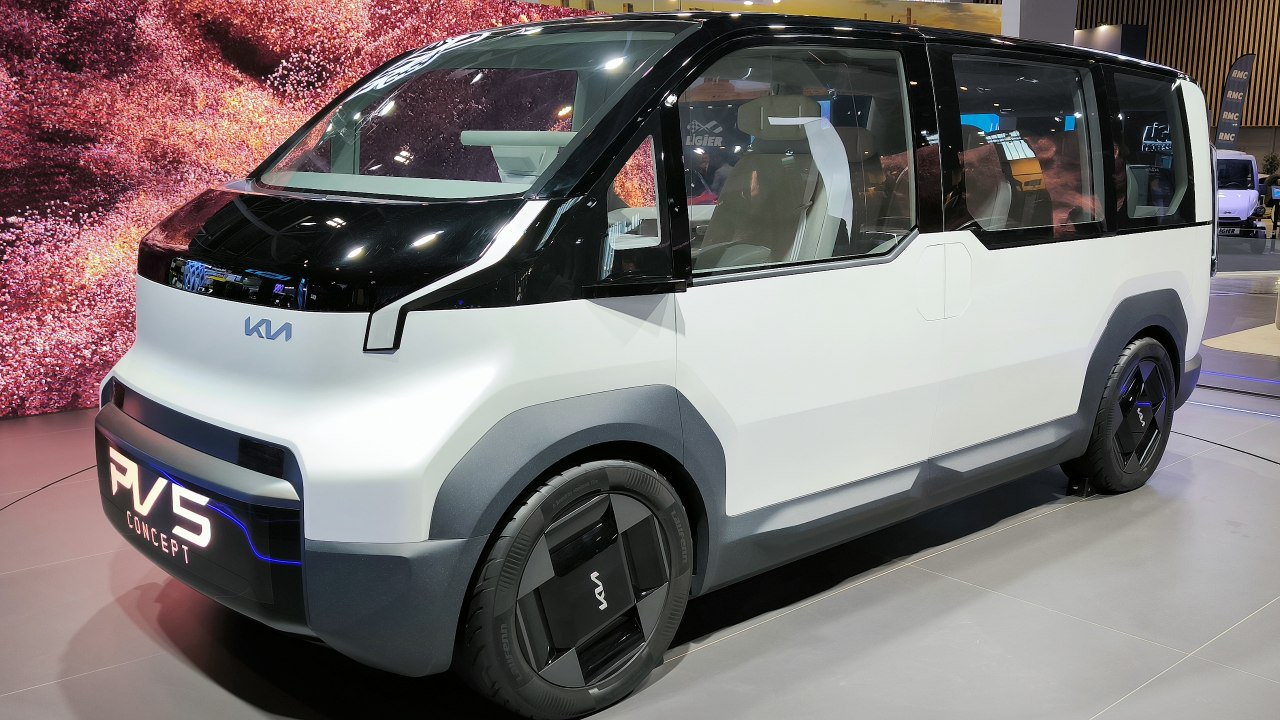
When a camouflaged Kia PV5 prototype rolled onto American roads with clear U.S. market tweaks, it signaled that Kia’s modular electric van is edging closer to a decision point. The sighting did more than confirm ongoing development work, it showed that Kia is actively tailoring its purpose-built EV for local regulations and tastes. For fleet buyers and families watching the electric van space, the PV5’s quiet test laps hint at a potentially significant new player.
Behind the vinyl wrap and taped badges sits a vehicle that has already impressed in Europe and other regions with its flexible interior, brisk charging, and commercial focus. The question now is not whether the PV5 is capable, but whether Kia will thread the policy and pricing needle required to bring it to the United States in meaningful numbers.
What the latest U.S. prototype reveals
The most recent PV5 spotted on American soil did not look like a simple import, it carried visible changes that point to a U.S. specification in the works. The van’s lighting signatures, bumper details, and apparent side marker placements all suggest compliance work for American regulations rather than generic global testing. Reporting on the sighting described the vehicle as an electric Kia PV5 van spied testing with U.S.‑market changes, a clear indication that engineers are validating hardware and software for local use rather than merely logging development miles elsewhere.
Earlier sightings of Kia’s electric van in the United States had already raised eyebrows, but those prototypes appeared closer to the versions seen in Europe and South Korea. The latest test vehicle, by contrast, aligns with coverage that framed it as a PV5 EV van spied testing with Market Changes specific to this region, reinforcing the idea that Kia is iterating on details such as lighting, safety equipment, and possibly charging interfaces to match American expectations. While Kia has not publicly confirmed a launch, the pattern of repeated U.S. testing with evolving hardware is difficult to interpret as anything other than serious preparation.
Design, comfort, and everyday usability
Beyond the camouflage, the PV5’s core appeal lies in a design that treats the van as a flexible tool rather than a box on wheels. Reviews of pre‑production models highlight DESIGN and STYLING that are distinctly futuristic, with clean surfaces and a cab‑forward stance that sets it apart from more conservative rivals. Pros noted in early drives include Distinctly modern looks and the Use of a modified car platform, which helps the PV5 feel more like a tall crossover from behind the wheel than a traditional commercial vehicle. That approach matters in the U.S., where many small businesses and families want van practicality without the penalty of truck‑like dynamics.
Inside, The Kia PV5 Passenger variant leans into comfort and versatility. Official material for The Kia PV5 Passenger emphasizes Everyday comfort, Quick charging, and Flexibility for different lifestyles, positioning the model as more than a bare‑bones workhorse. One standout detail is the Passenger variant’s best‑in‑class sidestep height of 399 m, which is designed to guarantee easy access and comfort for passengers compared with other segment vans available in Europe. For American buyers accustomed to minivans and three‑row SUVs, that low step‑in height and focus on daily usability could be a decisive advantage, especially for ride‑share operators, shuttle services, and families juggling child seats and cargo.
Powertrain, range, and charging performance
Under the skin, the PV5 has been engineered to balance efficiency with the demands of commercial duty cycles. Information on Powertrains and all‑electric range describes a setup tuned to deliver performance and efficiency across different passenger and cargo configurations, rather than a one‑size‑fits‑all approach. That modularity fits the broader purpose‑built vehicle strategy, where the same underlying hardware can serve as a delivery van, a people mover, or a mixed‑use family vehicle. For U.S. fleets that often mix urban routes with highway stretches, the ability to choose configurations that prioritize range or payload will be central to any purchasing decision.
Charging performance is another area where the PV5 appears ready for serious work. The van supports DC fast charging that can take the battery from 10 to 80 percent in around 30 minutes, a figure that directly addresses downtime concerns in often hectic commercial settings. That capability, combined with a payload capacity of up to 7,000‑plus pounds cited in the same context, positions the PV5 as a genuine alternative to combustion vans for last‑mile delivery and service fleets. When paired with the Quick charging focus highlighted for the Passenger version, the overall package suggests that Kia has designed the PV5 to slot into existing duty cycles with minimal disruption, a key requirement for American operators who cannot afford vehicles sitting idle for hours.
Award‑winning credentials and global positioning
Even before any formal U.S. launch, the PV5 has already earned significant recognition abroad. The model secured the 2026 International Van of the Year award, a signal that industry judges see its combination of electric powertrain, packaging, and usability as a step forward for the segment. Coverage of that accolade notes that Kia has not directly confirmed whether the PV5 is bound for the North American market, at least for now, but the award itself underscores that the vehicle is not an experimental niche product. It is a fully realized van that has been benchmarked against established European competitors and found competitive or better.
The same reporting stresses that the all‑new battery‑electric PV5 is aimed squarely at battery‑electric, last‑mile logistics and similar use cases, where operators are under pressure to cut emissions without sacrificing reliability. That focus dovetails with the broader push among North American fleets to electrify urban routes, particularly in cities that are tightening air‑quality rules or offering incentives for zero‑emission vehicles. If Kia chooses to bring the PV5 across the Atlantic, it would arrive with the credibility of an award‑winning product already in service elsewhere, rather than as an unproven experiment tailored only to U.S. tastes.
Policy headwinds, pricing pressure, and the U.S. opportunity
For all the promise shown by the U.S.‑spec prototype, the PV5’s path into American showrooms is complicated by politics and pricing. Reporting on earlier sightings of Kia’s electric van in the United States noted that Kia has yet to say if it will sell the PV5 here, likely due to the Trump Administration’s new auto tariffs. Those measures have reshaped the economics of importing electric vehicles, particularly from regions that do not benefit from favorable trade terms, and they weigh heavily on any decision to ship a relatively price‑sensitive commercial van. All electric vans targeting fleet buyers must hit aggressive total cost of ownership targets, and additional tariff costs can quickly erode that equation.
At the same time, the PV5 is entering a competitive landscape where rivals are already staking claims. Video reviews of the 2026 Kia PV5 Passenger have framed it against the VW ID. Buzz to see if this 33,000 pound electric van delivers on its promises, highlighting features such as From the Star Map lighting to an innovative three piece body concept. While the exact pricing and specification mix for any U.S. version remain unverified based on available sources, the comparison to the ID. Buzz underscores the pressure Kia faces to deliver compelling value. If tariffs push the PV5’s price too high, it risks ceding ground to established players or to domestic electric vans that may benefit from friendlier policy treatment.
More from Fast Lane Only