The 1968 Shelby GT500KR arrived at the height of Detroit’s horsepower rivalry and immediately reset expectations for what a factory muscle car could be. Positioned above the already formidable GT500, it combined a new big block engine, race bred chassis tuning, and distinctive styling into a package that justified its “King of the Road” nickname. Understanding what set the KR apart requires looking at how its powertrain, design, and rarity pushed it beyond its peers in the late 1960s performance wars.
Rather than being a simple appearance upgrade, the GT500KR represented a mid year escalation that turned the Shelby Mustang into Ford’s ultimate street performance statement. The car’s structure, from its reinforced Mustang underpinnings to its functional aero pieces and upgraded suspension, was engineered to handle a level of power and speed that most contemporaries only hinted at on paper.
The leap from GT500 to “King of the Road”
The GT500KR did not replace the standard GT500 so much as it supersized it, arriving as a mid year 1968 evolution once Ford’s new big block became available. Reporting on the model notes that the 500KR is the mid year, 68 version of the G.T. 500, created when Ford introduced the 428 Cobra Jet engine in April of 1968 and Shelby reworked his top Mustang around it. That timing meant the KR arrived just as the horsepower race among the Big Three was peaking, and Shelby used the opportunity to position his car at the top of the street performance hierarchy.
Contemporary accounts describe the GT500KR as the ultimate expression of Mustang muscle in the late 1960s, based on the GT500 but elevated in power, chassis tuning, and image. One detailed specification summary calls the 1968 Shelby GT500KR “King of the Road” the ultimate expression of Mustang performance in the late 60s and emphasizes that it was based on the GT500 platform but significantly upgraded. That context matters, because it shows that the KR was not simply another trim level, but a deliberate step above the already respected Shelby Mustang GT500.
The 428 Cobra Jet advantage
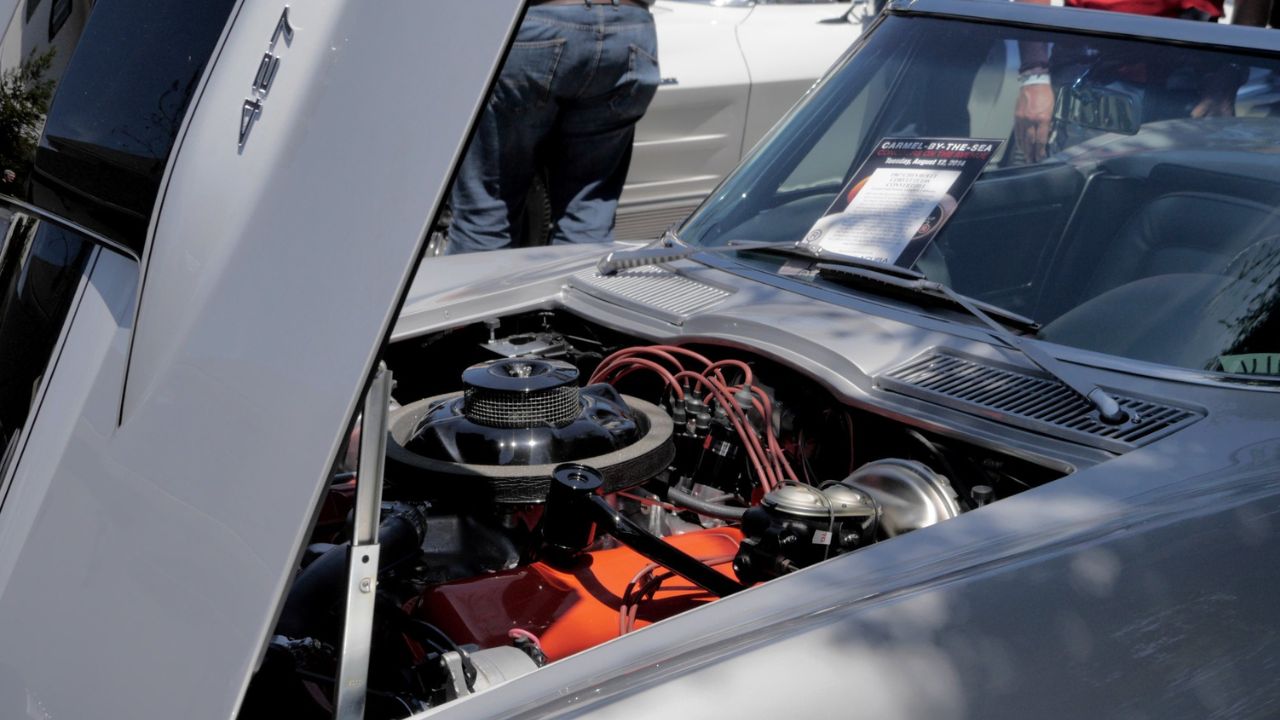
The single most important factor that separated the GT500KR from its peers was its engine. At the heart of the car was Ford’s new 428 Cobra Jet V8, described in one technical overview as an engine “worthy of royalty.” The powerplant displaced 428 cubic inches and was developed specifically to give Ford a dominant big block in both street and strip competition. Shelby’s decision to adopt this engine immediately gave the KR a performance edge over earlier GT500s and many rival muscle cars that still relied on less advanced big block designs.
Officially, Ford rated the Cobra Jet in the GT500KR at 335 horsepower, a figure that appears repeatedly in factory style specifications and enthusiast documentation. Another detailed explanation of the KR model notes that this new motor offered a significant horsepower increase, rated by Ford at 335 HP and 440 LB FT of torque, while adding that Actual HP was reportedly at least higher than the published number. That combination of a conservative rating and substantial real world torque meant the GT500KR could out accelerate many competitors that claimed similar or even greater horsepower on paper.
The Cobra Jet’s presence was not just a matter of raw output, it also reshaped the car’s identity. Several historical analyses point out that the addition of “Cobra” to the model name referenced its V8 Cobra Jet 428 engine, and that Shelby deliberately tied the KR’s branding to this new powerplant. Another summary of key points on the GT500KR highlights that the car was introduced in 1968 and featured a tuned 428 Cubic Inch Cobra Jet V8, intended for use both on the street and in more serious performance settings. In an era when big block badges were a form of currency, the Cobra Jet specification gave the KR a technical and marketing advantage that few rivals could match.
Chassis, structure, and real world performance
Power alone did not make the GT500KR stand out; the way its structure and chassis were adapted to handle that power was equally important. Shelby’s earlier GT500s already featured upgraded suspension and brakes compared with standard Mustangs, but the KR’s additional torque and speed demanded further refinement. Period style technical write ups note that many of the qualifications that defined the Shelby Cobra Mustang GT500 KR, marketed as the “King of the Road,” related to how its suspension, tires, and overall setup were optimized beyond prior GT500s. That meant revised spring and shock tuning, performance oriented tires, and other underbody changes that allowed the car to exploit the Cobra Jet’s output without feeling overwhelmed.
Performance testing from the era, as summarized in later retrospectives, indicates that the GT500KR’s acceleration and top speed placed it ahead of most of its contemporaries. One detailed discussion of the model’s engine and performance notes that the Cobra Jet powered KR delivered acceleration that was difficult to match by most of its contemporaries, reinforcing the idea that the car’s real world capability exceeded its modest official rating. Another overview of the 1968 Shelby Mustang Cobra GT500KR explains that plans were immediately put in action to further push the performance envelope, and that the GT500 would initially be fitted with the new engine before the KR specification crystallized around it. Together, these accounts show that the KR’s structure and tuning were conceived from the outset as a way to turn Ford’s new big block into a complete high performance package rather than a simple straight line special.
Design, fastback form, and Shelby identity
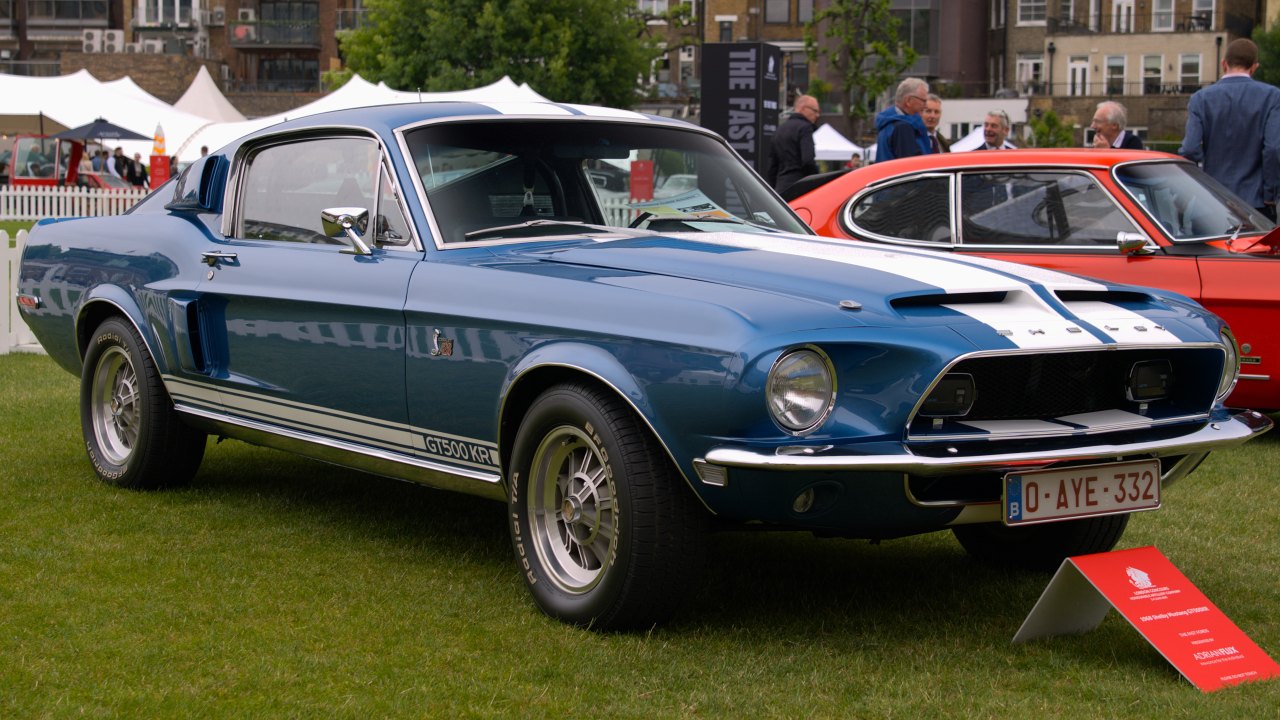
Visually, the GT500KR distinguished itself from both standard Mustangs and many rival muscle cars through a combination of aggressive aero pieces and Shelby specific trim. Contemporary descriptions emphasize that the 1968 Shelby Mustang GT500KR Fastback earned its legendary status with bold styling, power, and rarity, and that the “KR” stood for King in the context of the muscle car world. Another detailed feature on the 1968 GT500KR Fastback notes that the car’s performance was matched by its aggressive styling, with The Fastback body equipped with a functional hood scoop, racing inspired stripes, and other cues that signaled its performance oriented nature.
The fastback configuration in particular became closely associated with the KR’s image. Enthusiast summaries describe the 1968 Shelby Mustang GT500KR Fastback as a centerpiece of Shelby Mustang history, while related coverage of the 1968 Shelby Mustang GT500 Fastback characterizes it as “Muscle Refined with Cobra Attitude,” highlighting how the body style combined practicality with a dramatic profile. Even convertible versions, referenced in club discussions as the 1968 Shelby GT500 KR Convertible, are framed as extensions of a design language that Carroll Shelby used to take Ford’s Mustang and give it a more exotic, race inspired presence. These design elements, layered on top of the Mustang’s basic structure, helped the KR stand out visually in a crowded field of late 1960s performance cars.
Name, rarity, and lasting reputation
The GT500KR’s name and limited production further separated it from its peers. According to Ford’s own framing, the KR designation on the Mustang Shelby GT500 stood for “King of the Road,” a phrase that captured the car’s intended status at the top of the performance hierarchy. However, later accounts add that Shelby reportedly moved quickly to secure the “King of the Road” moniker before rival manufacturers could use it, underscoring how seriously he took the branding battle that paralleled the horsepower race. Club level histories of the 1968 Shelby Mustang GT500KR Fastback reinforce that the “KR” stood for King and that the model earned its legendary status with a combination of bold styling, power, and rarity.
More from Fast Lane Only