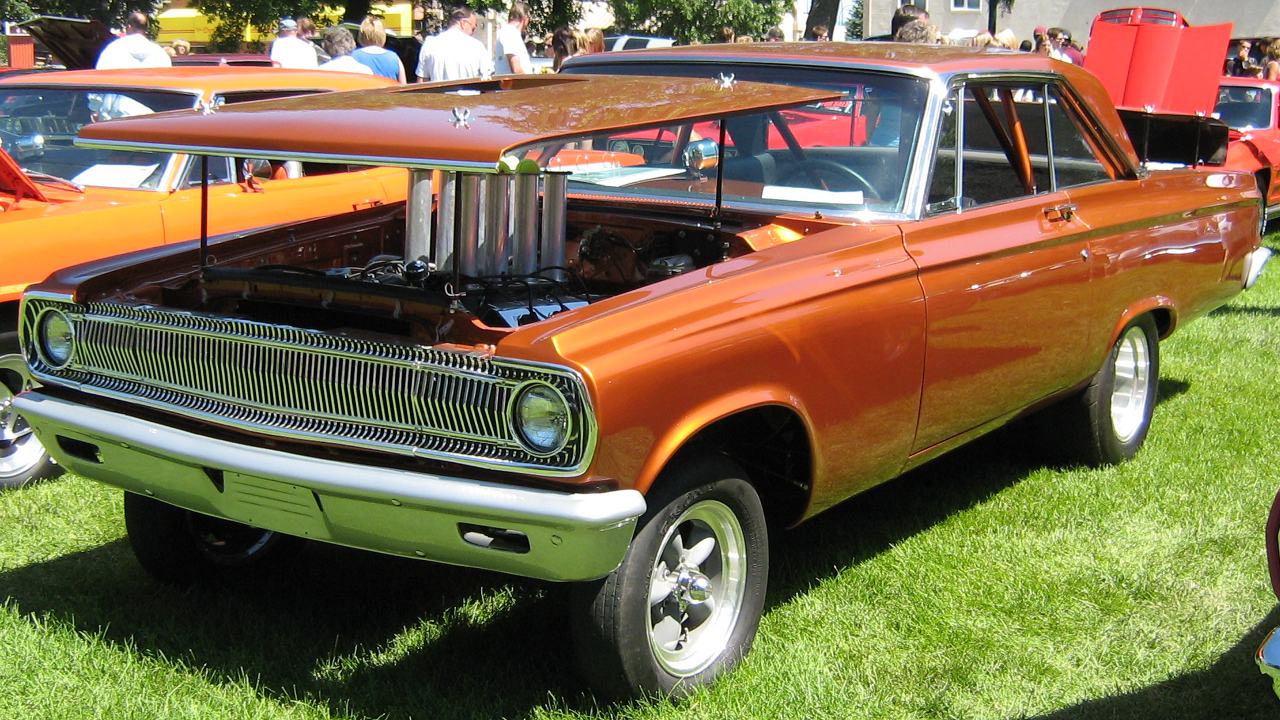
The Dodge Coronet R/T 440 sits at the intersection of Detroit muscle and collectible investment, a car born in the late 1960s horsepower race and now tracked as closely on auction blocks as it once was on drag strips. I want to look at when Dodge actually sold the Coronet R/T with the 440 engine, how rare those cars were in period, and what serious collectors are paying for them today.
From production figures in the late 1960s to recent valuation guides and auction results, the numbers tell a clear story: the Coronet R/T 440 moved from mid-size performance option to blue-chip classic, with prices that now rival or exceed many better known muscle nameplates.
How the Coronet evolved into the R/T 440
The Coronet nameplate that eventually carried the R/T 440 badge did not start life as a pure muscle car. In the mid 1960s, Dodge positioned the Coronet as a mainstream mid-size line, with four-door sedans described as sleek and practical transportation rather than track weapons. Reporting on the 1965 to 1967 generation notes that the Coronet 440 hardtop sat in the middle of the range, a trim level rather than an engine size, and that styling changes like full-width grille strips and widely spaced headlamps helped reposition the car after what was described as a historic blunder in Dodge’s earlier product planning. That context matters, because the R/T package arrived as a performance overlay on a platform that had been designed to appeal to families as much as enthusiasts.
By 1967, Dodge had turned that conservative base into a serious performance contender. The Coronet R/T package added heavy-duty suspension, performance gearing, and big-block power, including the 440 cubic inch Magnum V8 that would define the model for many buyers. Contemporary analysis of the 1967 Coronet R/T 440 notes that the Magnum engine, fed by a 4-barrel AFB carburetor, was rated at 480 foot-pounds of torque and was more than capable of turning rear tires into smoke. That combination of a relatively understated mid-size body with a very serious big-block engine is what turned the Coronet R/T 440 into a cornerstone of Dodge’s late 1960s performance push.
When Dodge sold the Coronet R/T 440 and how many were built
The Coronet R/T 440 story is anchored in the 1967 model year, when Dodge first offered the R/T package on the refreshed Coronet line. Production figures from that year show how quickly Dodge moved from mainstream mid-size to muscle car contender. In 1967, Dodge sold 179,583 Coronets in total, but only 10,181 were specified as R/T models, and of these, 628 were convertibles. Those exact figures underline how the R/T sat as a relatively rare performance variant within a much larger production run, and they help explain why surviving cars, especially convertibles, command a premium today.
The 440 engine quickly became the default choice for many R/T buyers, even though the 426 Hemi sat above it on the option sheet. Coverage of the 1967 Dodge Coronet R/T in valuation tools highlights that the top-spec 2-door Convertible with the 426cid/425hp dual-quad Hemi now carries a much higher valuation ceiling, but period buyers often chose the 440 for its balance of cost, drivability, and performance. A separate profile of the 1967 Coronet R/T 440 notes that the 440 Magnum, again identified explicitly as a 440 V8, was paired with either an automatic or a 4-speed manual, and that an original Coronet R/T with the 440 V8 and an automatic transmission sat at the bottom of the value range for the model, reinforcing how central that engine was to the car’s identity.
Performance character of the 440-powered R/T
From a driving perspective, the Coronet R/T 440 was engineered to deliver straight-line speed with enough refinement to serve as a daily driver. Reports on the 1967 Dodge Coronet R/T 440 describe how the 440 Magnum’s 480 foot-pounds of torque, delivered through that 4-barrel AFB carburetor, made effortless acceleration the car’s defining trait. The R/T package added stiffer springs, upgraded shocks, and performance gearing, so the car could translate that torque into real-world pace rather than just wheelspin. In period, this combination put the Coronet R/T 440 squarely in the thick of the muscle car wars, competing directly with big-block Chevelles and Fairlanes.
Later iterations of the Coronet R/T kept pushing the performance envelope, which has fed into collector interest in the entire R/T lineage. Coverage of a 1970 Dodge Coronet R/T 440–6 notes that 1970 was described as another pivotal year for the model, with the 440 engine again at the center of the story. That particular car, equipped with a 440–6 setup, illustrating how, by the end of the production run, the Coronet R/T 440 family had splintered into a mix of mainstream builds and ultra-rare configurations that now attract intense scrutiny from collectors.
What price guides say Coronet R/T 440s are worth
To understand what collectors pay today, I start with structured valuation tools that aggregate auction and private-sale data. A dedicated valuation entry for the 1967 Dodge Coronet R/T Convertible with the 426cid/425hp Hemi lists a top figure of $164,000 for a 2-door car in the best condition. That number does not apply directly to 440-powered examples, but it sets the upper boundary of the Coronet R/T market and shows how far values have climbed for the most desirable specifications. The same valuation entry notes that the most recent auction sale was recorded in 2025 by Bring a Trailer, which confirms that these cars are still trading actively in the current market rather than only appearing in older sales data.
Broader pricing snapshots that group all Dodge Coronet R/T models together, regardless of engine, paint a more nuanced picture. A current listing of Dodge Coronet R/T Pricing shows a Low of $29,500, an Average of $76,784, and a High of $103,998. Those figures, presented alongside details such as make and model, indicate that a driver-quality 440-powered R/T can still be found under the six-figure mark, while well-restored or particularly original cars are now comfortably into that territory. When I compare those guide numbers to the Hemi Convertible’s $164,000 ceiling, the 440 cars look relatively attainable, but they are no longer inexpensive entry points into classic Mopar ownership.
Recent auction results and real-world sale examples
Guide values are only part of the story, so I also look at individual auction results to see how 440-powered Coronets actually perform when the hammer falls. A notable example is a 1967 Dodge Coronet 440 R/T that crossed the block as Lot 136 at the Scottsdale Auctions in 2015. That car, explicitly identified as a 1967 Dodge Coronet 440 R/T, was SOLD for $71,500 against an estimate of $80,000 to $100,000, and it was offered without Reserve. That result, from 2015, sits comfortably within today’s Average pricing band and suggests that the market has been relatively strong for well-presented 440 R/Ts for at least a decade.
Other reporting on 1967 Coronet R/T values reinforces that hierarchy within the model range. A detailed look at what a classic 1967 Coronet R/T is worth today notes that at the bottom of the price range is an original Coronet R/T with the 440 V8 and an automatic transmission, while rarer configurations, including Hemi cars and convertibles, sit higher. That same analysis, dated Feb 5, 2021, explicitly references the 440 engine and frames it as the baseline for the model’s value spectrum. When I put that alongside the $71,500 sale of the 1967 Dodge Coronet 440 R/T and the current $29,500 to $103,998 guide range, a pattern emerges: solid, original or correctly restored 440 R/Ts tend to trade in the middle to upper-middle of the overall Coronet R/T market, with only the most exotic or perfectly documented examples pushing toward the very top.
Why rarity, specification, and documentation drive today’s prices
Looking across the data, three factors consistently shape what collectors pay for a Coronet R/T 440 today: how many similar cars were built, which engine and body style the car carries, and how well its history is documented. The production figures from 1967, with 179,583 Coronets built but only 10,181 R/Ts and just 628 convertibles, show how quickly rarity can compound when you start layering options. A 440-powered hardtop will never be as scarce as a Hemi Convertible, but within the 440 pool, specific color combinations, transmission choices, and low-mileage histories can still create meaningful scarcity. That is why a 1970 Coronet R/T 440–6 that claims 1-of-1 Rarity attracts attention, even as experts caution that it Has Too Many Puzzles in its documentation.
Specification and paperwork then translate that rarity into actual dollars. A valuation ceiling of $164,000 for a Hemi Convertible sets the aspirational benchmark, while the $29,500 Low and $103,998 High guide figures for Coronet R/Ts, combined with real-world sales like the $71,500 1967 Dodge Coronet 440 R/T at Scottsdale, map out the realistic range for 440-powered cars. When I weigh those numbers against the Feb 5, 2021 analysis that places an original 440 automatic at the bottom of the R/T price ladder, the conclusion is straightforward: the Coronet R/T 440 has matured into a serious collectible, with entry-level examples already deep into five figures and the best cars pushing toward six. For buyers and owners, the key is understanding exactly where a given car sits on that spectrum of rarity, specification, and proof, because that is what ultimately determines whether a Coronet R/T 440 trades closer to $29,500 or to the top of the current market.