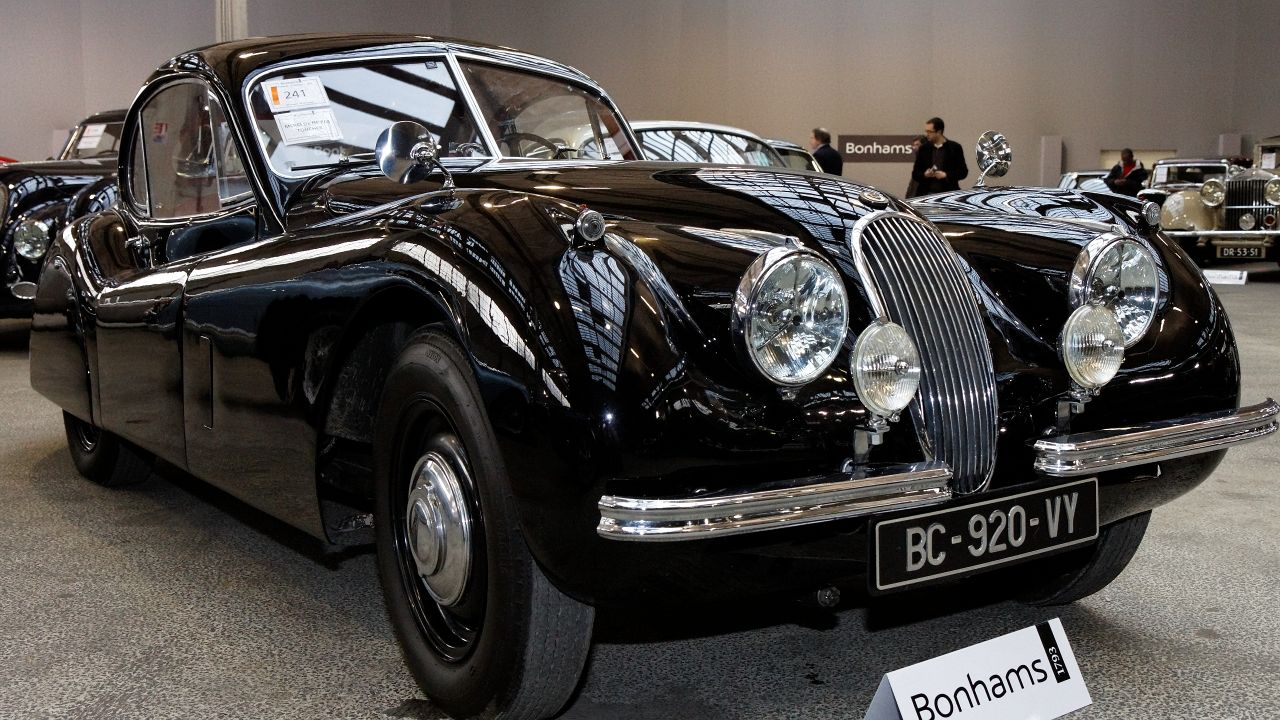
The Jaguar XK120 arrived in the early 1950s as a shock to a Europe still rebuilding, a low, feline roadster that could run flat out on the new high speed highways that were reshaping the continent. With its long bonnet, compact cockpit and a straight six that seemed bred for long distance velocity, it quickly became the car that symbolised how fast a civilian could travel on unrestricted asphalt. When enthusiasts talk about the era when a 1953 Jaguar XK120 ruled the autobahn, they are really talking about the moment when British engineering, post war optimism and raw speed briefly aligned.
The car that made 120 mph feel civilized
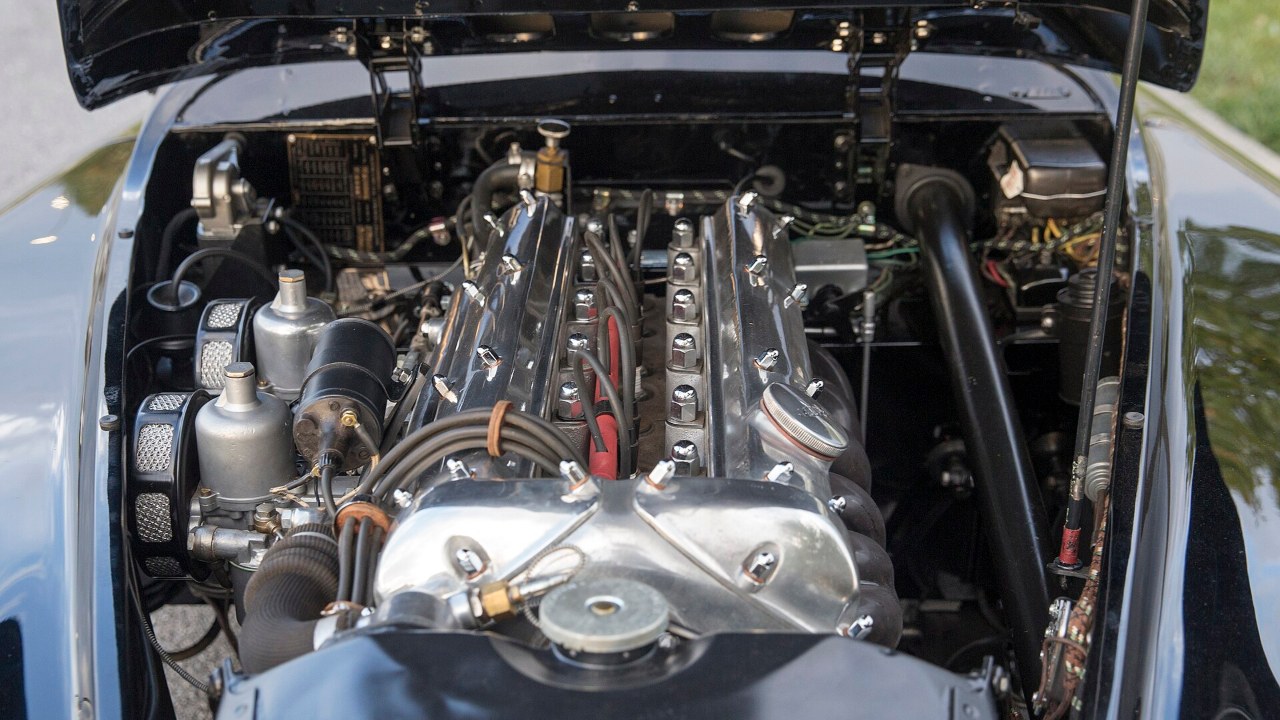
From the outset, the XK120 was engineered around speed rather than styling, even if its curves later defined 1950s glamour. The Jaguar XK120 was introduced in 1948 as what period testers called the fastest production car in the world, capable of reaching 120 m per hour, or 193 km per hour, figures that turned heads in an era when family saloons struggled to crack half that pace. Its sole purpose was to showcase the 3.4-litre straight six engine, a unit that Its makers expected to become the backbone of Jaguar cars for decades, and the chassis, suspension and body were all arranged to let that engine breathe and stretch on long, open roads.
That mechanical focus gave the XK120 a character that felt made for the autobahn and its continental cousins. The engine’s 160 horsepower output, delivered by a 3,442 cc DOHC inline six, worked through a four speed manual gearbox and independent wishbone front suspension that kept the car stable as the speedometer swept past three figures. Period road tests noted that the car would cruise at high speed with a composure that belied its era, something that made it attractive not only to enthusiasts but also to wealthy drivers who wanted to cover serious distance quickly on the growing network of high speed roads in Germany and beyond.
Proving speed on Europe’s fastest asphalt
Before it could claim any autobahn mystique, the XK120 had to prove that its name was more than marketing. Jaguar engineers took a prototype to the Ostend to Jabbeke motorway in Belgium, a stretch of road that functioned as a de facto European speed laboratory, and had it timed by officials from the Royal Automobile club. That test, run on an empty public highway rather than a closed circuit, showed that the car could sustain its claimed velocity in real world conditions, not just on a banked track. The choice of Ostend and Jabbeke, and the involvement of the Royal Automobile officials, underlined how seriously Jaguar treated the business of validating its speed claims.
Jabbeke became a proving ground not just for Jaguar but for rivals who wanted a share of the “fastest car” headlines. On September 25, 1953, in Jabbeke in Belgium, a Pegaso Z 102 Touring BS with a 2.8 litre single supercharged engine, a car derived from an old Barchetta used at Le Mans, set its own high speed marks and grabbed world records recognised by the Royal Automobile Club de Belgique. The fact that both the XK120 and the Pegaso Z 102 chose the same Belgian motorway for their record attempts shows how European manufacturers used public highways to demonstrate that their cars could sustain racing speeds in the same environment where owners would later drive them, including the unrestricted sections of the German autobahn.
From show stand experiment to production icon
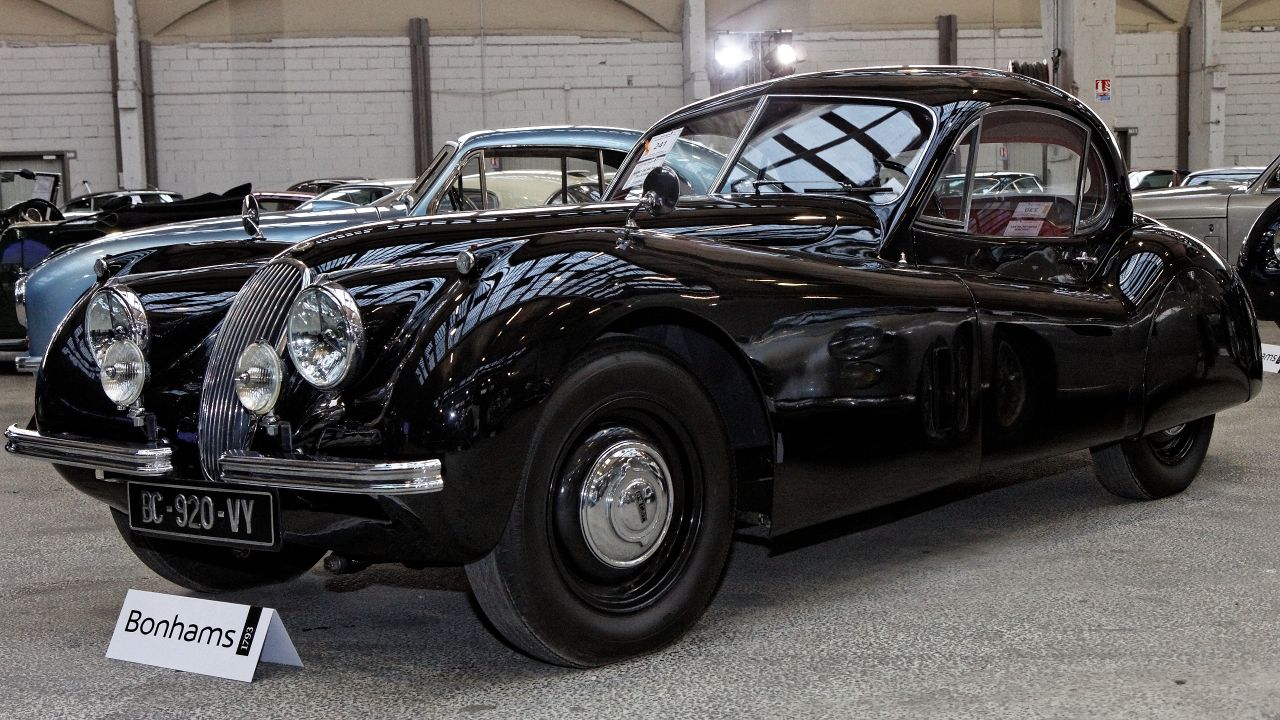
The XK120’s dominance on fast roads is more striking when I remember that it began almost as a temporary showpiece. Its creators originally built it to highlight the new 3.4-litre engine at a motor show, with no firm plan for mass production. Demand from buyers who saw the car and wanted that performance for themselves forced Jaguar to turn the prototype into a production model, and early examples used an aluminium body to speed up the process. Around 200 cars were built with the aluminium body before the company switched to steel, a change that made the car easier to manufacture while preserving the long bonnet and flowing wings that had captivated the public.
As production ramped up, Jaguar broadened the XK120 range beyond the original open two seater that most people picture on an autobahn. Fixed head and drophead coupé models became available in 1952 and 1953, giving buyers who wanted more weather protection a way to enjoy the same performance. Under the skin, the mechanical package remained focused on that 160 horsepower DOHC straight six and its ability to hold high speeds, so whether an owner chose an open roadster or a more enclosed coupé, the car still felt like a machine designed to devour long distances on fast roads rather than a boulevard cruiser.
Celebrity glamour and everyday autobahn reality
The XK120’s reputation on the autobahn was not built on engineering alone, it was also amplified by the people who chose to drive it. Famous XK120 owners included Clark Gable, Gary Cooper, Humphrey Bogart and Tyrone Power, Hollywood names whose enthusiasm for the car helped turn it into a global status symbol. In post war Britain the XK120 was seen as an export hero that brought in foreign currency, but on the continent it became a sign that its owner valued speed and style in equal measure, the sort of driver who might think nothing of crossing borders at triple digit speeds on a weekend trip.
That glamour filtered down to more ordinary enthusiasts who encountered the car on roads and in school car parks. One enthusiast, Roderick Lohrey, later recalled in a discussion that during his last two years of high school in 1970 and 71, a teacher drove a 1953 XK120 roadster, a detail that shows how the car remained aspirational even as newer models arrived. The fact that a two decade old Jaguar could still turn heads among teenagers in the early 1970s speaks to how its autobahn era image of speed and sophistication lingered long after it had been overtaken on paper by newer sports cars.
Design details that made high speed feel special
Part of what made the XK120 feel so at home on fast highways was the way its design balanced drama with usability. A 1953 Jaguar XK120 roadster finished in Carmine Red and Biscuit Connolly leather, a combination noted on a preserved example, shows how the company paired bold exterior colours with rich interiors to make long journeys feel like an occasion. The cockpit was snug but not cramped, with clear instruments and a low seating position that made the driver feel integrated into the car, an important factor when travelling at 193 km per hour on an open stretch of road.
Even as later Jaguars such as the Mk VII saloon carried the brand’s luxury image into larger, more formal bodies, the XK120 remained the purest expression of the company’s early post war performance ambitions. The first time Jaguar was used was as a model name on the S.S. Jaguar 2 ½ Litre sports saloon, and the company name was only later aligned with the leaping cat identity, but by the early 1950s that identity had become inseparable from cars like the XK120. Later commentators have described the Jaguar XK120 as the Worlds Fastest Production Car of the Early 1950s and a testimony to the finest traits of British styling and engineering, and that blend of speed, elegance and engineering rigour is what allowed a 1953 example to feel entirely at home running flat out on the autobahn.
More from Fast Lane Only: