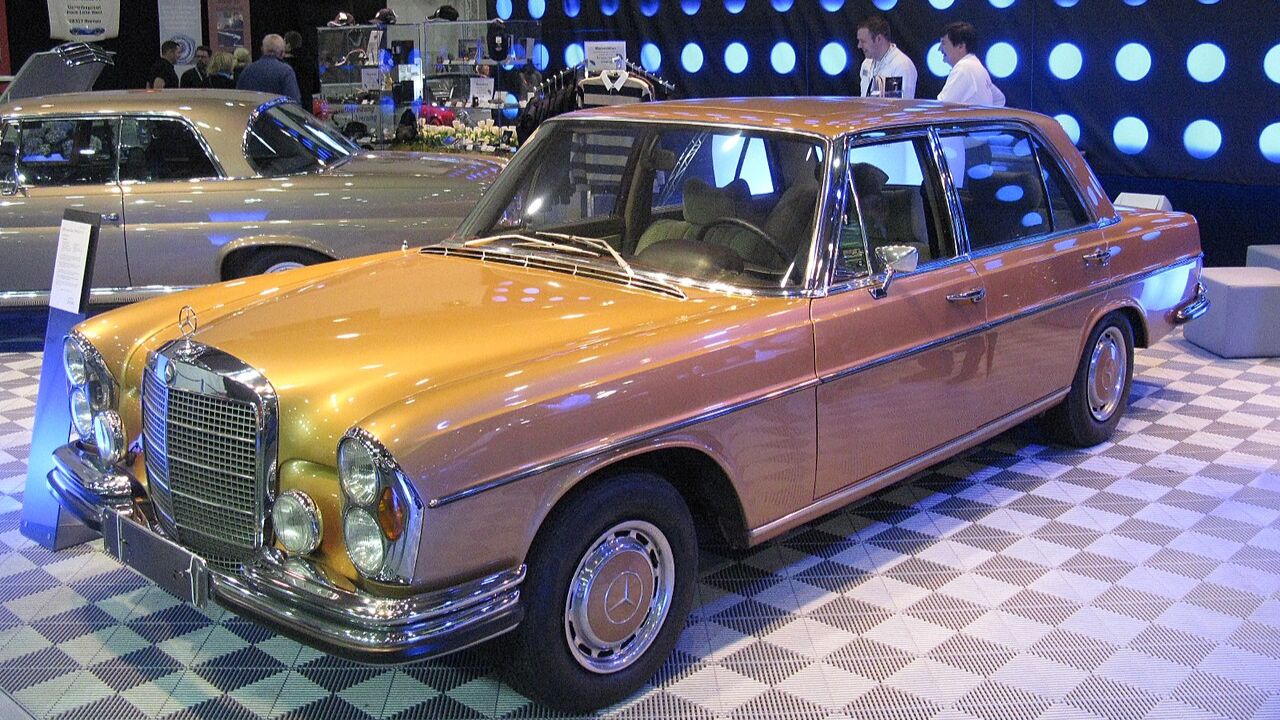
The early 1960s were a turning point for European luxury, and few cars captured that shift as completely as the 1962 Mercedes-Benz 300SE. At a time when most sedans and coupes still felt like upgraded family transport, this flagship arrived as a rolling manifesto for comfort, technology, and quiet status. When I look back at that moment, it is clear why this car briefly sat at the top of the luxury hierarchy and why its influence still lingers in today’s high‑end models.
To understand how the 300SE came to rule its niche, you have to see it not as a single model but as a carefully curated family of saloons, coupés, and cabriolets. Built from 1962 to 1967, these cars were the most expensive Mercedes-Benz automobiles of their era, aimed squarely at buyers who wanted the best and were willing to pay for it. That ambition shaped everything from the engineering hidden under the bodywork to the way the chrome caught the light outside a hotel in Beverly Hills.
The moment Mercedes decided to go all‑in on luxury
By the early 1960s, Mercedes and Benz engineers had already proven they could build durable, comfortable sedans, but the 300SE was where they decided to stretch for something more rarefied. The coupe and cabriolet variants were introduced as halo cars, positioned above the rest of the range and priced accordingly, with the 300SE models described as the most expensive Mercedes-Benz automobiles built between 1962 and 1967. A later profile of a 1967 300SE Cabriolet notes how these cars were deliberately aimed at the wealthy and famous, a reminder that the project was as much about image as it was about engineering, and that the Cabriolet sat at the very top of that pyramid.
Even within the Mercedes lineup, the 300SE had to be visually and technically separated from more modest siblings like the 220 SE. To distinguish it from the similarly constructed W111, the W112 version of the car was upgraded with more luxurious features, including extra chrome, richer trim, and a cabin that leaned heavily into wood and leather. One detailed description of a Bordeaux‑painted example explains how the interior underlines the extraordinary exclusivity of the model and explicitly contrasts it with the 220, underlining how Mercedes-Benz used design to signal that this was not just another fintail sedan.
Engineering a quiet revolution under the skin
For all the polished wood and chrome, the 300SE’s claim to luxury leadership rested on what happened when you turned the key. Under the hood sat a 3.0‑liter inline‑six derived from the company’s racing and sports‑car programs, a powerplant that connected the car directly to the brand’s most glamorous heritage. One investment analysis of the model highlights that the engine came from the 300 SL, describing the 3.0‑liter M189 inline six as an “Engine from the 300 SL” that combined technical sophistication with impressive reliability, and linking it to the famous Gullwing lineage that still captivates collectors.
The numbers behind that engine were impressive for a luxury car of the period. A contemporary enthusiast description notes that the straight‑six was Equipped with state‑of‑the‑art Bosch mechanical fuel injection and delivered a robust 170 horsepower at 5400 rpm, enough to move the big coupe or sedan with real authority on the autobahn. That same account places the car on the opulent streets of Beverly Hills, a fitting backdrop for a machine whose Bosch injection and 170 horsepower were as much about smooth, effortless progress as outright speed.
From Stuttgart showpiece to status symbol
The 300SE’s public debut was carefully staged to reinforce its role as a luxury flagship. In Stuttgart, a special premiere was organized for two premium‑class cars, the coupé and cabriolet, which were presented as four‑seater grand tourers with cutting‑edge comfort and safety. The event, held in the city that was and remains the brand’s home, underlined how seriously Mercedes treated these models, with the Stuttgart presentation framing them as the pinnacle of modern automotive construction.
That positioning carried through into the way the cars were marketed and remembered. Later historical pieces describe the coupé culture and cabriolet fascination of the period, noting that the luxury‑class cabriolet opened the door to a world of open‑air motoring that still felt formal and restrained rather than flashy. One retrospective even calls the cabriolet the ultra of modern automotive construction, a phrase that captures how the 300SE’s two‑door variants were seen as the purest expression of the brand’s luxury ambitions, with the Coupé and cabriolet pairing giving well‑heeled buyers a choice of roofline without sacrificing prestige.
Why the 300SE still feels rarefied today
Part of the 300SE’s mystique today comes from how few were built and how carefully they were specified. A detailed production breakdown notes that only 708 units of the open version were produced, making the cabriolet the most exclusive variant of all, while a larger but still limited number of coupés were built from 1962 to 1967. That scarcity has turned surviving cars into blue‑chip collectibles, and it is no accident that modern valuations of the model emphasize how those 708 units and the broader 300 SE production run have become a benchmark for serious collectors.
That exclusivity is reinforced by the way the market now talks about the car. A modern FAQ aimed at buyers describes THE FAQs for the Mercedes-Benz 300 SE Cabriolet, noting that The Mercedes 300 SE Cabriolet (W112) was produced from 1962 to 1967 and highlighting its air suspension, power steering, and high‑end trim as key selling points. The same guide points out that the Cabriolet is worth significant six‑figure sums today, a reminder that the Cabriolet has moved from aspirational new car to blue‑chip classic without losing its aura of quiet wealth.
The fintail sedan and the end of an era
It is easy to focus on the glamorous two‑door cars, but the 300SE story also runs through the so‑called “fintail” sedans that carried executives and dignitaries in period. A surviving 1962 Mercedes-Benz 300 SE sedan, sometimes called a Fintail, is described as an extremely rare find and an ideal restoration candidate, finished in white with a red interior that captures the era’s taste for contrast. A video walk‑around of that car underscores how the Nov listing of a 300 SE sedan still generates excitement among enthusiasts who know how unusual it is to see one in restorable condition.
The broader sedan range was reshaped in the mid‑1960s, which only adds to the 300SE’s sense of being a high point. In the summer of 1965 the W 111 and W 112 tailfin saloons were superseded by model series W 108, and only the 230 S model, created as a successor to the 220 S, remained in production for a time. That shift effectively closed the chapter on the fintail era and with it the original 300SE saloons, leaving the later W108 cars to carry the luxury torch while the earlier In the W 111 and W 112 designs became instant classics.
How the 300SE shaped the idea of modern luxury
Looking back now, I see the 300SE as a bridge between old‑world craftsmanship and the modern idea of a technology‑led luxury car. Contemporary commentators have described the W112 as a deeply intelligent and innovative car, pointing out that it was a proper four‑seater with advanced suspension and safety features at a time when many rivals were still relying on older layouts. One enthusiast history even argues that the 300SE cabriolet had it all, combining style, comfort, and engineering in a way that made the Jul assessment of the car sound almost understated.
The model’s legacy is also preserved in detailed ownership histories that trace how these cars were specified and sold. One such account, titled History of the 1961‑1967 Mercedes-Benz W112, notes that The Mercedes 300 SE Coupe was introduced in March 1962 and represented the Best of what the company could offer at the time, complete with options like A/C that were still rare in Europe. That same narrative underlines how the History of the W112 has become a touchstone for collectors who see the car as a template for later S‑Class models.
Racing echoes and the triple triumph
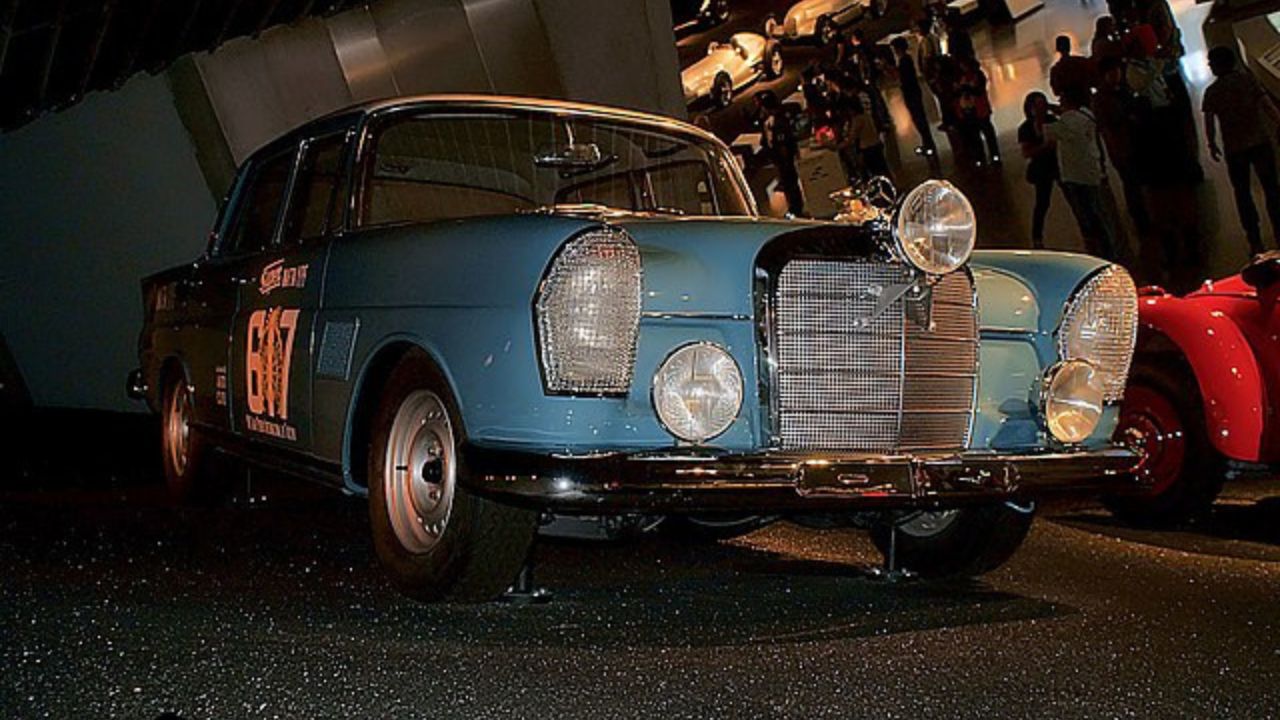
Even in competition, the 300SE managed to project an air of unflappable composure. A retrospective on the model’s motorsport record recalls how something of the 300 SL Gullwing’s beauty could be found at the heart of the 300 SE / W 112 tailfin saloons, which scored a so‑called triple triumph in rallying. That piece highlights how drivers like Ewy Rosqvist and Ursula Wirth, along with Maria Falk (number 609), used the car’s durability and speed to dominate their class, turning the supposedly staid Anyway sedan into an unlikely competition hero.
Those rally wins fed directly back into the car’s image on the road. When potential buyers saw a 300SE parked outside a hotel or gliding along a mountain road, they were looking at a machine that shared its heart with the Gullwing and its suspension and brakes with proven competition hardware. That blend of quiet luxury and real performance is why, even today, a well‑kept 300SE coupe or cabriolet feels less like a museum piece and more like an early draft of the modern luxury car, a role that the Mercedes engineers of the early 1960s seemed to understand instinctively.