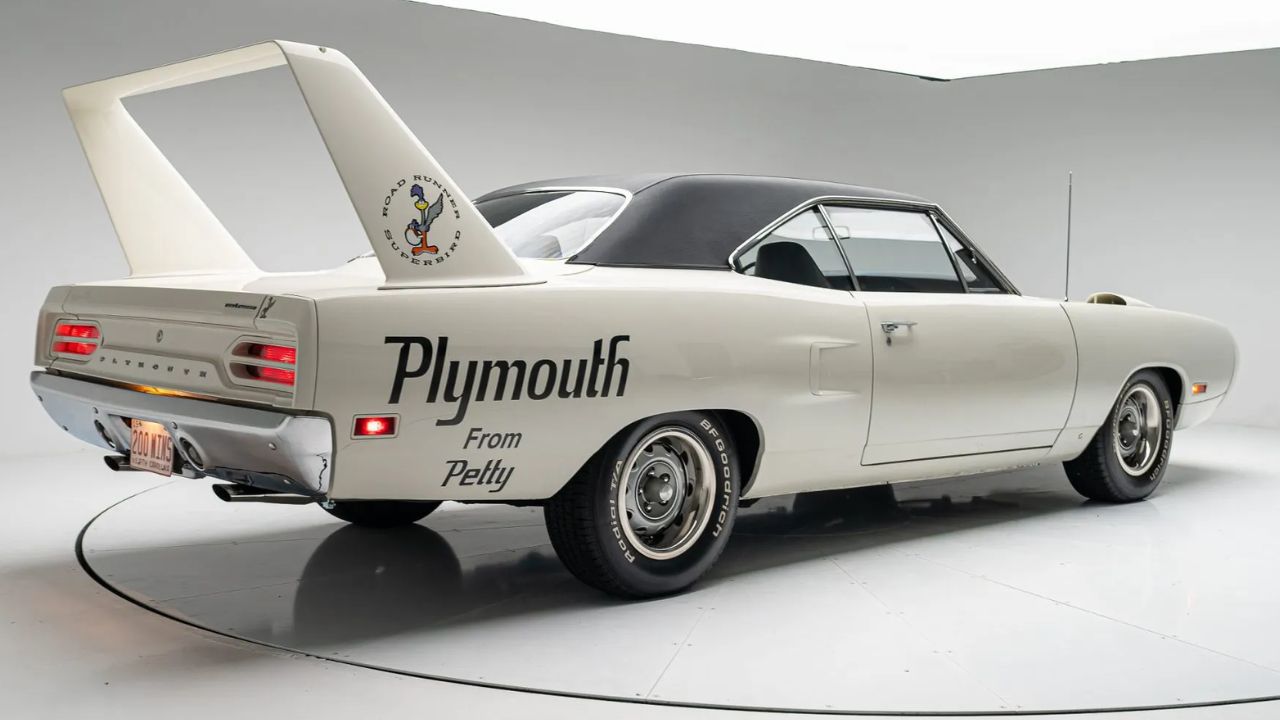
A 1970 Plymouth Superbird with direct ties to Richard Petty has drawn eye‑watering bids, yet it still has not changed hands. The car’s repeated trips across the auction block, each time attracting serious money but stopping short of the seller’s expectations, have turned one of NASCAR’s most famous nameplates into a case study in how far provenance can really push value.
At a time when top‑tier muscle cars continue to command strong prices, this ex‑Petty Plymouth Superbird is testing the upper limits of what the market will bear. The gap between the high bids and the reserve is now as much a part of the story as the car’s racing legend.
Petty’s Superbird: a legend with a reserve
The car in question is a Plymouth Superbird that carries a direct connection to NASCAR icon Richard Petty, a link that instantly sets it apart from standard production examples. It has been presented as an “Ex–Richard Petty 1970 Plymouth Superbird,” a description that leans heavily on its time in the orbit of the driver who made the winged Mopar famous on high‑speed ovals. That history is central to the seller’s pitch, positioning the car as a tangible piece of stock‑car heritage rather than just another restored muscle machine.
According to the listing that invited enthusiasts to “Bid for the chance to own a Ex–Richard Petty 1970 Plymouth Superbird” on Bring a Trailer, the car was marketed squarely at collectors who value both rarity and story. The auction on Bring a Trailer, which is known for high‑profile vintage and classic cars, underscored the Petty connection in its description of the Plymouth Superbird and its period‑correct presentation. A separate report on a 1970 Plymouth Superbird once owned by Richard Petty confirms that the car carried his name into the online sale on Bring a Trailer, reinforcing that the provenance is not a vague claim but a documented part of the car’s identity.
Record‑level bids, but no sale
Despite that pedigree, the Superbird has now failed to sell more than once, even as bidding climbed into territory that would qualify as a record for similar cars. Reporting on the latest attempt notes that a 1970 Plymouth Superbird with a direct connection to Richard Petty attracted what were described as record‑level bids yet still left the auction unsold. Another account of the same saga describes how the “Richard Petty 1970 Plymouth Superbird Falls Short Again at Auction Despite Record Bid,” making clear that this was not a one‑off disappointment but a pattern of near‑misses.
One summary of the car’s recent history points out that the Superbird had previously been offered with an asking price of $699,995 before returning to auction, a figure that helps explain why even aggressive bidding has not met the reserve. The Bring a Trailer listing for the Ex–Richard Petty 1970 Plymouth Superbird shows that the car drew intense attention from bidders, while a separate report on a Plymouth Superbird once owned by Richard Petty notes that the high bid on Bring a Trailer still ended with “Reserve not met.” Taken together, the coverage paints a picture of a seller who is holding firm on a valuation that sits above what the current pool of buyers is willing to commit, even for a car with this level of fame.
How this Superbird stacks up against the broader market
To understand why the car keeps stalling just short of a deal, it helps to compare the bids it is attracting with the wider Plymouth Superbird market. According to Classic.com data cited in one analysis, the average selling price for a 440 4‑barrel Superbird is $225,100, a benchmark that reflects actual transactions rather than ambitious asking prices. That same report notes that the market for these cars is “alive and well,” but it also stresses that the very highest prices are typically reserved for the most desirable specifications, particularly the Hemi‑equipped examples that sit at the top of the hierarchy.
Another detailed look at recent sales points out that “Only a small number have surpassed $300,000 in recent public sales, with most of those featuring the more desirable” engines and configurations. Against that backdrop, the Petty‑linked Plymouth Superbird is being positioned at a level that significantly exceeds both the $225,100 average for a 440 car and the $300,000 threshold that only a handful of top‑spec examples have cleared. One commentator framed the situation bluntly by noting that the owner of this Superbird “demands Hemi prices, but there’s a problem,” a reference to the disconnect between the car’s specification and the values typically associated with the very highest‑dollar Superbirds.
Condition, refurbishment, and the provenance premium
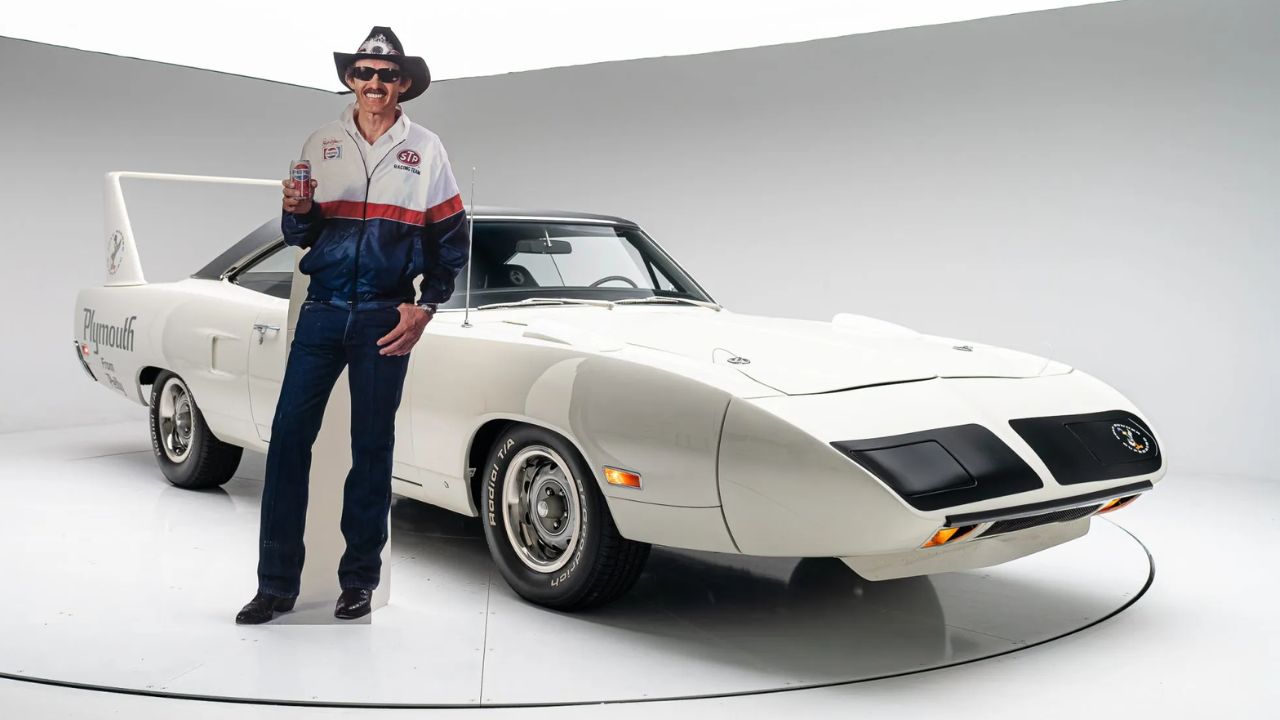
Condition is not the issue holding this car back. Reporting on the Petty Superbird’s presentation notes that it has been refurbished to near‑original condition and is described as a high‑quality example. The car features details such as embroidered seats and other interior touches that align with a careful restoration, and the overall impression is of a Plymouth Superbird that has been brought very close to how it would have appeared in period. For many collectors, that level of work removes the usual excuses about rust, neglect, or incorrect parts that can drag down bids.
The question, instead, is how much of a premium the market is willing to pay for the Richard Petty connection on top of an already strong baseline value for a well‑restored Superbird. The Bring a Trailer listing that invited enthusiasts to Bid for the car leaned heavily on the Petty story, and subsequent coverage of the unsold result highlighted that the car’s famous association was central to its pitch. A separate analysis of the Plymouth Superbird with a direct link to NASCAR legend Richard Petty emphasized that the car carried tributes to its famous association, underscoring that the provenance is not subtle. Yet the repeated “Reserve not met” outcomes suggest that while buyers are willing to stretch for the story, there is a ceiling to how far that narrative alone can push the price.
What the stalled sale says about today’s collector market
From my perspective, the saga of this Plymouth Superbird shows how disciplined today’s high‑end buyers have become, even when presented with a car that ticks nearly every box on paper. The market data around 440 cars at $225,100 on average, and the reality that only a small number of Superbirds have broken $300,000, give bidders a clear frame of reference. When a seller anchors expectations closer to a $699,995 asking figure, the gap between aspiration and precedent becomes hard to bridge, even with Richard Petty’s name on the paperwork.
The repeated no‑sale outcomes also hint at a broader shift in how collectors weigh provenance against fundamentals like specification, originality, and documented competition history. In this case, the car is a Plymouth Superbird with a strong story and a careful refurbishment, offered on a high‑visibility platform like Bring a Trailer and backed by coverage that repeatedly highlights its NASCAR and Richard Petty ties. Yet the market has effectively voted that the premium for that story has a limit. Until either the reserve moves closer to the established bands around $225,100 and $300,000, or buyers decide that Petty’s signature is worth a step change in valuation, this Superbird is likely to keep drawing huge bids and rolling back into storage unsold.
More from Fast Lane Only: