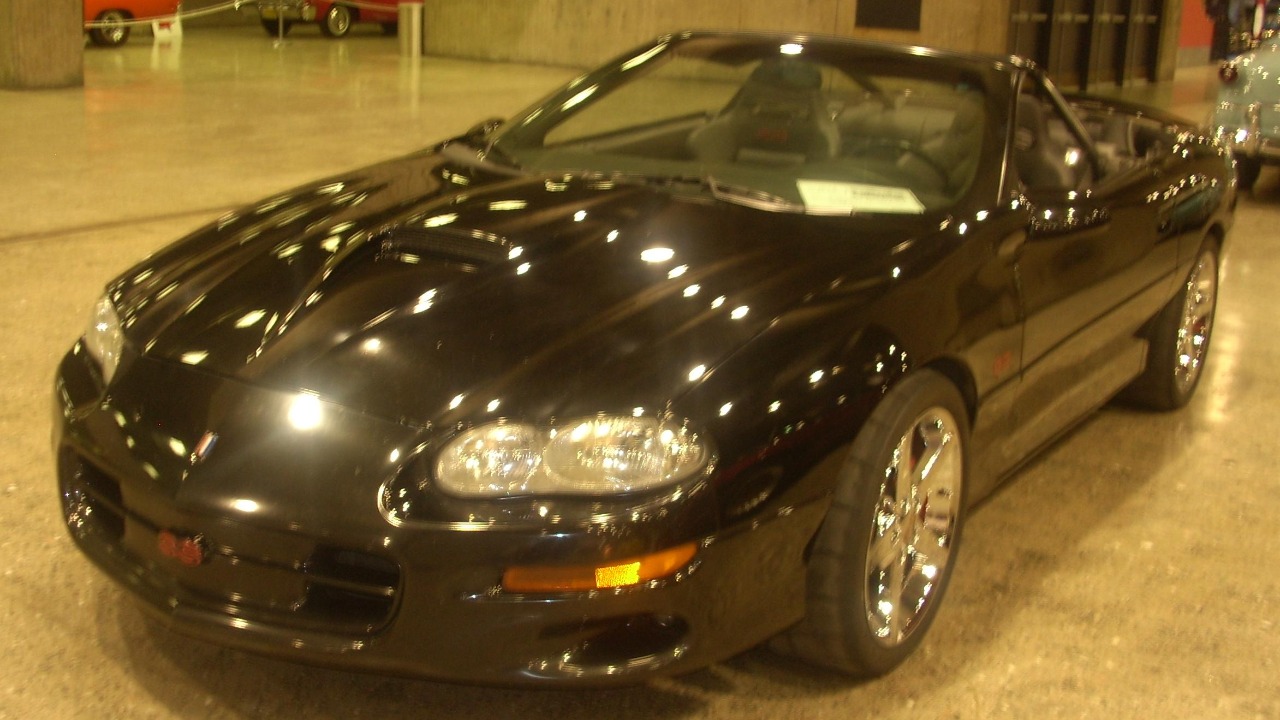
At a moment when traditional muscle cars were slipping off showroom floors and into history, the 1998 Chevrolet Camaro SS arrived with just enough attitude and technology to keep the flame lit. It paired a new-generation V8 with a sharpened chassis and a sleeker body, proving that big power and everyday drivability could still coexist. Looking back now, I see that car as a bridge between the old-school torque monsters and the modern performance machines that followed.
By the late 1990s, the market for rear-drive coupes was shrinking, but the Camaro SS refused to fade quietly. It delivered the kind of straight-line speed, soundtrack, and presence that defined American performance, while quietly previewing the engineering playbook that would shape performance cars for decades. That is how the 1998 Chevrolet Camaro SS kept muscle alive when it easily could have gone extinct.
The LS1 that rewrote the Camaro’s future
For me, the heart of the 1998 Camaro SS story is the LS1 V8, because that engine did more than add horsepower, it reset expectations for what a muscle car could be. In base Z28 trim, the LS1 was already rated at 305 horsepower, and the Chevrolet Camaro SS turned that foundation into something even more serious, sharing its basic formula with the similarly equipped Pontiac Fi sibling. That kind of output, combined with a relatively light, compact small-block, gave the SS the sort of performance that could embarrass more expensive sports cars while still feeling approachable to drive every day.
The LS1 itself was not just another revision of an old design, it was the lead entry in a new family of V8s that General Motors treated as a clean-sheet project. Debuting in the late 1990s as a 5.7-liter aluminum-block engine, it was significantly lighter than the old iron-block truck engines, yet it delivered more power and better efficiency. In the Camaro SS, that meant a car that pulled hard to redline but did not punish its owner at the pump, a balance that helped keep V8 performance relevant even as fuel economy and emissions standards tightened.
From an ending to a rebirth of muscle
What makes the 1998 Camaro SS so compelling to me is that it arrived just as the traditional F-body platform was nearing its end, yet it planted the seeds for a new era of performance. The LS1 was framed as the centerpiece of a story that could be summed up as From An Ending to a Rebirth, because the technology and architecture it introduced would later power everything from Corvettes to modern Camaros long after the original F-body left production. In that sense, the 1998 SS was both a last hurrah and a quiet prototype for the performance cars that followed.
That dual role mattered in a market where Even the broader sports car segment was seeing double-digit sales declines, as noted when Even enthusiasts were starting to drift toward trucks and SUVs. By delivering cutting-edge powertrain engineering in a familiar coupe body, the Camaro SS showed that muscle cars could evolve instead of simply aging out. That message, backed by real performance, helped justify the eventual return of high-powered V8 coupes in the 2000s and 2010s.
Styling, chassis, and the “catfish” that could corner
Visually, the 1998 refresh gave the Camaro a smoother, more aerodynamic face that fans quickly nicknamed the “catfish,” and I have always thought that nickname undersells how cohesive the design really was. The updated front end, revised lighting, and cleaner lines helped The Camaro look more modern without abandoning its long-hood, short-deck proportions, and a contemporary review noted that The Camaro retained its strength under the hood while gaining a more refined look. That combination of familiar stance and fresh detailing helped the SS stand out in traffic at a time when many coupes were starting to blur together.
Underneath, the SS package sharpened the already capable F-body chassis with stiffer suspension tuning and better grip, turning the car into more than just a straight-line bruiser. A later comparison that strapped a modern SS to a dyno found that After a single pull the contemporary car delivered After 358 horsepower at the wheels, underscoring how much real-world performance the platform could handle. Anti-lock brakes were standard on all Camaros by this era, and a limited run of earlier SS models had already reached 330 horsepower, so the 1998 SS sat at the intersection of rising power and improving control, a sweet spot that made it feel surprisingly composed on a back road.
Living with an SS: speed, comfort, and real-world manners
What keeps the 1998 Camaro SS relevant in my mind is how livable it was, even as it chased quarter-mile times. Period testing highlighted that the car could cruise at highway speeds with a level of efficiency that would have shocked earlier muscle car owners, with one evaluation pointing out that at a steady 75 m ph the SS could return fuel economy that made it a realistic daily driver. That blend of long-legged gearing and LS1 torque meant you could lope along in top gear, then roll into the throttle and feel the car surge forward without a downshift frenzy.
From behind the wheel, owners and testers alike have described the 98 SS as one of the nicest-driving fourth-gen F-cars, with a suspension that bites harder in corners yet remains docile at part throttle. A later deep dive into a modified example summed it up by noting that the 98 SS could feel almost tame in traffic, then wake up instantly when prodded. That dual personality is exactly what helped keep V8 performance cars viable for buyers who needed one vehicle to handle commuting, road trips, and weekend blasts.
Legacy, collectability, and why the ’98 still matters
Two decades on, I see the 1998 Camaro SS gaining the kind of respect that often comes late to cars that were once just affordable speed. Factory literature now highlights key milestones in the Camaro story, including the moment when the 1996 Camaro SS topped 300 horsepower for the first time since the early 1970s and the model’s selection as the Indianapolis 500 pace car earlier in the decade, and the LS1-powered SS fits neatly into that heritage as the car that carried the torch into a new technical era. That continuity of performance, from the early big-blocks to the LS engines, is a big part of why collectors are starting to pay closer attention to clean fourth-gen cars.
The market is already reflecting that shift, with examples like a low-mileage 1998 Chevrolet Camaro SS for sale described as With Only 17,324 Original Miles, this 98 Camaro is Ready to Drive, emphasizing how survivors are now prized for their originality. Auction listings talk up how This Camaro is an impressively equipped, genuine American sports car and note Features like performance suspension and limited-slip differentials, as seen in one This Camaro convertible that came with full service records. Those details show how the SS has shifted from used-car bargain to recognized modern classic.
How the 1998 SS feels from today’s driver’s seat
When I look at how enthusiasts interact with the 1998 Camaro today, what stands out is how contemporary the car still feels from behind the wheel. A modern video review of a “catfish” Z28 captures that vibe perfectly, with the host in Jun taking the car out for a spirited drive and discovering that the chassis, steering, and power delivery still feel engaging by current standards, as seen in the Jun clip that has circulated widely among fans. That kind of real-world feedback matters, because it shows that the SS is not just a nostalgia piece, it is a car you can still enjoy hard on a back road without feeling like you are wrestling an antique.
The engine helps there too, because In the Camaro the LS1 was tuned for a broad, usable powerband that suits modern traffic as well as weekend fun. One auction listing notes that in the Chevrolet Camaro the LS1 delivered consistent, strong performance wrapped in a sporty design characteristic of the fourth generation, a point underscored in the description of a In the Camaro LS1 example offered in Europe. When I put all of that together, I see the 1998 Camaro SS as the car that proved muscle could adapt, stay quick, and still feel relevant long after its original showroom moment passed.
More from Fast Lane Only: