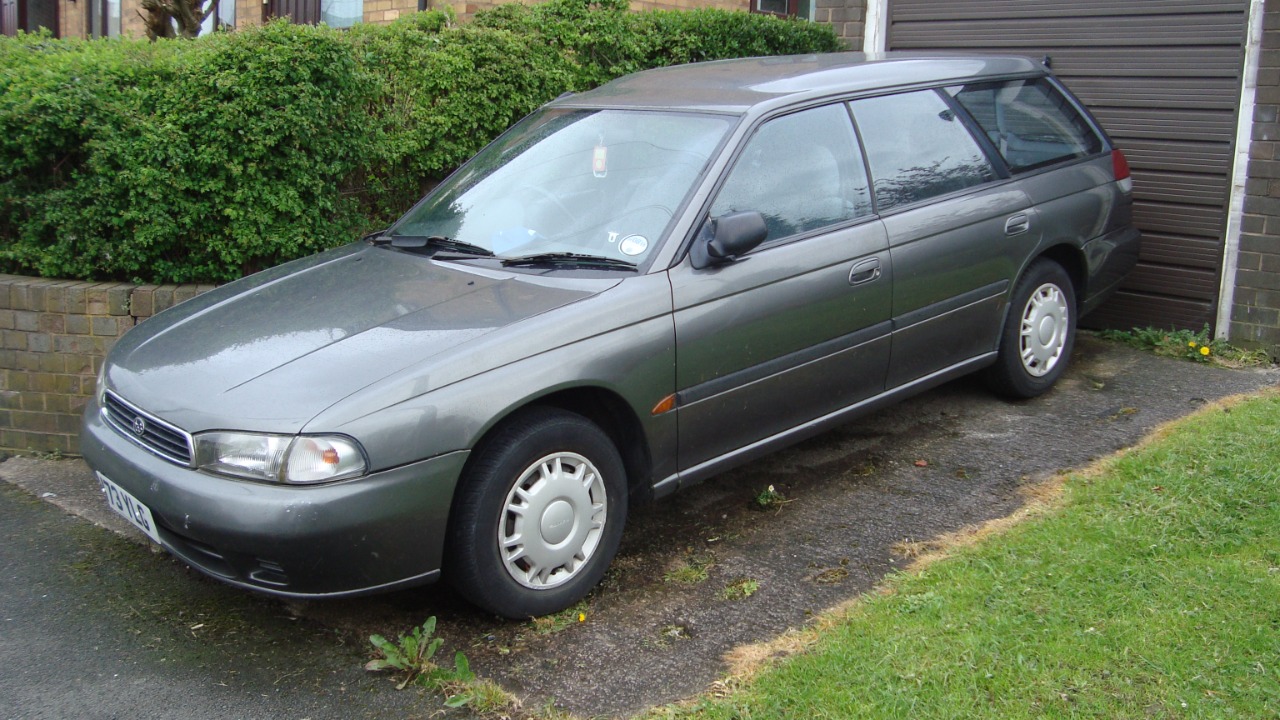
The 1995 Subaru Legacy GT arrived at a moment when all-wheel drive was still treated as a niche feature, more farm tool than performance hardware. By pairing permanent traction with a genuinely engaging chassis and a practical wagon body, it helped turn Subaru’s system from a snow-belt secret into something enthusiasts and families could both brag about. I see that car as the point where Subaru stopped merely offering AWD and started proving it could be the heart of a modern, desirable flagship.
To understand how that happened, it helps to trace where the Legacy came from, how the second generation sharpened the formula, and why the 1995 GT in particular still echoes through owner stories and internet lore. The result is a car that did more than survive harsh winters, it quietly rewrote what people expected from an affordable all-wheel-drive sedan or wagon.
From quirky 4WD to flagship ambition
Before the 1995 Subaru Legacy GT ever existed, the original Legacy had already signaled that Subaru wanted to move beyond its reputation for small, utilitarian 4WD runabouts. The worldwide introduction of the first-generation Legacy in 1989 put a more refined sedan and wagon on the map, aimed at buyers who might otherwise have shopped mainstream family cars with a V6 or V8 engine. Subaru still leaned on its trademark flat-four, but the message was clear: this was no longer just a quirky rural tool, it was a serious contender in the mid-size class.
Over time the Legacy became the maker’s flagship car, unique in its class for offering all-wheel drive as a standard feature and pairing it with Subaru’s traditional boxer engine. That combination of low-slung powertrain and full-time traction set the stage for a different kind of family car, one that promised stability and grip without demanding SUV compromises. By the early 1990s, Subaru had the bones of a credible AWD flagship; what it needed was a version that could make enthusiasts sit up and take notice.
The second-generation leap and the arrival of the GT
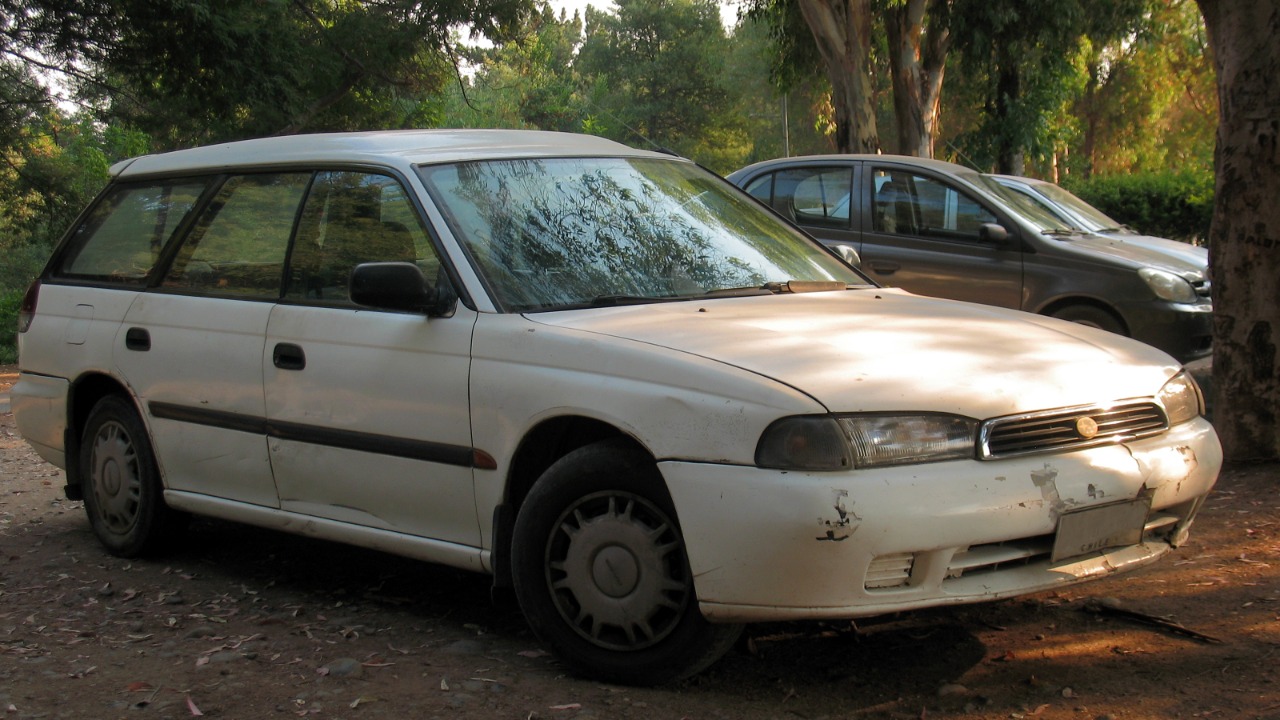
The second-generation Subaru Legacy arrived in Japan in the early 1990s, and by the 1995 model year it was the face of Subaru’s mid-size push in key export markets. The redesign brought cleaner styling, a stiffer structure and more sophisticated suspension tuning, all of which mattered once power and grip started to climb. In the United States, Subaru introduced this second-generation Legacy as both a sedan and a station wagon for the 1995 model year, and crucially, it used the GT badge to signal a more performance-oriented take on the formula.
That GT badge was not just decoration. In the home market, the Legacy GT was associated with a twin-turbo engine and an all-wheel drive configuration that underlined how serious Subaru was about combining speed and traction. A later auction listing for a 1995 Subaru Legacy GT Wagon notes that, In the United States, Subaru leaned on that image even when local cars did not share the exact same twin-turbo specification. The point was to connect the family wagon in the driveway to a broader story of rally-bred engineering and confident all-weather performance.
How Subaru turned AWD into a selling point
What made the 1995 Legacy GT so important is that it arrived just as Subaru was learning to market all-wheel drive as more than a winter survival tool. The company had spent years refining its systems and, as one historical overview notes, Subaru kept making enhancements while also branding AWD and 4WD as central to its identity. The Legacy GT, with its mix of comfort and pace, gave that branding a tangible, aspirational product that owners could point to as proof that AWD belonged in the mainstream.
Under the skin, Subaru’s approach was more nuanced than a simple “all wheels, all the time” slogan. Technical explainers have highlighted how Subaru has for many years quietly offered different AWD systems in the same car, from active torque split automatics to 50–50 manual setups with viscous couplings to limit slip. In practice, that meant a 1995 Legacy GT could feel planted and predictable in bad weather yet still reward a keen driver on a dry back road, a dual personality that helped move AWD from a purely functional checkbox to a core part of the driving experience.
Real-world grip: owners, testers and the snow-belt verdict
On paper, the 1995 Legacy GT’s all-wheel drive looked promising; on the road, it built a reputation that still shows up in owner anecdotes. One long-time driver described how their parents lived in Eagle River Wisconsin and how, After college in Duluth MN, they made countless trips “up north” in a Legacy wagon, praising the way the car clawed through snow and ice. That kind of testimony, from people who depended on the car in harsh conditions, did as much to cement Subaru’s AWD credibility as any brochure.
Professional testers reached similar conclusions. In a period road test, Motorweek noted that buyers clearly desired all-wheel drive station wagons that retained traditional Subaru strengths, and the Legacy wagon delivered with secure handling and confident traction. Even decades later, forum posts about a used 1995 Legacy Wagon emphasize that it does NOT SMOKE, the transmission is in like new condition, and that Everything in the car works, with owners suggesting that, When maintained, a Subaru and its drivetrain can run high mileage without major issue. That durability, combined with surefooted behavior, turned the Legacy GT from a spec-sheet curiosity into a trusted tool.
Why enthusiasts still argue for the 1995 Legacy GT
For all its practicality, the 1995 Legacy GT also carved out a quiet following among enthusiasts who saw it as a sleeper. On one enthusiast forum, a proud owner boasts, “I’ve got a GT that’ll blow the doors off an STi!” which captures the underdog charm that still surrounds these cars. In JDM circles, a thread titled “95 legacy or 98 civic?” features a Comments Section where one user simply shouts “LEGGY BOI,” a tongue-in-cheek endorsement that still reflects genuine affection for the model’s blend of speed and traction.
Part of that appeal comes from how Subaru positioned the trims. A period overview notes that Only the base L came standard as front-wheel drive, with Only the L offering AWD as an option, while higher versions like the Legacy GT made all-wheel drive standard. That meant choosing the GT was not just about more equipment, it was a statement that you valued the full Subaru AWD package, something that still resonates with drivers who prioritize grip and balance over outright horsepower numbers.
AWD as identity, not just hardware
By the mid-1990s, Subaru had begun to treat all-wheel drive as a core technology rather than a bolt-on feature, and the 1995 Legacy GT was one of the clearest expressions of that strategy. Analysts have pointed out that Subaru takes a different approach from rivals like Toyota, focusing on specialized core technologies refined over decades, which improves the driving experience but also presents specific engineering challenges. The Legacy GT showed how that focus could pay off, delivering a car that felt cohesive, from its boxer engine to its traction systems.
That cohesion is part of why Subaru’s AWD still inspires loyalty. On one enthusiast Q&A, a driver asks what is so special about Subaru AWD, and the top response notes that, Given the cost, the levels of grip and handling are pretty high, adding that they Given the system a lot of credit after a surprise in a high-speed corner. That kind of real-world validation is exactly what the 1995 Legacy GT helped generate, turning AWD from a line in a brochure into something drivers could feel and trust every day.
The long tail of reliability and maintenance
Any car that builds a reputation for all-weather confidence also has to prove it can survive years of hard use, and here the 1995 Legacy GT’s broader family has a strong record. Owners of similar 1995 Legacy models often trade maintenance tips, with one guide noting, IIRC 60k miles for the timing belt and recommending replacement of idlers and cam seals at the same time so the car can go for 250k+ miles reliably. That kind of longevity matters when a car is expected to slog through winters and long highway runs year after year.
Even outside Subaru-specific circles, the brand’s AWD reputation shapes buying decisions. In one comparison thread, a shopper weighing a 1995 Legacy against a late-1990s compact is nudged toward the Subaru by fans who value its traction and character, with one commenter simply writing LEGGY as a vote of confidence. For me, that kind of grassroots advocacy is the clearest sign of what the 1995 Legacy GT accomplished: it turned Subaru’s all-wheel drive from a technical specification into a shared belief that, with the right car, bad weather and rough roads are just part of the fun.
Why the 1995 Legacy GT still matters in the AWD story
Looking back, the 1995 Legacy GT sits at a crossroads between Subaru’s early, utilitarian four-wheel-drive wagons and the turbocharged performance icons that followed. It took the company’s maturing AWD technology, wrapped it in a second-generation body that felt genuinely modern, and sold it as a flagship that families and enthusiasts could both justify. That balance helped prove that all-wheel drive could be central to a car’s identity, not just an option box for people who lived near ski resorts.
Today, when I see a well-kept 1995 Legacy GT Wagon still tackling winter commutes or weekend road trips, I am reminded how much of Subaru’s current AWD credibility was earned by cars like this one. It was not the loudest or the fastest machine of its era, but it quietly convinced a generation of drivers that full-time traction, a boxer engine and a practical body could add up to something special, long before crossovers took over the world.
More from Fast Lane Only: