The 2009 Corvette ZR1 arrived as a shock to the supercar establishment, pairing American V8 muscle with the kind of speed and precision usually reserved for six-figure exotics. It was not just another fast Corvette, it was the moment Chevrolet pushed its long-running sports car into territory traditionally guarded by Ferrari, Lamborghini, and Porsche. I see that leap as a turning point, when the Corvette stopped chasing European benchmarks and started challenging them on equal terms.
The leap from sports car to supercar
By the late C6 generation, the standard Corvette was already quick, but the ZR1 represented a deliberate attempt to cross the line into true supercar performance. Chevrolet developed a new, supercharged LS9 V8 specifically for this car, and internal figures from Corvette Stats describe it as the “New, Supercharged LS9 V-8” that is the “Heart of the” ZR1, underscoring how central that engine was to the project. Factory specifications list output at 638 Horsepower and 604 lb-ft of Torque, numbers that, at the time, put the car in direct contention with European flagships that cost far more.
Performance metrics backed up the spec sheet bravado. Contemporary testing and analysis describe a power-to-weight figure of 5.2 pp, a ratio that placed the ZR1 squarely in the realm of low-production exotics rather than mass-market sports cars. Reporting on the model’s capabilities notes that the new ZR1 had a top speed of over 200 miles per hour, a psychological and technical threshold that only a handful of road cars had crossed at the time. When I look at those figures in context, it is clear that Chevrolet was not just building a quicker Corvette, it was engineering a car to sit in the same performance conversation as the most vaunted European machines.
Engineering that could run with Europe’s best
Raw power alone does not make a supercar, and the 2009 ZR1’s engineering package shows how seriously Chevrolet treated the rest of the equation. The LS9’s output demanded serious braking and chassis hardware, and the car arrived with carbon-ceramic brakes supplied by specialists like Brembo, a component choice that had previously been the preserve of ultra-expensive European models. The ZR1 also used extensive carbon fiber in its bodywork, including the hood and front splitter, to trim weight and manage airflow, a strategy that aligned it with the construction methods of contemporary European supercars rather than typical American muscle.
Historical overviews of the C6 generation note that the ZR1, described explicitly as “Surpassing even the Z06 as the ultimate C6,” firmly pushed the Chevrolet Corvette into the supercar class. Another detailed history of the C6 ZR1’s development stresses that Its return marked a bold statement from Chevrolet, explicitly challenging established European supercars on their own turf. When I connect those assessments with the hardware choices, the picture that emerges is of a car engineered from the outset to be judged against the best from Europe, not just as a value alternative but as a peer.
On-road behavior: brutal numbers, mild manners
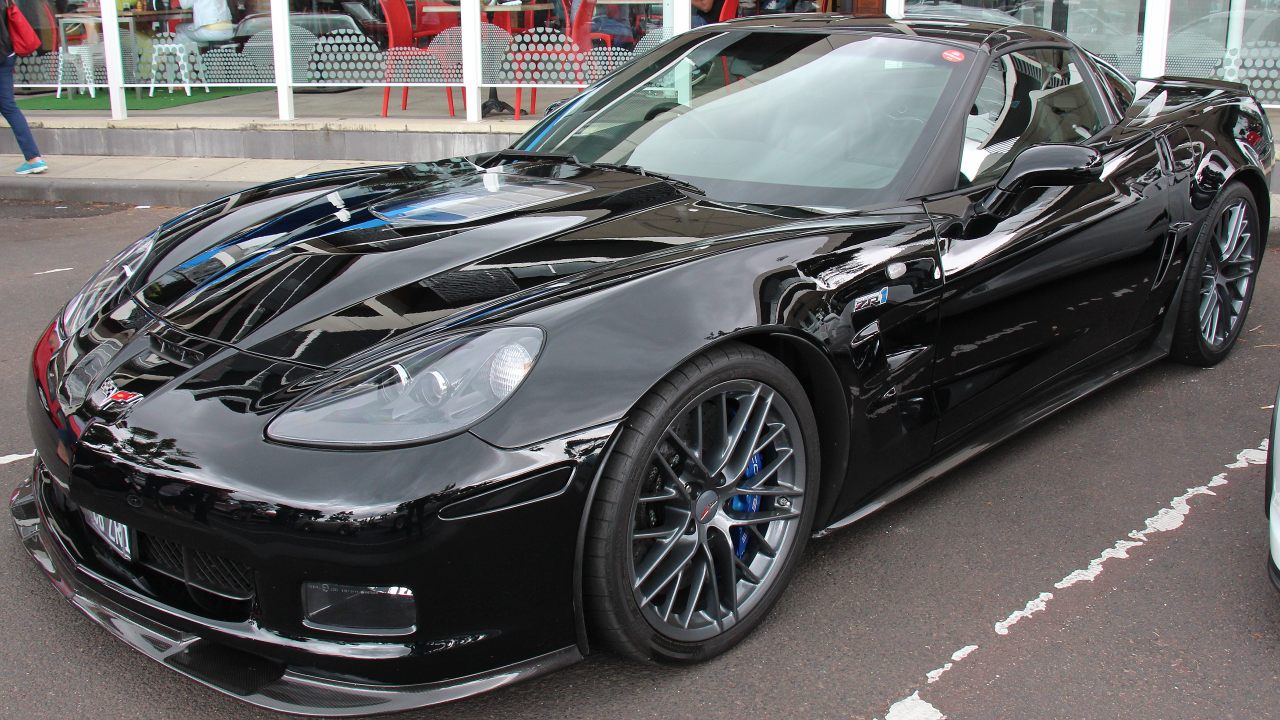
What impressed many early drivers, and still stands out to me, is how the ZR1 combined extreme performance with everyday usability. First-hand driving reports describe the 2009 Corvette ZR1 as “Detroit’s mild-mannered supercar,” a phrase that captures the way it could deliver 638 horsepower and 604 lb-ft of torque without feeling unruly or intimidating in normal traffic. The same testing that documented its 5.2 pp power-to-weight ratio also emphasized that, despite those numbers, the car remained composed and approachable, with progressive throttle response and a chassis that communicated clearly rather than snapping at the limit.
Video reviews from the period reinforce that dual personality. A Retro Review of the 2009 Chevrolet Corvette ZR1 from Motor, supported by sponsors like Autovalue and Bumper and Tyerrack, highlights how the car could transition from relaxed highway cruising to ferocious acceleration with a simple flex of the right foot. Another walkaround from Fast Lane Classic Cars in St charles Missouri underscores the same point, noting that while the supercharged V8 and aggressive aero give the ZR1 a track-ready stance, the interior ergonomics and drivability remain familiar to anyone who has spent time in a regular C6. That blend of civility and ferocity is a hallmark of modern supercars, and the ZR1 delivered it at a price point that undercut many rivals.
Market shock and the million-dollar halo
The ZR1’s impact was not limited to spec sheets and lap times, it also sent a clear signal in the marketplace. One of the most striking early moments came at a high-profile auction, where Witness January’s Barrett event saw the firstproduction ZR1 cross the block. Reporting from that sale notes that the car sold for one million dollars at Barrett Jackson, a figure that had less to do with its sticker price and more to do with the halo effect it created for the entire Corvette line. When a Corvette commands seven figures in a charity-focused auction environment, it signals that collectors and enthusiasts see it as something beyond a conventional American sports car.
That perception shift rippled outward. Analytical pieces on the Corvette’s broader history argue that the 2009 C6 ZR1 represented “peak C6,” a moment when the model’s performance and image converged at a new high point. Later commentary on the next-generation ZR1 even credits the C6 version with putting the Vette back on the map “After years in the doldrums,” noting that it set a number of speed and endurance records that reestablished the nameplate’s credibility. When I weigh those assessments against the auction result and the car’s performance credentials, it is clear that the 2009 ZR1 did more than add a fast variant to the lineup, it reshaped how the market valued the Corvette brand.
Legacy: the car that reset expectations
Looking back now, the 2009 Corvette ZR1 reads like a pivot point in the story of American performance cars. Historical retrospectives describe how the model “firmly pushed the Corvette into the supercar class,” and that framing matches the way later generations have been judged. When the next ZR1 arrived, opinion pieces framed it as building on the “ridiculousness” of its predecessor, while also acknowledging that the earlier car had already reset expectations by setting speed and endurance benchmarks and dragging the Vette out of its perceived slump. In that sense, the C6 ZR1 did the heavy lifting that allowed subsequent Corvettes to be discussed alongside the world’s elite without qualification.
What stands out to me is how comprehensively the 2009 ZR1 attacked the supercar problem: a bespoke supercharged LS9 at the center, carbon-ceramic brakes from suppliers like Brembo, extensive carbon fiber, a verified top speed over 200 miles per hour, and a power-to-weight ratio of 5.2 pp, all wrapped in a package that could be driven daily. Contemporary technical analysis even suggested that, with the 2009 Corvette ZR1, the Corvette may have made its biggest jump yet relative to the European competition, a view supported by detailed breakdowns of how it matched or exceeded rivals from Ferrari, Lamborghini, and Porsche on key performance metrics. Taken together, those elements explain why the 2009 ZR1 is still remembered as the moment the Corvette stopped flirting with supercar territory and fully stepped into it.
More from Fast Lane Only: