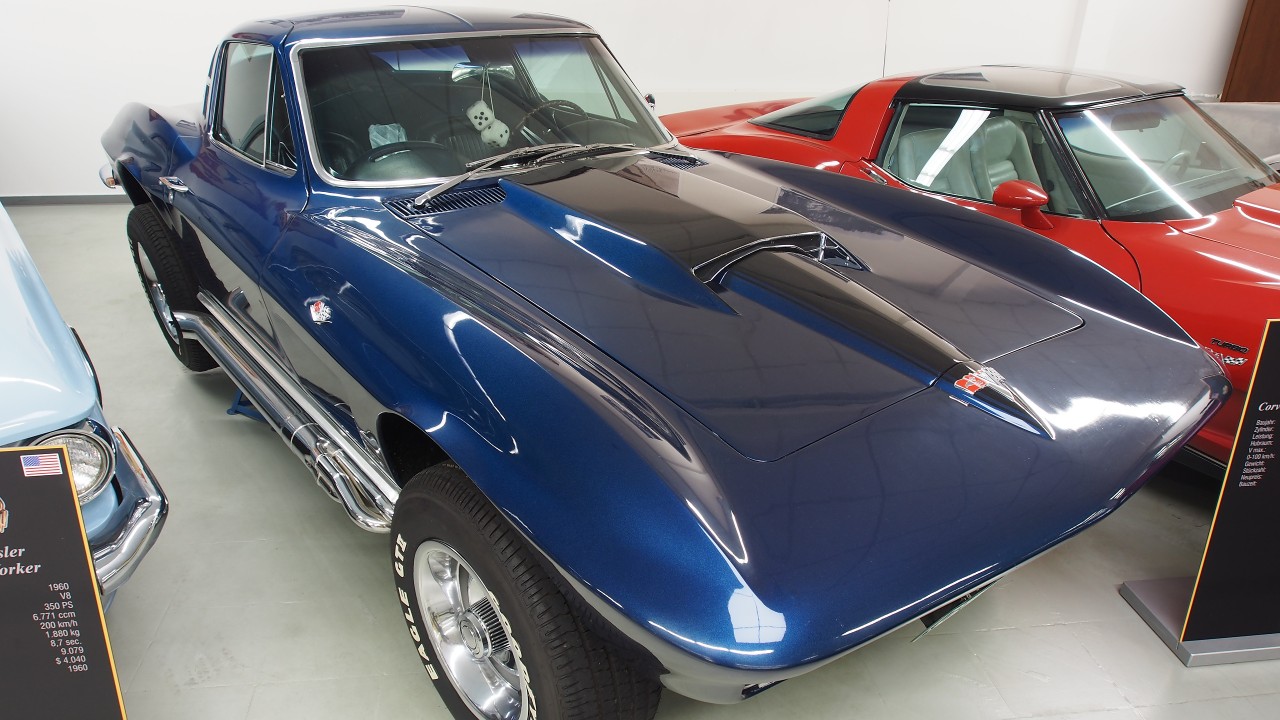
The 1964 Corvette arrived looking almost identical to the groundbreaking Sting Ray that debuted a year earlier, yet it quietly corrected the one feature that had divided designers, engineers, and buyers alike. By replacing the split rear window and layering in subtle mechanical refinements, Chevrolet turned a controversial style icon into a more usable, better sorted sports car without sacrificing its drama.
I see the 1964 model as the moment the second-generation Corvette stopped arguing with itself and started to cohere. The car kept the Sting Ray’s sharp-edged silhouette but resolved its most glaring flaw in visibility and refinement, setting the template that would carry the C2 through the rest of the decade.
The split-window dream that turned into a headache
When the second-generation Chevrolet Corvette arrived for 1963, its split rear window instantly became the car’s visual signature, but it also created a rift inside General Motors. Corvette (Chevrolet Corvette) chief engineer Zora Arkus Duntov saw the divided glass as a safety and usability problem, while design chief Mitchell treated it as a non‑negotiable styling flourish that completed the Sting Ray’s spine-like rear. Reporting on the period notes that Duntov disliked the split window and that Mitchell insisted on it, even as the press was hostile to the compromised rearward view.
The conflict was not just internal politics, it was baked into the car’s daily use. The two-piece glass and thick central bar made it difficult to see traffic and judge distances, a problem that owners and reviewers did not ignore. Later commentary on Corvette design from the Bill Mitchell era points out that not everything he pushed for worked, and it singles out the 1963 split rear window on the Corvette as a controversial choice that looked dramatic but frustrated drivers. That tension between sculpture and function set the stage for the changes that would arrive only a year later.
How 1964 quietly erased the controversy
For 1964 Chevrolet made only evolutionary changes to the Corvette, but one of them fundamentally changed how the coupe worked. Due to concerns over rear visibility, the coupe’s two piece split rear window was replaced with a single piece of arched glass. The overall Sting Ray profile remained, yet the view out the back was suddenly clearer, and the car felt less like a design experiment and more like a serious sports machine that could be driven hard without the driver peering around a styling statement.
Contemporary descriptions of 1964 cars underline how subtle the visual shift was and how significant the functional gain became. While the overall design remained similar, subtle updates distinguished the 64, and most notably, the split rear window from 1963 was replaced with a single piece of glass, improving rear visibility and quieting critics. Later sales listings for 1964 coupes and restomods routinely note that the split-screen rear window was a 1963-only feature that was dropped due to rearward visibility concerns, a reminder that the fix was driven by practical need rather than fashion.
Refinements beneath the skin

The rear glass was the headline change, but the 1964 Corvette also addressed how the car rode and handled. Technical summaries of the model year highlight new variable-rate front coil springs and variable-rate rear spring, with the amount of deflection decreasing in proportion to the severity of the load. That kind of progressive tuning helped the car feel more compliant over small bumps while staying controlled when pushed, a balance that made the Sting Ray more livable on real roads without dulling its responses.
Inside, Chevrolet also chipped away at noise and harshness. For the interior, the steering wheel rim was now simulated walnut, while door knobs became chromed, and the 1964 model incorporated refinements such as revised shift linkage bushings to decrease interior noise. These are small changes on paper, but they add up to a car that feels less raw and more finished, especially compared with the first-year C2. The pattern mirrored what The Corvair received for 1964, where Chevrolet emphasized larger engines and important chassis refinements to deliver a quieter, smoother ride and increased performance flexibility, suggesting a broader corporate push toward better-rounded dynamics.
From sales gamble to solid hit
Fixing the visibility issue and smoothing the driving experience helped the second-generation Corvette move from risky design statement to commercial mainstay. Production data for the year show that the C2 continued its strong sales run and 1964 saw 22,229 units produced, a healthy figure that confirmed buyers were embracing the refined Sting Ray. Corvette Production Volumes The record notes that several other detail changes accompanied the glass revision, but the key story is that demand did not falter once the split window disappeared, despite its later mystique among collectors.
That sales strength is echoed in how enthusiasts still seek out 1964 cars today. A modern restomod roadster built from a 1964 Chevrolet Corvette leans on the original body lines while updating mechanicals, and its description emphasizes that while the design remained similar, the subtle updates of that year, including the single rear glass, are part of the appeal. Another listing for a 1964 Chevrolet Corvette LT1 conversion is explicit that, granted, this car does not have the split-screen rear window because that was a 1963-only feature, and it frames the change as a practical improvement rather than a loss. The market may prize 63 split-window cars for their rarity, but the way 1964 models are used and modified suggests owners value the corrected flaw more than the original quirk.
Why the fix matters more than the myth
Looking back, it is tempting to romanticize the split-window Corvette as the purest expression of the Sting Ray idea, yet the 1964 revision shows how quickly the company prioritized function once the car met real roads and real drivers. Buyer guides for the 1963 to 1967 Chevrolet Corvette range underline that 63 was the only year for several unique design elements, most notably the split rear window that was ultimately dropped, and they note how those early cars are now highly prized in the collector car market. At the same time, historical pieces on Corvette design stress that not every Mitchell flourish aged well, and they treat the split window as a case where visual drama outpaced usability.
In that light, the 1964 Corvette’s biggest achievement is not that it looks nearly identical to its predecessor, but that it reconciles the Sting Ray’s identity with the realities of driving. Later profiles of individual cars, including a family-owned Sting Ray whose story recounts how Corvette, Chevrolet Corvette chief engineer Zora Arkus Duntov pushed back against the split window while Mitchell insisted, underline how personal and intense that debate was. By the time the 1964 model year arrived, the argument had been settled in glass and steel, and the Corvette that rolled out of showrooms was sharper to see out of, more refined to drive, and better aligned with the engineering instincts that would guide the nameplate for decades.
Even in enthusiast culture, the way people interact with these cars reflects that shift. A modern video chronicling a 1964 Chevrolet Corvette find begins with a 5:00 a.m. run on a Tuesday, a turn and burn in Houston covering 265 miles, with Sean along for the ride, and the narrative treats the car as something to be driven and enjoyed rather than preserved as a fragile design artifact. Another segment filmed at the Martin Auto Museum in Phoen, hosted by Oct personality Rick Dru, revisits the split-window controversy as a chapter in automotive evolution, not as a lost ideal. In both cases, the 1964 car stands as the version that kept the Sting Ray’s charisma while quietly fixing the flaw that had made the 1963 such a beautiful compromise.
More from Fast Lane Only: