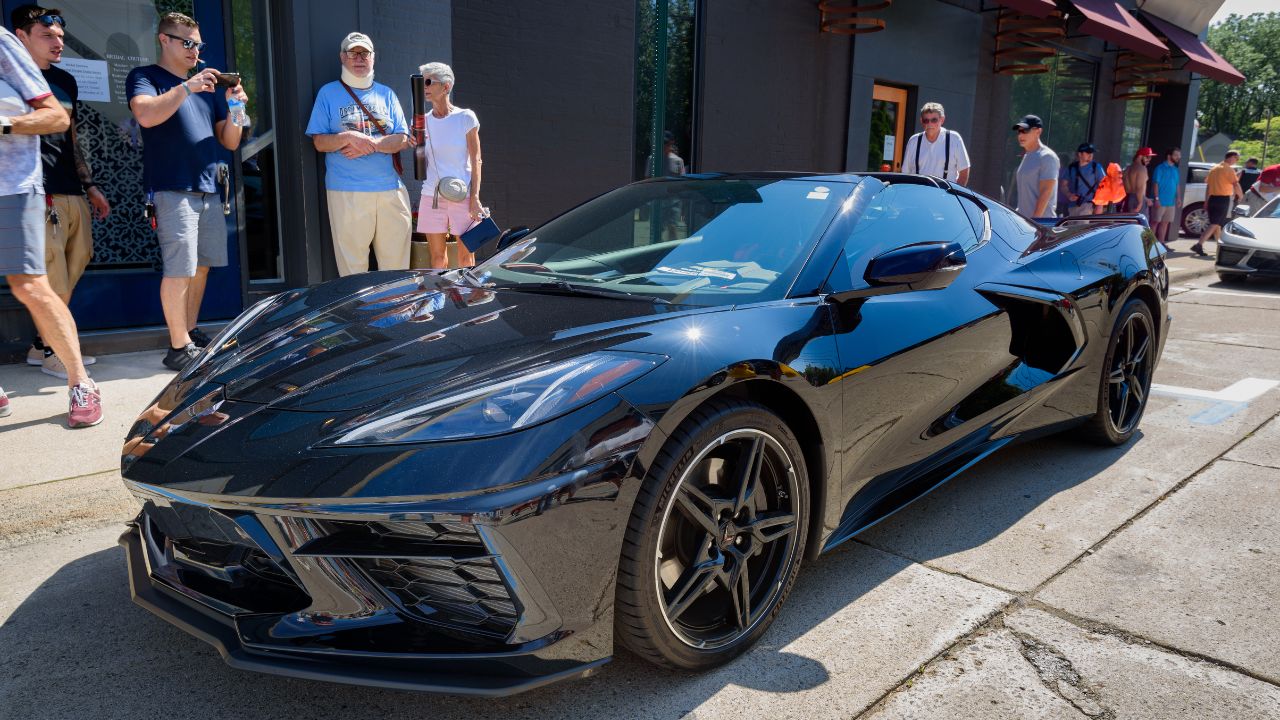
The 2020 Chevrolet Corvette C8 did more than update an American icon. It upended expectations about what a relatively attainable sports car could be, stepping directly into territory long guarded by Italian and German exotics. By moving its engine behind the driver and pairing that layout with serious performance engineering, the mid‑engined Corvette shocked a supercar world that had grown used to charging far more for similar thrills.
Instead of chasing nostalgia, Chevrolet treated the eighth‑generation Corvette as a clean break from the past. The result was a car that looked, felt, and performed like a traditional supercar, while still carrying a badge associated with blue‑collar performance. That tension between heritage and reinvention is what made the C8’s arrival so disruptive.
The mid‑engine leap that changed the Corvette’s identity
By the time the 2020 Chevrolet Corvette C8 arrived, the front‑engine formula that had defined the nameplate for decades had reached its limits. Moving the big V8 behind the driver transformed the proportions, with a short, aggressive nose and a cab pushed forward in classic supercar style. Reviewers immediately compared the new Corvette to far more expensive Italian machinery, noting that it looked and drove like a Ferrari for a fraction of the price, a direct acknowledgment that Chevrolet had aimed the C8 squarely at exotic benchmarks rather than traditional pony cars.
This architectural shift was not a styling exercise, it was a performance decision. With the engine now closer to the rear axle, the Corvette gained the traction and balance that mid‑engined rivals had long used to dominate on track. The car’s Kentucky assembly roots remained, but the driving experience moved into a different league, with the C8 behaving like a purpose‑built supercar rather than a hot‑rodded grand tourer. That is why early road tests framed the car as a radical reboot, describing the eighth‑generation Corvette as a clean break that finally aligned its engineering with the performance image Chevrolet had been cultivating for years.
A launch engineered to send a message to Ferrari
Chevrolet did not hide its ambitions when it pulled the wraps off the 2020 Corvette Stingray. The company unveiled the car at a special event in Tustin, California, on a Thursday in July, a stage choice that signaled this was more than a routine model update. By choosing a high‑profile reveal and emphasizing the first mid‑engine design in Corvette history, Chevrolet made it clear that the Stingray was gunning for Ferrari and other established supercar brands, not just domestic rivals.
The setting underlined that intent. The event in Tustin, California, tied the car back to General Motors’ broader technical ambitions, with the mid‑engine layout presented as the culmination of years of development rather than a risky experiment. Reporting on the reveal highlighted how openly Chevrolet positioned the Corvette Stingray against European exotics, framing the car as a direct challenger that would deliver comparable performance and drama at a significantly lower price. That positioning, more than any single statistic, is what rattled the supercar establishment.
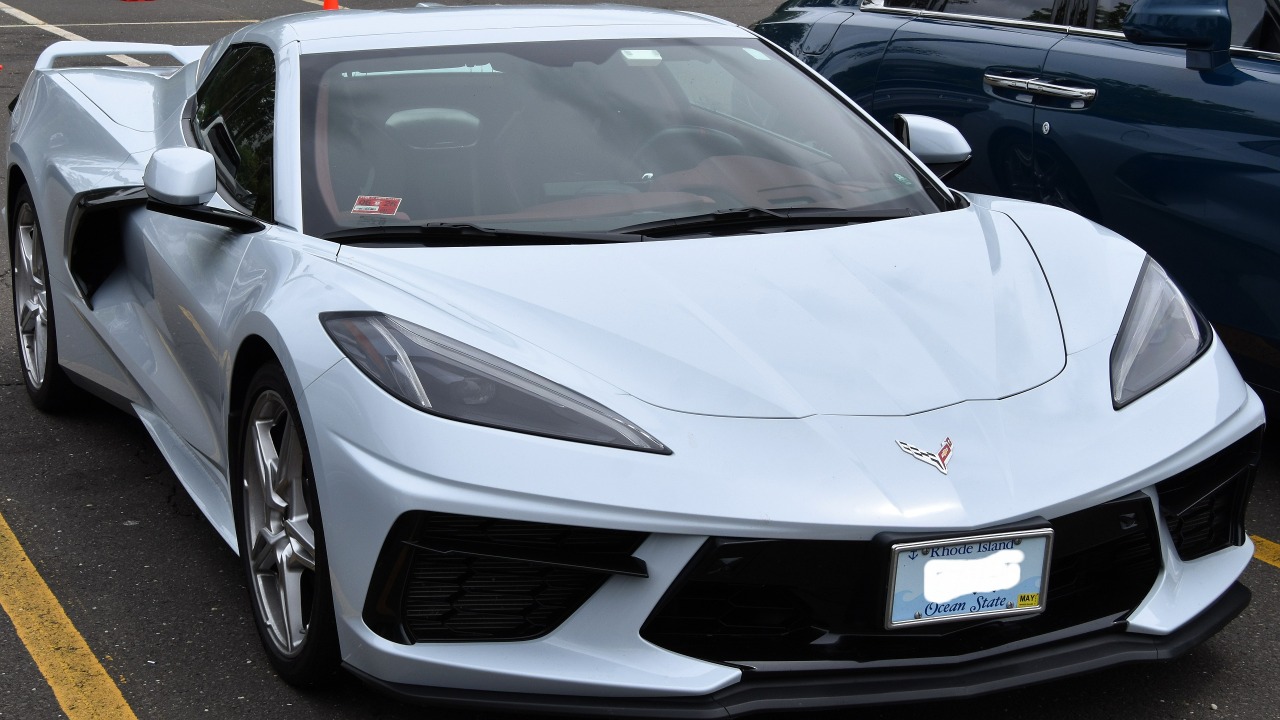
From concept to production: how General Motors framed the C8
The C8’s path to production was carefully managed to build anticipation while reassuring loyalists that the core Corvette values would survive the transition. Ahead of the official debut, Chevrolet confirmed that the 2020 Chevrolet Corvette C8 would be revealed in mid‑July and encouraged fans to stay in touch with updates, a slow‑burn strategy that kept speculation high without giving away the full story. By the time the covers came off, enthusiasts already understood that a mid‑engine layout was coming, but they did not yet know how aggressively Chevrolet would price and position the car.
General Motors also used the reveal to connect the C8 to its broader engineering capabilities. The car was unveiled at the General Motors Technical Center in Tustin, California, reinforcing the idea that this was a halo project designed to showcase the company’s most advanced thinking. Coverage of the event emphasized that the C8 Corvette was intended to push boundaries beyond imagination, language that framed the car as a technological flagship rather than a niche experiment. In that context, the mid‑engine layout became a symbol of GM’s willingness to challenge European supercar orthodoxy on its own terms.
Driving like a Ferrari, priced like a Chevrolet
What truly unsettled the supercar hierarchy was not only how the C8 Corvette looked, but how it drove relative to its cost. Early reviews stressed that the new Corvette behaved like a Ferrari on the road, with sharp turn‑in, strong braking, and a sense of composure at speed that had previously been the domain of far more expensive cars. The big V8, now mounted behind the driver, delivered the kind of immediate, rear‑biased thrust that enthusiasts associate with mid‑engined exotics, yet the car remained accessible in both price and day‑to‑day usability.
That value equation was central to the shock factor. The Corvette’s pricing undercut traditional supercars by a wide margin while still delivering a driving experience that reviewers described in the same breath as Italian and German rivals. One detailed test noted that the C8 looked and drove like a Ferrari for a fraction of the price, a comparison that would have sounded far‑fetched in earlier generations. By keeping the Chevrolet badge and the Kentucky production base while elevating the dynamics to supercar levels, the C8 blurred the line between aspirational exotic and attainable performance car in a way that few competitors could match.
How the C8 reset expectations for future Corvettes
The impact of the 2020 C8 did not end with its launch year. Even as the automotive industry dealt with parts shortages and a pandemic, the mid‑engined Corvette showed up to the party swinging, quickly establishing itself as a serious player in performance comparisons. Later variants like the Z06 and the E‑Ray would go on to face off against cars such as the Ferrari F8 and Lamborghini Huracan Evo, with coverage describing the latest Corvette as a bonfire supercar rather than a mere value alternative. That evolution confirmed that the C8 platform had the depth to support increasingly extreme versions without losing its core appeal.
For me, the most telling measure of the C8’s influence is how it reshaped what enthusiasts now expect from any future Corvette. A front‑engine layout would feel like a step backward after the way the 2020 car redefined the brand’s identity, and the benchmark set by early comparisons to Ferrari and other exotics has become the new baseline rather than an aspirational target. The C8’s combination of mid‑engine balance, supercar styling, and Chevrolet pricing did not just shock the supercar world at launch, it permanently raised the bar for what an American performance icon can and should be.
More from Fast Lane Only: