The 2023 Honda Civic Type R arrived with a clear mission: prove that front-wheel drive can still deliver serious performance in an era dominated by all-wheel-drive hot hatches. Rather than chasing power figures alone, Honda reworked structure, aerodynamics, and chassis tuning so the car could put its output to the ground with composure. The result is a front-drive hatch that behaves with a level of precision and stability usually associated with more complex drivetrains.
What makes this Civic Type R important is not just that it is quicker, but how it gets there. Honda leaned on incremental engineering changes, from body adhesives to tire sizing, to stretch the limits of what a front-driven layout can handle. Those small decisions add up to a car that feels more mature and more capable, especially when driven hard on track.
Stiffer structure, smarter bodywork
The foundation for the latest Civic Type R’s progress is its body-in-white. Based on the 11th-generation Civic, the car uses 3.8 times more structural adhesive than before, concentrated around spot welds to increase joint stiffness and reduce flex in key areas. That extra rigidity lets the suspension do its job more accurately, which is critical when the front axle is responsible for both steering and putting down turbocharged power. A stiffer shell also improves steering feel, because the front subframe and strut towers move less relative to the driver’s hands.
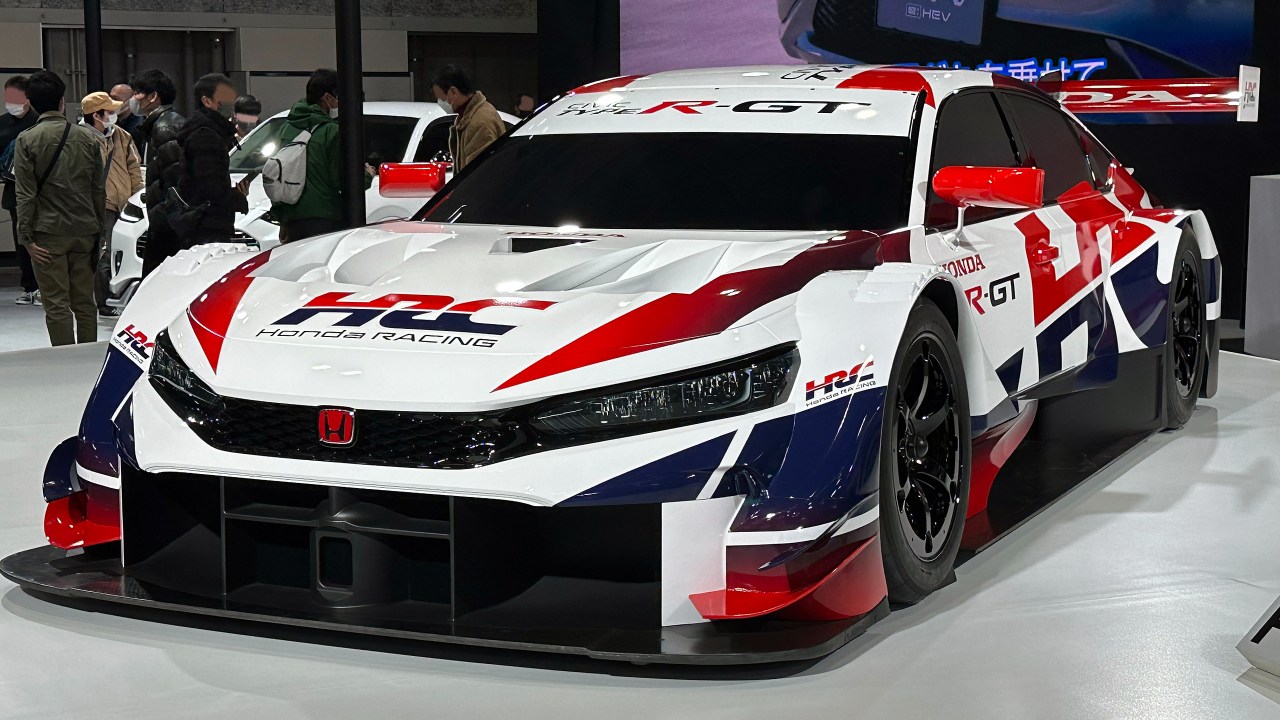
Honda paired that stronger structure with more deliberate aerodynamics. The new Civic Type R adopts cleaner, less fussy styling than its predecessor, but the surfaces are shaped to generate real downforce and stability at speed. The front bumper, hood vents, and rear wing are designed to manage airflow over and under the car, while the wider stance and flared arches help accommodate larger wheels and tires. Reporting on the car’s development notes that the body is not just more rigid but also tuned to reduce lift and improve high-speed balance, which is essential for a front-drive car that can approach track-day velocities.
Cooling and power delivery that front drive can actually use
One of the biggest weaknesses of the previous Civic Type R was thermal management during extended hard driving. Cooling was a bugbear in the outgoing model, so engineers enlarged the front grille opening and reworked the radiator and ducting to feed more air through the core. The new design uses a grille that is larger by nearly a third, improving airflow to the intercooler and engine bay. That change matters because a front-drive car that overheats its intake charge or coolant will quickly pull timing and lose power, undermining any claimed performance advantage.
The turbocharged and intercooled engine in the Civic Type R continues to deliver strong output, but the focus is on consistency rather than headline numbers. Honda’s own materials highlight that the powertrain is matched to an impressive power-to-weight ratio, and the revised cooling package helps the car maintain that performance over repeated laps. A high-flow exhaust system and improved breathing support the engine at higher loads, while the six-speed manual and rev-matching system keep the driver in the meat of the torque band. The net effect is that the car can exploit its front-drive layout without wilting under track conditions, a key step in pushing the configuration further.
Front axle hardware that tames torque and turn-in

Even with better cooling and a strong engine, front-wheel drive lives or dies by how well the front axle manages power and steering forces. In testing, the Civic Type R’s limited-slip differential and front suspension geometry combine to eliminate perceptible torque steer, even under heavy throttle. Once the driver commits to a corner, the steering remains calm instead of tugging or writhing in their hands, which is a common flaw in powerful front-drive cars. That composure lets the driver lean on the front tires more confidently, braking later and getting back on the gas earlier.
The suspension layout and tuning are central to this behavior. Honda uses dual-axis front struts and carefully chosen bushings to separate steering and drive forces as much as possible. The adaptive dampers are calibrated to control body motions without making the car skittish over bumps, so the front tires stay in better contact with the road. Reports from early testing describe a front end that bites hard on turn-in and resists understeer longer than expected, which is exactly what a front-drive performance car needs to feel genuinely fast rather than just frantic.
Tires, brakes, and the “sum of small changes” philosophy
Honda did not stop at the suspension arms and dampers. The 2023 Type R’s 19-inch wheels are wrapped in 265-section Michelin Pilot Sport 4S tires, a notable increase in width that gives the car a larger contact patch. That extra rubber on the front axle is crucial for both traction and braking, especially when the car is asked to accelerate out of slow corners or scrub speed from high velocities. The choice of Michelin Pilot Sport 4S, a tire known for its blend of grip and predictability, reinforces the car’s focus on usable performance rather than just lap-time heroics.
Braking hardware and calibration also reflect this incremental approach. Larger rotors and performance pads work with the sticky tires to deliver strong, repeatable stopping power, while the pedal tuning aims for a firm, linear response that inspires confidence on track. Coverage of the new model often describes it as a “Sum of small changes,” a phrase that captures how Honda approached the upgrade. Rather than reinventing the Civic Type R, engineers refined dozens of details, from tire size to damper curves, to create a car that feels like a clear step forward without losing the character that made the previous generation so popular.
From track-ready cockpit to everyday maturity
The Civic Type R’s cabin and driving experience show how far front-drive performance has come in terms of usability. The Civic Type features a performance-focused cockpit with supportive seats, a low driving position, and clear sightlines, all aimed at helping the driver place the car precisely. At the same time, visibility is enhanced compared with the previous generation, and the overall design is less cluttered, which makes the car easier to live with on daily commutes. The digital instrumentation and drive mode controls give the driver quick access to performance data and settings without overwhelming them.
On the road, that maturity translates into a car that can be genuinely comfortable when driven gently, then transform into a sharp tool on a back road or circuit. Reviews note that the new Type R feels more grown up, with better ride quality and reduced cabin noise, yet it still delivers the feedback and engagement that enthusiasts expect. The move to the 11th-generation Civic platform, combined with the structural adhesive upgrades and chassis tuning, allows the car to straddle that line between daily driver and track toy more effectively than before. In doing so, it shows that a front-wheel-drive hot hatch can be both sophisticated and brutally effective, pushing the layout further without sacrificing practicality.