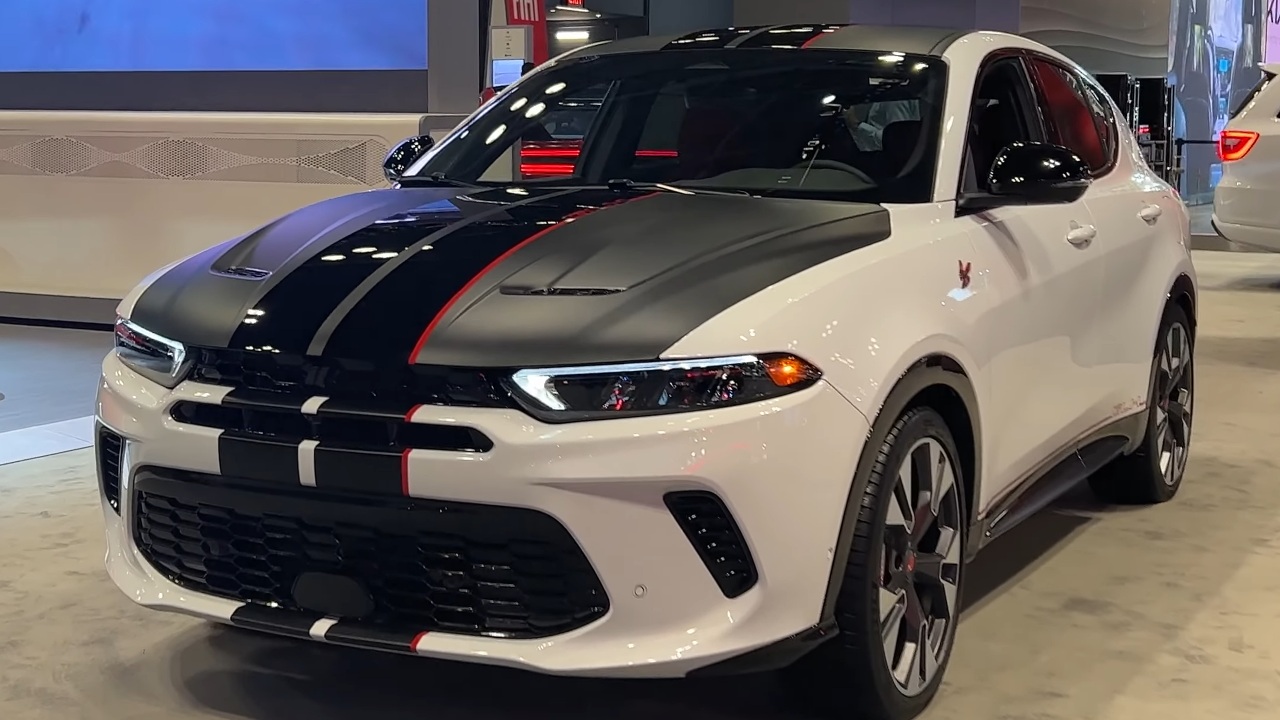
Deal hunters usually swarm the final model year of a discontinued vehicle, expecting fire-sale prices and generous factory cash. Instead, many of the savviest shoppers are quietly backing away from the last Dodge Hornets, even as dealers dangle steep discounts. The compact SUV has become a case study in how policy shocks, brand confusion, and collapsing resale confidence can turn a clearance event into a risk that value-focused buyers no longer want to carry.
The Dodge Hornet is exiting the market at the precise moment when tariffs, financing headaches, and a glut of unsold vehicles are reshaping what a “deal” really means. For shoppers who track long term costs as closely as the sticker, the final Hornets look less like bargains and more like stranded assets in a segment full of safer alternatives.
A policy-driven exit that poisoned the bargain well
The Hornet’s demise is not a typical end-of-life wind down but a policy shock that has left buyers wary of what comes next. The compact SUV was built in Italy, and Stellantis has acknowledged that shifts in the policy environment and import costs were the primary driver behind the decision to cancel the model. Production of the Hornet, built in Italy, has ended, and the company has framed the move as a Policy-Driven Execution rather than a routine product refresh. When a vehicle disappears because of tariffs and regulatory turbulence rather than simple age, shoppers reasonably worry about parts pricing, future support, and whether similar policy moves could hit related models.
Those concerns are amplified by the way the decision unfolded. Production was suspended in the summer of 2025, with factories in Italy shutting down assembly late in the year and no successor announced. Reports tied the doubts around the Hornet’s future directly to import tariffs linked to Trump, with some analysts bluntly stating that Trump Tariffs Might Have Killed Dodge’s RAV4 Rival. Other coverage described how Tariffs Force Dodge to Delay 2026 Hornet Production and warned that the policy environment could make continued imports uneconomical if The Trump followed through on additional measures. For a deal hunter, that backdrop turns a discounted Hornet into a bet on political stability, not just on a compact SUV.
From incentives to stigma: when discounts stop looking smart
On paper, the final Hornets should be irresistible. Shortly after the model’s struggles became clear, the incentives started rolling out, and by September 2024 dealers were slashing prices to get Hornets off their lots. Some examples were listed for just $22,452, a striking figure for a turbocharged compact SUV with modern tech. In a normal cycle, that kind of markdown would draw in shoppers who are comfortable buying an orphaned model in exchange for thousands off MSRP. Instead, the deep cuts have become a red flag that something is fundamentally wrong with the product and its prospects.
Part of the problem is that the Hornet’s sales collapse was not a gentle taper but a cliff. By 2025, the Hornet’s sales reportedly dropped more than 50 percent year-over-year, a Perfect Storm of Problems that went far beyond routine end-of-life fatigue. Analysts have described how the Hornet never caught on with buyers and how sales were slow at best even before tariffs hit. When a vehicle that was once Dodge’s second best-selling product suddenly needs heavy incentives just to move, bargain hunters start to see the discounts as hazard pay for taking on a model that the broader market has rejected. That stigma undermines the usual logic of buying at the bottom of the depreciation curve.
Brand mismatch and a confused identity
Even before policy and pricing shocks, the Hornet struggled with a basic question of identity. The vehicle was effectively a Dodge-branded Alfa Romeo Tonale, built in Italy and adapted for American showrooms. Enthusiasts of the traditional Dodge brand, accustomed to big-displacement muscle cars and brash styling, were never fully convinced by a compact crossover that shared so much DNA with a European sibling. Coverage of the Hornet’s short production run has highlighted how many buyers saw it as expensive, unreliable, and uninspiring rather than as a fresh expression of the brand.
That identity crisis became catastrophic for its marketing position once tariffs and policy shifts entered the picture. Analysts have noted that the doubts behind the Hornet’s future stemmed from import tariffs that were catastrophic for its marketing identity, turning what was supposed to be a globalized, premium-leaning compact into a political football. A separate look at the end of the road for the Dodge-branded Alfa Romeo Tonale in the U.S. framed the decision around Sales Collapse and External Pressures, with Dodge declining to go into detail about the precise reasons. For deal hunters, the combination of a muddled brand story and a quiet retreat from the segment signals that the company itself is eager to move on, which is hardly reassuring when considering a long term purchase.
Financing headaches and a fragile used-market future
Even buyers willing to overlook the Hornet’s policy drama and brand confusion have run into a more immediate obstacle: getting the vehicles financed on acceptable terms. Video reports from mid 2024 described situations where Stellantis In Trouble Dodge Hornets Can’t Get Financed Banks Saying NO, with dealers complaining that lenders were balking at the model. While not every bank has taken such a hard line, the perception that Hornets are harder to finance than rival compact SUVs has filtered into enthusiast forums and buyer chatter, further eroding confidence.
Those financing concerns feed directly into fears about resale value. Analysts covering the Hornet’s collapse have emphasized that sales fell more than 50 percent year-over-year and that production of the Hornet, built in Italy, has ended with no clear replacement. When a model exits under that kind of cloud, used buyers often demand steep discounts to compensate for perceived risk around parts, software support, and long term reliability. Enthusiast commentary underlines that many owners already view the Hornet as expensive, unreliable, and uninspiring, which is not the recipe for strong demand in the secondhand market. For a deal hunter who cares as much about exit price as entry price, the prospect of owning a vehicle that could be difficult to sell or trade in a few years is enough to send them toward more stable nameplates.
A buyer’s market that makes walking away easy
The Hornet’s troubles are unfolding in a broader retail environment that gives shoppers unprecedented leverage. Industry data show retail car sales plunging by 18.8 percent as inventory reaches an unprecedented 790,000 vehicles, an oversupply that has put significant financial pressure on dealerships. With unsold inventory piling up, dealers face mounting carrying costs and are increasingly willing to cut prices across a wide range of models to clear the stock, even if that erodes profit margins. In such a market, a buyer who walks away from a questionable Hornet can usually find a compelling deal on a more conventional compact SUV without sacrificing much on price.
That context helps explain why the last Hornets are not enjoying the usual clearance rush. Shoppers who might once have tolerated an orphaned model in exchange for a unique bargain now have alternatives that do not carry the same policy, financing, and resale baggage. Reports of Dodge showrooms struggling to move Hornets even “just weeks ago” underscore how the model has become a hard sell despite aggressive incentives. With Trump Tariffs Might Have Killed Dodge’s RAV4 Rival and Tariffs Force Dodge to Delay Hornet Production, the vehicle’s fate has become a cautionary tale about how quickly external shocks can turn a promising product into a liability. In a buyer’s market, the rational move for deal-focused consumers is to leave those liabilities on the lot and direct their negotiating power toward models whose futures look less uncertain.
More from Fast Lane Only