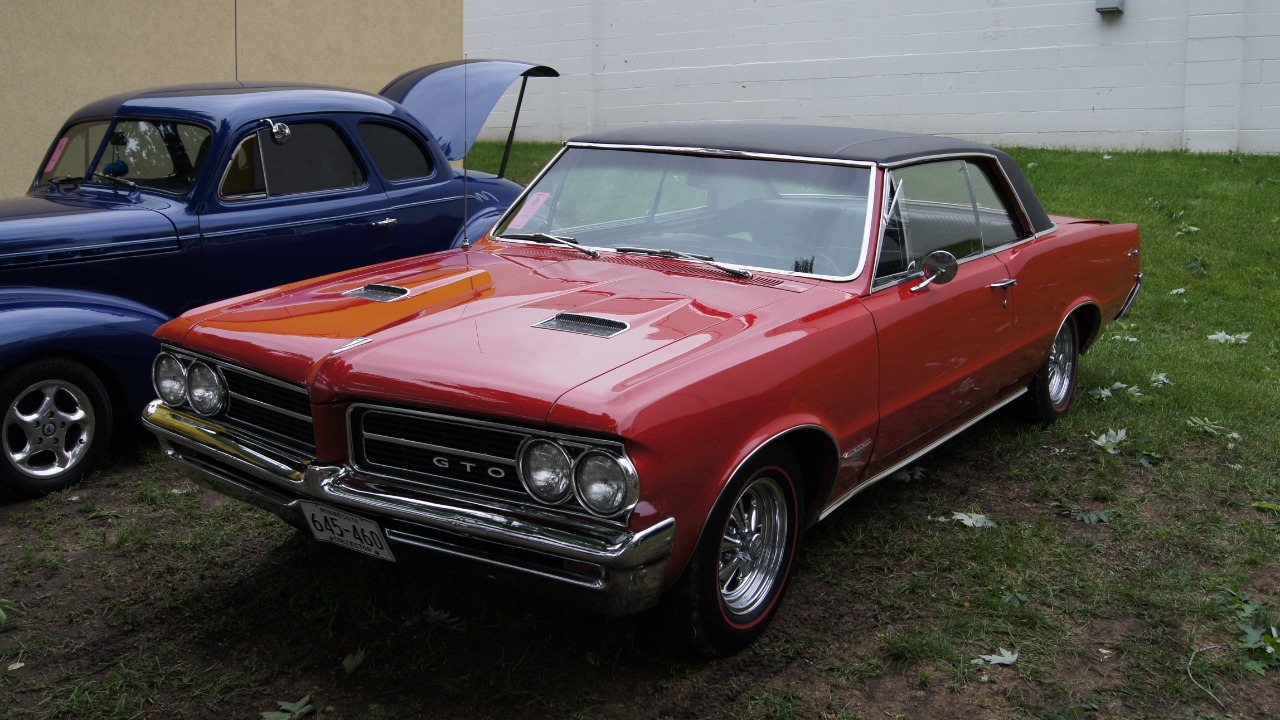
The Pontiac GTO is widely recognized as the car that launched the muscle car era, but its creation was far from a safe decision. General Motors had strict rules limiting engine sizes in midsize cars, making the GTO a gamble from the beginning. Pontiac’s willingness to challenge convention resulted in one of the most influential performance cars in American automotive history.
Breaking the Rules to Build Something Different
During the early 1960s, General Motors prohibited its divisions from installing large-displacement engines in midsize cars. Pontiac engineers, led by performance-minded executives, believed younger buyers wanted affordable cars with serious power rather than larger, heavier full-size models. Instead of accepting the restrictions, they searched for a creative solution.
Their answer was to offer the GTO as an optional performance package on the Pontiac Tempest. Because it was technically an option package rather than a separate model, Pontiac successfully introduced a powerful 389 cubic-inch V8 without directly violating GM’s internal policies.
The decision carried considerable risk. If buyers ignored the GTO, Pontiac could face criticism for investing in a niche performance package during a period when efficiency and practicality remained important selling points.
Instead, the bold strategy attracted immediate attention and demonstrated that performance could become a major selling advantage.
Performance Became the Main Attraction
The original GTO delivered exactly what enthusiasts had been waiting for. Its large V8 engine produced impressive horsepower and abundant torque, giving drivers strong acceleration at a price that was far more accessible than many dedicated sports cars of the era.
Pontiac paired the engine with available four-speed manual transmissions, heavy-duty suspension components, and optional performance upgrades that made the GTO feel more capable than an ordinary family coupe. Buyers could customize the car to suit both street driving and weekend competition.
The combination of everyday usability and exciting performance proved irresistible. Drivers no longer had to choose between practicality and speed because the GTO successfully blended both characteristics into a single package.
Its growing popularity quickly validated Pontiac’s willingness to take a chance on an unconventional idea.
Sales Success Changed the Entire Industry
Pontiac initially expected modest sales, believing the GTO would appeal to a relatively small group of performance enthusiasts. Instead, demand far exceeded expectations, with thousands of buyers rushing to dealerships eager to own the new high-performance model.
Competing manufacturers quickly recognized the GTO’s success and began developing their own midsize muscle cars. Within only a few years, nearly every major American automaker offered powerful V8-equipped performance models designed to compete in the rapidly expanding muscle car market.
The GTO’s commercial success reshaped product planning throughout Detroit. Performance became a central marketing strategy, influencing everything from engine development to advertising campaigns.
Pontiac had not simply introduced another fast car—it had helped create an entirely new automotive segment.
A Legacy That Still Defines the Muscle Car Era
Today, the original Pontiac GTO remains one of the most important American performance cars ever built. Its bold engineering, innovative marketing, and willingness to challenge established corporate policies helped redefine what buyers expected from midsize automobiles.
Collectors continue seeking well-preserved GTO models because they represent the beginning of the muscle car movement. The car’s influence can still be seen in modern high-performance sedans and coupes that emphasize powerful engines and accessible performance.
What began as a risky experiment ultimately became Pontiac’s greatest achievement and one of General Motors’ most significant automotive success stories.
The original GTO proved that taking calculated risks could transform an entire industry, cementing its place as the car that inspired a generation of American performance machines.
More from Fast Lane Only
- Unboxing the WWII Jeep in a Crate
- 15 rare Chevys collectors are quietly buying
- 10 underrated V8s still worth hunting down
- Police notice this before you even roll window down
*Research for this article included AI assistance, with all final content reviewed by human editors