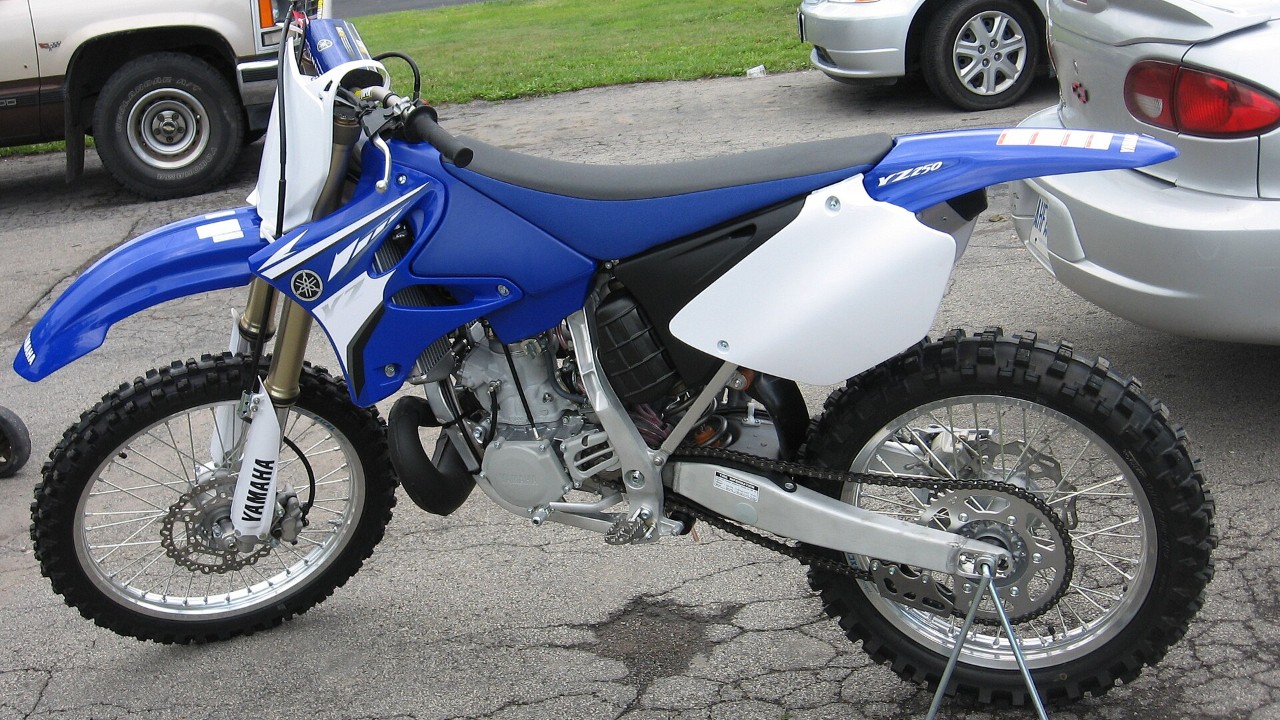
Two-strokes were supposed to be finished by now. Emissions rules pushed them off American streets decades ago, and four-strokes took over the motocross track. Even so, the Yamaha YZ250 has been in the lineup since 1974. You can walk into a dealer and buy a new one.
A two-stroke fires on every turn of the crank, so it packs a lot of punch into a small, light package. That simplicity is why riders keep coming back to them. However, not every smoky ring-ding aged well, and some of the best ones left the showroom decades ago.
These 12 are our picks, the two-strokes we would happily park in our own garage today. Some are new off-road bikes you can order this season. Others are older trail, motocross and street machines that we think reward the hunt. Here is why each one made the list.
1. 2018 KTM 300 EXC TPI
For decades, every two-stroke rider carried a measuring cup for oil and a pocket full of carburetor jets. KTM set out to end that with the 300 EXC TPI. It is a 300 cc enduro bike built for long days on trails and forest roads. TPI is KTM’s name for its fuel injection, and it reached showrooms on the 2018 models.
When KTM revealed the bike in May 2017, Visordown reported that the maker called the 250 and 300 EXC TPI “the world’s first fuel-injected two-stroke enduro bikes.” The system uses two injectors that feed the cylinder ports. As a result, KTM said riders no longer needed premix fuel or jet changes when conditions changed.
Our take: this is the two-stroke for the rider who loved the old power but hated the fiddling. KTM’s newer 300s have since moved to throttle-body injection. That makes an early TPI bike a sensible way into injected two-stroke riding on a used budget. Before you pay, ride it from a cold start and again when it’s hot, and ask for the service records.
2. 2025 Yamaha YZ250
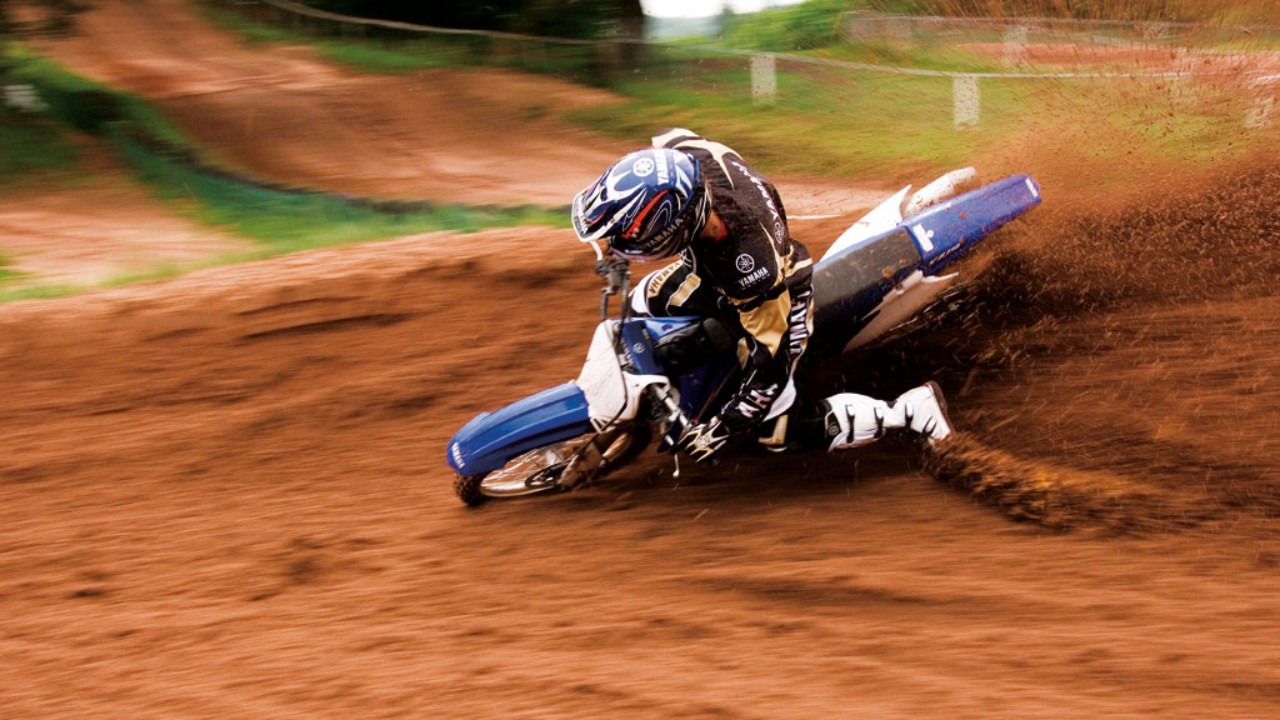
Yamaha launched the YZ250 for 1974 and has kept building it ever since. That makes it a rare race bike that a parent and a child could both have bought new. Today’s engine dates to 1999. That year, Yamaha settled on a 66.4 mm bore and a 72 mm stroke for 249 cc.
For 2005, Yamaha gave the bike an aluminum frame that cut dry weight to about 212 pounds. The last big change was new bodywork for 2022. According to Dirt Bike magazine’s 2025 two-stroke buyer’s guide, the bike has been mechanically unchanged since then, and it listed at $7,999 with KYB suspension.
In our view, that lack of change is a strength. Parts are easy to find. Better yet, a used Yamaha YZ250 from the aluminum-frame years gives you most of the new bike for far less money. If you want a motocross two-stroke with no surprises at the parts counter, start here.
3. 2025 Beta 300 RR
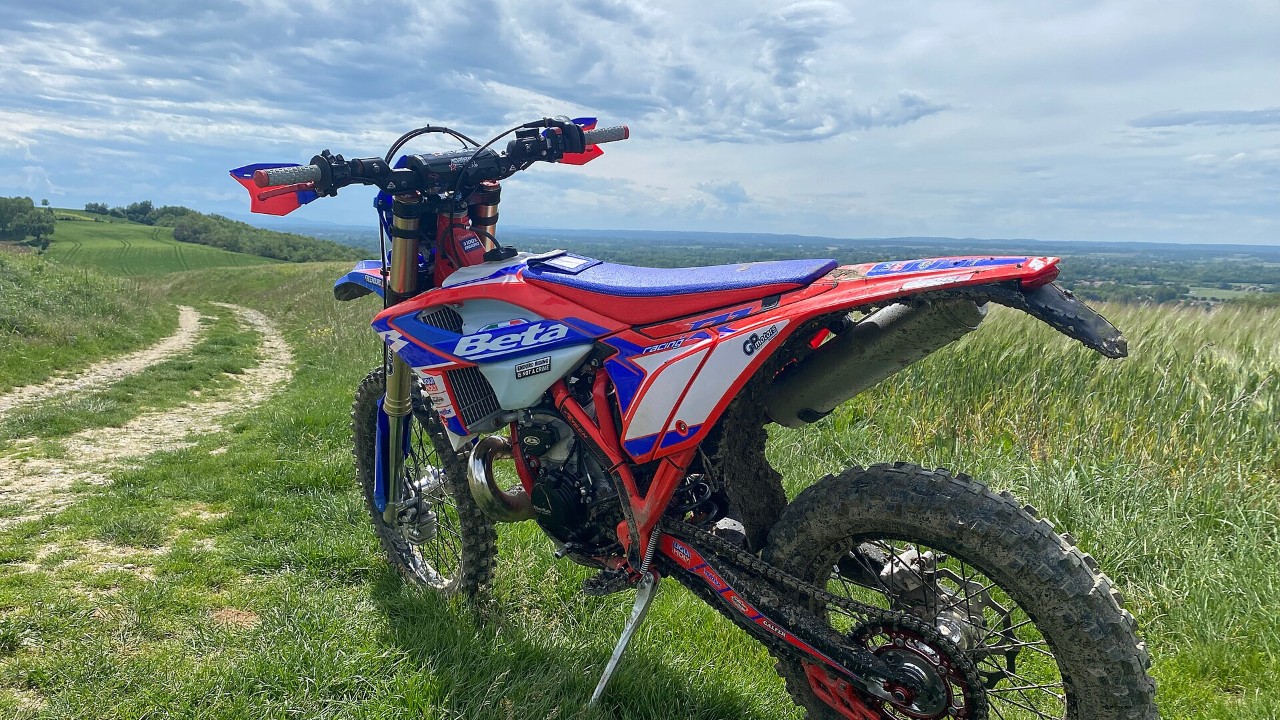
Beta began in Florence in 1904 as a bicycle maker, and it built its name on trials bikes. World trials champions such as Dougie Lampkin and Albert Cabestany rode them. The Italian company came to big enduro two-strokes later, adding the 300 RR in 2013.
Beta added oil injection to its 250 and 300 two-strokes for 2016, so you fill a reservoir instead of mixing fuel. Then the 2025 bike brought a new frame, a seat 20 mm lower and a single-spring front fork, Dirt Bike reported. It listed at $9,899, and the magazine praised its “trail-friendly disposition.”
Our take: the Beta is the friendliest big two-stroke on this list. We think its trials roots show in how calmly it crawls through rocks and roots. The lower seat also helps shorter riders. Buy one if your riding is tight woods and technical climbs rather than motocross tracks.
4. 2025 GasGas EC 300
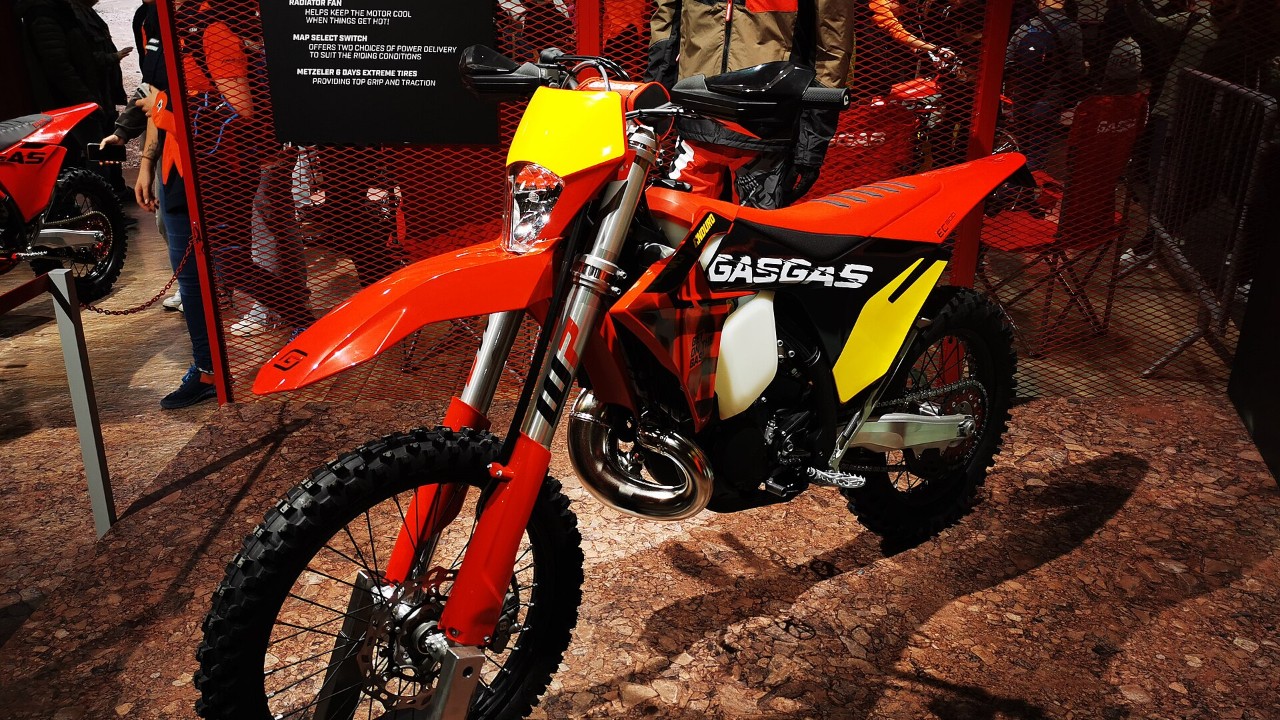
GasGas started in 1985 in Salt, in Spain’s Girona province. Its founders, Narcís Casas and Josep Pibernat, had worked at Bultaco before that factory closed. Today the brand sits inside the KTM group, which took a large stake in 2019.
That parent company shows in the hardware. In Dirt Bike’s 2025 guide, the EC 300 pairs oil injection with Keihin throttle-body fuel injection tied to an electronic power valve. It is the trail model in the GasGas range, with smoother power and softer suspension than the EX and MC bikes. Meanwhile, the 300 listed at $10,799.
We’d recommend it to a rider who wants modern injection without paying top KTM money. For comparison, the KTM 300 XC listed at $11,499 in the same guide. Choose the EC over the race-focused EX if most of your miles are on trails.
5. 2025 Yamaha YZ125
The YZ125 arrived alongside the Yamaha YZ250 in 1974, and Yamaha has kept it in the range since. It is a 124.9 cc single, and riders have taken it to five AMA National Motocross Championships. Liquid cooling came in 1981, and an aluminum frame followed in 2005.
Dirt Bike’s 2025 guide listed it at $7,099 and noted that Yamaha last updated it for 2023. The magazine was frank, too. It wrote that “the bike itself hasn’t improved significantly,” and it grouped the Yamaha with the carbureted, kick-start 125s.
We’d buy one anyway. A carbureted 125 with a kick-starter is simple enough for a new rider to learn to maintain. It also teaches you to carry corner speed, because a small two-stroke rewards a rider who keeps it on the boil. Pick it as a first race bike, or as an affordable way to relive the 1980s.
6. 1983–2004 Kawasaki KX500
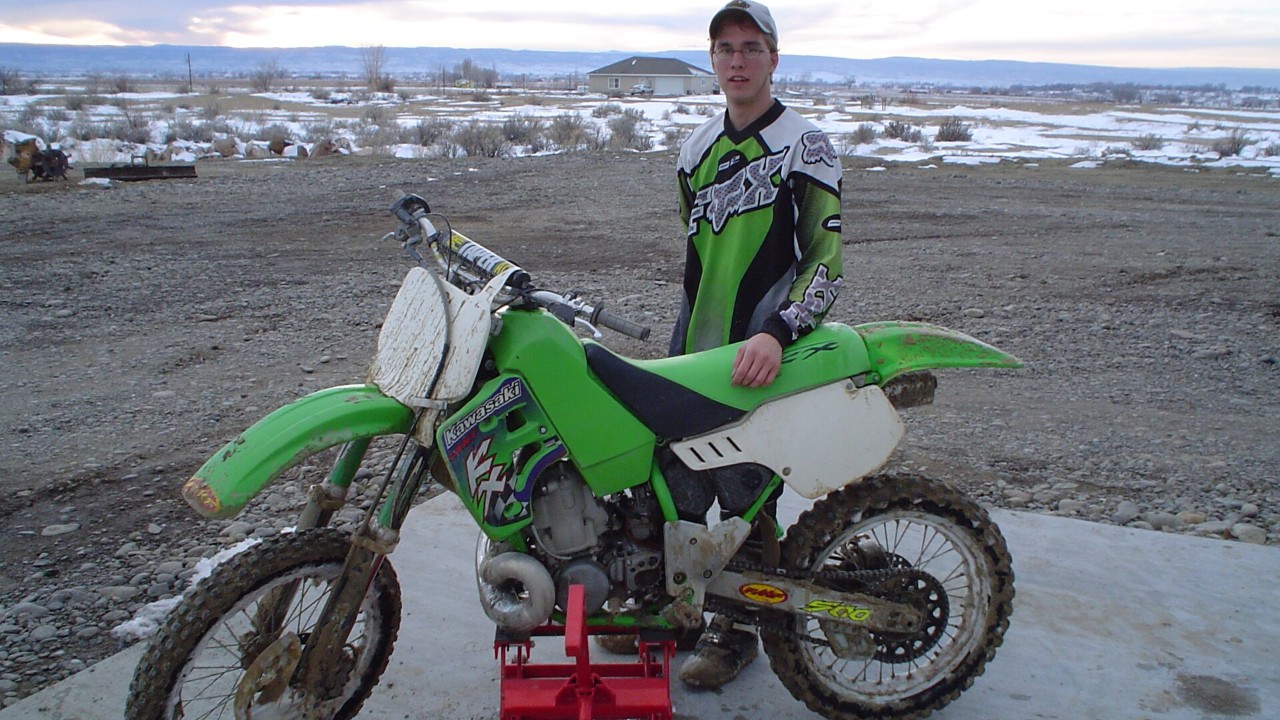
Kawasaki introduced the KX500 for 1983, and the first ones were rough. In June 1983, Dirt Bike called it “unrideable,” “violent” and “a fuse looking for a light,” as the magazine recalls in its history of the KX500. Kawasaki had to lower compression because the combustion chamber design caused self-destructive tendencies. For a buyer today, that early history matters less than what came next.
Then Kawasaki fixed it. A liquid-cooled motor arrived in 1985, and the KIPS power valve followed in 1986, a first for any 500 cc two-stroke. Jeff Ward won 500 Nationals on KX500s in 1989 and 1990. Later, Danny Hamel won every desert National from 1992 to 1995. Finally, the big Kawasaki bowed out in 2004, after more than 10 years without major change.
Our take: a late KX500 is a bike for experienced riders, and we mean that. It is also the open-class two-stroke we would most like to own, because nothing else on this list hits as hard. Next to it, even the Yamaha YZ250 feels polite. Look for a 1990-or-later bike with the upside-down fork. If the engine history is unknown, budget for a top-end rebuild before you ride it hard.
7. 1997–2007 Honda CR250R

Honda built a CR250R prototype in 1971 and put the 1973 model on sale in late 1972. The nameplate then ran all the way to 2007. For 1997, Honda gave the bike an aluminum chassis, which the company counted as an industry first for a motocross bike.
That frame makes the later bikes our pick. Maybe you know Honda mostly from the street bikes in our look at 1970s Honda motorcycles worth collecting. If so, the CR shows the company’s other side. It was a pure race machine, and the 2007 bikes were the last CR250Rs Honda built. That long run means plenty of tuning knowledge is out there.
We’d seek out the cleanest aluminum-frame CR250R you can afford rather than a project. Plastics and small parts get harder to find each year. Ride it before you buy, and listen at idle, because a tired top end rattles like loose change.
8. 1995–2006 Kawasaki KDX200

Not every great two-stroke was built to race. The KDX200 was an intermediate enduro bike that Kawasaki sold from 1983 to 2006, with leftovers on some showroom floors into 2008. It used a 198 cc single with KIPS, the Kawasaki Integrated Powervalve System, which boosts power from the mid-range to the top end.
Kawasaki improved the bike in stages. Liquid cooling and dual disc brakes arrived by 1989. Then the 1995 update brought the first perimeter frame, 43 mm Kayaba cartridge forks and higher compression.
In our view, a 1995-or-later KDX200 is one of the best used trail bikes around. It suits a rider who wants a two-stroke without the motocross edge. It is light enough to pick up, mild enough to ride all day and simple enough to fix at camp. If you find one with paperwork and a quiet bottom end, grab it.
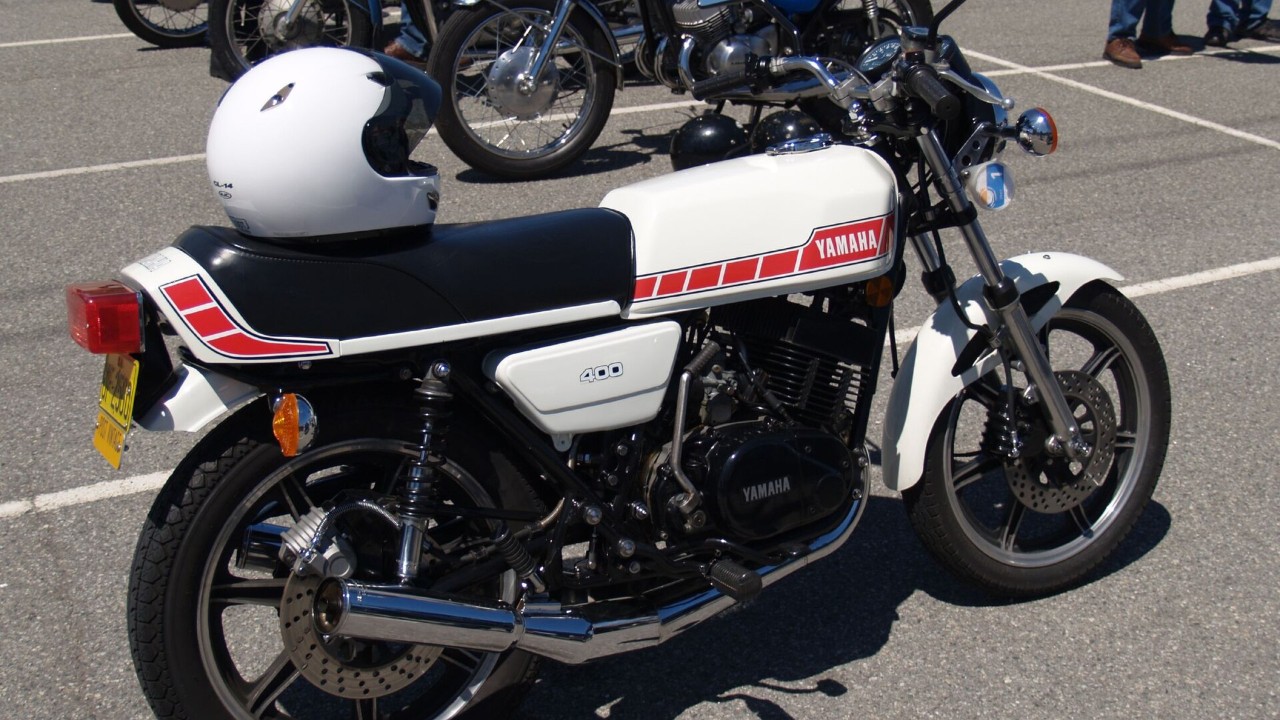
9. 1984–1985 Yamaha RZ350
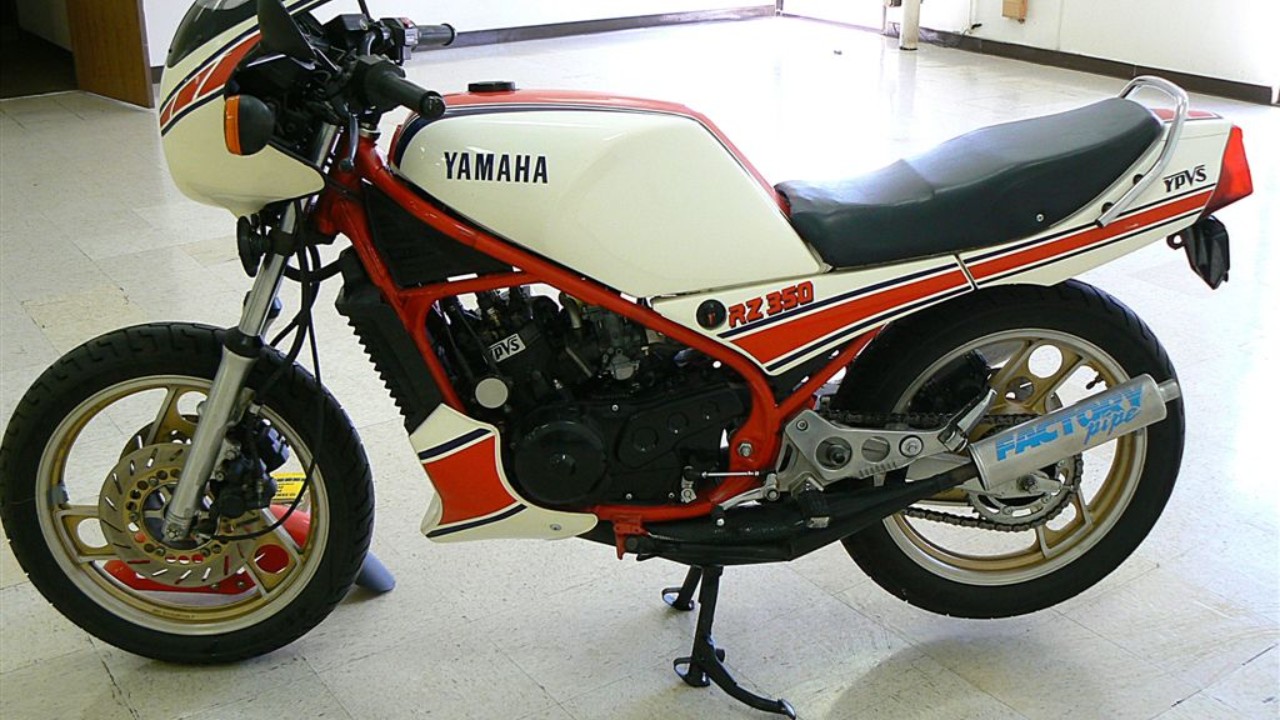
The RZ350 sold in the US for only a short spell, and clean air was the reason. American bikes carried catalytic converters, and California versions added an evaporative canister plus a second converter. Even so, Yamaha stopped US sales after 1986. The two-stroke would have used too much of its federal fleet emissions allowance, which also had to cover larger, more popular bikes.
Its 347 cc liquid-cooled twin was the first in the RD family with YPVS, the Yamaha Power Valve System. A basic computer moves a valve in the exhaust port, adding low-rpm torque without giving up top-end power. Elsewhere, Yamaha sold the same bike as the RD350 YPVS, and UK sales lasted until 1995.
Here is why we’d buy one now. The Banshee 350 ATV used a version of the same engine without YPVS, and many parts swap between them. That gives an RZ owner a wider parts pool than most 1980s street bikes enjoy. If you want the most recognizable paint, look for a US Kenny Roberts edition in yellow and black.
10. 1985 Honda NS400R
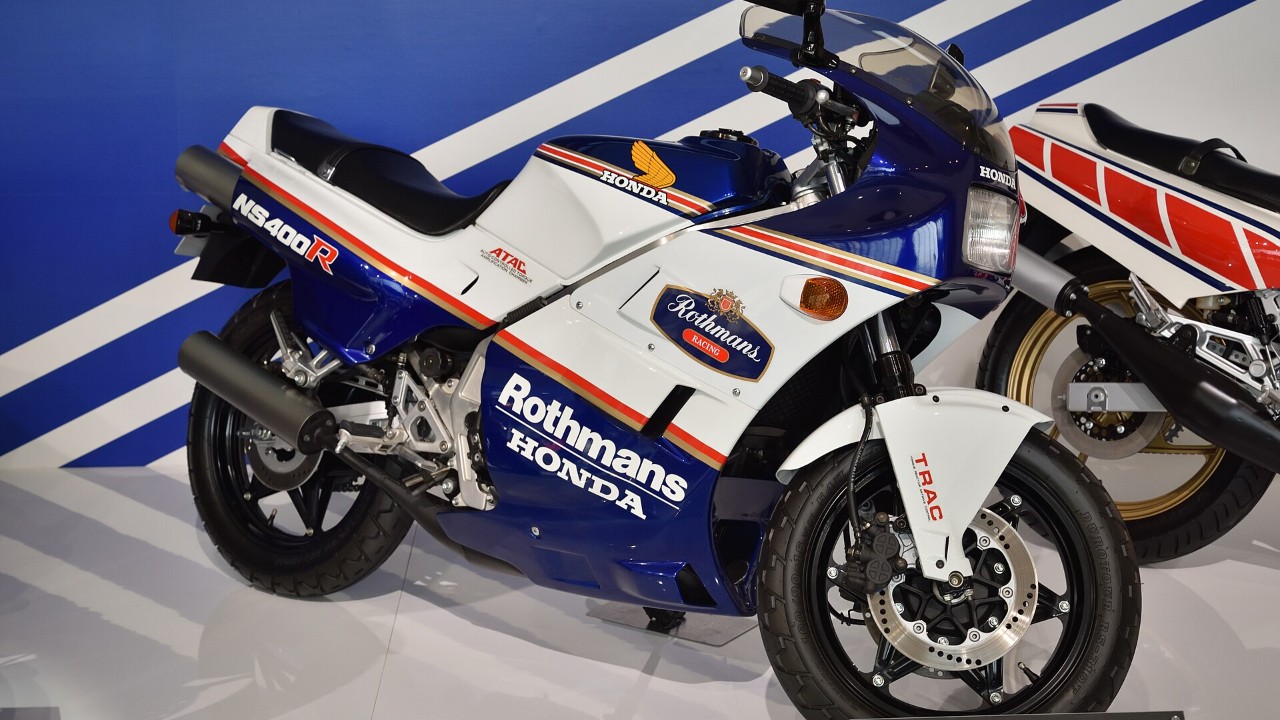
Honda’s NS400R put a racer’s three-cylinder layout into a road bike. It used a 387 cc liquid-cooled, oil-injected 90-degree V3 breathing through three flat-slide carburetors. The design traced back to the NS500 that Freddie Spencer rode to the 1983 500 cc world title.
Export bikes made 72 horsepower at 9,500 rpm, while Japanese models were restricted to 59. The chassis was serious too. It had a box-section alloy frame, Honda’s TRAC anti-dive fork, Pro-Link rear suspension and three disc brakes. Dry weight was just 163 kg, or about 359 pounds.
Our take: the NS400R is the street two-stroke we’d pick for real riding, not just display. Oil injection means no premix at the pump, and a V3 sounds like nothing else on a Sunday ride. It also makes a fun contrast with the four-strokes in our list of Honda CB motorcycles. Expect to hunt for carburetor and exhaust parts, so buy from an owner who kept records.
11. 1968 Yamaha DT-1
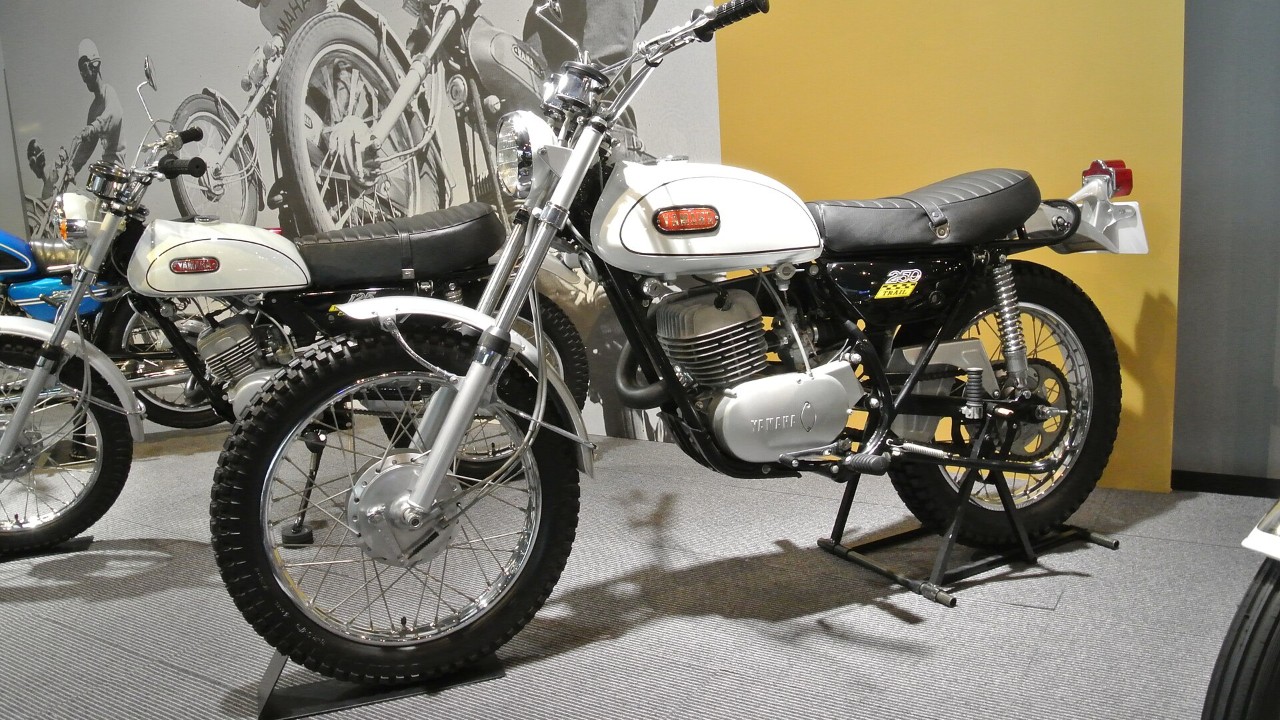
Yamaha unveiled the DT-1 at a US dealer meeting in October 1967 and put it on sale in spring 1968. It was Yamaha’s first off-road model, and the company credits it with creating the “trail” bike. That meant a machine you could ride on the street to the trailhead and then keep going.
Its 250 cc single shared a 70 mm by 64 mm bore and stroke with Yamaha’s YX26 factory motocrosser. At the time, Yamaha’s US arm sold about 4,000 bikes a year, yet it set a first-year DT-1 target of 12,000. According to Yamaha’s own history of the DT-1, that target was met quickly. Tom White of White Brothers saw one at the Cycle World Show in December 1967. Later he recalled, “Nobody here had ever seen anything like it.”
We’d recommend a DT-1 to anyone who wants a vintage two-stroke to ride, not just restore. Yamaha designed it for public roads and dirt trails, so a sorted example handles a gentle trail and a back road with equal ease. That first model year carries the story, so look for one with its correct 1968 parts.
12. 1978–1982 Suzuki RG250
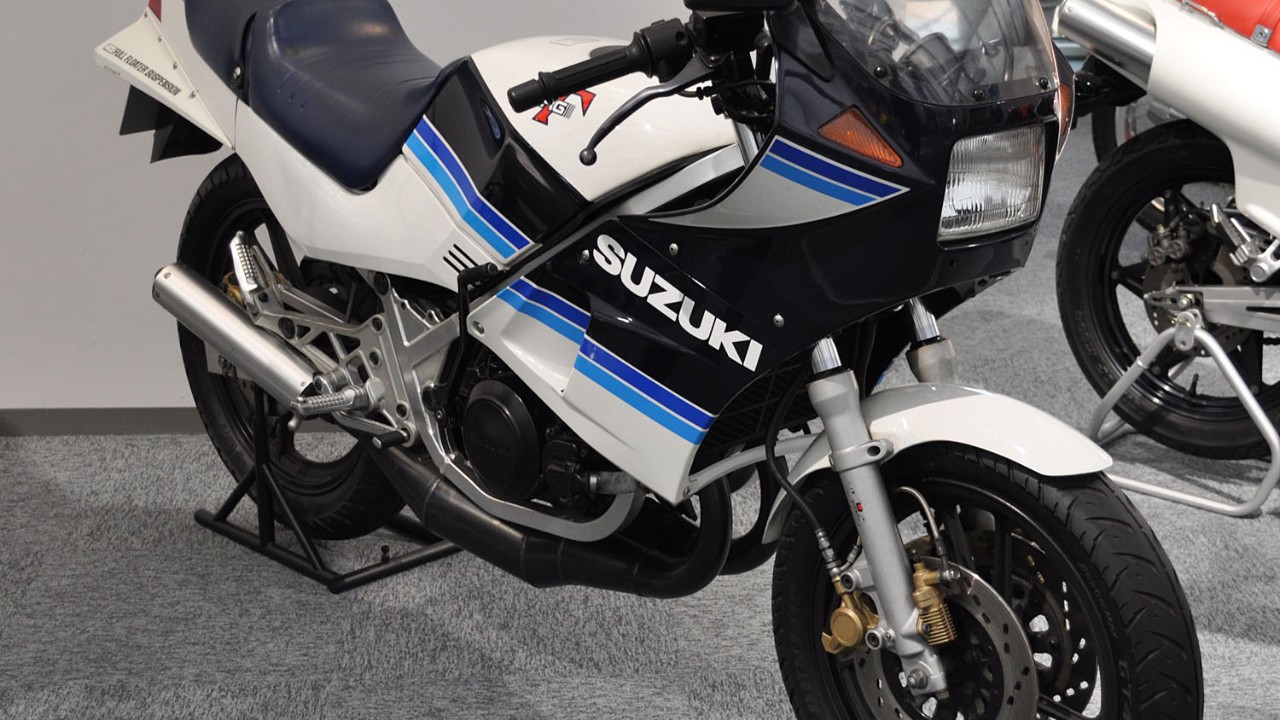
Before the Gamma, there was the plain RG250. Suzuki built it from 1978 to 1982 as the successor to the GT250 X-7, with a 247 cc twin-cylinder two-stroke. Its square 54 mm by 54 mm bore and stroke produced about 30 horsepower at 8,000 rpm.
That is modest power by modern standards. However, the RG250 set up what came next, because the RG250 Gamma followed in 1983 and became the name most riders remember. We suspect the earlier bike gets overlooked for exactly that reason.
Our take: the early RG250 is a good entry ticket to 1980s Suzuki two-strokes. A light twin with about 30 horsepower is easy to ride, easy to work on and kind to a newer rider. For the engineering behind that idea, our piece on how the 1958 DKW 3=6 embraced two-stroke thinking follows the same idea on four wheels. Buy a complete bike, since trim pieces are the hard part to replace.
More from Fast Lane Only