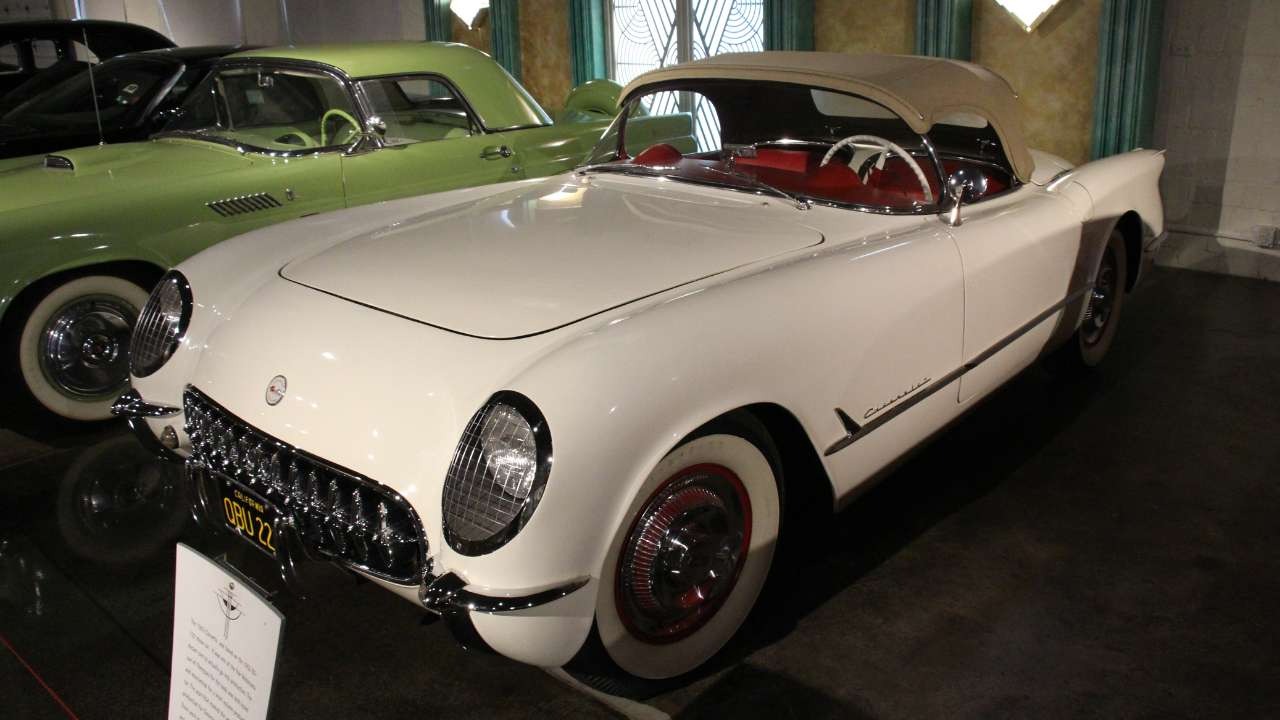
The 1953 Chevrolet Corvette arrived with the fanfare of a concept car driven straight off an auto show stand, then almost died before it could become a real sports car. Underpowered, hastily engineered, and priced like a luxury import, it sold so poorly that executives inside General Motors quietly prepared to walk away. The fact that the Corvette name is still alive today rests on a series of close calls, internal rebellions, and second chances that began with that troubled first year.
Revisiting the fragile origins of America’s longest-running sports car helps explain why survival, not just speed, is baked into Corvette culture. The 1953 model was less an instant icon than a prototype pushed prematurely into mass production, and its near cancellation still shapes how enthusiasts and restorers treat every battered fiberglass shell they drag out of a barn.
How a show car turned production experiment nearly stalled out
The first Corvette was born out of styling ambition more than mechanical planning. Chevrolet designers created a low, two-seat roadster in fiberglass, a material that promised dramatic curves without the cost of steel tooling. Executives loved the idea of a glamorous halo car that could sit near European roadsters in showrooms, so the design went from Motorama star to production order in a rush.
That speed came with compromises. Instead of a new performance drivetrain, the 1953 car relied on Chevrolet’s existing inline six-cylinder engine paired with a two-speed automatic transmission. The result looked like a sports car but drove more like a stylish cruiser. Early reviewers praised the styling but criticized the lack of power and the soft, boulevard-focused suspension, which left the car short of the athletic feel buyers expected from a two-seat roadster.
Production itself was closer to handcraft than mass manufacturing. Fiberglass body panels required new techniques, and fit and finish varied widely from car to car. The first run was limited, and the cars were built in a small operation that could not match the consistency of Chevrolet’s volume sedans. Those constraints might have been acceptable if demand had exploded. Instead, the opposite happened.
Buyers balked at paying a premium price for a car that delivered less performance than many mainstream models. The first-year Corvette became a curiosity, admired at dealerships but left unsold in significant numbers. Within General Motors, some executives began to see the car as a failed experiment that distracted from the profitable core lineup.
The internal rescue mission that kept Corvette alive
The trajectory changed not because of a sudden surge of sales but because new internal champions emerged. Engineers and performance-minded managers saw that the basic concept still had potential if Chevrolet treated the Corvette as a serious sports car instead of a styling exercise. That meant more power, a manual transmission, and a chassis tuned for real handling.
As the 1950s progressed, the Corvette gradually received V8 power, better brakes, and suspension improvements. Racing involvement helped prove the concept. Each update moved the car away from its 1953 roots as a flashy cruiser and closer to a true performance machine that could compete with European rivals. The early threat of cancellation lingered in the background, however, pushing advocates to keep improving the car rather than letting it drift into niche novelty status.
That history of almost losing the model in its infancy created a culture in which every new generation had to justify its existence. Later Corvettes, from the mid-year C2 to the modern mid-engine versions, carried the weight of that legacy. The car could never again be just a styling statement. It had to deliver on performance, value, and technological ambition or risk reopening the old argument about whether Chevrolet should build a two-seat sports car at all.
Why the Corvette’s shaky start still resonates with enthusiasts
The near cancellation of the 1953 car matters today because it colors how enthusiasts see every surviving early Corvette and, more broadly, how they treat neglected examples from later years. A rough, incomplete car is not just a used vehicle. It is another chance to keep a fragile lineage alive.
That mindset shows up in the restoration stories that circulate through the hobby. When a mid-1960s coupe is pulled out of long-term storage and given what fans like to call a second life, owners often describe the project as saving a piece of history rather than simply flipping an old car. One example is a 1965 Corvette that sat untouched for 45 years before being revived. Enthusiasts celebrated the resurrection not only for the mechanical achievement but for the symbolic act of bringing a dormant chapter of the brand’s story back onto the road.
That emotional charge traces directly to the fragile early years. Because the 1953 model almost disappeared, later owners treat the whole lineage as something that must be actively preserved. The idea that the car survived corporate skepticism once makes each restoration feel like a small personal version of that same fight.
The first-year model itself has also gained a special aura. Collectors value it not for outright performance, which later cars easily surpass, but for its role as the car that had to be saved. Owning a 1953 Corvette is as much about curating a near-miss in automotive history as it is about driving. The car’s flaws, from its modest power to its imperfect fiberglass, have become part of its charm.
Modern performance owes a debt to that early gamble
The current Corvette, with its mid-engine layout, advanced electronics, and track-ready capability, might seem far removed from the 1953 original. Yet the willingness to push the car into new territory grew out of the same determination that kept it alive after its shaky debut. Once Chevrolet committed to the idea that the Corvette should exist at all, the company had to keep proving that decision was justified.
That pressure encouraged bold engineering choices. Over the decades, the Corvette adopted fuel injection, independent rear suspension, advanced composite materials, and high output small-block V8s. Each leap forward helped cement the car as a technology showcase within Chevrolet’s lineup. Without the memory of that early brush with cancellation, the company might have been more cautious and less willing to treat the car as a rolling laboratory.
There is also a cultural dimension. The Corvette became a symbol of American performance partly because it survived adversity. Fans see it as the sports car that was not supposed to make it, yet did, and then kept evolving. That underdog narrative sits in the background whenever a new generation is unveiled or a record lap time is announced.
What the 1953 close call suggests about Corvette’s future
Looking ahead, the story of the first Corvette’s near demise offers clues about how the brand might navigate the shift toward electrification and changing performance expectations. The same questions that hovered over the 1953 car are back in new form. Does a two-seat performance model still fit Chevrolet’s business priorities. Can it adapt to new technologies without losing its identity.
The early lesson is that survival depends on treating the car as more than a styling statement. If the Corvette moves further into hybrid or fully electric territory, the mechanical choices will need to feel as purposeful as the V8 swap that rescued the car in its early years. A future battery powered Corvette that merely looks the part would risk repeating the 1953 mistake of selling image without enough substance.
At the same time, the culture of second chances that surrounds the car suggests that enthusiasts will follow if the product delivers. Just as owners invest time and money to revive long parked coupes and roadsters, the community is likely to rally around new interpretations that honor the performance mission. The brand has already weathered shifts from carburetors to fuel injection, from chrome bumpers to plastic fascias, and from front-engine layouts to a mid-engine chassis. Each transition felt risky, yet the car’s identity survived.
More from Fast Lane Only
- Unboxing the WWII Jeep in a Crate
- 15 rare Chevys collectors are quietly buying
- 10 underrated V8s still worth hunting down
- Police notice this before you even roll window down
*Research for this article included AI assistance, with all final content reviewed by human editors