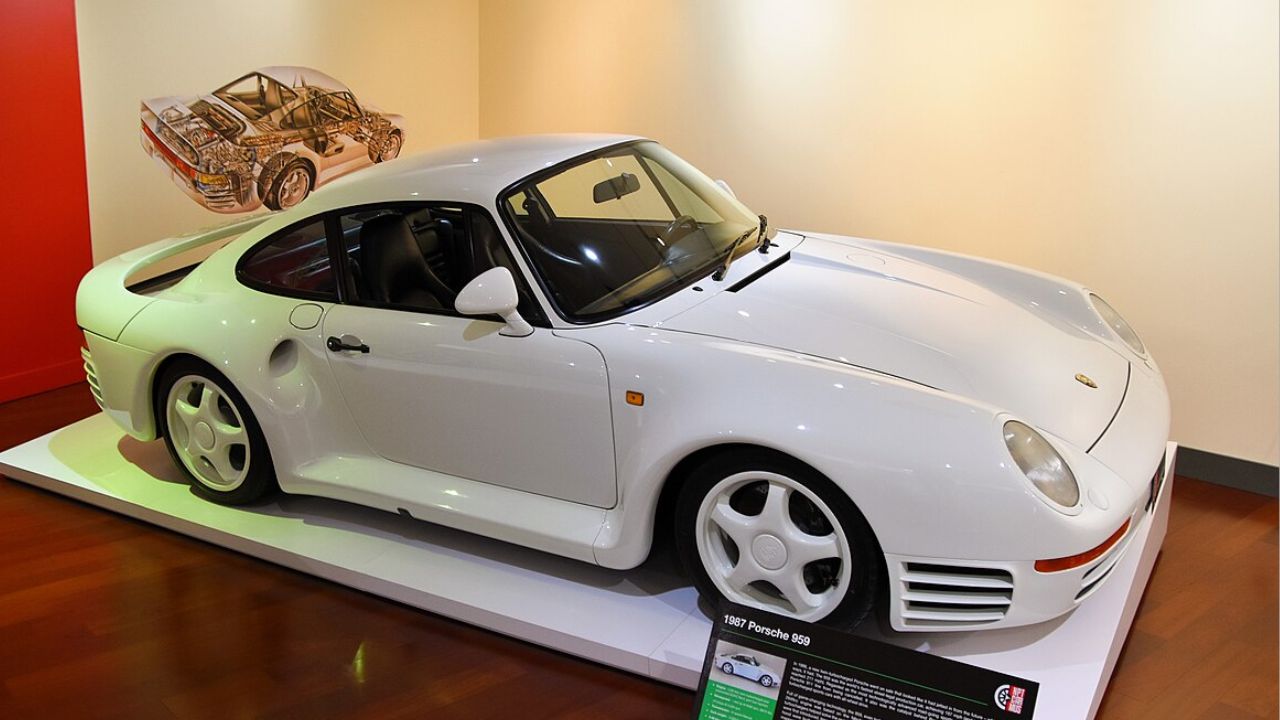
The 1987 Porsche 959 is often hailed as a groundbreaking vehicle that redefined the supercar genre. Combining cutting-edge technology, performance, and luxury, the 959 set a new standard that influenced countless manufacturers and models that followed.
The Birth of the Porsche 959
The Porsche 959 was born out of the desire to compete in the Group B racing series, a platform that demanded not only speed but also advanced engineering. Initially conceived as a high-performance sports car, the 959’s development began in the early 1980s when Porsche sought to leverage its motorsport expertise into a road-legal vehicle. The project faced numerous engineering challenges, including the necessity to innovate and integrate various technologies that had not been used in production cars before.
Upon its launch, the 959 was met with a mix of awe and skepticism. The automotive community recognized the car’s potential, while some traditionalists questioned whether such high-tech features belonged in a Porsche. Nevertheless, the 959 quickly garnered attention for its striking design and performance capabilities, setting the stage for its legendary status.
Innovative Technology and Engineering
One of the most revolutionary aspects of the Porsche 959 was its all-wheel drive (AWD) system. At a time when most supercars were rear-wheel drive, Porsche introduced an AWD system that provided unmatched traction and stability. This technology was not merely a gimmick; it fundamentally changed how performance vehicles handled in various driving conditions. The AWD system enabled the 959 to harness its power effectively, allowing for precise control and enhanced cornering capabilities.
Aerodynamics also played a crucial role in the 959’s design. The car featured innovative aerodynamic enhancements, including an active rear spoiler that adjusted to speed, optimizing downforce and stability. This meticulous attention to aerodynamics not only improved the 959’s performance but also influenced future designs across the supercar spectrum. Additionally, the use of lightweight composite materials in the construction of the 959 contributed to its agility and speed, setting a precedent for future supercars.
Performance and Specifications
Under the hood, the Porsche 959 boasted a powerful 2.85-liter twin-turbocharged flat-six engine. This engineering marvel produced an impressive 450 horsepower, allowing the car to accelerate from 0 to 60 mph in just 3.6 seconds. Such performance metrics were groundbreaking at the time and established benchmarks for future supercars. The 959 was capable of achieving a top speed of 197 mph, making it one of the fastest production cars available in the late 1980s.
The handling dynamics of the 959 were equally impressive. Equipped with a sophisticated suspension system featuring adjustable dampers, the car offered a smooth yet responsive driving experience. The braking system, utilizing advanced technology for its time, provided the stopping power necessary to match the car’s remarkable speed. Together, these elements created a vehicle that was not only fast but also incredibly enjoyable to drive, whether on the track or the road.
Luxury and Comfort Features
While performance was undoubtedly a focal point for the Porsche 959, the interior design reflected a commitment to luxury and comfort. The cabin was meticulously crafted, featuring high-quality materials and a layout that prioritized driver ergonomics. Leather upholstery, comfortable seating, and ample legroom made the 959 a surprisingly practical option for a supercar, allowing it to serve as a daily driver despite its high-performance pedigree.
Technological advancements also took center stage inside the 959. It was one of the first supercars to feature digital displays, providing the driver with crucial information at a glance. Climate control systems enhanced comfort, ensuring that occupants could enjoy their drive in any weather condition. This blend of performance and luxury set a new standard for supercars, prompting other manufacturers to adopt similar features in their designs.
Impact on Competitors and the Supercar Market
The influence of the Porsche 959 on the supercar market cannot be overstated. It served as a critical benchmark for subsequent models, inspiring competitors like Ferrari and McLaren to push the boundaries of performance and technology. The innovations introduced with the 959, such as AWD and advanced aerodynamics, became integral features in many later supercars, establishing a new norm within the industry.
As consumer expectations evolved, so too did the landscape of high-performance vehicles. The success of the 959 led to a shift in focus toward more technologically advanced and versatile supercars. Buyers began to seek out vehicles that offered not only blistering speed but also enhanced usability and comfort, a trend that has continued to shape the market to this day.
Legacy and Cultural Significance
The Porsche 959 has cemented its status as an icon in automotive history. Its groundbreaking features and exceptional performance have made it a subject of admiration among car enthusiasts and collectors alike. The vehicle has appeared in various films and video games, further solidifying its place in popular culture as a symbol of luxury and performance. Its unique design and technological innovations have made it a topic of discussion in automotive circles for decades.
In the collector car market, the 959 is highly sought after, with values steadily increasing over the years. Its limited production numbers and historical significance contribute to its desirability, making it a prized possession for enthusiasts. As a classic, the 959 continues to be celebrated at car shows and gatherings, where its legacy as a groundbreaking supercar is honored.
The Porsche 959 vs. The Ferrari F40
The rivalry between the Porsche 959 and the Ferrari F40 epitomizes the competitive spirit of the late 1980s supercar market. While both vehicles offered extraordinary performance, they catered to different segments of the audience. The 959 focused on technological innovation and all-around usability, while the F40 was a raw, track-oriented machine that prioritized speed above all else. The F40’s lightweight construction and aggressive design appealed to purists, while the 959 attracted drivers looking for a blend of performance and luxury.
In terms of specifications, the two vehicles showcased different philosophies. The F40’s twin-turbocharged V8 engine produced 471 horsepower, allowing it to achieve similar performance metrics as the 959. However, the 959’s advanced AWD system provided it with superior handling and stability, especially in challenging driving conditions. This head-to-head comparison not only highlighted the strengths and weaknesses of each model but also underscored the evolving expectations of supercar enthusiasts during that era. The legacy of this rivalry continues to resonate in the automotive community, influencing the design and engineering of modern supercars. For a deeper dive into this competition, check out this article.
Challenges and Controversies
Despite its groundbreaking features, the Porsche 959 faced its share of challenges and controversies. One significant hurdle was its limited production numbers, which were restricted to just 337 units. This exclusivity contributed to its allure but also meant that many enthusiasts were unable to experience the vehicle firsthand. Additionally, the production limitations raised questions about accessibility and the feasibility of owning such a technologically advanced vehicle.
Legal hurdles also plagued the 959, particularly in its quest to enter the U.S. market. The car’s advanced technology and design did not meet the necessary regulatory standards at the time, complicating its importation. This situation frustrated both Porsche and potential buyers, as the 959 was unable to fulfill its promise of being a global supercar. Critics pointed to these challenges as shortcomings, while admirers lauded the car’s innovation and performance.
The Porsche 959 Today
In the current collector car market, the Porsche 959 commands impressive values, often fetching prices in the millions at auctions. Its status as a limited-production vehicle and its groundbreaking technology contribute to its desirability among collectors and enthusiasts alike. As interest in classic supercars continues to rise, the 959 has become a focal point in discussions about automotive history and innovation.
Preserving the Porsche 959 for future generations is of paramount importance. As with any classic vehicle, restoration efforts focus on maintaining the car’s original features while ensuring its reliability and performance. Enthusiast communities play a significant role in this preservation, organizing events and gatherings to celebrate the 959 and educate new generations about its legacy. The continued appreciation for the Porsche 959 serves as a testament to its impact on the automotive landscape and its enduring status as a revolutionary supercar.
More from Fast Lane Only