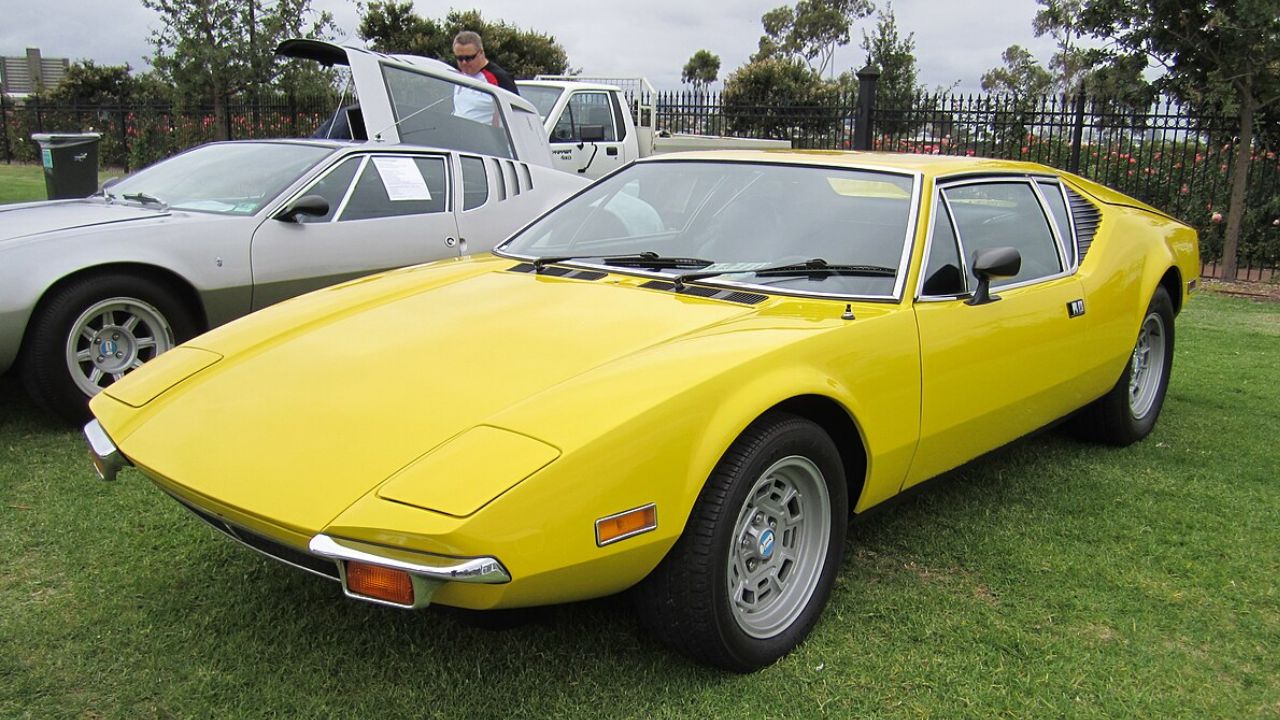
The 1971 De Tomaso Pantera marked a significant fusion of Italian automotive design and American muscle, offering enthusiasts a unique blend of style and power. This iconic sports car not only showcased the visionary artistry of its creators but also harnessed the performance of a potent American V8 engine, making it a standout in the early 1970s automotive landscape.
Origins of the De Tomaso Pantera
Founded by Alejandro De Tomaso, the De Tomaso brand aimed to create a sports car that combined the elegance of Italian design with the raw power of American engineering. De Tomaso, an Argentine-born entrepreneur, sought to craft a vehicle that would appeal to both European and American markets. He envisioned a car that could marry the aesthetic appeal of Italian craftsmanship with the brawn of American muscle, a conceptual fusion that would ultimately lead to the creation of the Pantera.
In the late 1960s, De Tomaso struck a pivotal partnership with Ford Motor Company, which would supply the engine that would power the Pantera. The decision to utilize the Ford 351 Cleveland V8 engine was revolutionary at the time, as it provided the necessary horsepower and torque that enthusiasts craved. The collaboration not only helped keep production costs manageable but also ensured that the Pantera would have the performance to match its stunning design. This partnership came at a time when the automotive industry was undergoing a transformation, with increasing demands for both style and performance.
Design and Aesthetics
The De Tomaso Pantera’s design is attributed to the renowned Italian design house Ghia, known for their elegance and attention to detail. The Pantera features a low profile, an aggressive stance, and sleek lines that are instantly recognizable. The front end is characterized by its sharp headlights and wide grille, while the rear sports a distinctive tail that houses dual exhausts and a wide track. These elements combined to create a car that was not only visually striking but also aerodynamically efficient.
When compared to contemporaneous sports cars, such as the Chevrolet Corvette and the Ferrari 246 GT, the Pantera stood out due to its unique blend of Italian flair and American muscle. The car’s silhouette and proportions set it apart, allowing it to capture the imaginations of car enthusiasts. The introduction of the Pantera coincided with a time when buyers were looking for vehicles that offered not only performance but also a sense of style and prestige. The Pantera delivered on both fronts, making it an alluring option in the luxury sports car market.
Engineering Innovations
The choice of the Ford 351 Cleveland V8 engine was a critical factor in the Pantera’s performance capabilities. With a horsepower rating of approximately 330, the engine provided the Pantera with exhilarating acceleration and a top speed that could rival its European competitors. The Pantera’s engine was mated to a ZF five-speed manual transmission, which allowed for quick gear changes and contributed to a thrilling driving experience.
The chassis design of the Pantera also played a significant role in its handling and performance. Constructed with a steel monocoque structure, the Pantera was built for rigidity while maintaining a relatively low weight. The car’s weight distribution, aided by its mid-engine layout, resulted in superb handling characteristics, allowing drivers to navigate corners with confidence. The suspension setup, featuring independent front and rear configurations, further enhanced its performance on both road and track, making it a versatile option for enthusiasts.
Performance Metrics
The De Tomaso Pantera boasted impressive performance metrics that captured the attention of automotive enthusiasts. With a 0-60 mph time of around 5.5 seconds and a top speed exceeding 140 mph, the Pantera was not just a pretty face; it was a serious performance machine. The combination of its powerful V8 engine and lightweight design enabled it to compete effectively against rivals such as the Porsche 911 and the Jaguar E-Type.
Real-world performance reviews highlighted the Pantera’s exhilarating power delivery and precise handling. Automotive journalists praised its ability to combine straight-line speed with agile cornering capabilities, making it a favorite among those who sought both performance and style. The Pantera quickly garnered a reputation in the driving community as a capable sports car that could hold its own on both the road and the racetrack.
Market Reception and Sales
The initial reception of the Pantera by the automotive press was largely positive. With its striking design and impressive performance, the Pantera attracted attention from potential buyers looking for something unique in the luxury sports car market. Early reviews often highlighted its competitive pricing compared to European rivals, making it an appealing option for enthusiasts.
Sales figures for the Pantera during the 1970s reflected its popularity, particularly among affluent buyers. Targeted primarily at young professionals and successful individuals, the Pantera was positioned as a car that offered both performance and prestige. The car found a niche in the American market, where it appealed to those who desired the thrill of a sports car without the exorbitant price tag often associated with European models. Despite its initial success, the Pantera faced challenges as the decade progressed.
Cultural Impact and Legacy
The De Tomaso Pantera’s influence on automotive culture cannot be overstated. Its unique design and powerful performance made it a symbol of the era, and it has been featured in various films and television shows, contributing to its iconic status. The car made notable appearances in movies like “The Gumball Rally” and “The Fast and the Furious” franchise, further solidifying its place in pop culture. These appearances played a significant role in popularizing the model and capturing the imaginations of new generations of car enthusiasts.
Today, the Pantera is considered a collectible classic, with its value steadily increasing over the years. Enthusiasts and collectors appreciate the car not only for its performance but also for its distinctive Italian styling and American heart. The Pantera has become a fixture at car shows and events, where it continues to draw admiration from fans of automotive history and design.
Challenges and Decline
Despite its initial success, the De Tomaso Pantera faced significant challenges in the mid-1970s, particularly with the onset of the 1973 oil crisis. Rising fuel prices and changing consumer preferences led to a decline in demand for high-performance vehicles. The Pantera, with its powerful V8 engine, struggled to find buyers in an increasingly fuel-conscious market. This shift in consumer behavior severely impacted sales and production, leading to a decrease in the model’s availability.
In addition to market challenges, reliability and serviceability issues arose, particularly in the American market. Owners reported difficulties in finding parts and service centers familiar with the Pantera’s unique design. These issues contributed to a decline in the vehicle’s reputation, prompting some potential buyers to look elsewhere for their sports car needs. Ultimately, the combination of these factors led to the cessation of Pantera production in the early 1980s, marking the end of an era for the De Tomaso brand.
The Pantera Today: A Timeless Classic
Today, the De Tomaso Pantera is regarded as a timeless classic, celebrated for its innovative fusion of design and performance. The car has found new life among collectors and enthusiasts, with a growing market for restored models. Enthusiasts often share their passion for the Pantera through online forums and social media, showcasing their restoration projects and modifications. The current market values restored Panteras at significant prices, reflecting their desirability among collectors.
Modern modifications and performance enhancements have also played a role in the Pantera’s resurgence. Many owners are opting to upgrade various components, including suspension systems, exhausts, and engine performance, to enhance the driving experience further. This trend has helped maintain the Pantera’s relevance in today’s automotive landscape, ensuring that it continues to capture the hearts of enthusiasts who appreciate the blend of Italian style and American power.
More from Fast Lane Only