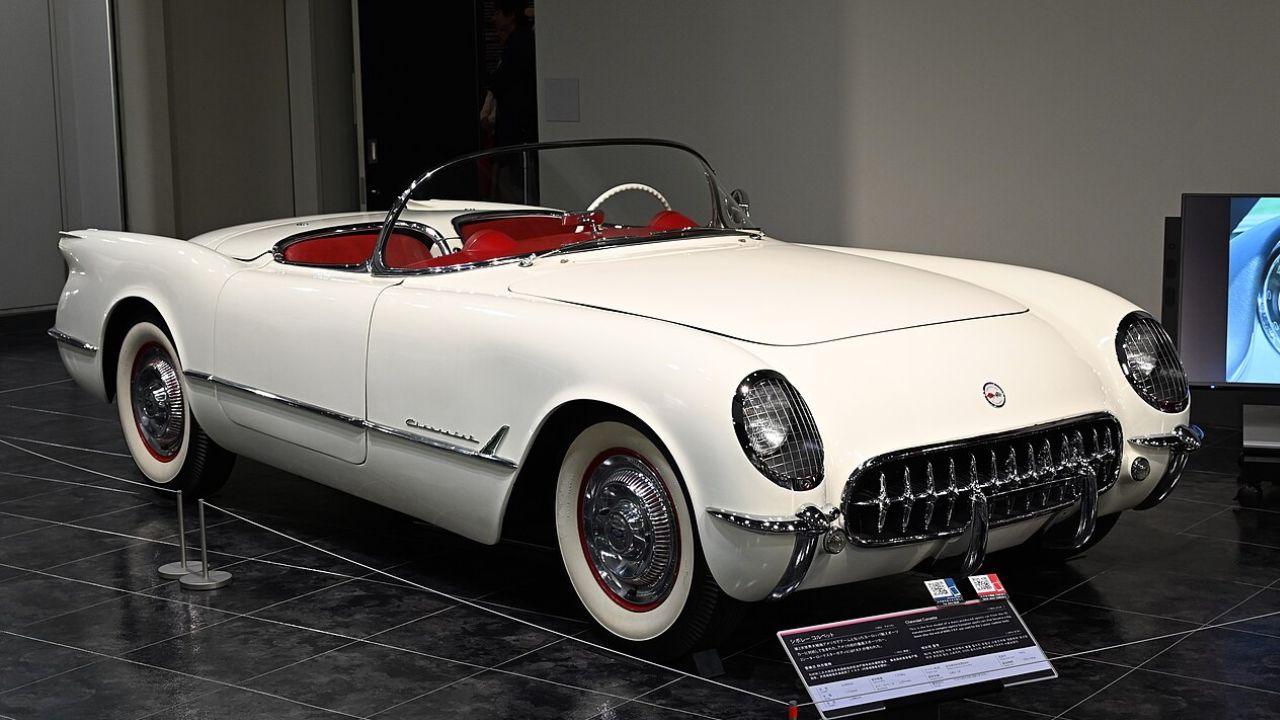
The 1953 Chevrolet Corvette, an iconic symbol of American automotive ingenuity, faced a precarious fate in its debut year. Despite its innovative design and engineering, it struggled to capture the market’s attention, leading to its near disappearance after just one year. Several factors contributed to this situation, including design limitations, market competition, and strategic missteps that almost derailed what would eventually become a legendary nameplate in automotive history.
Historical Context of the 1953 Chevrolet Corvette
The post-war automotive boom significantly influenced American car culture, as consumers sought new vehicles that embodied freedom and modernity. After World War II, the economy flourished, and Americans were eager to spend on luxuries, including automobiles. In this burgeoning market, Chevrolet envisioned a sports car that would symbolize American ingenuity, and thus the Corvette was born. The car was introduced at the 1953 Motorama, capturing the public’s imagination with its sleek design and promising performance.
Initially, the public reception was mixed. While some praised the Corvette for its unique styling and fiberglass body, others criticized its performance and price point. Critical reviews noted that while the car was visually striking, it fell short in several key areas when compared to established sports cars like the Jaguar XK120. This lukewarm reception set the stage for the challenges the Corvette would face in its inaugural year.
Design and Engineering Challenges
The Corvette’s fiberglass body was a revolutionary development in automotive design, allowing for a lighter and more aerodynamic frame than traditional steel. This innovation was intended to enhance performance and handling. However, the manufacturing process for fiberglass was still in its infancy, leading to inconsistencies in quality and fit. Additionally, early models faced mechanical issues that hampered their performance, leaving many potential buyers dissatisfied.
Performance shortcomings became apparent as the Corvette struggled with competition from rivals. Despite its sporty appearance, the car’s powertrain—a 235 cubic inch inline-six engine—failed to deliver the expected excitement. With only 150 horsepower, it was significantly less powerful than competitors like the Ford Thunderbird, which offered a more robust V8 engine option. These design flaws not only affected production but also eroded consumer trust, making it difficult for Chevrolet to establish the Corvette as a viable sports car option.
Market Competition
During the early 1950s, the sports car market was filled with strong competitors, including the aforementioned Ford Thunderbird and the European invasion of models like the MG and Triumph. The Thunderbird, introduced in 1955, quickly gained popularity with its more powerful engine and luxurious features, appealing to a broader audience. In contrast, the Corvette struggled to find its niche, with sales figures reflecting the challenges it faced. In 1953, only 300 units were produced, which paled in comparison to the burgeoning demand for other sports cars.
As consumers began to shift their preferences towards more traditional vehicles with greater power and comfort, the Corvette’s appeal waned. The allure of American muscle cars began to overshadow the Corvette’s sporty yet underpowered image, further complicating its position in the market. The Corvette needed to adapt quickly to survive in a rapidly changing automotive landscape.
Production Limitations
Scaling production of the Corvette proved to be a significant challenge for Chevrolet. While the company aimed to create a high-quality sports car, the manufacturing process for fiberglass was still evolving. Initial production runs were hampered by supply chain issues and labor shortages, which delayed delivery timelines and created inconsistencies in quality. As demand for sports cars grew, Chevrolet struggled to meet expectations, making the Corvette less accessible to potential buyers.
The limited dealership network also played a crucial role in the Corvette’s struggles. With few locations selling the vehicle, many consumers had difficulty finding a Corvette to test drive or purchase. This lack of availability hampered sales and contributed to a perception that the vehicle was more of a novelty than a serious contender in the sports car market. For a car that aimed to capture the spirit of American automotive culture, these limitations were detrimental to its long-term success.
Marketing Missteps
Chevrolet’s initial marketing strategy for the Corvette focused heavily on its innovative design and sporty aesthetic. However, the approach lacked a clear understanding of consumer expectations and desires. Instead of positioning the Corvette as a true performance vehicle, Chevrolet emphasized its styling and luxury features. This disconnect left potential buyers unconvinced of the car’s capabilities as a sports car, leading to poor sales.
In contrast, competitors like Ford employed more effective marketing campaigns that highlighted performance and the driving experience. As the Thunderbird gained traction through targeted advertising and promotional events, the Corvette struggled to find its identity in a crowded market. Without a strong marketing strategy that resonated with consumers, the Corvette faced an uphill battle in establishing itself as a legitimate sports car option.
Economic Factors Affecting Sales
The economic climate in the early 1950s also played a significant role in the Corvette’s struggles. Following the post-war boom, inflation began to rise, affecting consumer spending habits. Many buyers were hesitant to invest in luxury items like sports cars, especially when more practical and affordable options were available. This economic uncertainty made it increasingly difficult for the Corvette to find a foothold in the market.
Regional differences in sales performance further complicated the situation. While some areas of the United States embraced the new sports car trend, others remained resistant to the idea of purchasing a vehicle primarily for performance. As a result, Chevrolet faced challenges in understanding regional preferences and tailoring their marketing efforts accordingly. The combination of economic factors and shifting consumer attitudes ultimately hindered the Corvette’s ability to thrive in its debut year.
Consumer Feedback and Reception
Customer reviews and feedback from early adopters of the Corvette reflected the mixed sentiments surrounding the vehicle. While some owners enjoyed the unique design and head-turning aesthetics, others were disappointed with the car’s performance and reliability. Automotive journalism played a crucial role in shaping public perception, with influential publications highlighting both the strengths and weaknesses of the Corvette.
Test drives often revealed the Corvette’s shortcomings, particularly when compared to more established models. Critics noted that while the Corvette offered a unique driving experience, it lacked the power and handling that many enthusiasts sought. As automotive journalists highlighted these flaws, the Corvette’s reputation suffered, making it even more challenging for Chevrolet to reposition the vehicle in the minds of consumers.
Chevrolet’s Response and Strategic Decisions
In response to the numerous challenges faced by the Corvette, Chevrolet began to take decisive actions aimed at addressing the vehicle’s shortcomings. Engineers worked diligently to refine the car’s design and performance, leading to a series of improvements for the 1954 model. These changes included a more powerful V8 engine option, which significantly enhanced the Corvette’s performance and appeal.
The decision-making process behind continuing or discontinuing the Corvette line was fraught with debate. However, the insights gained from customer feedback and automotive journalism ultimately led Chevrolet to commit to further developing the Corvette. This strategic decision would lay the groundwork for future models, ensuring that the Corvette would not only survive but eventually thrive in the market.
The 1954 Turnaround and Legacy
The introduction of the 1954 Corvette marked a critical turning point for the model, rejuvenating interest and setting the stage for its eventual success. Key changes, including the addition of a V8 engine, transformed the Corvette into a true performance vehicle, capturing the attention of car enthusiasts. The enhanced performance characteristics redefined the Corvette’s image, allowing it to compete more effectively in the sports car market.
Moreover, the role of racing and performance in reshaping the Corvette’s image cannot be overstated. As Chevrolet began participating in racing events, the Corvette’s reputation as a high-performance sports car solidified. Over time, the Corvette evolved into a symbol of American automotive culture, paving the way for future generations of the model to continue its legacy. Today, the Corvette stands as a testament to the resilience and innovation of American automotive engineering, securing its place in history as a beloved icon.
More from Fast Lane Only