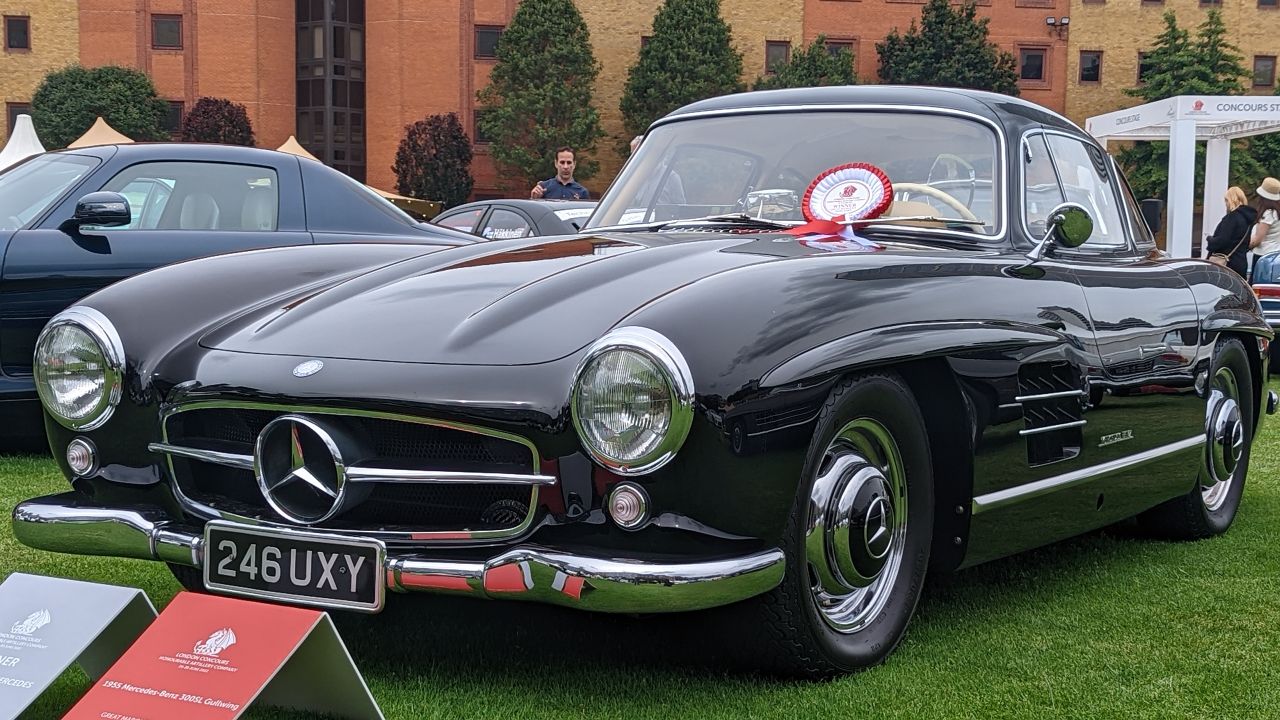
The 1955 Mercedes-Benz 300SL did more than go fast. It fused racing technology, radical design and everyday usability in a way that set the template for what we now recognise as the modern supercar, and it has since become one of the most coveted collector cars on the planet. By looking at how it was conceived, engineered, styled and valued, I can trace how this single model became the blueprint others have been chasing for decades.
From race winner to road-going statement
The 300SL began as a pure competition tool, then was pulled into road production because demand proved impossible to ignore. Initially, there were no plans to build a street version, but the Daimler and Benz Board changed course after hearing persistent requests from influential importer Maximilian Hoffman, who saw a market for a high performance flagship in the United States. That pivot turned a successful racing machine into a halo road car that carried its competition pedigree straight onto public roads, giving later performance brands a model for turning motorsport success into showroom desirability.
Even in its name, the 300 designation signalled continuity with the company’s top tier engineering, while the SL badge linked the car to its lightweight racing origins. The decision to retain so much of the competition car’s character, from its tubular spaceframe to its dramatic proportions, meant the production 300SL felt like a race car adapted for the street rather than a conventional coupe with a sporty badge. That direct lineage from track to road is a pattern that later icons, from Italian exotics to modern GT cars, would follow, but the 300SL showed how to execute it at scale.
Engineering that defined the supercar formula
The 300SL’s technical package reads like a checklist for what we now expect from a supercar, yet it arrived in the mid 1950s. Its 3.0L Inline Six engine used mechanical fuel injection at a time when carburettors were still the norm, and period specifications list output at 215 horsepower at 5,800 RPM with 202 ft-lb of torque. That combination, paired with a tall 3.25 final drive, gave the Gullwing the kind of high speed performance that would not look out of place decades later, and contemporary driving impressions still describe it as capable of serious acceleration from a simple standing start.
Top speed figures underline how far ahead of its peers the car was. The coupe is regarded as the world’s first production supercar capable of 155 m per hour, a number that put it in a different league from typical sports cars of its day and set a benchmark for future high performance road machines. The way the chassis and drivetrain were tuned, with shift points marked on the speedometer to help drivers exploit that 3.25 differential, showed a focus on extracting maximum performance that feels very familiar in today’s supercar segment. When I look at later halo cars that chase high top speeds and race derived engines, I see them following a path the 300SL had already mapped out.
Design drama and everyday usability
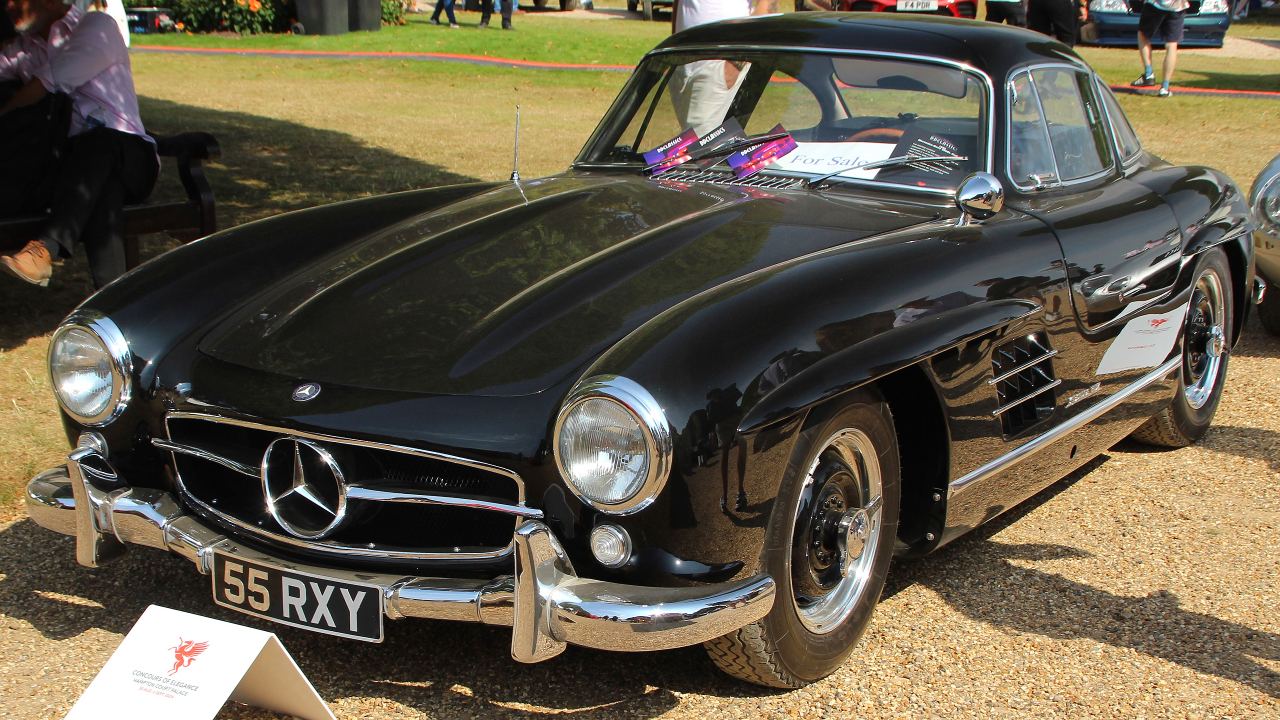
The Mercedes and Benz 300SL Gullwing did not just rely on numbers, it wrapped its engineering in a body that instantly communicated speed and innovation. The upward opening doors, dictated by the high sills of the spaceframe chassis, turned a structural necessity into a visual signature that made the Gullwing one of the most recognisable silhouettes in automotive history. Every roar of its engine and every gleam off its polished surface reinforced the sense that this was a mechanical object from the future, and that theatrical presence has become a core expectation of any car that aspires to supercar status.
Yet for all its drama, the 300SL was engineered to be driven, not just displayed. Period accounts describe cars that were Driven in long distance events and on public roads, with owners using them for real journeys rather than occasional track outings. The balance between radical styling, advanced engineering and genuine usability is what I see echoed in later grand touring supercars that promise both continent crossing comfort and headline performance. By proving that a car could look like a showpiece, perform like a racer and still function as a roadgoing machine, the Gullwing set a practical template that others have refined rather than reinvented.
How the 300SL became the collector benchmark
Decades after production ended, the 300SL has turned into what many market observers regard as the reference point for blue chip collector cars. Analysts comparing it with other icons note that The Ferrari F40, often seen as a rival in desirability, would need to be worth $3.7 million on average to match the 300 SL’s performance in long term value charts, and it still falls short even when rarer F40 LM variants are included. That kind of sustained appreciation suggests the Gullwing has transcended normal classic car status and become a financial benchmark as well as a cultural one.
Individual auction results reinforce that picture. Case studies from major sales show that a steel bodied 1955 300 SL with its original engine has brought $1.7 m, with reports also citing the same figure as $1.7 million at high profile RM Sot events. Alloy bodied examples have gone even higher, setting records that pull the entire market upward. When a single model consistently commands such numbers, it shapes expectations for what a top tier collector car should be, influencing how buyers, insurers and even museums value later supercars that aspire to similar status.
The lasting cultural imprint of the Gullwing
The 300SL’s influence is not confined to engineering and auction catalogues, it has seeped into how people imagine the ideal sports car. Commentators have noted that if you Close your eyes and think of 10 cars, the 300 SL will likely be among them, a testament to how deeply its image has lodged in popular memory. Specialists like Marcus, identified as a Car Sp and Director of Sales in Germany for a major auction house, point to the model’s enduring appeal among both seasoned collectors and newer enthusiasts who see it as a touchstone of automotive design.
That cultural weight feeds back into the market and into how manufacturers frame their own heritage. Modern presentations of Mercedes and Benz Formula 1 technology often reference the company’s historic road and race cars, with the 300SL frequently cast as a star actor in that narrative of revolutionary design. When Every new generation of performance car is introduced, from contemporary SL models to limited run halo projects, the shadow of the Gullwing is never far away. In that sense, the 1955 Mercedes-Benz 300SL did not just set a technical pattern for the supercar, it created a mental template for what the ultimate roadgoing performance car should look and feel like, a standard that continues to guide designers, engineers and collectors alike.
More from Fast Lane Only: