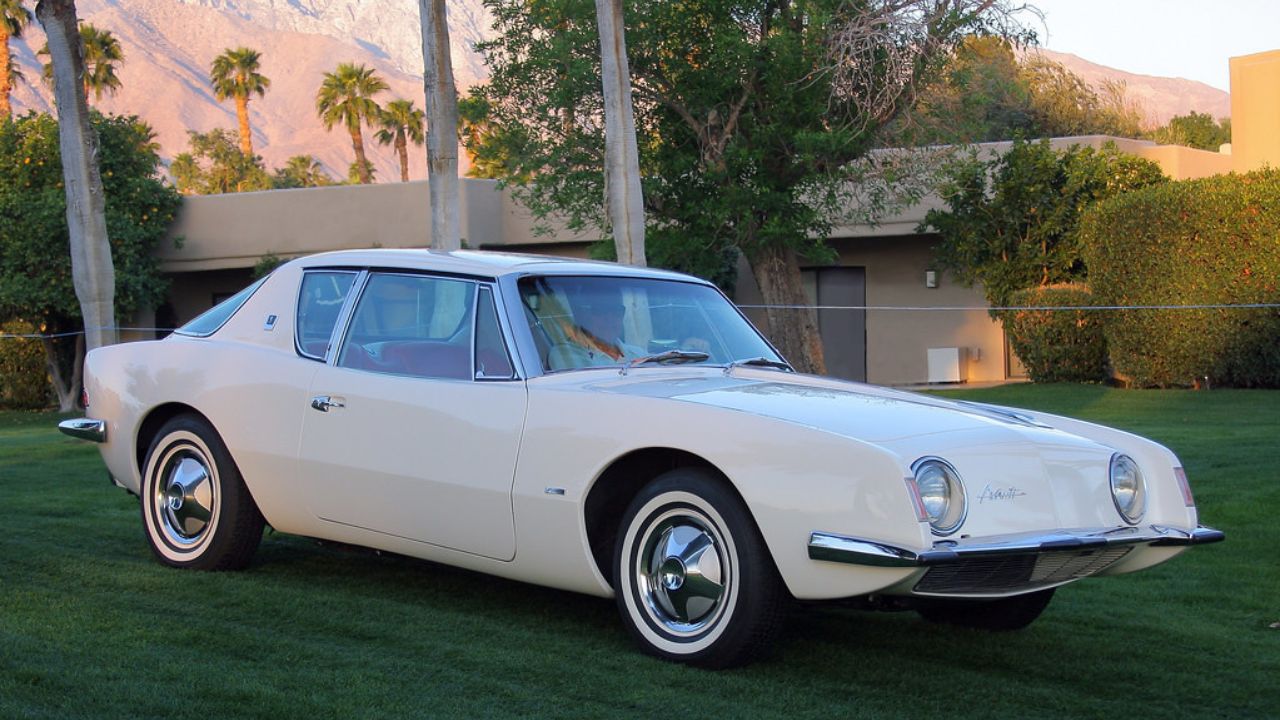
The 1963 Studebaker Avanti was launched as a dramatic lifeline for a struggling independent automaker, a fiberglass bullet aimed at the Corvette and the Thunderbird. Today it survives mostly as a ghost, glimpsed at concours fields or small-town cruise nights, far from the mainstream traffic it once hoped to conquer. Its scarcity on modern roads traces back to a mix of bold engineering, limited production, and the harsh realities that pushed Studebaker out of the car business.
For collectors and casual spotters alike, the Avanti’s rarity is not just a numbers game. It marks a turning point in American car culture, when sleek styling and supercharged speed could not quite overcome balance sheets and dealer anxiety.
A radical coupe from a company in trouble
Studebaker entered the early 1960s in financial distress, caught between the Big Three and rising import competition. The Avanti project was conceived at high speed, with designer Raymond Loewy’s team sketching and modeling the car in a matter of weeks. The result was a fiberglass-bodied 2+2 coupe with a coke-bottle waistline, a grille-less nose, and a safety-focused interior that featured a padded dash and aircraft-style switches.
Although the Avanti rode on a modified Lark chassis and used familiar Studebaker V8 power, the body and interior signaled a sharp break from the brand’s conservative image. It was marketed as a personal luxury performance car, the sort of statement piece that might lure younger, affluent buyers into showrooms that had long catered to practical family sedans.
Production limits and the supercharged edge
From the outset, the Avanti was never positioned as a mass-market product. Fiberglass construction slowed assembly, and Studebaker relied on outside suppliers for body shells, which created bottlenecks and quality headaches. Buyers could choose a naturally aspirated 289 cubic inch V8 or an optional Paxton supercharger that turned it into one of the quickest American cars of its day.
Surviving examples with the original supercharged R2 setup remain especially scarce. One mostly unrestored 1963 car, described as packing a rare factory blower and retaining its period-correct details, illustrates how few of these high-performance versions were built and how carefully they are now preserved by dedicated owners, as highlighted in a feature on a supercharged Avanti.
The Avanti’s performance credentials were not marketing fluff. With the supercharged engine, the car was timed at speeds that put it at the top of the American production field for 1963, ahead of rivals that had larger engines but less aerodynamic bodies, a point revisited in analysis of the fastest American car of that year.
Why so few were built
Despite its performance and styling, the Avanti arrived in a fragile business environment. Studebaker dealers were wary of an expensive halo coupe when bread-and-butter models were already hard to move. Production targets were missed early, partly because of body supply problems and partly because demand never matched the optimistic projections floated at launch.
Meanwhile, Studebaker’s broader lineup pulled attention away from the Avanti. The company still needed to sell compact Larks and family-oriented models such as the 1964 Studebaker Daytona convertible, which itself represented an effort to keep the brand relevant in a market obsessed with style and V8 power, as seen in coverage of a well-preserved Daytona convertible. The Avanti was meant to lift the whole brand, but it ended up competing for scarce marketing and engineering resources.
When Studebaker closed its South Bend, Indiana, assembly operations in the mid-1960s and shifted limited production to Canada, the Avanti was dropped entirely. That decision froze the model’s production run at a few thousand units, a fraction of what Chevrolet or Ford would build for any comparable specialty car.
Design that aged well, hardware that did not
Part of the Avanti’s modern rarity stems from how owners treated the cars once Studebaker folded. The fiberglass body resisted rust, so the shape survived better than many steel contemporaries. Underneath, however, the chassis, suspension components, and driveline hardware were standard Studebaker pieces. As parts support dried up, routine maintenance became harder and more expensive, and some cars were parked or cannibalized to keep others running.
The styling, once polarizing, has aged into a kind of timeless oddity. Its smooth nose and semi-fastback roofline look more contemporary than many early 1960s designs, which helps explain why a subset of enthusiasts went to great lengths to keep their cars on the road. Others were less patient with cracked fiberglass, sunbaked interiors, or tired superchargers, and their Avantis quietly disappeared into barns and backyards.
Collector appeal versus daily-driver reality
On today’s roads, the Avanti’s scarcity is less about total survivors and more about how those survivors are used. Many remaining cars live in collections or are driven sparingly to shows, where their rarity and Studebaker’s underdog story add to their appeal. Owners often treat them as artifacts from the final chapter of an independent automaker, not as commuter cars that can rack up thousands of miles each year.
Insurance classifications and rising values also keep Avantis out of daily service. Collector car policies typically limit annual mileage and encourage careful storage, which means even mechanically sound examples spend most of their time in garages. For younger enthusiasts who might otherwise daily-drive an old coupe, the Avanti’s parts scarcity and specialist repair needs can be a deterrent compared with more common classics like Mustangs or Camaros.
How Studebaker’s fall shaped the car’s fate
The collapse of Studebaker as a full-line automaker rippled through every aspect of Avanti ownership. Without a nationwide dealer network, warranty support and service expertise evaporated. Independent shops could handle basic V8 work, but supercharger rebuilds, fiberglass repairs, and unique trim pieces required niche knowledge and sourcing.
Some entrepreneurs stepped in later and revived the Avanti name under new ownership, using updated drivetrains and modified bodies. These later Avanti II and successor cars kept the general silhouette alive but were produced in tiny numbers and did not change the visibility of original 1963 models on regular streets. If anything, they reinforced the idea of the Avanti as a boutique curiosity rather than a mainstream classic.
Why the car still matters to enthusiasts
For many enthusiasts, the Avanti represents a rare instance of a struggling company swinging for the fences with design and engineering rather than cutting costs. The car’s safety features, such as its built-in roll bar and recessed controls, anticipated concerns that would not fully enter the mainstream until years later. Its performance showed that a relatively small-displacement V8, paired with forced induction and a slippery body, could challenge bigger engines on top speed and acceleration.
The Avanti also stands as a reminder that innovation alone does not guarantee survival. Studebaker built a car that could outrun and out-style many competitors, yet the company lacked the financial cushion and dealer depth to sustain it. That disconnect between product excellence and corporate health is part of what keeps the story alive among historians and collectors.
What to watch for in the years ahead
In the years ahead, the 1963 Avanti is likely to become even less visible on public roads, even as its profile rises inside the collector world. Aging owners, rising restoration costs, and the shift toward electric daily drivers will continue to push these cars into more specialized use. Auction listings already show a gap between average driver-quality cars and carefully preserved or correctly restored supercharged examples, a trend that tends to reduce casual use.
At the same time, digital communities and online marketplaces have made it easier for parts suppliers and specialists to reach scattered owners. That connectivity may help keep more Avantis mechanically healthy, even if they only emerge for weekend drives and regional shows. For anyone hoping to spot one in the wild, the best bet remains near events that celebrate independent automakers or performance milestones from the early 1960s, where the Avanti’s brief moment as a record-setting American coupe still commands attention.
More from Fast Lane Only
- Unboxing the WWII Jeep in a Crate
- 15 rare Chevys collectors are quietly buying
- 10 underrated V8s still worth hunting down
- Police notice this before you even roll window down
*Research for this article included AI assistance, with all final content reviewed by human editors.