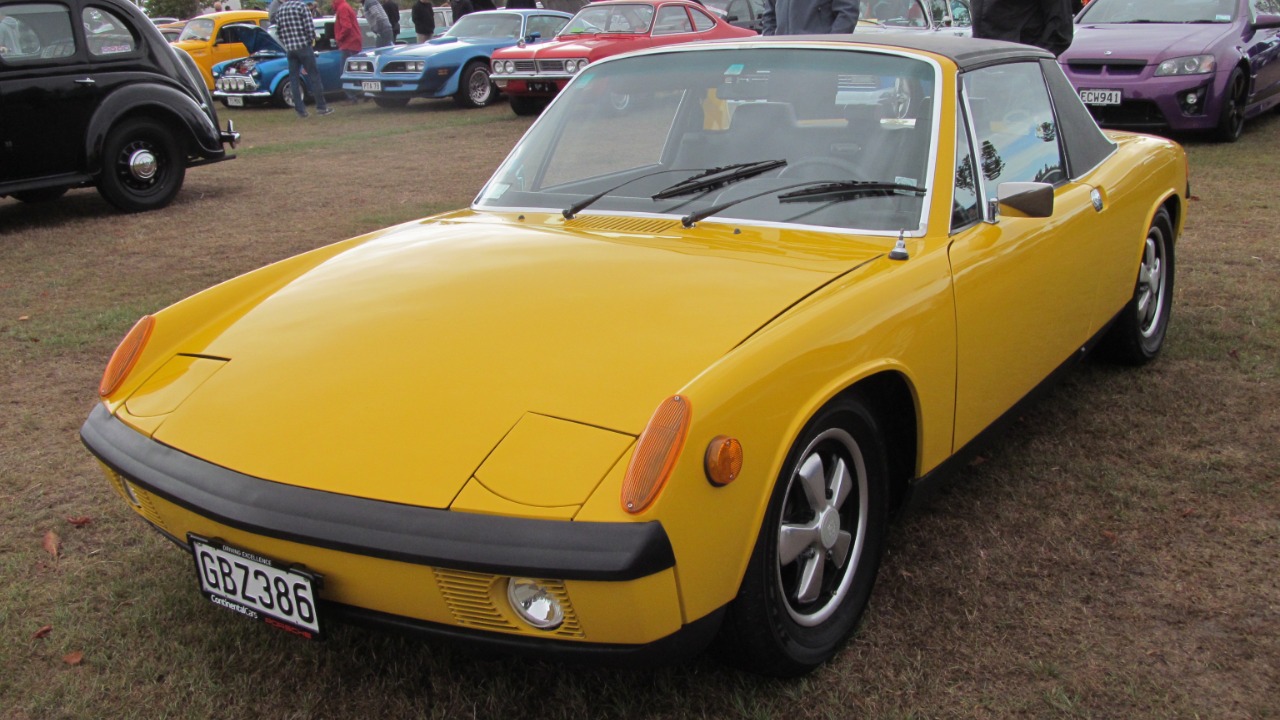
The 1970 Porsche 914-6 arrived with a flat-six engine, a low center of gravity, and handling balance that should have guaranteed instant classic status. Instead, it spent decades in the shadow of other Stuttgart icons, dismissed as a parts-bin oddity and a “Volkswagen Porsche” that did not fit the brand’s image. Only recently have collectors and historians started to reassess how and why such a capable sports car slipped through the cracks.
Understanding that long cold shoulder requires looking beyond simple performance numbers. The 914-6 was shaped by corporate politics, market expectations, and styling prejudice as much as by engineering. Its story shows how easily a car can be misjudged when badge, price, and perception pull in different directions.
The 914 Project Porsche Never Quite Owned
The 914 line started as a joint venture between Porsche and Volkswagen, conceived as a shared platform that could replace both the four-cylinder 912 and Volkswagen’s Karmann Ghia. That corporate parentage left the 914 with an identity problem from day one. The basic four-cylinder 914 carried Volkswagen badges in some markets and Porsche badges in others, and even the more powerful 914-6 could not fully escape that split personality.
For the 1970 model year, Porsche dropped the 2.0-liter flat-six from the 911T into the mid-mounted bay of the 914-6, transforming the car’s character. The engine sat ahead of the rear axle, which gave the car a near-ideal weight distribution and a very different feel from the rear-engined 911. Yet buyers saw the targa roof, the squared-off nose, and the shared body with the cheaper four-cylinder version and struggled to reconcile the price with what looked like an entry-level model.
The 914 program also arrived at a time when Porsche’s resources and attention were pulled in many directions, including racing efforts and the evolution of the 911. The 914-6 was never promoted with the same intensity as the flagship coupe. As a result, the car that should have been framed as a mid-engine engineering showcase was often treated in brochures as an upmarket variant of a budget sports car.
Styling, Status, and the “Volkswagen Porsche” Stigma
Much of the 914-6’s early neglect can be traced to styling and status. The wedge-like body, pop-up headlights, and removable roof panel looked unlike any previous Porsche. Traditional buyers who associated the brand with the flowing lines of the 356 and the round headlights of the 911 saw the 914 as angular and slightly awkward. Period reviews often described the shape as functional rather than beautiful, a verdict that stuck for years and fed the idea that the car was somehow less “pure” than its siblings.
Badge politics made that perception worse. In several markets, the 914 carried both Porsche and Volkswagen identification, which signaled to prestige-focused buyers that this was a compromise product rather than a thoroughbred. The 914 was sometimes lumped in with other collaborative projects that blurred brand lines, similar to how a mid-engine Corvette concept later faced questions about whether a radical layout suited a traditional nameplate, as seen with one forgotten mid-engine Chevrolet design. For the 914-6, that confusion undercut the appeal of its more sophisticated mechanical package.
Inside, the car also failed to project luxury. The cabin was simple, with flat surfaces and limited ornamentation. For drivers coming from a 911, the 914-6 felt more sparse and utilitarian, even though it cost nearly as much once optioned. The combination of unconventional looks, shared lineage with Volkswagen, and a minimalist interior made it easy for period buyers to dismiss the car as a quirky offshoot rather than a serious sports machine.
Performance That Outran Its Reputation
On the road, the 914-6 delivered a driving experience that belied its modest image. The mid-engine layout produced crisp turn-in and remarkable stability, particularly on tight, technical roads where the car’s compact footprint and low weight came into play. Drivers praised the precise steering and neutral balance, qualities that later became hallmarks of mid-engine sports cars from other brands.
Under the engine lid, the 2.0-liter flat-six shared much of its hardware with the 911T. In period tune, it produced power that, while not overwhelming by modern standards, felt lively in a chassis that weighed significantly less than a contemporary 911. Enthusiasts who spent time behind the wheel often came away impressed by how much speed the car could carry through corners, especially compared with heavier front-engine rivals.
Modern assessments have started to highlight how misunderstood this performance package was. Contemporary reviewers now describe the mid-engine 914 as one of the most underrated Porsches, praising its balance and everyday usability and pointing out how it anticipated later mid-engine offerings. One detailed look at the car’s development frames the 914 as both “misunderstood” and “underrated,” a verdict that fits the six-cylinder version even more closely given its higher capability, as seen in a retrospective on the mid-engine 914.
In motorsport, the 914-6 GT variant proved what the basic platform could do when fully developed. Prepared for endurance racing, these cars scored class wins and strong overall results, including in demanding events where reliability and chassis balance mattered as much as outright power. Those achievements did little to change showroom fortunes at the time, but they laid the groundwork for the car’s later reappraisal among track-focused collectors.
Pricing Missteps and Market Confusion
If the 914-6 had been priced clearly below the 911, it might have found a natural place as a nimble alternative for drivers who valued handling over status. Instead, the car landed uncomfortably close to the flagship in many markets once taxes and options were added. Buyers were effectively asked to pay near-911 money for a car that looked like a cheaper Volkswagen-based model and offered less power than some six-cylinder 911 variants.
That pricing gap reflected the realities of low-volume production and the cost of adapting the 911 engine to a new chassis, but it made the 914-6 a hard sell. Sales never reached expectations, and Porsche ultimately shifted focus back to the four-cylinder versions, which were easier to position as affordable entry models. The six-cylinder car quietly disappeared after a short production run, leaving behind a small pool of owners who appreciated its strengths but lacked the influence to shape wider opinion.
The market confusion also affected how dealers approached the car. Some showrooms treated the 914-6 as a stepping stone for buyers who could not quite reach a 911, rather than as a distinct proposition. That framing encouraged direct comparison with the rear-engined icon, a contest the 914-6 was always likely to lose in the eyes of traditionalists who valued heritage and straight-line performance over mid-corner poise.
Oddball Image and Media Perception
Period coverage often reinforced the idea that the 914 was an odd fit in the Porsche family. The car’s square proportions, removable roof, and shared DNA with Volkswagen made it an easy target for jokes about kit cars and parts-bin specials. That tone carried into later nostalgia pieces, which sometimes described the 914 as a curiosity rather than a serious classic. One feature on the car’s styling called it a “very odd” Porsche, a phrase that captured how many enthusiasts saw the shape for years, as reflected in a discussion of the unusual 914.
Such portrayals mattered because they shaped how younger enthusiasts encountered the car. For a long time, the 914-6 appeared in the background of Porsche history, overshadowed by the 911 in books, magazines, and later online content. When it did appear, the focus was often on its perceived compromises rather than its engineering achievements. That skewed coverage helped keep prices low and interest limited, which in turn reduced the incentive for restorers and specialists to champion the model.
The car’s association with the more common four-cylinder versions also influenced perception. Many people’s first exposure to a 914 came through tired, rust-prone examples that had been used hard and maintained poorly. Those cars felt slow and rough compared with modern machinery, so the entire line was sometimes written off as underpowered and fragile, even though the six-cylinder variant offered stronger performance and, when maintained correctly, solid durability.
Engineering Ambition Hiding in Plain Sight
Behind the image problems, the 914-6 embodied several forward-looking ideas that would later define modern sports cars. The mid-engine layout placed the mass of the drivetrain close to the center of the car, which improved agility and stability. The targa roof combined open-air driving with a rigid safety structure, a concept that has remained popular across multiple brands. The car also offered practical touches such as trunks at both ends, which made it more usable as a daily driver than many of its contemporaries.
The 914 platform even served as a testbed for more extreme experiments. A small number of 914-8 prototypes received eight-cylinder engines derived from Porsche’s racing program, creating mid-engine machines with power that rivaled contemporary supercars. These one-off cars, built in tiny numbers, demonstrated how much performance potential existed in the basic chassis, as highlighted in coverage of the rare Porsche 914-8. Although those prototypes never reached production, they underscored that the 914 concept was more than an entry-level experiment.
For the 914-6, that engineering ambition translated into a car that rewarded smooth driving and precise inputs. Owners who took the time to understand its handling often described it as confidence-inspiring at the limit, with progressive breakaway and clear feedback. Those traits made the car particularly appealing on winding roads and in club-level motorsport, even if they did not show up in headline acceleration numbers.
From Bargain Bin to Blue-Chip Collectible
The same factors that once held the 914-6 back eventually set the stage for its rediscovery. As air-cooled 911 values climbed, enthusiasts began to look more closely at other classic Porsches that offered similar mechanical character at lower prices. The 914-6, with its shared engine and distinctive layout, emerged as a compelling alternative. Collectors started to recognize how few were built and how many had been lost to rust or neglect, which sharpened interest in surviving examples.
Recent auction results illustrate how dramatically sentiment has shifted. A 1970 Porsche 914-6 GT, prepared to period competition specification, sold for a substantial sum that would have seemed unthinkable when the model was still regarded as a quirky outlier. Coverage of that sale framed the car as a significant piece of Porsche racing history, reflecting a broader reappraisal of the model’s importance, as shown in reports on a 914-6 GT sale.
Standard 914-6 road cars have followed a similar trajectory, with well-preserved examples now commanding strong prices and attracting international bidders. Restorers who once hesitated to invest heavily in the model are now more willing to undertake full, factory-correct rebuilds, confident that the market will support the effort. That shift has improved the quality of cars available and helped highlight the model’s original virtues.
More from Fast Lane Only
- Unboxing the WWII Jeep in a Crate
- 15 rare Chevys collectors are quietly buying
- 10 underrated V8s still worth hunting down
- Police notice this before you even roll window down
*Research for this article included AI assistance, with all final content reviewed by human editors.