The 1966 Ford Cortina Lotus looked like a tidy family saloon, yet it kept humiliating purpose-built race cars that were louder, lower and far more obviously aggressive. What caught rivals off guard was how thoroughly this modest Ford had been re-engineered, turning a commuter shell into a precision tool that thrived on tight circuits and rough rally stages alike. I want to unpack why that transformation worked so well, and why so many seasoned racers underestimated it until they saw the lap times.
The unlikely partnership that rewrote Ford’s rulebook
On paper, the idea sounded almost contradictory: take a mass-market Ford Cortina and ask Lotus to turn it into a competition weapon without losing its basic road-car manners. The result, widely known as the Lotus Cortina, was not a simple trim package but a ground-up rethink of how much performance you could hide inside a family sedan. Developed in collaboration with Ford, the project blended Ford’s production scale with Lotus engineering, creating a car that looked approachable yet behaved like a lightweight racer once the flag dropped.
What made this collaboration so disruptive was the way it blurred categories that racers had grown comfortable with. The Lotus Cortina carried Ford badges and a familiar three-box silhouette, but under the skin it followed the lightweight, minimalist philosophy that defined Lotus. Contemporary accounts describe it as a wolf in sheep’s clothing, a seemingly humble Ford sedan transformed into a track-ready machine that could out-handle sports cars, a reputation that is still central to how enthusiasts remember the Lotus Cortina today.
Light weight, sharp power and the numbers that shocked the paddock
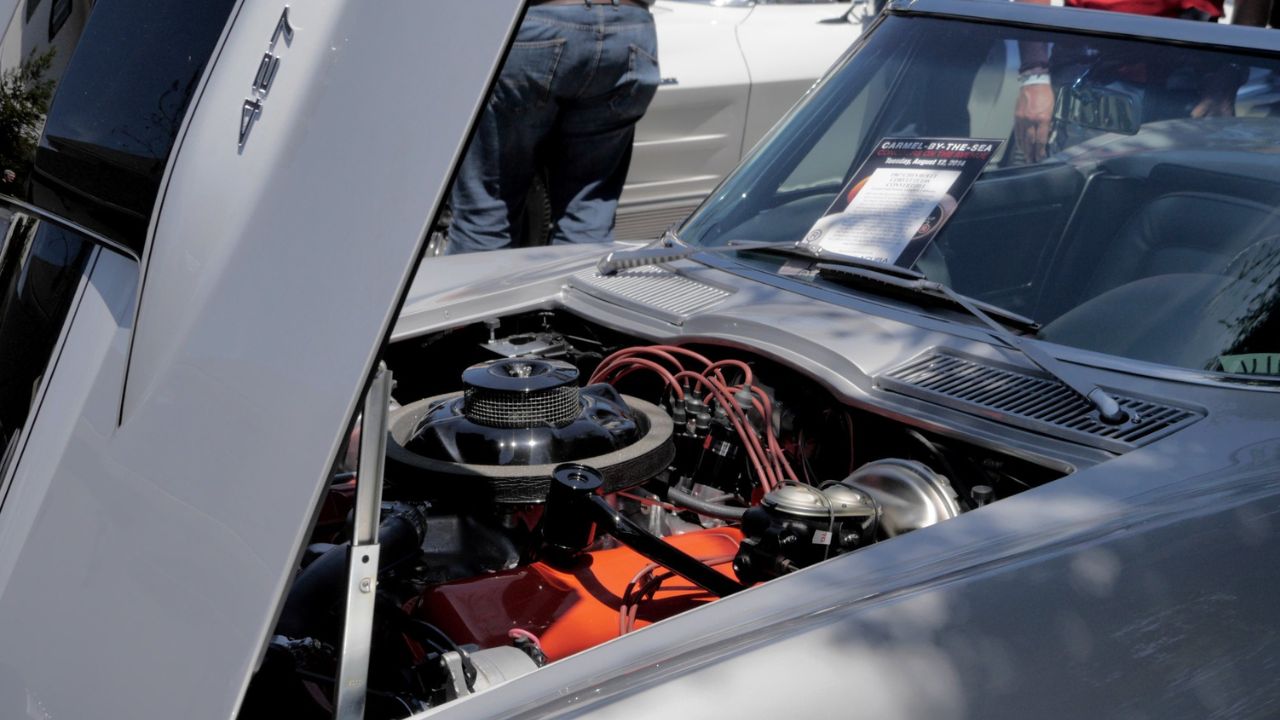
Rivals were not just beaten by a badge, they were beaten by physics. The core of the package was a tuned version of Ford’s Kent engine, a 1500cc block topped with Lotus’s twin-cam cylinder head that delivered strong power without adding bulk. Period figures describe how this compact four-cylinder pushed the car from rest to highway speeds in just under ten seconds, a figure that might sound tame in a modern turbo era but was startling for a small sedan in the early sixties, especially one that still wore hubcaps and a rear bench. That blend of modest displacement and brisk acceleration is still highlighted in detailed histories of the 1500cc Kent block and its twin-cam top end.
Weight was the other half of the ambush. Where many touring cars of the period were sturdy but heavy, the Lotus interpretation of the Cortina trimmed mass wherever it could, from body panels to interior fittings, to keep the car nimble and responsive. Later evolutions carried this thinking into different categories, including Improved Production racing, where a Ford Cortina-Lotus Mk II was described as a “dazzlingly fast 1.6 litre Improved Production” car that weighed about 850 kgs, a combination that made it devastating on tight tracks and twisty rally stages. That specific reference to a 1.6 engine and an 850 kilogram target comes straight from period reflections on how the 1.6 litre Improved Production cars were set up, and it underlines how central lightness was to the whole philosophy.
How a “Year of the Lotus Cortina” changed expectations
The surprise factor did not come from one fluke win, it came from a sustained run of dominance that forced people to rethink what a small sedan could do. Earlier in the decade, the car’s competition story crystallised in what enthusiasts still refer to as a “Year of the Lotus Cortina,” a season when the model’s pace and consistency reshaped touring car grids. That period is vividly captured in a film titled Year of the Lotus Cortina, which presents a Story of the 1964 Season and shows how often the white-and-green cars were at the front, harrying and passing machinery that, on paper, should have been quicker.
What struck me, looking back at that era, is how the car’s success was as much about versatility as outright speed. The same basic package could be trimmed for circuit racing, adapted for rallying, or even pointed at endurance events without losing its core strengths of balance and traction. Reports from that Season show the Lotus Cortina coping with bumpy airfields, tight club circuits and long-distance challenges, and in each case the car’s poise under braking and through mid-corner transitions gave its drivers options that heavier rivals simply did not have. That breadth of ability is a big part of why the 1966 Ford Cortina Lotus continued to catch opponents off guard even after its reputation had started to spread.
Alan Mann Racing, iconic stripes and the art of looking ordinary
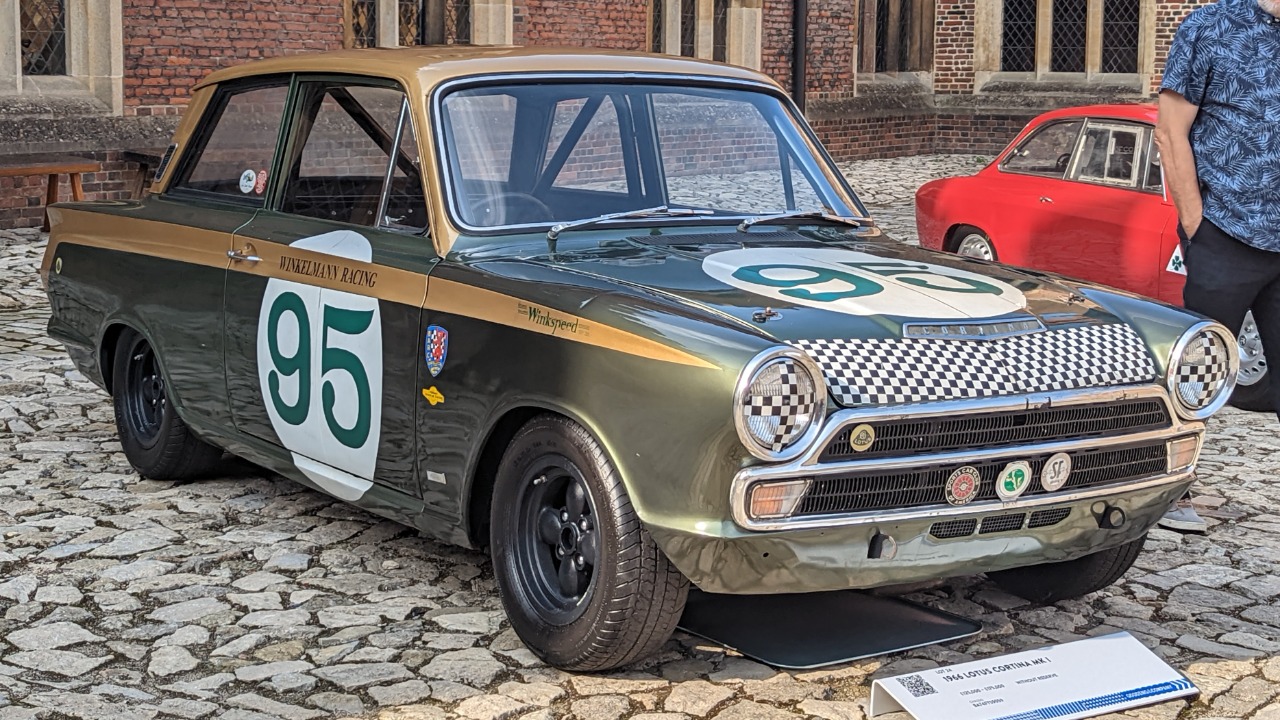
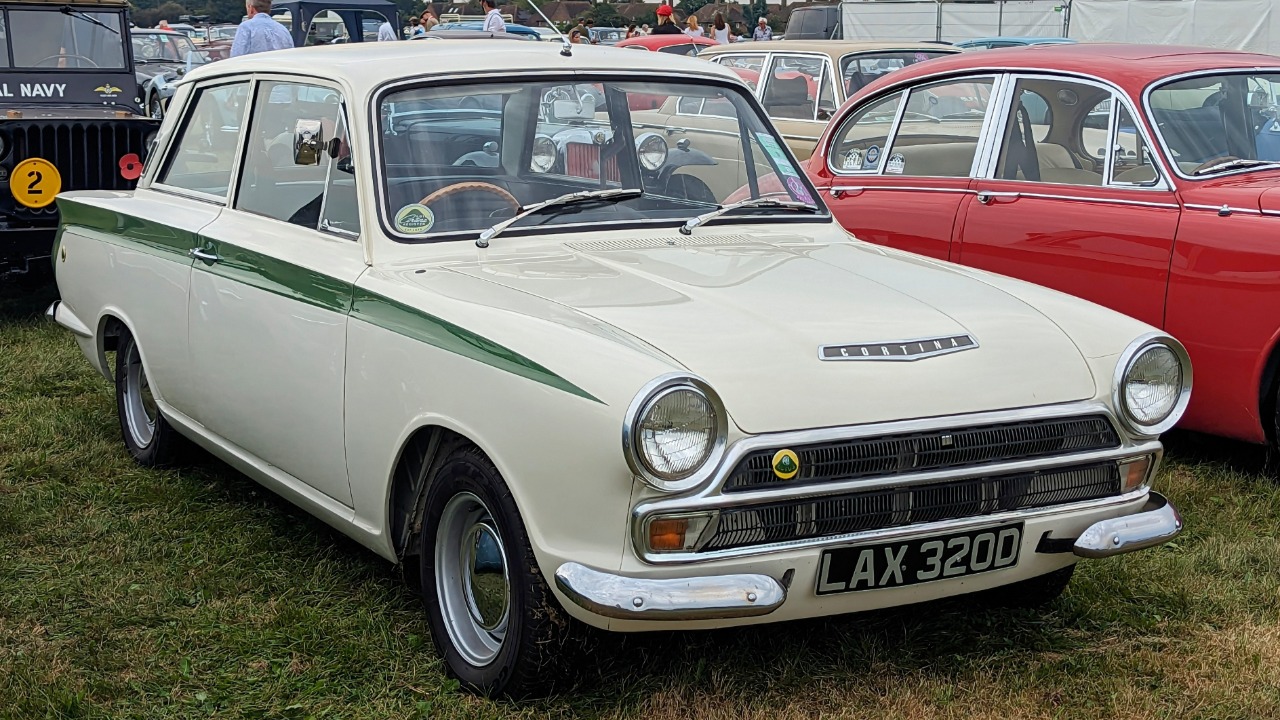
Part of the car’s mystique lies in how it looked, and how that appearance evolved. Early competition examples ran in a simple white finish with a green flash along the side, a livery that became instantly associated with the model’s factory-backed efforts. When Alan Mann Racing took on the Lotus Cortina Mk1, the team initially kept that standard Lotus white with a green flash, before later adopting revised colours that reflected its own identity. Accounts of those cars describe how they featured a revised paint scheme that still nodded to the original look, and how the Alan Mann Racing versions became some of the most recognisable touring cars of their time.
Yet even with those stripes and flashes, the underlying shape remained resolutely ordinary, which only heightened the shock when one of these cars dived past a sleeker coupe under braking. Contemporary retrospectives still describe the Lotus Cortina as a wolf in sheep’s clothing, a phrase that captures how the car’s visual modesty lulled rivals into underestimating it. Modern write-ups of the model emphasise that it was a seemingly humble Ford sedan transformed into a track-ready terror, and they often point to those iconic green side stripes as the only real visual clue that this was not just another commuter Ford Cortina waiting in the paddock car park.
From “Not Like Other Fords” to lasting influence
Looking back from today, it is clear that the Lotus Cortina did more than win races, it helped define a new template for fast road cars. By pairing a practical four-door body with a tuned engine, upgraded suspension and serious brakes, it anticipated the formula that would later underpin generations of sports sedans and hot hatches. Modern comparisons often place it alongside cars like the BMW 2002 as early examples of the compact performance coupe or sedan, and detailed spec tables still highlight how the Lotus (Ford) Cortina Mk1 delivered around 105 hp while remaining light and tossable. That combination is captured in analyses that explicitly label The Ford Lotus Cortina as “Not Like Other Fords,” underlining how far it sat from the rest of the Ford Cortina range in character.
For me, that is the real reason racers were so often caught out by the 1966 Ford Cortina Lotus: it did not fit their mental categories. It was built by Lotus yet sold through Ford dealers, it had a small engine yet punched like a heavyweight, it looked like a commuter car yet behaved like a purpose-built racer. Enthusiast histories still describe The Lotus Cortina as a wolf in sheep’s clothing and celebrate how it refined the idea of a practical performance car, and that legacy continues to echo every time a modern manufacturer bolts a powerful engine and sharp suspension into an otherwise sensible shell and expects rivals to underestimate it, just as they once did with the original The Lotus Cortina.
More from Fast Lane Only: