By the late 1960s, Pontiac had become one of America’s most performance-oriented car brands.
The division’s reputation was built on speed, youthful marketing, and racing success. Cars like the Pontiac GTO had helped launch the muscle car era, while Pontiac advertisements frequently emphasized excitement, horsepower, and aggressive styling. For many buyers, Pontiac represented the youthful and rebellious side of General Motors.
That image worked remarkably well.
Yet Pontiac executives recognized a problem.
Not every customer wanted a muscle car.
Many buyers were getting older, earning higher incomes, and looking for vehicles that offered prestige alongside performance. They still appreciated powerful engines and sporty driving characteristics, but they also wanted comfort, luxury, and sophistication.
Pontiac needed a car that could appeal to those customers without abandoning the brand’s performance identity.
The answer arrived in 1969.
The redesigned Grand Prix became one of the most important vehicles in Pontiac history. It didn’t simply create a successful new model. It transformed how buyers viewed the entire brand, proving that Pontiac could build elegant personal luxury cars just as effectively as it built muscle machines.
In many ways, the 1969 Grand Prix changed Pontiac from a performance division into a broader lifestyle brand.
Pontiac Needed Something Beyond Muscle Cars
Throughout the mid-1960s, Pontiac’s success was closely tied to performance.
The GTO generated enormous publicity. Racing programs strengthened the division’s image. Younger buyers flocked to Pontiac dealerships looking for excitement.
However, relying too heavily on a single type of customer created risks.
As buyers matured, many sought vehicles that reflected their changing priorities. They wanted style and prestige without giving up the sporty character that had attracted them to Pontiac in the first place.
At the same time, the personal luxury market was growing rapidly.
Cars such as the Ford Thunderbird demonstrated that buyers were willing to pay for distinctive coupes that blended comfort, image, and performance.
Pontiac wanted a share of that market.
The Grand Prix would become its entry.
Earlier Grand Prix Models Had Limited Success
The Grand Prix name wasn’t new in 1969.
Pontiac had introduced the model in 1962 as a premium full-size coupe. While those early cars offered comfort and style, they never achieved the sales success Pontiac hoped for.
Part of the problem involved size.
The original Grand Prix shared its platform with Pontiac’s larger full-size models, making it more expensive and less agile than some competitors.
The market was evolving.
Buyers increasingly wanted personal luxury cars that felt sporty rather than simply large.
Pontiac realized it needed a new approach.
The 1969 redesign would be far more ambitious than a simple update.
John DeLorean Helped Shape the Vision
One of the key figures behind the 1969 Grand Prix was John DeLorean.
Before becoming famous for his own automobile company, DeLorean played a major role in Pontiac’s success during the 1960s. He understood both performance marketing and consumer trends.
DeLorean recognized that Pontiac could create a luxury-oriented coupe without abandoning its sporty reputation.
The solution involved combining elements from multiple market segments.
The new Grand Prix would offer luxury-car style and amenities while retaining Pontiac’s performance heritage.
It would look expensive, drive confidently, and remain accessible to a wider audience than traditional luxury vehicles.
That combination became the foundation of the project.
The New Platform Was a Game-Changer
Rather than continuing to use a full-size platform, Pontiac moved the Grand Prix onto GM’s midsize architecture.
This decision had enormous implications.
The smaller platform reduced weight and improved proportions. It allowed designers to create a sleeker, more athletic-looking coupe while also lowering production costs.
The change enabled Pontiac to offer the Grand Prix at a more competitive price.
Buyers received the appearance and prestige of a luxury automobile without paying luxury-car money.
The strategy was brilliant.
It created a new formula that competitors would soon rush to imitate.
The Styling Made an Immediate Impact
Perhaps the most important reason the 1969 Grand Prix succeeded was its appearance.
The car looked dramatically different from previous Pontiacs.
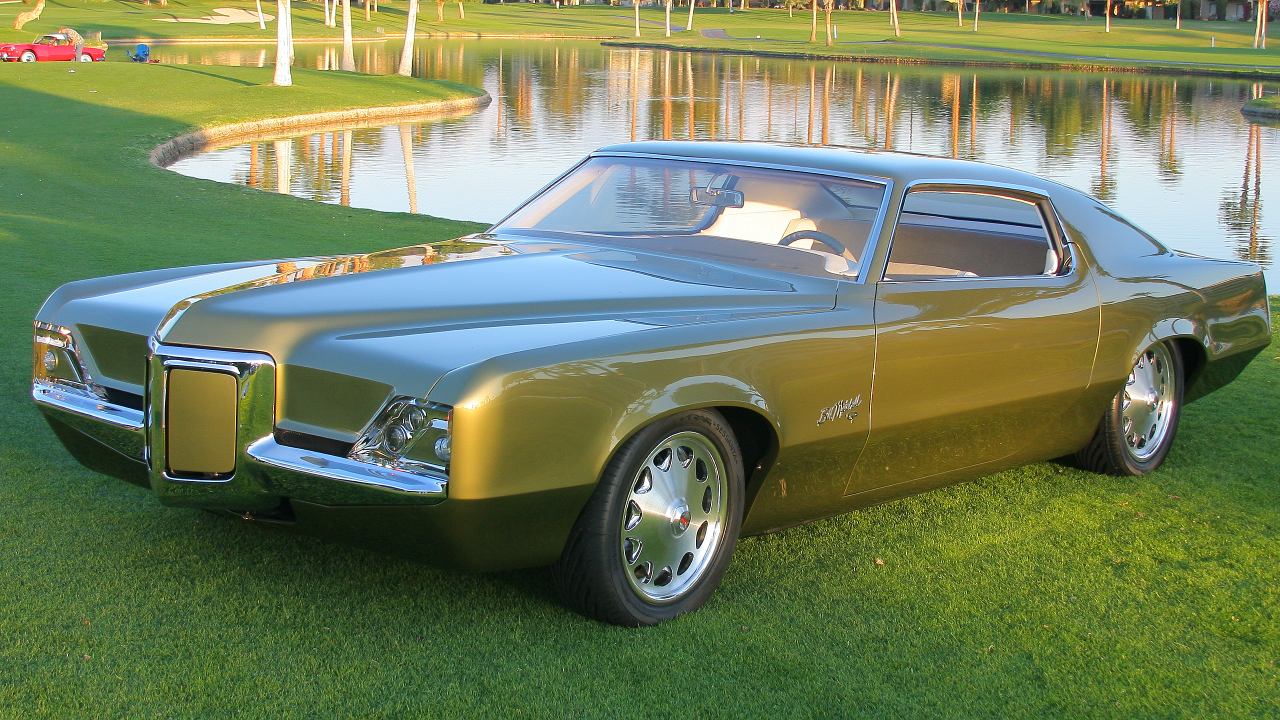
A long hood stretched far ahead of the passenger compartment, creating classic luxury-car proportions. The short rear deck emphasized elegance and sophistication. The front grille projected confidence without appearing overly aggressive.
The overall effect was striking.
The Grand Prix looked expensive.
Many buyers assumed it cost significantly more than it actually did.
That perception became one of the car’s greatest advantages.
Pontiac had created a vehicle that delivered visual prestige at an attainable price.
Luxury Took Center Stage
While Pontiac remained closely associated with performance, the Grand Prix emphasized a different set of priorities.
The interior reflected that shift immediately.
Rich materials, comfortable seating, and thoughtful design details created an upscale atmosphere. The dashboard wrapped around the driver, producing a cockpit-like feel that enhanced the car’s sporting image while maintaining a luxurious environment.
Pontiac called attention to these features in its marketing.
The company wanted buyers to understand that the Grand Prix represented something more sophisticated than a traditional muscle car.
The car appealed to professionals, executives, and buyers who wanted style without sacrificing comfort.
This broadened Pontiac’s customer base considerably.
Performance Was Still Available
The Grand Prix may have focused on luxury, but Pontiac wisely avoided abandoning performance altogether.
Buyers could still order powerful V8 engines, including Pontiac’s respected 400-cubic-inch and 428-cubic-inch powerplants.
These engines provided strong acceleration and effortless highway cruising.
The availability of substantial horsepower helped preserve Pontiac’s identity.
Customers didn’t feel as though they were choosing between luxury and performance.
They could have both.
That balance became one of the Grand Prix’s defining characteristics.
The car wasn’t a muscle car in the traditional sense, but it certainly benefited from muscle-car DNA.
Buyers Responded Immediately
Pontiac expected the redesigned Grand Prix to perform well.
Few anticipated just how successful it would become.
Sales increased dramatically compared to previous generations. Buyers embraced the new formula, appreciating the combination of style, luxury, and value.
The Grand Prix quickly became one of Pontiac’s most important products.
Its success validated the company’s strategy and demonstrated that a substantial market existed for personal luxury coupes positioned between mainstream and premium segments.
The car attracted customers who might never have considered a traditional Pontiac.
That achievement changed the division’s trajectory.
Competitors Took Notice
The Grand Prix’s success didn’t go unnoticed elsewhere in Detroit.
Other manufacturers quickly recognized the appeal of Pontiac’s formula.
The idea of combining midsize platforms with luxury-car styling and upscale interiors proved highly attractive from both marketing and profitability perspectives.
Soon, similar vehicles began appearing throughout the industry.
The Grand Prix helped define a new category of personal luxury coupe that would dominate much of the 1970s.
Pontiac had identified an important trend before many competitors fully understood its potential.
That foresight paid enormous dividends.
The Car Expanded Pontiac’s Identity
Perhaps the most lasting impact of the 1969 Grand Prix involved perception.
Before its arrival, Pontiac was often viewed primarily as a performance brand.
Afterward, the division possessed a more sophisticated image.
The Grand Prix demonstrated that Pontiac could build vehicles emphasizing elegance and comfort without losing its sporty character.
This expanded identity gave the brand greater flexibility.
Pontiac could appeal to a wider range of customers while maintaining the excitement that had fueled its success during the muscle car era.
The transformation was subtle but significant.
The division became more than just horsepower.
Collectors Still Appreciate Its Importance
Today, the 1969 Grand Prix enjoys considerable respect among enthusiasts and collectors.
While it may not attract the same attention as a GTO Judge or other famous muscle cars, historians increasingly recognize its importance.
The car helped redefine an entire market segment.
It influenced competitors.
Most importantly, it changed Pontiac itself.
Few vehicles can claim to have altered the direction of an entire brand.
The Grand Prix accomplished exactly that.
More Than Just Another Pontiac
Looking back, the 1969 Grand Prix succeeded because it arrived at precisely the right moment.
Buyers wanted something different from traditional luxury cars and conventional muscle cars. Pontiac identified that opportunity and created a vehicle that blended elements of both.
The result was stylish, comfortable, powerful, and attainable.
More importantly, it broadened perceptions of what Pontiac could be.
The Car That Reintroduced Pontiac
The 1969 Pontiac Grand Prix changed the brand’s image because it proved Pontiac was capable of more than building performance cars.
The division’s reputation had been built on speed and excitement, but the Grand Prix added sophistication, elegance, and prestige to the equation.
It attracted new customers, influenced competitors, and helped establish one of the most successful automotive formulas of the 1970s.
In doing so, it transformed Pontiac from a performance-focused division into a more complete automotive brand.
For Pontiac, the Grand Prix wasn’t merely another successful model.
It was a reinvention.
And few cars have changed a brand’s image more effectively.
More from Fast Lane Only