The muscle car era produced no shortage of attention-grabbing machines. By 1970, American automakers were locked in a horsepower war that seemed to escalate with every passing model year. Engines grew larger, performance figures climbed higher, and styling became increasingly aggressive as manufacturers fought for the attention of young buyers.
In a marketplace filled with memorable cars, standing out wasn’t easy.
Yet the 1970 Buick GSX managed to do exactly that.
Built by a division better known for comfortable luxury cars than quarter-mile heroics, the GSX arrived wearing bright colors, bold graphics, a massive hood scoop, and enough torque to challenge virtually anything else on the street. It looked dramatically different from the conservative image many buyers associated with Buick.
The surprise wasn’t just that Buick built a muscle car.
The surprise was that Buick built one of the most visually daring muscle cars of the entire era.
Today, the GSX is remembered as one of the most distinctive and desirable performance cars of the early 1970s. Its combination of outrageous styling, immense power, and limited production transformed it from a niche showroom curiosity into a collector favorite.
The GSX proved that even the most conservative brands could embrace the excesses of the muscle car age.
Buick Wasn’t Known for Wild Performance Cars
To understand why the GSX felt so shocking in 1970, it’s important to understand Buick’s position within the General Motors hierarchy.
During the 1960s, Buick occupied a relatively upscale place in GM’s lineup. Chevrolet appealed to mainstream buyers, Pontiac cultivated a youthful performance image, Oldsmobile balanced innovation and comfort, and Cadillac represented luxury.
Buick sat somewhere between Oldsmobile and Cadillac.
Its customers often valued refinement, comfort, and prestige. Performance wasn’t absent from Buick showrooms, but it typically wasn’t the division’s primary selling point.
That image made the GSX particularly surprising.
Rather than producing another comfortable cruiser, Buick decided to build a car capable of competing directly with Detroit’s most intimidating muscle machines.
The company wasn’t interested in creating a subtle performance package.
It wanted something impossible to ignore.
The Foundation Was Already Strong
The GSX began life as an enhanced version of Buick’s already capable Gran Sport 455.
The GS 455 was no slouch.
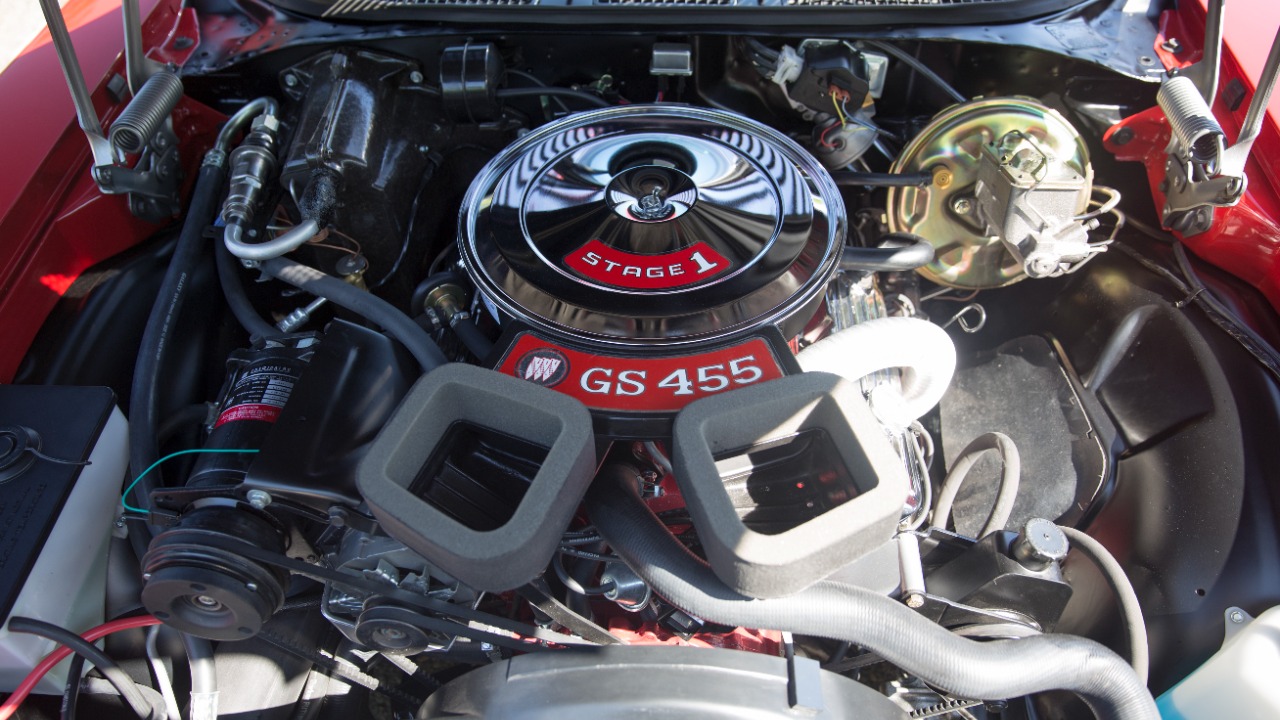
Powered by Buick’s massive 455-cubic-inch V8, it delivered impressive performance and tremendous torque. Even before the GSX package arrived, the car had earned a reputation as one of the strongest street performers available.
Buick engineers had developed an engine that emphasized real-world acceleration rather than headline-grabbing horsepower figures.
The result was a muscle car that felt incredibly powerful from the moment the accelerator moved.
The GSX would take that formula and add a dramatic visual identity.
Buick Wanted to Grab Attention
By 1970, bold styling had become an important part of muscle car marketing.
Manufacturers recognized that appearance could be almost as important as performance. Buyers wanted cars that looked fast even when parked.
Buick’s designers understood the assignment.
The GSX package transformed the relatively restrained GS 455 into something far more dramatic.
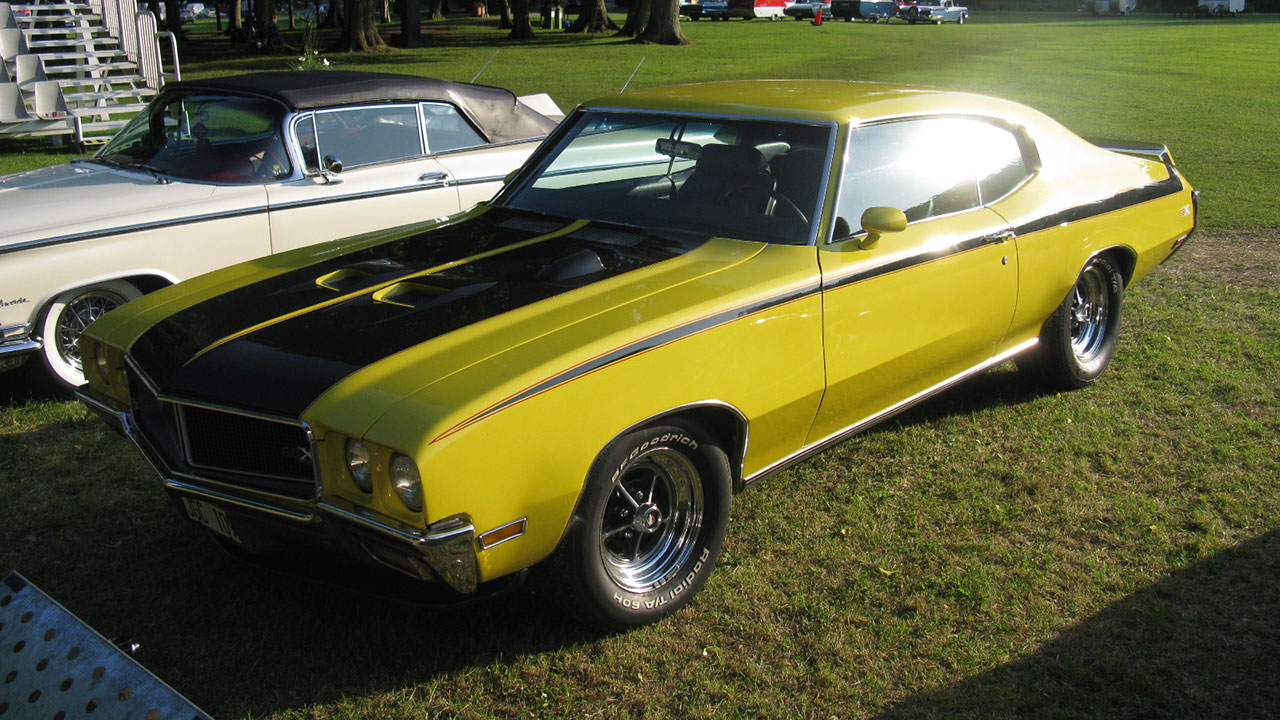
Large body stripes stretched across the car’s flanks.
A front air dam added visual aggression.
Rear spoilers enhanced the sporting image.
Most famously, the hood featured a prominent functional scoop that immediately communicated performance intentions.
The combination made the GSX impossible to mistake for an ordinary Buick.
That was exactly the point.
Saturn Yellow Changed Everything
No feature contributed more to the GSX’s bold reputation than its most famous color.
Buick offered the car in Saturn Yellow, a bright and highly visible shade that stood out dramatically against the more subdued colors typically associated with the brand.
For decades, Buick had built its reputation on tasteful elegance.
Saturn Yellow ignored that tradition completely.
The color practically demanded attention.
Parked among ordinary sedans, a Saturn Yellow GSX looked almost radioactive.
Combined with the black graphics package, the paint transformed the car into one of the most visually striking muscle cars of its generation.
Buyers who selected Saturn Yellow weren’t interested in blending in.
They wanted to be noticed.
And they succeeded.
The Torque Monster Under the Hood
While the styling grabbed headlines, the GSX’s performance ensured it wasn’t merely a visual exercise.
The standard GSX came equipped with Buick’s 455-cubic-inch V8.
Officially, the engine produced 350 horsepower.
The more impressive figure, however, was torque.
The GSX generated an astounding 510 lb-ft of torque.
At the time, that ranked among the highest torque ratings available in an American production automobile.
Torque is what creates the sensation of effortless acceleration.
It’s the force that pushes occupants back into their seats.
It’s what causes tires to spin and rear suspensions to squat under hard acceleration.
The GSX had an abundance of it.
Many contemporary drivers discovered that the car felt stronger than some competitors with higher advertised horsepower ratings.
The Stage 1 Package Raised the Stakes
For buyers seeking maximum performance, Buick offered the legendary Stage 1 package.
This option transformed an already formidable muscle car into one of the quickest vehicles available from any American manufacturer.
The package included upgraded cylinder heads, larger valves, revised camshaft specifications, and numerous other engine enhancements.
Official horsepower ratings remained relatively conservative, but road tests told a different story.
Magazine testers frequently recorded acceleration figures that placed the Stage 1 GSX among the fastest muscle cars of the era.
The car’s immense torque allowed it to deliver devastating straight-line performance with remarkably little effort.
It didn’t need high engine speeds to feel fast.
The power was available almost everywhere.
Buick Embraced the Muscle Car Moment
What’s particularly fascinating about the GSX is how completely Buick embraced the spirit of the muscle car era.
Some manufacturers approached performance cautiously, adding sporty options while maintaining traditional brand identities.
The GSX felt different.
Buick appeared willing to abandon convention entirely.
The bright paint, oversized graphics, hood scoop, spoilers, and aggressive stance represented a dramatic departure from the division’s usual image.
For one brief moment, Buick seemed determined to prove that it could build a muscle car every bit as exciting as anything from Pontiac, Chevrolet, Dodge, or Plymouth.
The GSX wasn’t trying to be sophisticated.
It was trying to be unforgettable.
Production Numbers Stayed Low
Despite its impressive capabilities, the GSX remained relatively rare.
Production numbers were limited, partly because the package added cost and partly because the muscle car market was already beginning to face new challenges.
Insurance premiums for high-performance vehicles were climbing rapidly.
Emissions regulations loomed on the horizon.
Consumer priorities were slowly starting to shift.
As a result, only a small number of GSX models left Buick showrooms.
That rarity would later become one of the car’s greatest assets.
Collectors tend to value vehicles that combine significance, performance, and scarcity.
The GSX offers all three.
The Market Eventually Caught Up
For years, the GSX existed somewhat in the shadow of more famous muscle cars.
Models like the Plymouth Hemi ‘Cuda, Chevrolet Chevelle SS 454, and Pontiac GTO Judge often received more attention from collectors and enthusiasts.
Over time, however, appreciation for the GSX grew.
Collectors began recognizing just how unusual the car was.
It represented one of the most dramatic styling statements of the muscle car era while also delivering genuinely exceptional performance.
As awareness increased, values followed.
Today, well-preserved GSX models rank among the most sought-after Buicks ever built.
Why the GSX Still Turns Heads
Many muscle cars have become familiar sights in books, magazines, and automotive media.
The GSX remains different.
Its styling still feels startling.
The bright colors, bold graphics, and aggressive details continue to attract attention more than five decades after the car’s debut.
Part of that appeal comes from authenticity.
The GSX wasn’t designed by a modern committee trying to recreate muscle car excitement.
It emerged during the peak of the original horsepower wars, when manufacturers were willing to take risks and experiment with outrageous ideas.
The result feels genuine in a way that few modern vehicles can match.
Buick’s Boldest Statement
Looking back, the 1970 Buick GSX represents one of the most dramatic departures from brand expectations in automotive history.
Buick took a company known for refinement and transformed one of its models into a bright yellow, stripe-covered torque monster capable of challenging the best muscle cars Detroit could produce.
The decision could have failed.
Instead, it created a legend.
The GSX succeeded because it combined visual drama with genuine substance. Its styling attracted attention, but its performance justified the excitement.
More than fifty years later, the car remains one of the boldest expressions of the muscle car era.
And that’s exactly why enthusiasts continue to celebrate it.
The 1970 GSX wasn’t just a powerful Buick.
It was Buick at its loudest, proudest, and most unforgettable.
More from Fast Lane Only