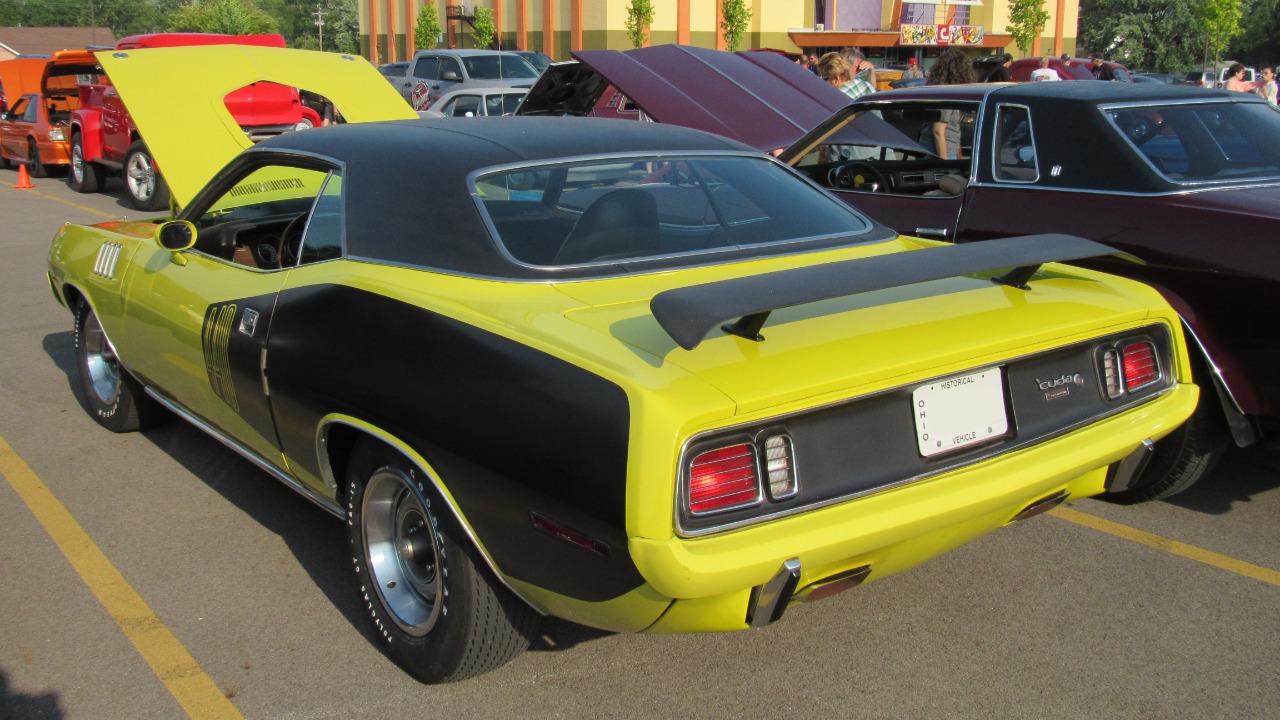
It’s the kind of moment every classic-car owner dreads: you’re feeling good, the paint’s shining, and the car wash is supposed to be the easy button. Then you pop the trunk afterward and realize the “easy” part just turned into “why is there a puddle where my spare tire lives?” That’s exactly what happened after a 1971 Plymouth ’Cuda rolled out of a wash and started leaking like a roof with a missing shingle—right around the rear glass seal.
The scene wasn’t subtle, either. Water didn’t just show up as a few damp spots; it reportedly poured in around the base of the rear window area and ran straight into the trunk. For a car that’s old enough to have outlived disco, that’s not shocking—but it’s still painful to see in real time.
A car wash is a brutal test for old seals
At home with a garden hose, you can kind of control where the water goes and how hard it hits. A modern car wash doesn’t do “gentle,” especially the kind with high-pressure jets that blast every seam and edge like they’re trying to peel off your license plate. Those sprays don’t just hit the glass; they force water into tiny gaps that might never show up in normal driving.
On a 1971 ’Cuda, the rear glass is a known place where time can do its worst. Rubber hardens, adhesive dries out, and little channels meant to guide water away can clog with old dirt. Add the fact that many classics have had glass work at some point in their lives, and you’ve got a perfect recipe for a surprise indoor pool.
Why the rear glass seal sends water straight to the trunk
On a lot of classic coupes, the trunk is basically the downstairs of the car’s water-management system. If water gets past the rear window seal, it can run behind the interior trim and down into the package tray area, then follow gravity into the trunk. It’s not magic—just a very old car doing what old cars do when a barrier fails.
Even worse, the leak path can hide until water pressure pushes it open. A seal might look fine sitting still, but under a hard spray it flexes, gaps widen, and suddenly the water has a freeway. By the time you notice, the trunk mat is soaked and anything back there—tools, jack, paperwork—has been baptized.
The usual suspects: rubber, trim, and old installation shortcuts
The first thing most people blame is the rear window gasket itself, and honestly, that’s often fair. Decades of sun and temperature swings can turn rubber from flexible to stiff and shrunken, especially at corners where it needs to stay pliable. Once it loses its grip, water doesn’t need much encouragement to sneak in.
But the gasket isn’t always the only culprit. The stainless trim around the glass can get bent or installed slightly off, and that changes how the seal sits. If the glass was ever removed and reinstalled without the right bedding compound or sealant in the right places, it can look “installed” while still leaking like crazy under pressure.
What it looks like when the leak is really at the rear glass
Classic-car leaks love to play misdirection. Water can enter at one point and show up somewhere else, so the spot you see wet might not be the true entry point. But when water is pouring into the trunk near the rear window area, especially right after a wash, the rear glass seal shoots to the top of the suspect list.
A quick clue is where the first dampness shows up. If the trunk lid weatherstrip is dry but the trunk floor is wet closer to the back seat side, that’s a sign the water is coming from above and forward—exactly where a rear window leak would travel. If the moisture starts near the taillight pockets instead, the leak might be from lamp gaskets or quarter panel seams.
How owners typically confirm it (without fancy tools)
Most people don’t need a smoke machine or a lab coat to track this down. A common method is to dry everything out, then use a controlled hose test while someone watches from inside the trunk with a flashlight. The key is to go slow and isolate sections—top of the glass, sides, bottom corners—so you know what actually triggers the leak.
If the water immediately appears at the bottom edge of the rear window opening, it’s pretty telling. If it takes a minute and then starts running from a seam or a corner, you might be dealing with a localized gap or a channel that’s holding water and dumping it once it fills. Either way, the car wash basically did the diagnosis for free—just not in the way anyone wanted.
Why you don’t want to ignore a wet trunk on a classic
Water in the trunk isn’t just annoying; it’s a quiet way to lose a car one layer at a time. Trunk floors rust from the underside and the top, and trapped moisture accelerates the process. In a muscle car where metal work can get expensive fast, a small leak can turn into a big check.
There’s also the “mystery smell” problem. Wet carpet, jute padding, and old insulation hold moisture like a sponge, so even after it dries on the surface, the dampness can linger. Then you get that musty aroma that no air freshener can out-muscle.
What the fix usually looks like
Sometimes the simplest fix is cleaning and resealing, especially if the gasket is in decent shape but not sealing tightly at one spot. People will lift the lip carefully and apply the correct automotive sealant where the gasket meets the body or glass, depending on the design. That can buy time, and in some cases it solves the issue completely.
But if the rubber is hardened, shrunken, or cracked, replacement is usually the real answer. That typically means removing trim, pulling the glass, cleaning the pinchweld area, treating any surface rust, and installing a new gasket—often with the right sealant in the right places. Done right, it restores the original water barrier instead of just patching around it.
The car wash lesson every classic owner learns sooner or later
Modern car washes are built for modern cars with modern seals, and even then, they still find weak points. On a 1971 ’Cuda, that high-pressure spray is basically a stress test for everything made of rubber, adhesive, and hope. It doesn’t mean the car is fragile—it just means it’s honest about its age.
The upside is that leaks like this are usually fixable, and catching it early is a win. A wet trunk is frustrating, sure, but it’s also a heads-up before rust gets comfortable. And next time, if the urge to run a classic through a high-pressure wash hits, it might be worth remembering: the soap is cheap, but chasing water trails in an old muscle car can get expensive fast.
More from Fast Lane Only
- Unboxing the WWII Jeep in a Crate
- 15 rare Chevys collectors are quietly buying
- 10 underrated V8s still worth hunting down
- Police notice this before you even roll window down
*Research for this article included AI assistance, with all final content reviewed by human editors.