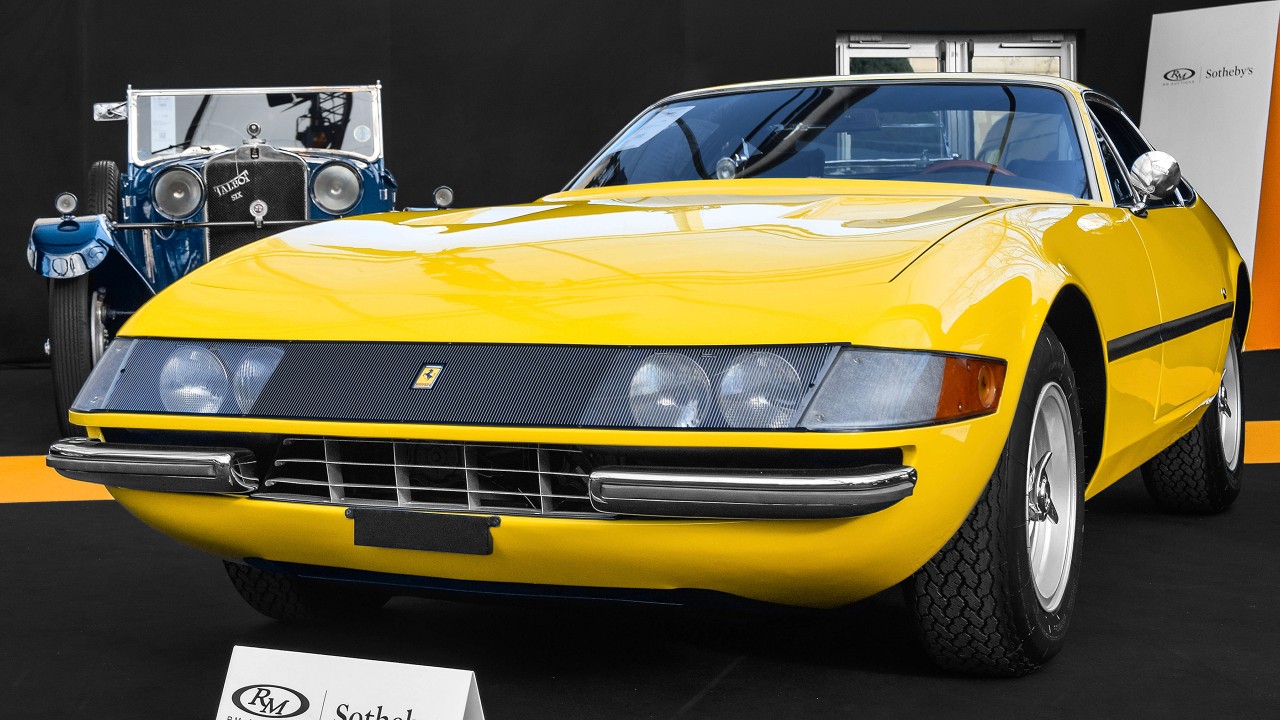
The 1971 Ferrari 365 GTB/4, better known as the Daytona, arrived at the exact moment the supercar world was pivoting to mid‑engine layouts and calmly refused to follow the script. Instead of retreating, Ferrari doubled down on a long bonnet, a V12 ahead of the driver and a stance that turned front‑engine packaging into a statement of intent. That mix of speed, style and defiance is why the Daytona came to define front‑engine bravado for an entire generation of enthusiasts.
Born to answer a mid‑engine challenge
By the late 1960s, the center of gravity in performance car design was literally moving toward the middle of the chassis. When Lamborghini unveiled the Miura at the Turin Salon, the mid‑engine layout made Ferrari’s incumbent 275 GTB look old almost overnight, and the pressure on Maranello to respond was intense. Unlike Lamborghini, which put the Miura’s V12 behind the seats, Ferrari chose to keep the engine in front for its new grand tourer, turning the Daytona into a kind of rolling argument that a traditional layout could still lead the pack.
The Daytona was conceived as the successor to the 275 GTB/4, with the brief to counter Lamborghini’s groundbreaking Miura while remaining a high‑performance grand tourer rather than a fragile showpiece. The Ferrari 365 GTB/4, for Gran Turismo Berlinetta, carried a name that spelled out its mission, and period accounts describe it as a sensation at introduction, a car that blended long‑distance usability with race‑bred speed. Although Ferrari never officially called it the “Daytona,” the nickname stuck after a one‑two‑three finish at the 24‑hour race that showcased Ferrari dominance, and the label has followed the 365 GTB/4 ever since.
Power figures that backed up the attitude
Ferrari’s confidence in keeping the engine up front only mattered because the numbers were strong enough to silence doubters. Beneath the bonnet lay a multi‑litre V12 that contemporary reports describe as producing a formidable 352 bhp, a figure that helped dethrone the Lamborghini Miura P400 from claims to being the world’s fastest production car at the time. Factory data for the 365 GTB/4 quotes Maximum power at 352 hp and a top speed of 280 km/h, which made it by some margin the fastest road Ferra of its era and turned the Daytona into a benchmark for straight‑line performance.
The engine itself drew on Ferrari’s established V12 lineage, with sources pointing to a 4.3-litre configuration in some descriptions and a 4.4-litre Col unit in detailed road tests, a reminder that period reporting sometimes rounded or framed displacement differently. What matters is that the Daytona’s V12 combined high specific output with the kind of throttle response and soundtrack that defined Ferrari road cars for decades. Later commentary has highlighted how this same Colombo‑derived architecture would echo into modern models, underlining that the Daytona’s powertrain was not a dead end but a high point in a long mechanical story.
Design that turned a long bonnet into theater
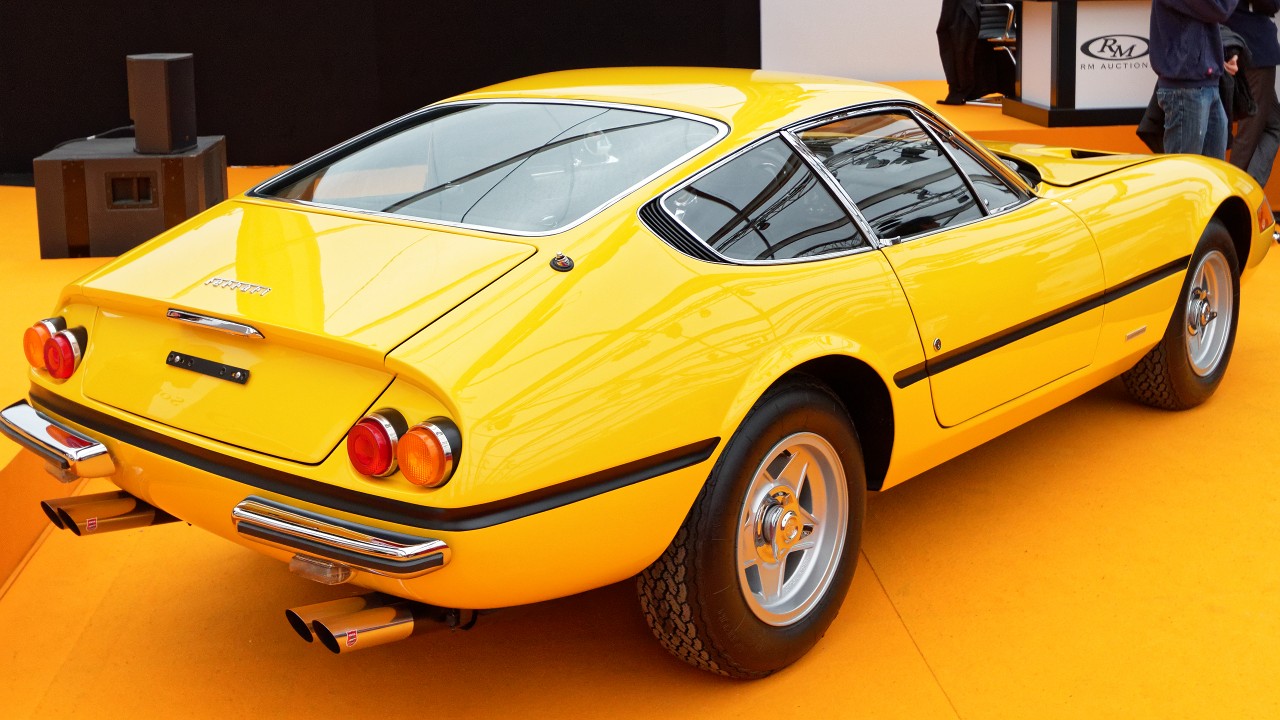
The Daytona’s styling made its front‑engine layout impossible to miss, and that was the point. The Ferrari 365 GTB/4 Gran Turismo Berlinetta stretched a dramatic bonnet ahead of the cabin, then balanced it with a cropped tail, a composition of curves and sharp edges that looked both muscular and disciplined. Early prototype versions carried a nose inspired by the 275 G, with softer forms and different lighting, before the production car adopted the more assertive front treatment that enthusiasts now associate with the model.
That visual drama was not just for show. The long hood and set‑back cabin helped distribute weight more effectively over the chassis, and Ferrari engineers placed the engine behind the front axle line to improve balance, a layout that kept the car stable at the 280 km/h speeds it could reach. The Daytona’s proportions also made space for proper grand touring accommodation, with luggage room and cabin comfort that mid‑engine rivals struggled to match. It was as much a road‑trip machine as a performance flagship, and the design telegraphed that dual purpose every time the car appeared in a rear‑view mirror.
Racing credibility and the “Daytona” myth
Although Ferrari never stamped the word “Daytona” on the 365 GTB/4’s official paperwork, the racing world effectively did it for them. The nickname grew out of Ferrari’s one‑two‑three sweep at the 24‑hour race in Florida, a result that cemented the brand’s endurance reputation and gave marketers and fans a convenient shorthand for the new road car. The Ferrari 365 GTB/4 Daytona Independent Competizione variants took that connection further, with privateer and factory‑supported entries using the same basic front‑engine architecture to contest long‑distance events.
Those competition cars underscored how far Ferrari was willing to push a front‑engined chassis at a time when rivals were moving mid‑ship. Period race‑prepared Daytonas retained the essential silhouette of the road car, which meant spectators could draw a straight line from the machines pounding around circuits to the Berlinettas parked outside hotels. That continuity between road and track, combined with the car’s success in endurance racing, helped turn the Daytona name into a myth that outgrew its unofficial origins and reinforced the idea that a front‑engine Ferrari could still dominate the world’s toughest events.
Last of a front‑engined V12 dynasty
In hindsight, the Daytona’s swagger looks even bolder because it sat at the end of an era. The model would prove Ferrari’s final front‑engined V12 flagship before the company pivoted to the mid‑engine Berlinetta Boxer for its top‑line performance cars, a shift that aligned Maranello more closely with the layout pioneered by the Miura. Contemporary guides to the Daytona’s legacy stress that while Ferrari embraced mid‑engine architecture for its halo models, the 365 GTB/4 remained the definitive expression of the classic front‑engine grand tourer formula.
That status has only grown as later Ferraris have circled back to the Daytona for inspiration. Modern front‑engined V12s, from open‑roof grand tourers to limited‑run special series, are frequently described as spiritual successors, and recent commentary on the all new 12‑cylinder models notes that designers and engineers explicitly looked to the 365 GTB/4 for cues. The Daytona’s blend of long‑distance comfort, towering performance and unapologetically front‑biased proportions set a template that Ferrari has been refining for more than five decades, and it is why the 1971 car still stands as the definitive statement of front‑engine bravado in the supercar age.
More from Fast Lane Only: