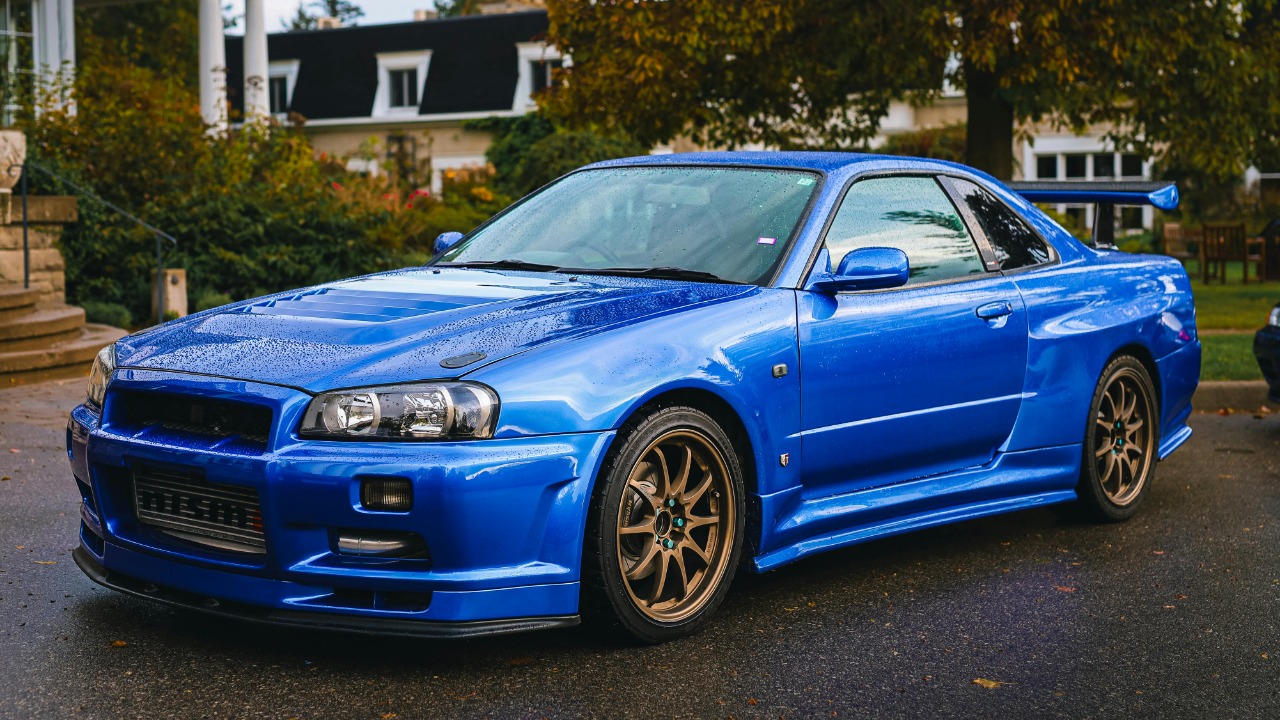
The 1989 Nissan Skyline GT-R did not just revive a storied badge, it rewrote what a mass-produced performance car could be. With all-wheel drive, four-wheel steering, and a turbocharged straight-six wrapped in a relatively understated coupe body, it reset expectations for how fast, how clever, and how usable a road-going racer could feel. I see its impact every time a modern supercar is judged as much by its lap time and electronics as by its badge.
To understand why that single model year still looms so large, you have to look at how it fused racing intent with everyday drivability, and how its legend grew in the years when it was forbidden fruit in key markets. The R32 GT-R did not just go quicker than rivals, it changed the rulebook for what counted as a serious performance benchmark.
From dormant badge to all-out assault
When the Skyline GT-R name returned in 1989, it carried the weight of history. Nissan had already used the GT-R badge between 1969 and 1973 on earlier Skyline models, then let it lie dormant for more than a decade before reviving it for the R32 generation, a move that signaled how seriously the company took this new project in its own History. I read that gap as deliberate: the GT-R name was not going to be dusted off for a mild warm-over, it was reserved for a car built to dominate.
The roots of that ambition go back to the original Skyline racers that earned a fearsome reputation in Japan. From the earliest models to those resurrected in 1989, race-prepared GT-Rs did not just win, they deprived rivals of trophies and reshaped expectations of what a Japanese performance car could be, a pattern traced in detail From the first competition outings onward. When I look at the R32, I see a car built first and foremost to continue that streak on track, with road legality almost a secondary benefit.
Engineering a new performance template
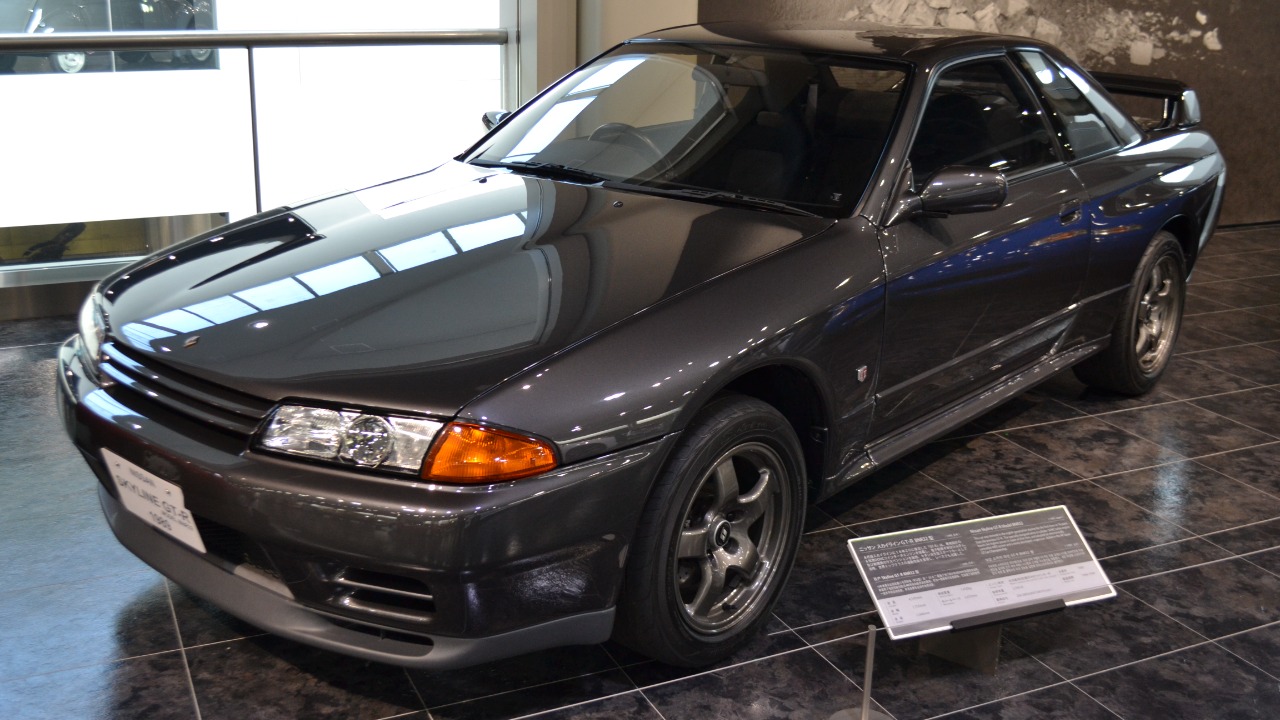
The core of the 1989 Skyline GT-R’s rule-breaking character sits under its hood and beneath its floorpan. Nissan created the RB26DETT, a twin-turbocharged, 2.6-liter straight-six that was officially rated to satisfy domestic limits but engineered for far more, a layout that enthusiasts still shorthand simply as the 2.6-liter heart of the car. That engine was paired with the brand new ATTESSA E-TS all-wheel-drive system, which could shuffle torque between the axles in real time, giving the GT-R traction and stability that felt almost supernatural compared with rear-drive rivals of the era.
Under Group A regulations, the combination of that powertrain and chassis delivered a quoted output of 233 kW, which corresponds to 317 PS and 312 hp, figures that were extraordinary for a production-based touring car at the time and are preserved verbatim under the heading Under Group. I find those numbers important not just for the raw power, but for what they say about intent: this was a car engineered to sit at the top of a tightly controlled racing formula, then sold to the public with minimal dilution.
Chassis tricks that made giants nervous
Power alone did not earn the R32 its “Godzilla” nickname, the way it turned that power into lap time did. The GT-R’s electronically controlled HICAS rear steering, in its more advanced Super HICAS form, could subtly angle the rear wheels in concert with the fronts to sharpen turn-in and stability, a system described in detail where HICAS and Super HICAS are laid out as key parts of the Skyline range. When I think about how modern performance cars lean on rear-wheel steering, it is striking how early and how aggressively Nissan pushed this technology into a road-going coupe.
The result was a car that could carry astonishing speed through corners, which translated directly into race dominance and headline lap times. At launch, the Nissan Skyline GT-R R32 set a new production-car benchmark around the Nürburgring Nordschleife, a feat that later reporting credits as a foundational moment for the GT-R legend and ties explicitly to the Nissan Skyline GT record. Watching period footage, I am still struck by how flat and composed the car looks over the Nordschleife’s worst bumps, a testament to how far ahead of its time the suspension and electronics package really was.
Forbidden fruit and the myth of the banned Skyline
Part of why the 1989 GT-R feels so rule-breaking is that, for many enthusiasts, it literally sat outside the rules. In key markets like the United States, the car was never officially sold, which helped fuel the idea that it was “too fast” or “too advanced” for regulators. Coverage of that era notes that by 1989, Japan’s automakers were no longer content to build only economy cars, and that Nissan in particular had refined the Skyline into something so potent that it became a symbol of performance that Americans could not buy, a dynamic captured in a piece bluntly titled about an 80s Nissan being off limits. When I talk to owners, that sense of being shut out of the party still colors how they describe the car.
Over time, import rules softened, and the GT-R’s status shifted from outlaw to cult classic. Enthusiasts in the United States learned that the federal 25-year rule meant cars needed to be a quarter-century old to bypass certain safety and emissions requirements, a threshold explained in plain language with the word Basically doing a lot of work in one owner’s account of securing California’s first street-legal GT-R. When the first JDM Skyline GT-Rs finally arrived legally, commentators were quick to point out that by modern standards the 1989 R32’s numbers might not sound outrageous, but that Japan’s old “gentlemens’ agreement” on power output had long masked how serious the car really was, a nuance spelled out in a report on the first JDM import.
From track terror to nostalgic icon
On track, the R32 GT-R’s dominance was so complete that it reshaped entire series. In Japan, the saying “No victory, unless GT-R” captured how inevitable a Skyline win felt once the car hit its stride, a phrase that later retrospectives on the Skyline GT era repeat with a mix of awe and nostalgia. That same coverage notes how the Nissan Skyline GT-R became a shorthand for Japanese engineering pride, to the point that the phrase Nissan Skyline GT is now as much cultural reference as model name.
The Nürburgring again provides a useful yardstick for how the legend has aged. A period video of an R32 lapping the circuit shows a time that, while slower than the later 7:08:69 set by the R35 NISMO GT-R, was described as absolutely mind-blowing when it was recorded, a reminder that the 69 at the end of that later lap time sits on a foundation the R32 helped build. When I compare the two, I see less a story of obsolescence and more a clear lineage of continuous improvement.
Owning the legend in the real world
As the R32 has shifted from cutting-edge weapon to classic, the ownership calculus has changed too. Buyers’ guides now stress the importance of careful maintenance histories, with some owners insisting on cars that have already had engine rebuilds as a condition of purchase, a point made explicitly in a detailed buyer’s guide that also urges shoppers to buy sooner rather than later as values climb. I hear the same advice from specialists: pay more for a sorted car now, or pay even more in repairs later.
The car’s cultural reach is such that it has even been immortalized in miniature and digital form. One slot-car maker notes that The GT-R name, used between the 1960s and 1970s, was taken up by Nissan in 1989 for the R-32 model and that it was only a change of regulations that allowed the car to dominate, a story retold in the description of a The GT model that also references a 32 m track layout. When a car’s backstory is baked into toys and games, I take that as a sign it has crossed from enthusiast niche into broader pop culture.
The GT-R’s lasting rulebook rewrite
Looking back from today’s vantage point, it is clear to me that the 1989 Skyline GT-R did more than win races, it set a template for how performance cars would be judged. Later GT-Rs, including the R35, built on that foundation, with the R35 NISMO GT-R’s 7:08:69 Nordschleife lap time often cited as a modern benchmark that still traces its lineage to the original NISMO philosophy. When I see manufacturers today touting all-wheel drive, rear steering, and track times in the same breath, I hear echoes of Nissan’s late-eighties playbook.
That is why, even as the GT-R line prepares to wind down and the R35 bids its own farewell, commentators still look back to the moment when the Nissan Skyline GT-R R32 shattered the Nordschleife record and forced the rest of the industry to respond, a moment revisited in coverage of the R35’s swan song that ties directly back to the Nordschleife breakthrough. For me, that is the clearest measure of how the 1989 GT-R reset performance rules: more than three decades on, the rest of the world is still playing the game it helped invent.
More from Fast Lane Only: