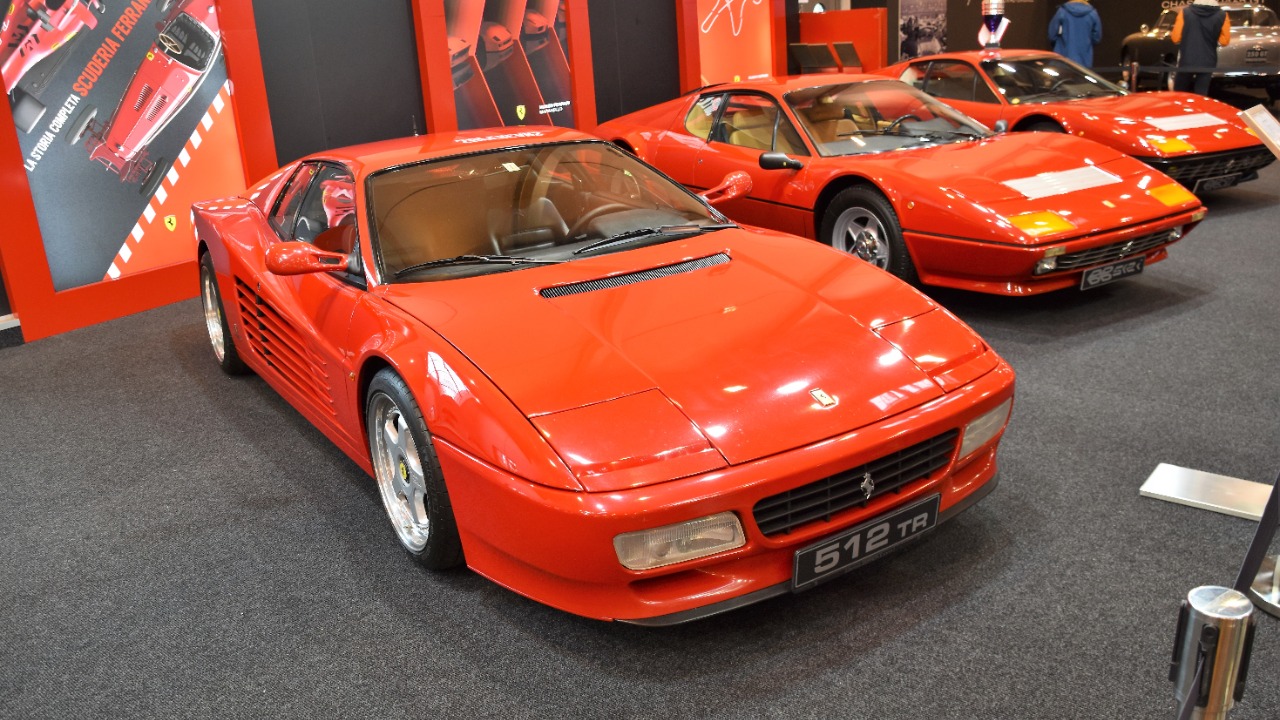
The 1991 Ferrari 512 TR arrived at the tail end of the excess-soaked 1980s, yet it did something quietly radical: it kept the drama and stripped away the worst of the excess. Instead of chasing a new silhouette, Ferrari used the 512 TR to refine the wild Testarossa formula into something sharper, faster and more livable. I see it as the moment when Ferrari proved that maturing a poster car did not have to mean taming it.
From The Testarossa to 512 TR: evolution, not apology
By the time the 512 TR appeared, the original Testarossa had already become a cultural shorthand for big hair, bigger deals and late‑night neon. Rather than disown that image, Ferrari treated the new car as a considered second draft, keeping the flat‑twelve layout and side strakes but tightening almost everything else. Officially, the 512 TR was described as the evolution of the Testarossa and production started in 1991, a clear signal that this was a continuation rather than a clean break.
That continuity mattered because The Testarossa had already carried Ferrari through a crucial era of expansion in the supercar market. As one detailed history notes, The Testarossa would receive its first major update in 1991, with extensive mechanical upgrades and a new name that folded its 5‑liter, 12‑cylinder layout into the badge. The result was the 512 TR, a car that looked familiar at a glance but had been rethought in ways that made it feel more focused and less flamboyant from behind the wheel.
Design: sharpening the icon without losing the theater
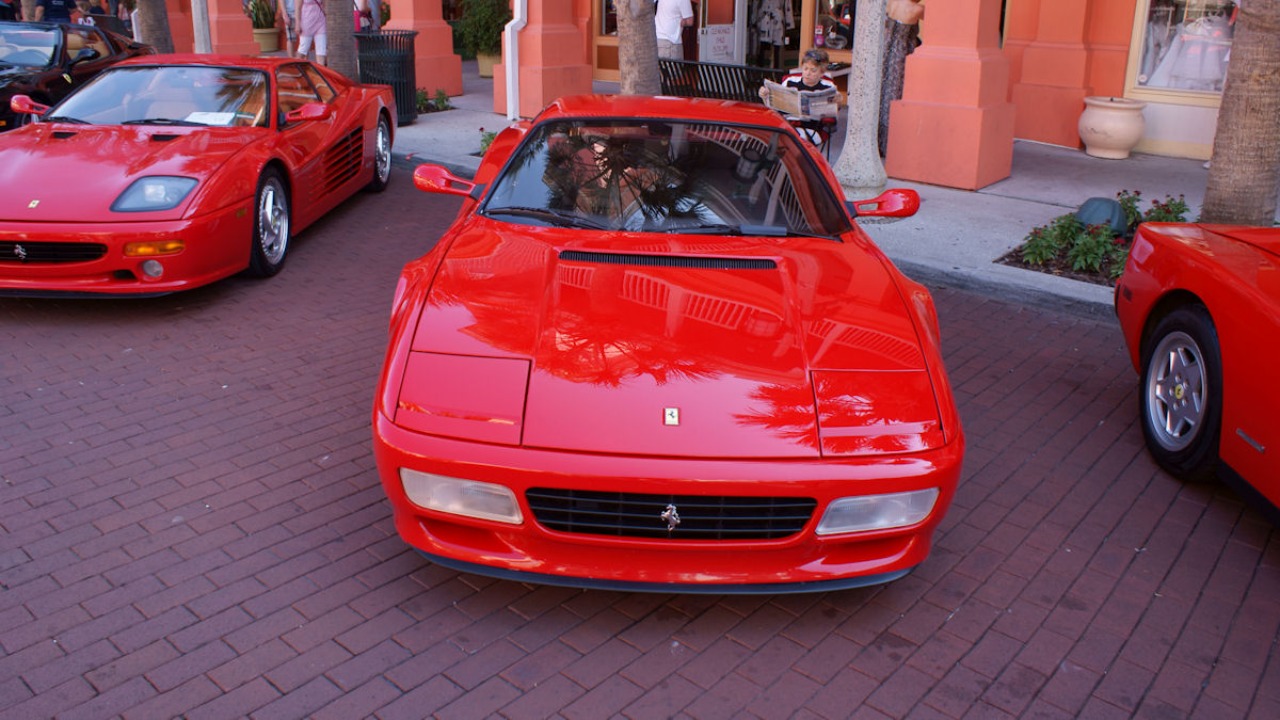
Visually, the 512 TR walked a fine line between nostalgia and progress, and I think that is where its refinement of excess is most obvious. The basic wedge and those dramatic side intakes remained, but the surfaces were cleaned up and the stance was more assertive, with a lower nose and a more integrated front bumper that made the car look less like an ’80s caricature. Ferrari’s own description highlights how the bodywork was redesigned to improve aerodynamics and how the interior was reworked to increase comfort, with the 512 TR presented as a more mature evolution rather than a stylistic reboot.
Contemporary observers noticed that the smoother, rounder lines echoed the language of the smaller Ferrari 348, which was shaping the brand’s early‑1990s look. One detailed generational overview describes the 512 TR as Wearing smoother, rounder lines aped from the contemporary Ferrari 348, with an updated transmission and a refreshed interior that toned down some of the original car’s flash. In practice, that meant the 512 TR still turned heads in traffic, but it did so with a bit more restraint, like a former nightclub regular who had discovered tailored suits.
Engineering focus: turning drama into discipline
Under the skin, the 512 TR’s mission was to turn the Testarossa’s raw spectacle into something more disciplined and rewarding to drive. The flat‑twelve remained the star, but Ferrari reworked its breathing, fueling and exhaust to free up more power and sharpen the response. A detailed guide to the model notes that, Most notably, the new 512 TR had been given a cosmetic facelift and several mechanical upgrades to improve performance, with changes that reduced intake restriction and helped the engine pull harder across the rev range.
Those upgrades sat on a chassis that had already been advanced for its era, with a tubular steel frame and independent, unequal‑length suspension at each corner. Earlier engineering work on the Testarossa had produced a structure that combined that frame with sophisticated suspension geometry, and one technical history points out that The chassis and suspension systems were equally advanced, supporting a flat‑twelve that delivered its power at a higher 5,500 rpm. In the 512 TR, that foundation was tightened with revised mounting points and geometry, so the car felt less like a wide‑body GT and more like a serious driver’s machine when you committed to a fast corner.
Performance and production: numbers behind the nuance
For all the talk of refinement, the 512 TR still had to justify its existence with hard numbers, and it did. The flat‑twelve’s output climbed, and official data lists the 512 TR’s engine in the Powertrain table with a rating of 315 kW (428 PS; 422 hp), enough to push the car deep into supercar territory for its time. That same reference notes that the 512 TR’s Production run stretched from 1991 to 1994, with 2,261 examples produced, a figure that kept it exclusive without making it unobtainable folklore.
Those production numbers also show how Ferrari treated the 512 TR as a bridge between eras rather than a short‑lived special. The 512 TR sat between the original Testarossa and the later F512 M, carrying over the core architecture while preparing customers for a more modern driving experience. In that sense, its 2,261‑car run feels like a deliberate calibration: enough cars to make a real impact on the road and in the market, but not so many that it diluted the aura that had made the Testarossa a star in the first place.
Legacy and value: how refinement aged better than flash
Three decades on, the 512 TR’s blend of drama and discipline has turned out to age more gracefully than the pure excess of its predecessor. Collectors have started to recognize that balance, and the market has followed. Valuation data for a 1993 Ferrari 512 TR shows that the most recent auction sale reached $202,500, achieved by a listing handled by Cars & Bids, a figure that reflects both nostalgia and a growing appreciation for the car’s usability. That kind of number suggests buyers are not just chasing a childhood poster, they are paying for a driving experience that still feels special without being punishing.
The 512 TR’s influence also shows up in how we talk about design today. When a modern project invites famed studios back to reinterpret 1990s supercars, it is telling that the conversation often returns to the same Italian names and proportions. One recent concept story opens with the phrase Enter famed Italian design house Pininfarina, which is asked to revisit the ’90s supercar template, a reminder that the same studio language that shaped the Testarossa and 512 TR still defines what many of us picture when we think “supercar.” In that light, the 512 TR feels less like a footnote and more like the moment when that template was edited, tightened and prepared for the future.
More from Fast Lane Only: