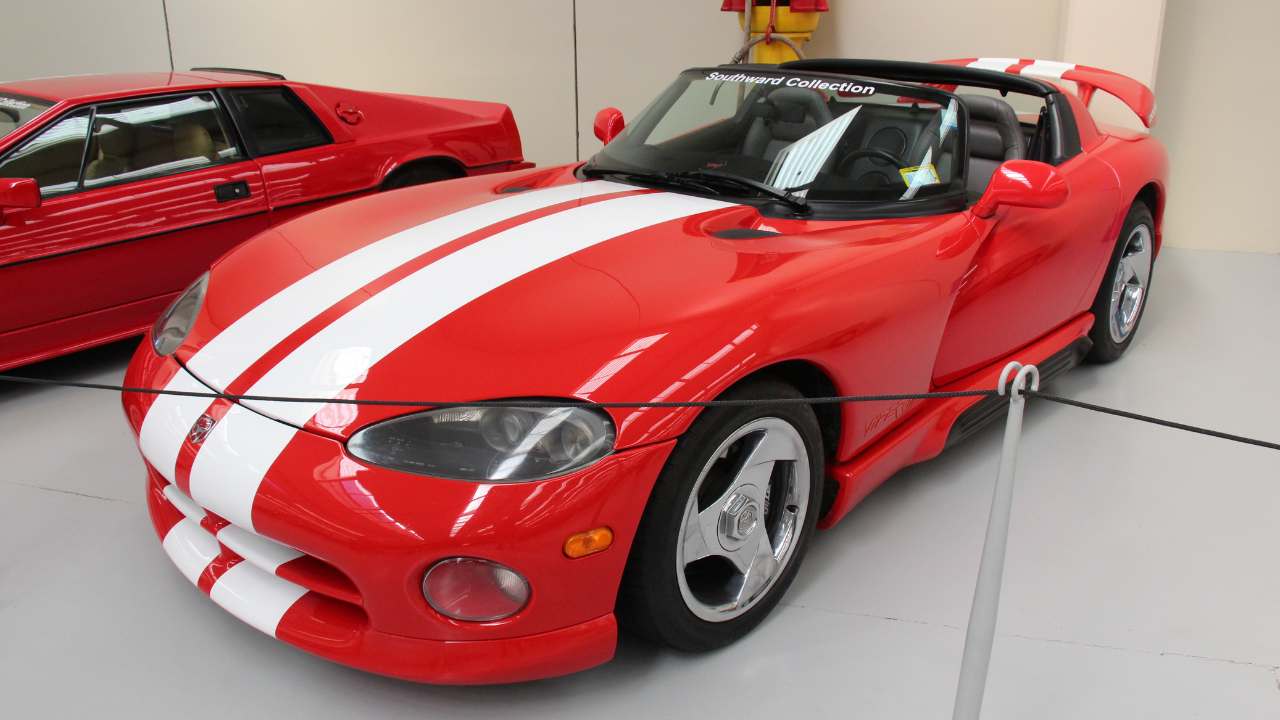
The 1992 Dodge Viper emerged as a revolutionary sports car that defied conventional automotive design and engineering norms. With its unapologetic raw power and minimalist approach, the Viper not only captured the hearts of car enthusiasts but also raised eyebrows across the industry.
The Birth of the Viper: A Bold Concept
The story of the Dodge Viper begins in the late 1980s when Chrysler was looking for a way to revitalize its brand and reconnect with car enthusiasts. The concept was born out of a desire to create a vehicle that prioritized performance over the bells and whistles that had become commonplace in the automotive industry. Chief engineer Bob Lutz played a crucial role in this endeavor, envisioning a car that would harken back to the classic American sports cars of the 1960s while incorporating modern engineering.
The initial design was a bold departure from the established norms of the time. The Viper was unveiled as a concept car at the 1989 Detroit Auto Show, creating a buzz that would lead to its production just a few years later. The project faced numerous challenges, including engineering complexities and budget constraints, yet the team was united by a shared vision: to create a car that would deliver an exhilarating driving experience without compromising on performance.
Stripped-Down Design Philosophy
The Viper’s design is strikingly minimalist. Unlike many sports cars of its era, which offered a plethora of technological frills and creature comforts, the Viper took a different approach. Features such as power windows, air conditioning, and even a stereo were deemed unnecessary distractions from the driving experience. This commitment to simplicity not only reduced weight but also underscored the car’s focus on performance.
The use of lightweight materials was a key aspect of the Viper’s design philosophy. By employing fiberglass and aluminum, the engineers managed to produce a vehicle that was agile and responsive, qualities essential for a true sports car. The decision to embrace a raw, visceral driving experience rather than a polished, luxurious one set the Viper apart from its competitors, making it a favorite among purists who craved an unfiltered connection to the road.
Engine Power: A No-Holds-Barred Approach
At the heart of the Viper was its groundbreaking 8.0-liter V10 engine, a powerhouse that redefined what a sports car could achieve. This massive engine produced an astonishing 400 horsepower and 465 lb-ft of torque, catapulting the Viper from 0 to 60 mph in just 4 seconds. It was a performance figure that left its competitors in the dust and set a new benchmark for American muscle cars.
The engineering challenges involved in developing the V10 were substantial. Chrysler engineers had to create a robust engine that could handle the immense power while still being reliable. They succeeded not only in crafting a formidable engine but also in making it sound distinctive—with a growl that became synonymous with the Viper brand. The result was a car that delivered raw, exhilarating performance, challenging the industry norms of the time and paving the way for future performance cars.
Aesthetic Choices: Function Over Form
The Viper’s exterior design is as iconic as its performance. With its long hood, wide stance, and aggressive lines, the Viper exudes power and speed even when stationary. The styling choices were made with function in mind; the car’s aerodynamics were carefully considered to enhance performance. The bold colors—often bright reds and yellows—further emphasized its sporty nature, setting it apart from the more conservative designs of the era.
The public reception of the Viper’s design was overwhelmingly positive, with many praising its unapologetic aesthetics that screamed performance. Critics noted that the Viper was a refreshing change from the more refined and often homogenized designs dominating the automotive landscape at the time. The Viper’s unique appearance not only appealed to car enthusiasts but also solidified its status as a cultural icon, influencing the design of sports cars that followed.
Marketing Strategy: Breaking the Mold
In a time when traditional advertising dominated the automotive landscape, the marketing strategy for the Viper was refreshingly unconventional. Rather than relying heavily on advertisements, Dodge focused on the car’s raw performance, showcasing it at automotive events and through word-of-mouth in car culture circles. The Viper quickly became a symbol of American muscle, attracting attention not just for its performance but also for its striking design and limited availability.
This unique marketing approach had a profound impact on Dodge’s brand image, positioning the company as a serious contender in the sports car arena. The Viper garnered a dedicated following, with enthusiasts eager to share their passion for the car through social media platforms, including Instagram. For example, the community-driven posts and fan pages helped to proliferate the Viper’s allure, turning it into a cultural phenomenon that transcended traditional marketing boundaries.
Safety and Regulatory Challenges
While the Viper was celebrated for its performance, its development was not without challenges, particularly in terms of safety and regulatory compliance. The car was initially designed without modern safety features, such as airbags or anti-lock braking systems (ABS), which raised concerns among safety advocates and consumers alike. This lack of advanced safety equipment highlighted the Viper’s focus on performance at the potential expense of safety.
The Impact on Automotive Culture The Viper’s influence on automotive culture cannot be overstated. It redefined what an American sports car could be, inspiring a new generation of performance vehicles that embraced raw power and minimalist design. The Viper’s emergence coincided with a resurgence of interest in muscle cars, leading to a renewed appreciation for high-performance vehicles among enthusiasts. As a result, it helped to foster a vibrant community of fans dedicated to the car and its legacy. Legacy and Evolution of the Viper Even years after its initial release, the original Dodge Viper continues to have a lasting impact on the automotive industry. Its ethos of prioritizing performance and driving experience resonates in modern sports cars, where manufacturers strive to capture the raw and unfiltered essence that the Viper embodied. Subsequent models have attempted to retain the spirit of the original while incorporating advancements in technology and safety features. legacy.
More from Fast Lane Only