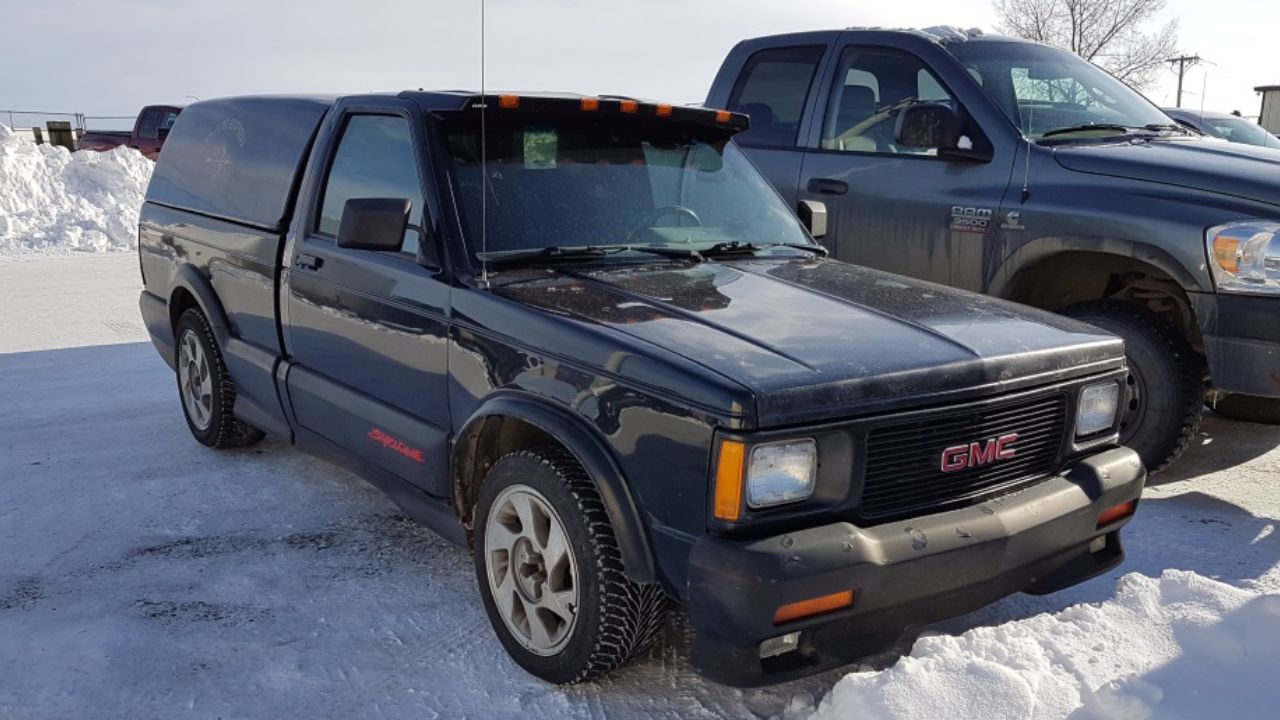
The 1991 GMC Syclone is often hailed as the forefather of modern performance trucks, combining sports car speed with pickup utility. This groundbreaking vehicle set a new standard for what a truck could be, influencing generations of performance-oriented pickups that followed.
Origins of the GMC Syclone
The journey to create the GMC Syclone began in the late 1980s when GMC sought to develop a performance variant of the Sonoma pickup. At the time, the pickup segment was primarily focused on utility and payload capability, with few manufacturers willing to explore the fusion of performance and practicality. GMC’s vision was bold: to take the rugged and reliable Sonoma and transform it into a vehicle that could compete with sports cars in terms of speed and handling.
Central to this ambitious project was GMC’s Special Vehicle Team (SVT), which drew inspiration from the performance DNA of the Chevrolet Corvette. This collaboration infused the Syclone with advanced engineering techniques and a turbocharged engine that would elevate its performance to unprecedented levels for a pickup. The market conditions of the early ’90s also played a crucial role in the Syclone’s development; consumers were becoming increasingly interested in vehicles that combined performance with everyday usability. The timing was perfect for introducing a performance truck that could captivate both truck enthusiasts and speed aficionados.
Performance Specs That Changed the Game
Powering the GMC Syclone was a formidable 4.3L V6 turbocharged engine, which delivered an impressive 280 horsepower. This engine, paired with a 4-speed automatic transmission, allowed the Syclone to achieve 0 to 60 mph in just 4.3 seconds—a feat that was astonishing for a pickup at the time. The inclusion of all-wheel drive provided not only enhanced traction but also superior handling, making the Syclone a well-rounded performer on various terrains. The sport-tuned suspension system further contributed to its agile driving dynamics, setting it apart from its contemporaries.
When compared to other performance vehicles of the early ’90s, the Syclone’s numbers were nothing short of remarkable. For instance, it outperformed popular sports cars like the Ford Mustang GT and Chevrolet Camaro, which were often regarded as the benchmarks for speed. The Syclone’s ability to blend pickup utility with sports car performance redefined consumer expectations and laid the groundwork for future performance trucks.
Design and Aesthetics
The design of the GMC Syclone was instrumental in distinguishing it from traditional pickups. With aggressive styling, including a lowered stance, wide wheel arches, and a sleek front fascia, the Syclone conveyed a sense of speed even when stationary. The monochromatic paint scheme, which included shades like black and red, further emphasized its sporty character and helped to establish a visual identity that was both striking and memorable.
Inside, the Syclone was designed with performance enthusiasts in mind. The cockpit featured bucket seats, a sport steering wheel, and an array of gauges that provided vital performance information. While maintaining practicality, the interior also included features such as air conditioning and a premium sound system, allowing drivers to enjoy their high-speed adventures in comfort. The attention to detail in its design contributed to the Syclone’s overall appeal, making it a coveted vehicle among enthusiasts.
Impact on the Truck Market
The introduction of the GMC Syclone had a profound impact on the truck market, reshaping consumer expectations for performance in pickups. Prior to its release, trucks were primarily viewed as workhorses, but the Syclone demonstrated that they could also be thrilling to drive. This shift in perception opened the door for other manufacturers to explore the performance truck segment, leading to the emergence of various performance variants. Brands like Ford and Dodge began to recognize the potential for performance-focused pickups, resulting in models like the Ford Lightning and the Dodge Ram SRT-10 in the following years.
The legacy of the Syclone can be seen in the modern performance trucks available today. It set a benchmark that manufacturers have sought to match or exceed, driving innovation in both powertrain technology and design. The influence of the Syclone is still felt in contemporary models, which continue to blend utility with exhilarating performance, proving that the original vision for a performance truck was not just a fleeting trend but a lasting evolution in the automotive landscape.
Cultural Significance and Popularity
The GMC Syclone quickly became a cultural icon in the 1990s, thanks in part to its appearances in video games and films. Titles such as “Gran Turismo” and various racing simulators featured the Syclone, introducing a new generation of car enthusiasts to its impressive capabilities. It was not unusual to see the Syclone featured in car shows and gatherings, where it garnered attention for its unique combination of pickup utility and sports car performance.
The community of Syclone enthusiasts has remained active over the years, forming clubs and online forums dedicated to the vehicle. This camaraderie has fostered a sense of belonging among owners and fans, who share tips on maintenance, performance upgrades, and restoration projects. Collectors have also recognized the Syclone’s significance, leading to a steady increase in its market value. Today, pristine models can fetch impressive sums at auctions, reflecting the enduring popularity of this groundbreaking truck.
Comparison with Modern Performance Trucks
When comparing the GMC Syclone to modern performance trucks like the Ford Raptor and Ram TRX, several similarities and differences emerge. Like the Syclone, these modern counterparts boast impressive horsepower and advanced technology, yet they also benefit from decades of advancements in materials and engineering. For instance, while the Syclone’s all-wheel-drive system was groundbreaking for its time, contemporary trucks often feature sophisticated traction management systems that enhance performance across diverse conditions.
However, the Syclone’s compact size and lighter weight contribute to a different driving experience compared to today’s larger performance trucks. The evolution of performance standards in the truck segment has led to the development of vehicles that prioritize both off-road capability and on-road performance. Despite these advancements, the Syclone’s influence is evident in the way performance trucks are designed and marketed today, as manufacturers strive to blend excitement with utility.
Challenges Faced by the Syclone
Despite its groundbreaking design and performance, the GMC Syclone faced several challenges during its production run. Limited production numbers meant that availability was restricted, which ultimately affected sales. The initial hype surrounding its release was significant, but as demand fluctuated, so did the Syclone’s presence in the market. Critics pointed to its high price point relative to other pickups, which made it a tough sell for budget-conscious consumers looking for a work vehicle.
Additionally, some challenges were related to reliability and maintenance. While the turbocharged engine offered exhilarating performance, it also required careful attention to ensure longevity. GMC worked to address these concerns with updates and support, but the Syclone’s reputation suffered somewhat due to these issues. Ultimately, its discontinuation in the mid-1990s left a void in the performance truck segment, but its legacy continues to influence the industry.
Revival and Future Prospects
The legacy of the GMC Syclone has not been forgotten, leading to recent attempts to revive the nameplate. Speculation around new models has generated excitement among enthusiasts, with some manufacturers hinting at potential successors that would honor the original’s performance ethos. Concepts have emerged that pay homage to the Syclone’s roots while incorporating modern technology and design elements, as seen in various automotive showcases and virtual renderings like the one featured on Autoevolution.
As the automotive landscape continues to evolve, the future of performance trucks looks promising. With advancements in electric and hybrid technologies, there is potential for a new generation of performance trucks that could deliver even greater power and efficiency. The spirit of the Syclone lives on, inspiring current and future designs that prioritize both exhilarating performance and practical utility. Consumers can look forward to innovations that push the boundaries of what a performance truck can be, much like the original Syclone did over three decades ago.
More from Fast Lane Only