The 1996 Pontiac Firebird Trans Am WS6 arrived at a moment when American pony cars were fighting to stay relevant against imports and tightening emissions rules. By pairing the familiar LT1 V8 with a carefully engineered handling and airflow package, Pontiac created a fourth‑gen Firebird that punched well above its brochure numbers and reset expectations for the nameplate.
Rather than chase a completely new engine, Pontiac’s engineers focused on air, grip, and balance. The resulting WS6 package turned the Trans Am from a quick cruiser into a serious performance car, with real‑world acceleration and cornering that outstripped its paper specs.
What happened
When the fourth‑generation Firebird launched for 1993, the Trans Am already carried the 5.7‑liter LT1 V8 and a choice of manual or automatic transmissions. By 1996, Pontiac wanted a harder‑edged variant that could compete with contemporary performance cars and reclaim some of the Trans Am’s track‑day credibility. That push produced the WS6 Ram Air Performance and Handling Package, a factory option that sat above the standard Trans Am configuration.
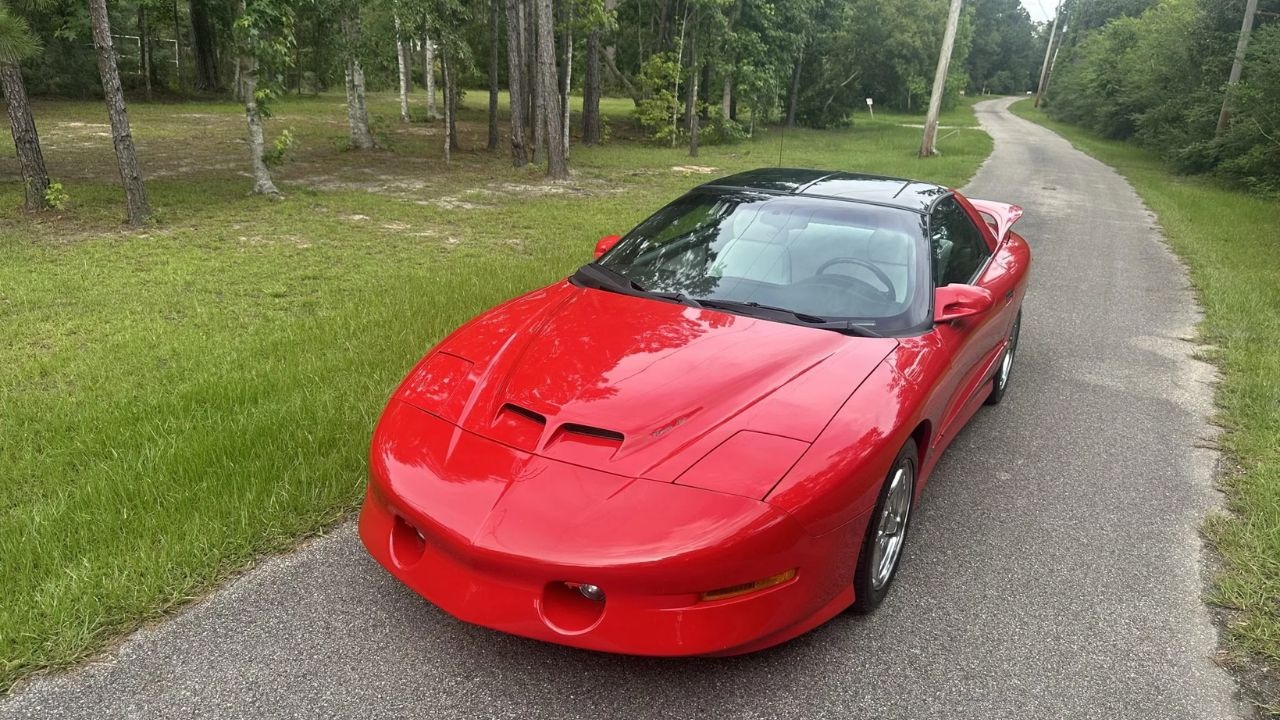
The WS6 recipe began with the LT1, rated at 285 horsepower and 325 lb‑ft of torque in Ram Air form for the 1996 model year. Instead of redesigning the engine, Pontiac added a functional twin‑nostril hood that fed a low‑restriction intake path. The Ram Air system improved volumetric efficiency at speed, helping the LT1 breathe better in the upper rev range and sharpening throttle response.
Chassis changes were just as significant. The WS6 package specified stiffer springs, revised shock valving, a larger rear sway bar, and 17‑inch wheels wrapped in performance tires. This wider footprint and higher‑rate suspension gave the car noticeably higher lateral grip compared with a standard Trans Am. Pontiac also upgraded the exhaust system to reduce backpressure, which worked in concert with the intake to free additional power.
These changes were more than cosmetic. Period testing showed WS6 cars running quicker quarter‑mile times and higher skidpad numbers than their non‑WS6 counterparts. Later fourth‑gen examples, such as the 2002 Trans Am WS6, built on the same philosophy and were described as Pontiac’s last and possibly strongest high‑performance pony cars, a reputation rooted in the foundation that the 1996 package helped establish, as reflected in analysis of the 2002 Trans Am.
The WS6 code itself had history inside Pontiac, attached to earlier second‑generation Trans Am suspension packages. Reviving that designation for the mid‑1990s car signaled that the option was more than a styling exercise. Engineering details such as higher‑rate bushings, specific alignment settings, and carefully matched spring and shock tuning supported that message and gave the WS6 a distinct driving character.
Why it matters
The 1996 WS6 mattered because it showed how targeted engineering could keep a familiar platform competitive without a clean‑sheet powertrain. The LT1 V8 was already several years into its life cycle, and competitors were starting to introduce newer architectures. By focusing on airflow and chassis tuning, Pontiac enabled the Trans Am to deliver stronger real‑world performance than its catalog numbers suggested.
On the engine side, the Ram Air system did more than add a visual cue. By pulling cooler, higher‑pressure air from the leading edge of the hood, the setup improved intake charge density at speed. Cooler air carries more oxygen, which supports more efficient combustion. The benefit was most apparent during highway pulls and track use, where sustained airflow let the LT1 maintain power as temperatures climbed. Drivers experienced a car that felt livelier at speed than a standard Trans Am, even though the rated output only climbed modestly.
The suspension and tire upgrades were equally important. Moving to 17‑inch wheels allowed Pontiac to fit wider, lower‑profile tires that increased the contact patch. Combined with firmer springs and bars, the WS6 delivered higher cornering limits and more immediate turn‑in. Reviews from the period highlighted the car’s ability to carry more speed through sweepers and its improved stability under hard braking compared with non‑WS6 models.
This balance between straight‑line speed and handling helped reposition the Trans Am in the performance hierarchy. No longer seen only as a boulevard car with a big engine, the WS6 variant could credibly line up against contemporary sports coupes on a road course. The package also signaled to enthusiasts that Pontiac still valued driver involvement at a time when some rivals were softening their lineups.
The WS6 story also connects directly to the broader arc of Pontiac performance. Later fourth‑gen WS6 cars, especially those using the LS1 V8, became reference points for factory F‑body capability, with detailed breakdowns of the WS6 hardware often citing the combination of Ram Air, suspension tuning, and wheel and tire choices as the core of the package. The 1996 version was an early proof of concept that showed how those elements worked together on the LT1 platform.
From a market perspective, the WS6 also helped maintain interest in the Firebird line during a period of tightening emissions and changing consumer tastes. Buyers who wanted American V8 performance with credible handling found a clear choice in the WS6, which carried a distinct visual identity through its hood and wheel design. That halo effect supported the rest of the Firebird range and kept the Trans Am name in enthusiast conversations.
Technically, the WS6 approach foreshadowed how later performance cars would be developed. Rather than relying solely on engine displacement, modern packages often combine optimized intake paths, carefully tuned exhaust systems, specific spring and damper calibrations, and unique wheel and tire setups. The 1996 Trans Am WS6 stands as an early example of that integrated strategy in a mass‑market American coupe.
What to watch next
Interest in fourth‑generation Firebirds has been rising, and the WS6 cars sit at the center of that trend. Collectors and drivers now look closely at how early Ram Air LT1 cars compare with later LS1‑powered WS6 models. The 1996 version occupies a transitional role, blending older small‑block architecture with a more modern approach to chassis and airflow tuning.
As values evolve, originality and condition are likely to play a larger role for these cars. Factory WS6 equipment, including the specific hood, intake hardware, suspension components, and 17‑inch wheels, helps distinguish genuine cars from standard Trans Ams that have been modified with similar parts. Documentation that confirms the original WS6 option often becomes a deciding factor for buyers weighing long‑term collectability.
Attention is also growing around how these cars are used. Some owners lean into the package’s track‑friendly nature, upgrading brakes and tires while preserving the core WS6 character. Others focus on preserving low‑mileage examples as reference points for the era. The tension between driving enjoyment and preservation will likely shape the WS6’s story over the next decade, especially as clean, unmodified cars become harder to find.
From an engineering heritage standpoint, the WS6 framework continues to influence how enthusiasts modify fourth‑gen Firebirds. Many build recipes still start with improved intake and exhaust flow, stiffer suspension components, and wider wheels and tires, echoing the factory’s priorities in 1996. That continuity reinforces the idea that Pontiac’s choices were not just marketing, but grounded in effective performance gains.
Looking ahead, the WS6 name carries a legacy that extends beyond its original production run. As electric performance cars gain ground, the Trans Am WS6 represents a particular moment in American V8 history, when incremental engineering refinements extracted meaningful gains from a familiar platform. The 1996 model, with its Ram Air LT1 and sharpened chassis, remains a key chapter in that story and a benchmark for how targeted upgrades can transform a car’s capability without reinventing its core.
More From Fast Lane Only: