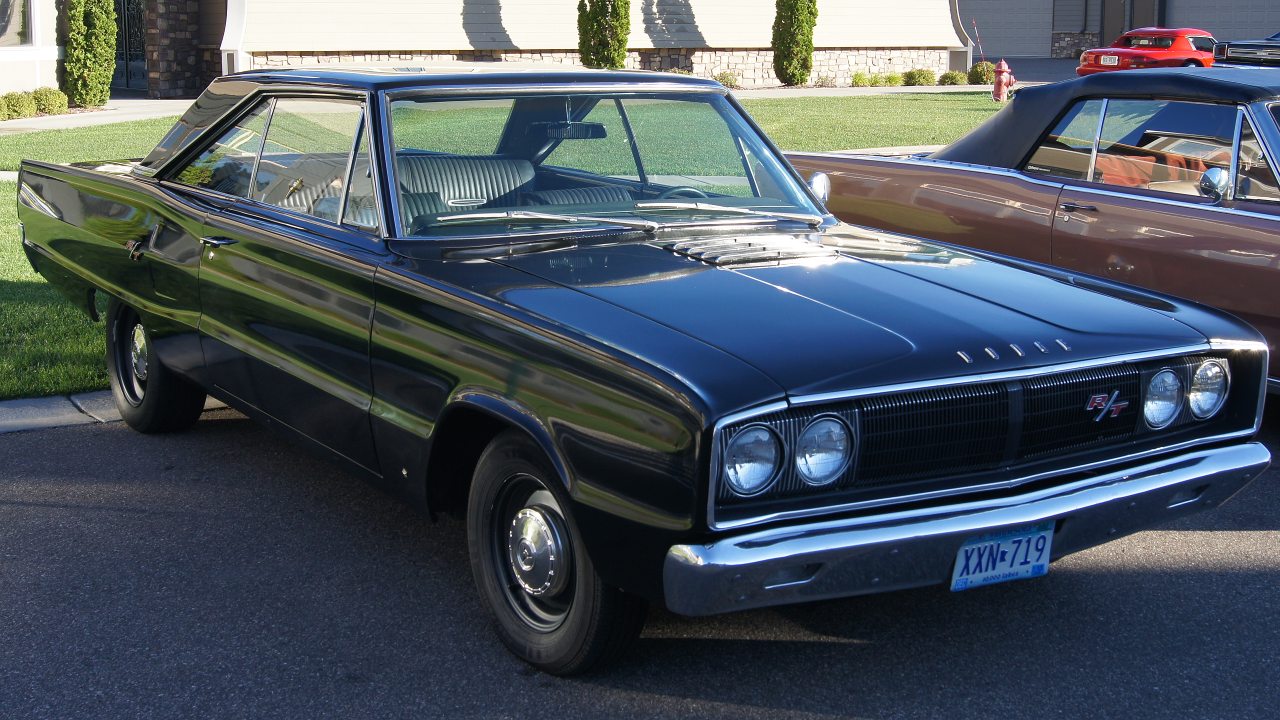
The Dodge Coronet R/T occupies a curious place in muscle car history. It delivered the full force of late‑1960s American performance, yet it has never been as overexposed as some of its contemporaries. That relative quiet around the nameplate is exactly why the Coronet R/T still rewards close attention from anyone who cares about how power, design, and rarity intersect.
Look closely and the car reveals a layered story: a serious engineering statement from Dodge, a showcase for big‑block performance, and a model line that moved from family sedan roots to Road/Track credibility. For enthusiasts and collectors willing to study the details, the Coronet R/T offers both visceral appeal and the kind of depth that keeps people talking long after the engine is shut off.
From sensible sedan to Road/Track statement
The Coronet name began as a straightforward mid‑size Dodge, but the R/T badge turned it into a declaration of intent. With the Road/Track specification, Dodge took a practical platform and reoriented it around performance, giving buyers a car that could still carry a family yet felt purpose built for speed. The shift was not cosmetic; it was a structural change in how the brand wanted to compete in the muscle era, positioning the Coronet R/T as the go‑to choice for drivers who wanted a large engine and a genuine high horsepower experience.
That transformation is evident in how the R/T trim was described at the time, with the package explicitly framed as a top‑tier performance option rather than a mere appearance upgrade. The Coronet R/T was treated as the pinnacle of the line, with powerful V8 engines and a focus on acceleration and handling that set it apart from more modest Coronets. With R/T trim and serious power, the Coronet (Dodge Coronet) evolved from a sleeper into a recognized muscle car, and the Road/Track branding signaled that Dodge was no longer content to sit on the sidelines of the performance wars.
Powertrains that still command respect
Under the hood, the Coronet R/T backed up its aggressive image with hardware that remains impressive even by modern standards. The Coronet R/T package, introduced in 1967, came standard with a 440-cubic-inch RB engine, a big‑block configuration that delivered the kind of torque and straight‑line thrust that defined the era. For buyers who wanted even more, Dodge offered the legendary 426 HEMI as an option, turning an already serious car into something close to a street‑legal race machine. This combination of a standard 440-cubic-inch motor and the optional 426 upgrade ensured that the R/T badge meant real performance, not marketing hype.
Later model years continued to refine that formula, with the Coronet R/T recognized as the pinnacle of performance within the broader Coronet range. The car was equipped with powerful V8 engines, including the 440 cubic-inch Magnum, and exhaust systems with prominent tail pipes that made its intent obvious even at idle. Contemporary descriptions of the R/T trim emphasize that it was designed with gearheads in mind, with the Road/Track specification standing for a balance of straight‑line speed and usable road manners. For enthusiasts today, those factory powertrains are central to the car’s appeal, offering a direct link to the peak of big‑block American engineering.
Design that captures Chrysler’s golden era
Beyond the numbers, the Coronet R/T’s styling helps explain why it continues to draw careful scrutiny. The 1967 Dodge Coronet R/T is often cited as a quintessential example of late‑1960s American muscle, combining bold lines with a stance that looks ready to launch even when parked. Its proportions, from the long hood to the squared‑off rear, reflect Chrysler’s golden period of design, when the company managed to blend everyday usability with a visual language that signaled performance. That mix of practicality and aggression gives the car a presence that still feels authentic rather than theatrical.
By 1969 and 1970, the Coronet R/T’s look had become even more assertive. The 1969 Dodge Coronet R/T is described as a true American muscle car icon, featuring a split grille and aggressive detailing that made it instantly recognizable. The 1970 Dodge Coronet R/T pushed further with distinctive “Coke bottle” styling, a bold and aggressive shape that stood out even among other Mopar offerings. Known for its aggressive styling and powerful engine options, the Coronet R/T was clearly designed for enthusiasts who wanted both speed and visual drama, and that design language remains a major reason collectors still study these cars in detail.
Rarity, production numbers, and overlooked value
Part of the Coronet R/T’s enduring fascination lies in how its production numbers intersect with today’s collector market. Dodge sold 179,583 Coronets in 1967, but only 10,181 were specified as R/T models. Of these, 628 were convertibles, and 61 got the most coveted powertrains, figures that underline how quickly the pool narrows once performance and body style are taken into account. Those numbers help explain why certain Coronet R/T variants, particularly convertibles and HEMI cars, are now regarded as rare finds that command intense interest when they surface.
The story becomes even more dramatic with the 1970 Coronet R/T, where production of some configurations was extremely limited. Reports note that Dodge made only a tiny number of 1970 Coronet R/T HEMI convertibles, a level of scarcity that places them among the rarest Dodge muscle cars ever produced. At the same time, the broader Coronet R/T range has often been overshadowed by more famous nameplates, which means many examples remain relatively overlooked compared with similarly capable rivals. In a market where a 1970 Buick GS 455 Stage 1 can carry an Average Price of $87,100, the Coronet R/T’s combination of rarity and underappreciation gives attentive buyers room to find value that is not yet fully priced in.
Why enthusiasts still seek it out
For modern enthusiasts, the Coronet R/T offers more than a static slice of history; it provides a driving and ownership experience that rewards engagement. Known for its aggressive styling and powerful engine options, the Coronet R/T was designed for people who wanted both speed and comfort, and that dual character still resonates. Owners describe the 1970 Dodge Coronet R/T as an extremely loud, bold muscle machine, with its Coke bottle styling and exhaust note turning every drive into an event. Even examples that have been neglected for decades, such as long‑stored 1968 and 1967 cars, attract attention when rediscovered, because the underlying Road/Track package still promises serious performance once restored.
That appeal is reinforced by the way the Coronet R/T fits into Dodge’s broader heritage. The 1967 Dodge Coronet R/T (Road/Track) is recognized as Dodge’s first true entry into the muscle car market under the R/T badge, a move that signaled the brand’s commitment to competing head‑on with rivals. Later descriptions of the 1969 Dodge Coronet R/T emphasize its status as a true American muscle car icon, while discussions of Rarity and Legacy around the 1969 Coronet R/T highlight how its exclusivity and performance make it a prized possession among collectors today. With R/T trim and serious power, the Coronet (Dodge Coronet) stands as a bridge between everyday transportation and focused performance machine, and that layered identity is exactly what keeps enthusiasts coming back to study, restore, and drive these cars.
More from Fast Lane Only