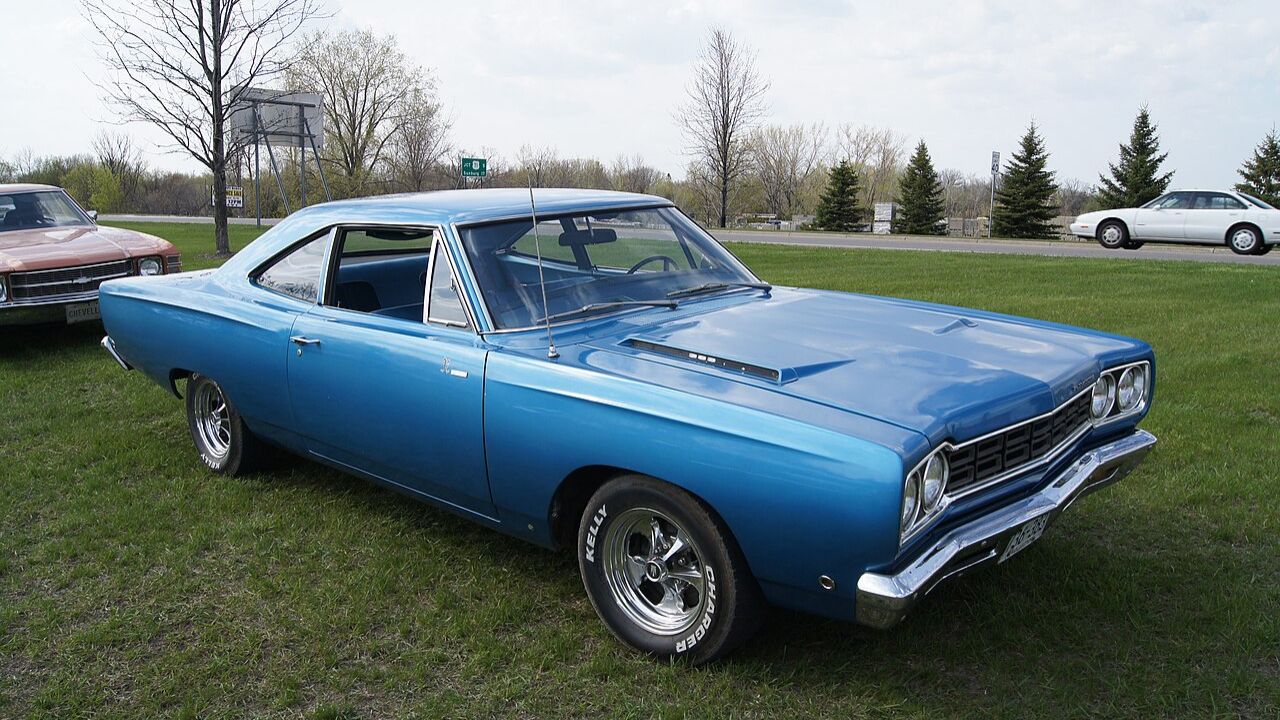
The Plymouth Road Runner changed the muscle car market by proving that serious performance did not have to come with a high price tag. Introduced in the late 1960s, it combined powerful engines, lightweight construction, and a simple approach that focused on driving excitement. Its success made it one of the most influential performance bargains of the muscle car era.
A Simple Idea Created a Muscle Car Revolution
During the late 1960s, many high-performance cars were becoming increasingly expensive as manufacturers added luxury features and premium options. Plymouth recognized that younger buyers wanted affordable speed rather than extra comfort and unnecessary equipment.
The company created the Road Runner as a stripped-down performance model based on the Belvedere platform. Instead of adding expensive features, Plymouth focused on the essentials that mattered most to enthusiasts: a powerful engine, strong drivetrain, and lightweight body.
Introduced for the 1968 model year, the Road Runner offered buyers access to serious muscle car performance at a much lower price than many competitors. Its straightforward design helped keep costs down while maintaining impressive capability.
The formula was simple but effective: remove the extras and deliver maximum performance for the money.
Big Power Made It a Serious Threat
The Road Runner gained instant attention because of its available V8 engines. Buyers could choose powerful options such as the 383 cubic-inch V8, while higher-performance versions featured the legendary 426 Hemi and 440 Six Barrel engines.
These engines transformed the Road Runner into a serious competitor on both the street and the drag strip. The car’s relatively lightweight body allowed it to make excellent use of its available horsepower.
Unlike some performance cars that required expensive upgrades to become competitive, the Road Runner was already capable straight from the factory. It delivered the kind of acceleration enthusiasts wanted without the premium price attached to many muscle cars.
This combination of affordability and performance became the foundation of its popularity.
Smart Marketing Made It Stand Out
Plymouth understood that the Road Runner needed more than just performance—it needed personality. The company created a unique identity around the car with its cartoon-inspired Road Runner character, distinctive horn, and bold advertising campaigns.
The playful image helped separate it from more serious competitors and attracted younger buyers who wanted a fun, exciting vehicle. At the same time, the car’s performance reputation ensured it was respected by serious enthusiasts.
The Road Runner represented a different philosophy from many luxury-oriented muscle cars. It was not about status or comfort—it was about speed, simplicity, and enjoyment.
This clear identity helped the Road Runner become one of the most recognizable cars of its generation.
A Legacy Built on Value and Performance
The Plymouth Road Runner remains admired because it captured the true spirit of the muscle car era. It delivered impressive power without unnecessary complexity, proving that performance could be accessible to a wider audience.
Collectors continue valuing Road Runner models because they represent an important moment when manufacturers focused on creating affordable performance machines. Their combination of strong engines, distinctive styling, and historical importance keeps them highly desirable today.
The Road Runner’s greatest achievement was changing expectations. It showed that a buyer did not need to spend a fortune to own a serious performance car.
By offering big power at a reasonable price, the Plymouth Road Runner became an instant performance bargain and one of the most memorable muscle cars ever created.
More from Fast Lane Only
- Unboxing the WWII Jeep in a Crate
- 15 rare Chevys collectors are quietly buying
- 10 underrated V8s still worth hunting down
- Police notice this before you even roll window down
*Research for this article included AI assistance, with all final content reviewed by human editors