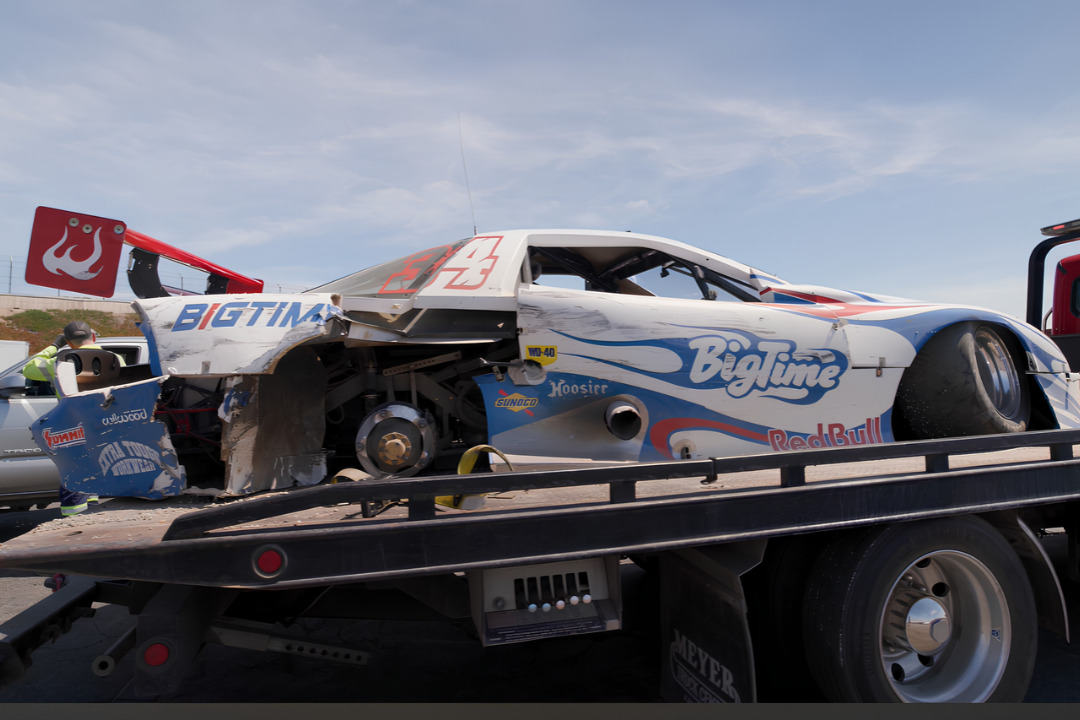
Jeremiah Burton had just spent two weeks rebuilding his 30-year-old race car for a head-to-head against a factory Ford GT LM. A fresh body, new brakes, a custom livery, all of it built toward one shot at proving an old car could still hang with a multimillion-dollar one. It came apart in a single corner at Laguna Seca, the Camaro’s rear wheel shearing clean off its hub at nearly 80 mph. Burton walked away with a mild concussion. The car didn’t walk away at all.
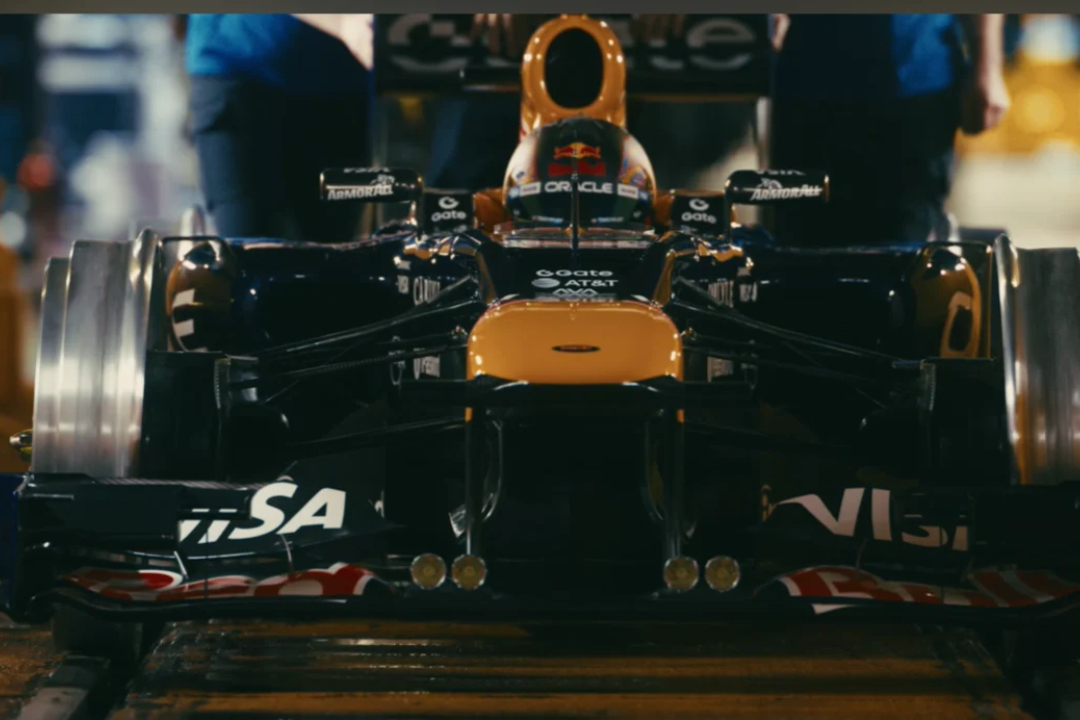
The whole project started as a straightforward challenge: pit that decades-old Camaro against a genuine Ford GT LM, a factory endurance racer that finished second in class at the 2016 24 Hours of Le Mans. Burton wanted to test whether raw car value actually translates into lap time, or whether it stops mattering somewhere along the way.
Eight days for a body job that was supposed to take a few
The mechanical prep went smoothly enough: new rotors, hubs, bearings, and brake pads, plus an upgrade from 16-inch wheels to a stickier 18-inch setup. The body was where things spiraled. What Burton expected to be a quick refresh turned into eight days and nearly 100 hours fitting a new composite shell alone, eventually requiring backup from his mechanic mentor Jorge, who spent five straight days helping fit windows, fabricate trays, and hand-cut a new front splitter with a jigsaw.
A closer fight than the price tags suggested
At Laguna Seca, the numbers told a surprisingly competitive story. Burton’s Camaro ran a baseline 1:29.1. Jeff O’Neill’s Ford GT LM, still warming its tires, ran a 1:31.05. Despite giving up a factory carbon-fiber monocoque and wind-tunnel-tested aero, Burton’s car was, in that first comparison, actually quicker, helped by a power-to-weight picture closer than the price gap implied: roughly 500 horsepower in a 1,245-kilogram Ford against nearly 600 horsepower to the wheels in Burton’s 2,880-pound Camaro.
One more lap, then everything went wrong
Rather than switch straight to his new wheels, Burton went back out on the original 16-inch set for one more attempt at a faster lap. Entering Turn 9, known as Rainy Curve, at close to 80 mph, the car suffered a catastrophic failure and went off track, ending both the session and the shoot.
Telemetry from a RaceBox GPS device pinned the failure right around that 80 mph mark, with the car pulling roughly 1.61 lateral Gs, translating to about 4,637 pounds of lateral force loading through the tires. Burton’s theory, backed by a physical inspection afterward, was that a fatigue crack had been quietly growing where the wheel’s center met its outer rim, likely for years, until Turn 9 finally asked more of it than it had left to give. The left-rear wheel showed matching cracks in the same spot, supporting the theory that this had nothing to do with one bad corner and everything to do with three decades of accumulated stress.
What actually survived the day
The car didn’t make it home in one piece, but Burton was quick to note the people involved mattered more than the outcome: Jorge, the livery designer, the wrap team, a sponsor who stuck around even after the original backer pulled out mid-shoot. The team even turned the wreckage into merchandise, sealing broken bodywork fragments in jars alongside gravel collected from the track itself.
A car that had just absorbed two weeks of dedicated rebuild work going down in a single corner is the kind of ending nobody plans for. But the baseline numbers before the crash suggested Burton’s underlying theory held up right up until a three-decade-old wheel finally ran out of road.
More from Fast Lane Only
- Unboxing the WWII Jeep in a Crate
- 15 rare Chevys collectors are quietly buying
- 10 underrated V8s still worth hunting down
- Police notice this before you even roll window down
*Research for this article included AI assistance, with all final content reviewed by human editors.