The 1970 AMC 390 V8 powered some of AMC’s fiercest muscle cars but was gone after a single year. Built for speed, it marked a high point for American Motors before the 401 took over. Here are eight reasons why this 6.4-liter engine was a short-lived legend, diving into its specs, costs, and place in history.
High-performance design for the Rebel Machine

The 1970 AMC Rebel Machine’s 390 V8 delivered 340 horsepower at 5,100 rpm and 430 lb-ft at 3,600 rpm, with a 4.165-inch bore and 3.68-inch stroke. Its forged crankshaft powered a 0-60 mph sprint in ~6.8 seconds. Only 2,326 Machines were built, priced at $3,475 (~$27,500 today).
Tuned for AMC’s top muscle car, the 390 used a high-strength iron block and a 690-cfm Motorcraft carburetor. AMC switched to the 401 in 1971, with a taller deck and larger 401.11 cu in, to streamline production and compete with Big Three rivals. Its brief run made it a rare powerhouse.
Forged components for durability

The 390’s forged steel crankshaft and connecting rods handled high-rpm stress, ideal for racing builds up to 7,000 rpm. Weighing ~650-700 lbs, it ran a 10.0:1 compression ratio in the Rebel Machine. Forging dies raised production costs by ~$50-$100 per engine over cast parts.
AMC chose forged parts for the 1968 AMX launch, lacking time to test cast components. The 401 continued this durability, but its larger displacement cut costs by reducing engine variants. Hot rodders still prize the 390’s toughness for big-power builds.
NASCAR and Trans-Am racing influence

Built for Trans-Am racing with Mark Donohue, the 390’s SR block had thicker main bearing webs, supporting aftermarket four-bolt main caps. It produced 325 hp at 5,000 rpm and 425 lb-ft at 3,200 rpm in non-Machine trims, with a ~5,500-rpm redline.
Used in 1970 Javelins by Penske Racing, the SR block didn’t need homologation, giving AMC a Trans-Am edge. The 401’s 1971 arrival, with a longer 3.84-inch stroke, replaced it to boost street and track performance. Its racing legacy shines in AMC’s underdog story.
Limited production volume
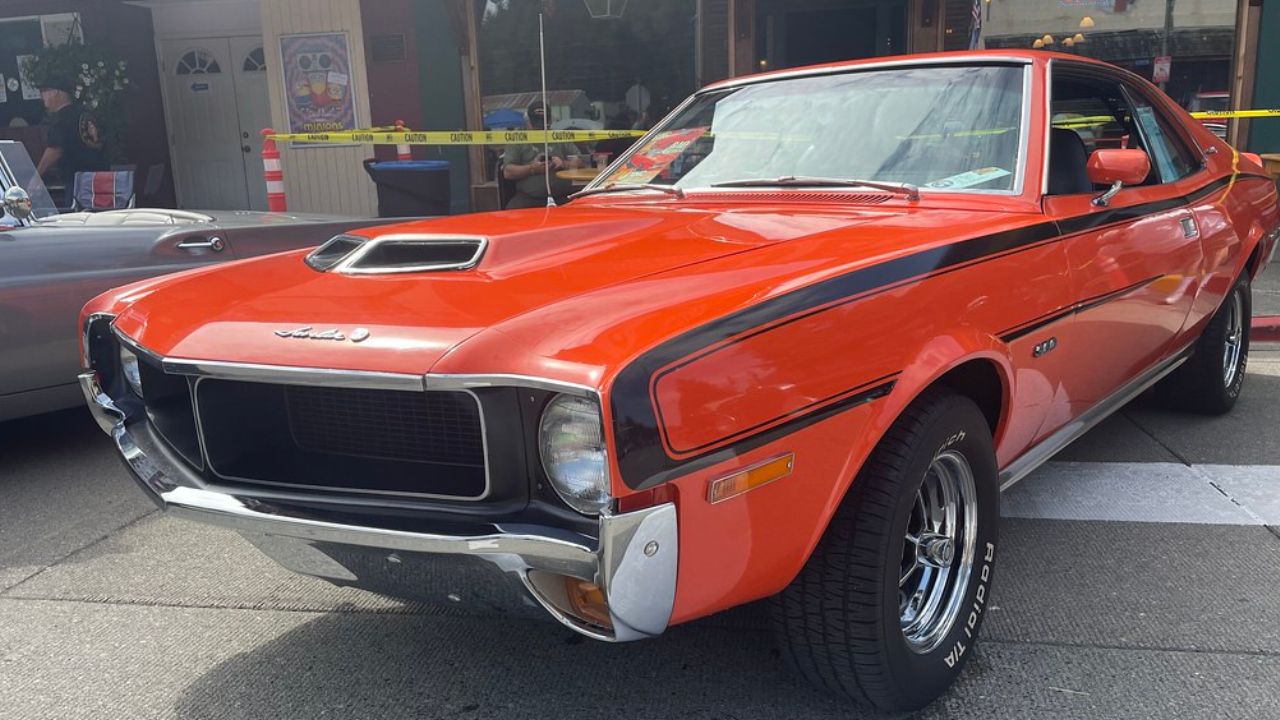
AMC built ~8,000-9,000 390 engines for the 2,326 Rebel Machines, ~4,116 AMXs, and ~2,500 Javelins, each costing $500-$700 to produce. Its 4.75-inch bore spacing fit compact chassis like the AMX’s 97-inch wheelbase.
Low sales and AMC’s tight budget, compared to GM or Ford, limited output. The 401’s 1971 debut saved ~$50-$100 per engine by unifying the lineup. The 390’s rarity now fuels its mystique among collectors chasing AMC’s muscle era.
Dog-leg cylinder heads for better flow

The 1970 390 introduced dog-leg cylinder heads, boosting exhaust flow by ~20% with 2.025-inch intake and 1.625-inch exhaust valves. Costing ~$20-$30 extra per engine, they maximized power, especially in the Machine’s ram-air setup.
The 401 reused these heads, making the 390’s one-year run a cost-saving move as AMC streamlined its V8s. The airflow edge helped the 390 hit 340 hp, cementing its performance cred before emissions rules changed the game.
Emissions and market pressures

By 1970, emissions laws loomed, challenging the 390’s 10.0:1 compression (9.7:1 in standard trims, 325 hp, 425 lb-ft). Retooling for smog compliance cost ~$500,000-$1 million across AMC’s lineup. Its 0.020-inch overbore limit (0.030 common) suited high-performance builds.
The 401’s 9.5:1 compression was easier to detune for 1972’s net ratings (255 hp). Fuel costs and insurance rates also pushed AMC toward efficiency, making the 390’s raw power a one-year outlier.
Transition to the 401 V8

The 401, introduced in 1971 with a 9.208-inch deck and 3.84-inch stroke, produced 401.11 cu in and 330 hp (gross), later 255 hp (net). It saved ~$50-$100 per engine by reducing variants, using the same forged components.
Better suited for larger cars like the Matador and Jeeps, the 401 replaced the 390 to align with AMC’s strategy against bigger rivals. The transition was practical, prioritizing scale over the 390’s niche performance.
Collector value and rarity today

A 1970 Rebel Machine fetches $45,000-$100,000, with top examples hitting $149,500 at auction. A standalone 390 engine sells for $3,000-$7,000, with ~2,000-3,000 likely surviving from ~8,000-9,000 built. Its 325 hp (non-Machine) and 6.4-liter displacement drive demand.
The 390’s one-year run and AMC’s underdog status make it a collector’s gem. Its role in the Rebel Machine, AMX, and Javelin keeps it a revered piece of muscle car history.
Like Fast Lane Only’s content? Be sure to follow us.
Here’s more from us:
*Created with AI assistance and editor review.