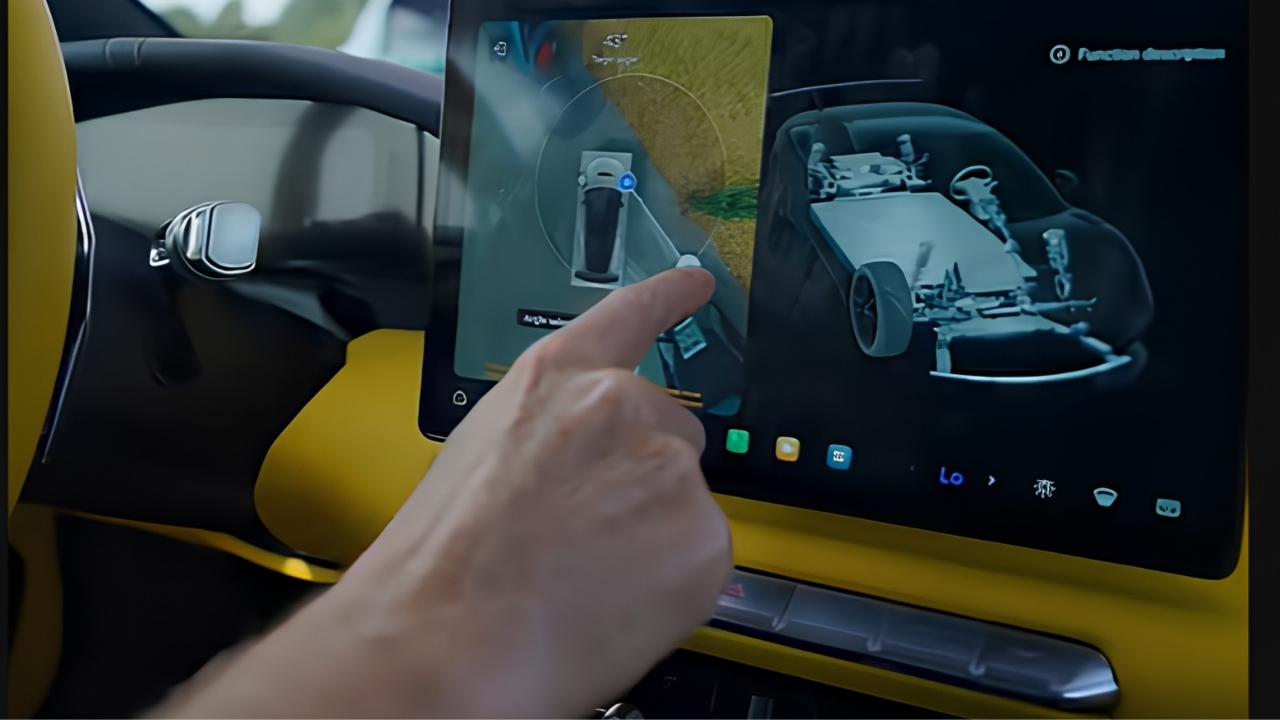
It started the way a lot of modern mysteries do: not with a lipstick stain or a suspicious late-night text, but with a tiny line of text on a screen. A wife was riding in the passenger seat, killing time while the car’s infotainment system loaded up. She tapped into the navigation history and saw an address she didn’t recognize.
At first, it didn’t feel dramatic—more like a mental speed bump. The kind where your brain goes, “Huh… that’s odd,” and then circles back five seconds later with, “Wait, why is that there?” And because it was right there in the system’s recent destinations, it didn’t feel like a random glitch. It felt like a breadcrumb.
A small discovery that didn’t feel small
The address wasn’t a gas station, a grocery store, or a place they’d talked about visiting. It looked residential, specific, and recent. That combination—unfamiliar and precise—has a way of making your stomach drop even if you’re trying to stay chill.
So she did what most people would do: she asked about it, casually at first. Not an interrogation, not a courtroom scene. Just a “Hey, what’s this address?” tossed into the air like it shouldn’t matter, even though it clearly did.
The moment questions started stacking up
His answer didn’t settle it. Maybe it was too vague, maybe it came too fast, or maybe it didn’t match what she knew about his day. When the explanation doesn’t click, your mind starts filling in the blanks on its own, and it rarely fills them in with something relaxing.
She asked another question, then another—still calm, but more focused. It wasn’t about “catching” anyone in the moment. It was about trying to understand why their car—shared space, shared life—was pointing toward a place she’d never heard of.
Why navigation history hits a nerve
Phones are one thing. But navigation history feels weirdly intimate because it’s tied to movement, not just words. It suggests someone physically went somewhere, took a route, arrived, stayed, and then left.
And unlike a text message that can be deleted or brushed off as “just chatting,” an address feels concrete. It’s a dot on a map. It’s a front door. It’s the kind of detail that makes you picture a scene, even when you don’t want to.
The very normal reasons an address can show up
Before the story turned into a full-blown household investigation, she tried to think through the innocent possibilities. A wrong tap, a misheard voice command, a rerouted shortcut suggested by the system. Sometimes navigation apps log things that weren’t actually driven to, especially if someone searched a place and backed out.
There are also practical explanations: work errands, helping a friend, a delivery pickup, an appointment someone forgot to mention because it felt too boring to bring up. And, yes, sometimes people punch in an address just to check how long it would take to get somewhere. Curiosity isn’t a crime, but it can look suspicious when you’re on the outside of it.
But suspicion isn’t born out of thin air
Here’s the part that friends tend to say out loud: people don’t spiral over one weird address if everything else feels solid. Usually, it’s the address plus a few other things—more guarded phone habits, changes in routine, a new distance in conversations, more “I’m just tired” than usual.
So even if the address has an innocent explanation, the emotional reaction might be about something bigger. Navigation history just happened to be the thing that made it visible. Like finding smoke and realizing you’ve been smelling something off for a while.
How she approached it without turning it into a shouting match
Instead of going full detective right away, she stayed on the simplest point: “I don’t recognize this. Help me understand.” That framing matters, because it’s about clarity, not accusation—at least at the start.
She also watched the response more than the words. Was he willing to talk? Did he get defensive immediately? Did he act confused in a believable way, or did the confusion feel performative, like someone buying time while their brain scrambles for a story?
What “proof” looks like in real life (and why it’s messy)
People love to imagine there’s a single receipt that explains everything. Real life doesn’t work like that. Even if he pulled up his timeline, his calendar, or a message thread, it still might not satisfy the bigger question: why didn’t she know about it in the first place?
On the other hand, the absence of an easy explanation doesn’t automatically mean the worst. It means more conversation is needed, and maybe a look at patterns rather than one data point. A single address is a clue, not a verdict.
The privacy vs. transparency tug-of-war
Shared tech creates shared temptations. The car is a joint space, so it feels fair game to glance at what’s in it. But once the questioning begins, it can quickly slide into a debate about privacy, trust, and “why are you checking up on me?”
That’s where a lot of couples get stuck—arguing about the act of looking instead of the worry that caused the looking. If someone feels blindsided, they’re not going to be comforted by a lecture on boundaries. And if someone feels surveilled, they’re not going to respond well to cross-examination.
How this kind of situation often resolves
Sometimes the explanation is genuinely boring. It’s a coworker’s house for a quick drop-off, a medical appointment that felt too personal to mention, or a mistaken search. In those cases, the bigger outcome is usually a conversation about sharing plans a little more clearly, not because anyone needs permission, but because surprises erode trust.
Other times, the address is exactly what it looks like, and the navigation history becomes the first hard evidence in a larger story. That’s when the questions stop being about one location and start being about the relationship itself—honesty, respect, and whether the life they’re living matches the one they both thought they had.
A modern reminder: the car remembers
One quiet detail in this story is how casually technology keeps records. Many vehicles and connected apps store recent destinations, frequent routes, and synced contacts. People often forget that the car is basically a rolling diary with a touchscreen.
It’s not that the system is “telling” on anyone. It’s that it doesn’t know what’s sensitive and what’s not. It simply logs what it’s asked to do, and sometimes it drops that information right into a shared space at the worst possible moment—like a random address popping up on a Tuesday afternoon when nobody was expecting a plot twist.
By the time the ride ended, she still didn’t have a neat, satisfying answer. But she did have something else: a clear signal that there was a conversation they couldn’t keep skipping. One unfamiliar address might not mean everything, but it was enough to make her stop pretending she wasn’t curious—and start asking the questions that had been waiting for a reason to come out.
More from Fast Lane Only
- Unboxing the WWII Jeep in a Crate
- 15 rare Chevys collectors are quietly buying
- 10 underrated V8s still worth hunting down
- Police notice this before you even roll window down
*Research for this article included AI assistance, with all final content reviewed by human editors.