The Yamaha SRX600 cost $2,600 in 1986 and vanished from American showrooms after one season. In fact, it belongs to a long line of factory café racers that sold in small numbers and then slipped out of memory. Most riders can name a café racer special built in a garage, yet far fewer remember the ones that came straight from a showroom.
These seven are our picks, from a BSA twin of 1962 to the Triumph that revived a famous racing name in 2004. Each one also shipped with low bars, a lean riding position or a racing seat. Every figure below comes from period road tests, museum records or specialist histories.
1. 1962–1963 BSA Rocket Gold Star
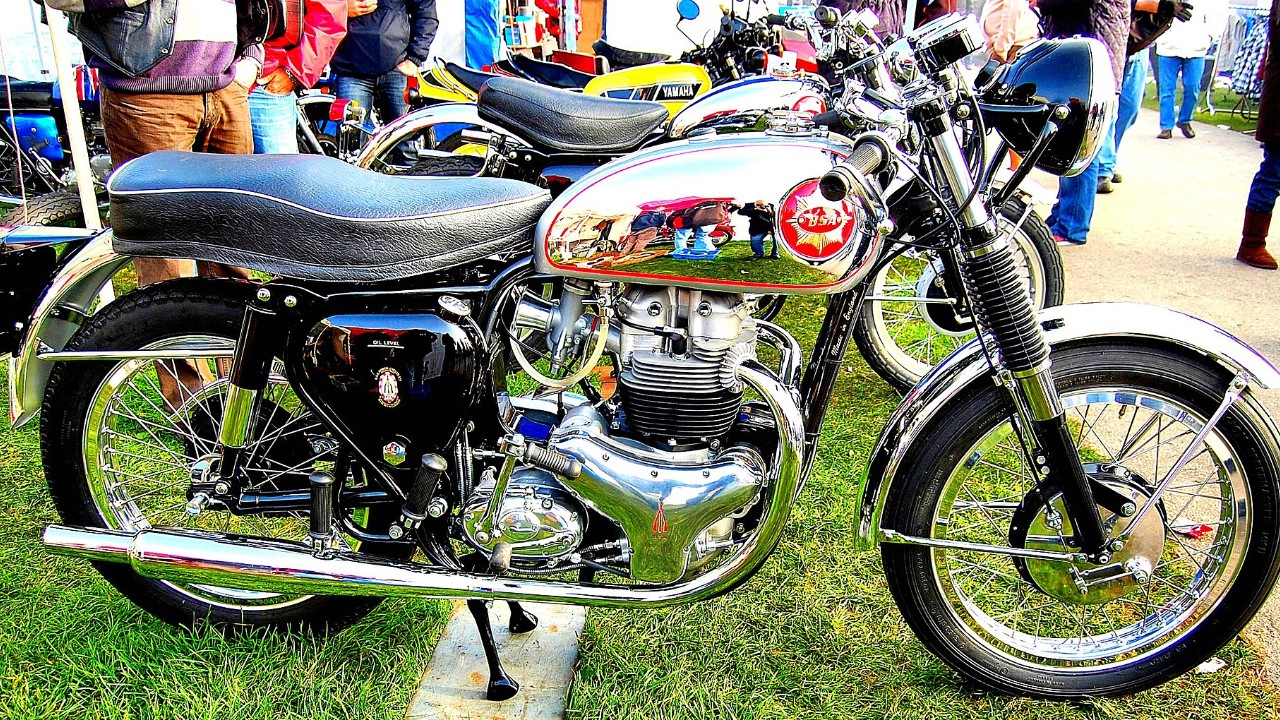
Eddie Dow sold BSAs and tuned Gold Stars for a living. Starting in 1959, his shop built about 20 bespoke café racers that put the A10 Super Rocket twin into a Gold Star chassis. Dow then lobbied BSA to build its own version, and the factory first said no. By February 1962, though, the Rocket Gold Star was on sale.
BSA had a practical motive, too. According to Classic Bike Guide, the bike used up the last A10 engines while the new unit-construction twins entered production, so it lasted only about 18 months. Silodrome puts the total at 1,584, with 272 of those built as scramblers for the California desert. The engine was a 646 cc parallel twin with a hot camshaft and 9:1 compression.
2. 1971–1974 Moto Guzzi V7 Sport
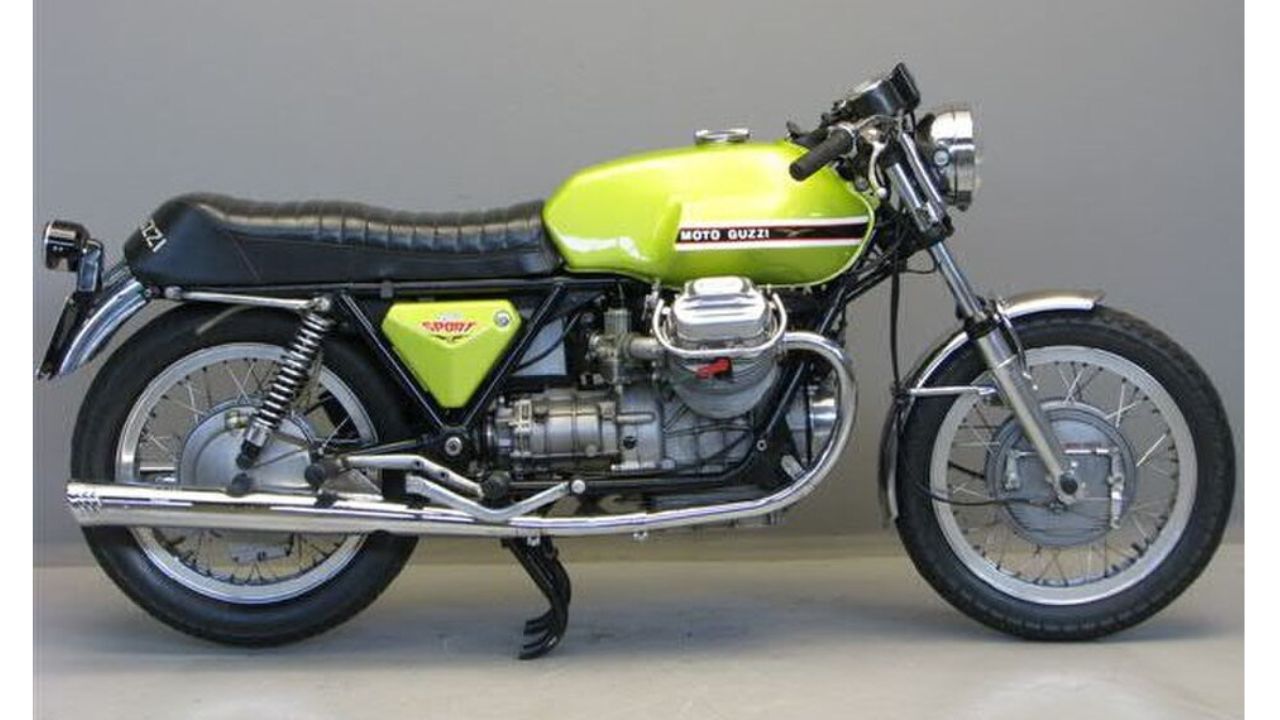
Lino Tonti took over design at Moto Guzzi in 1970. His first big job was turning the heavy V7 touring twin into a sports bike. Tonti drew a low twin-cradle frame that wrapped around the engine, and that frame carried Guzzi’s big twins for decades.
Finally, the road bike reached customers in November 1971. Before that, Guzzi hand-built roughly 150 to 200 pre-production bikes with red frames, a batch Italians call “Telaio Rosso.” As Classic Bike Hub notes, the 748.4 cc engine made a claimed 70 bhp at the crank, or about 52 bhp at the rear wheel. Top speed was 120 mph. Instead of fixed clip-ons, the swan-neck bars slid up and down the fork tubes so each rider could set his own crouch.
3. 1975 Honda CB400F
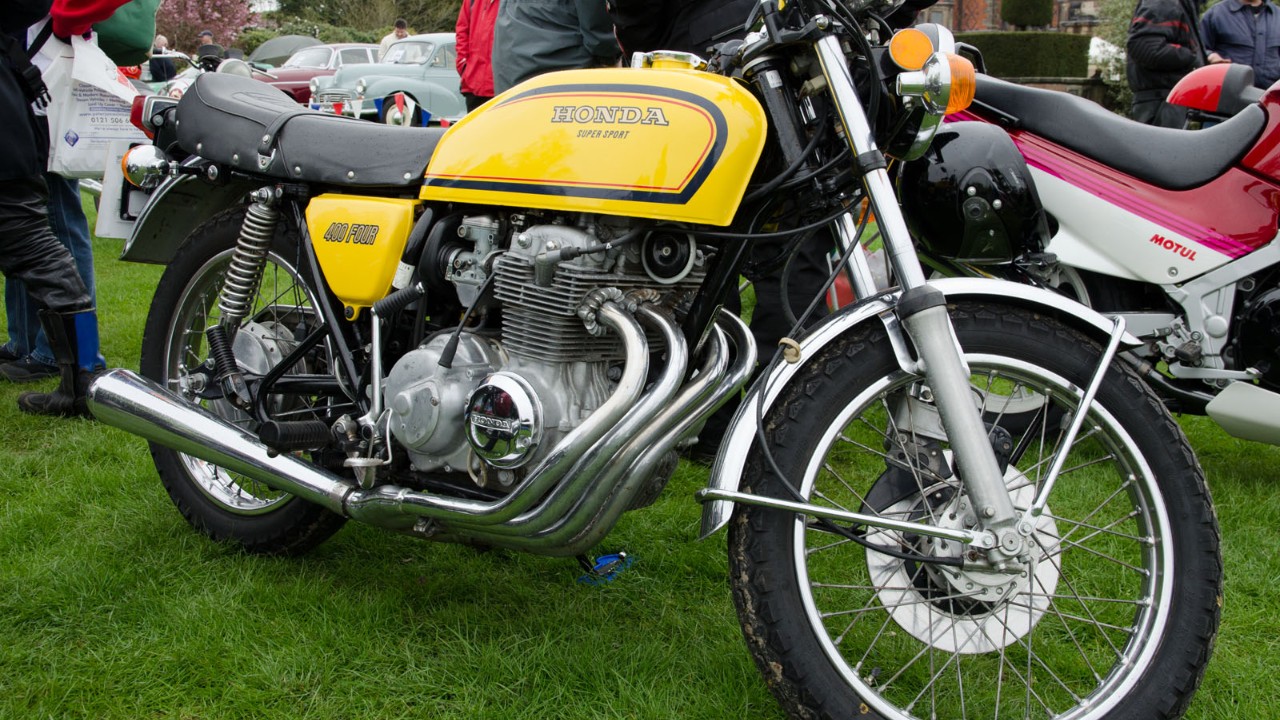
Honda’s smallest four of the mid-1970s looked like a factory café racer. It had flat bars, rear-set footpegs, solid paint and a sweeping four-into-one exhaust. At the time, that pipe was rare on a stock Japanese bike then.
The Audrain Automobile Museum lists a 408 cc air-cooled single-overhead-cam four fed by four Keihin carburetors. It made 37 hp at 8,000 rpm and reached 103 mph. Meanwhile, its six-speed gearbox set it apart from Honda’s other fours, which used five. Even so, the two-stroke Yamaha RD and Kawasaki triples beat it on pace. Honda built it for three years, and tuners such as Pops Yoshimura later turned it into a production racer.
4. 1976 Moto Guzzi 850 Le Mans
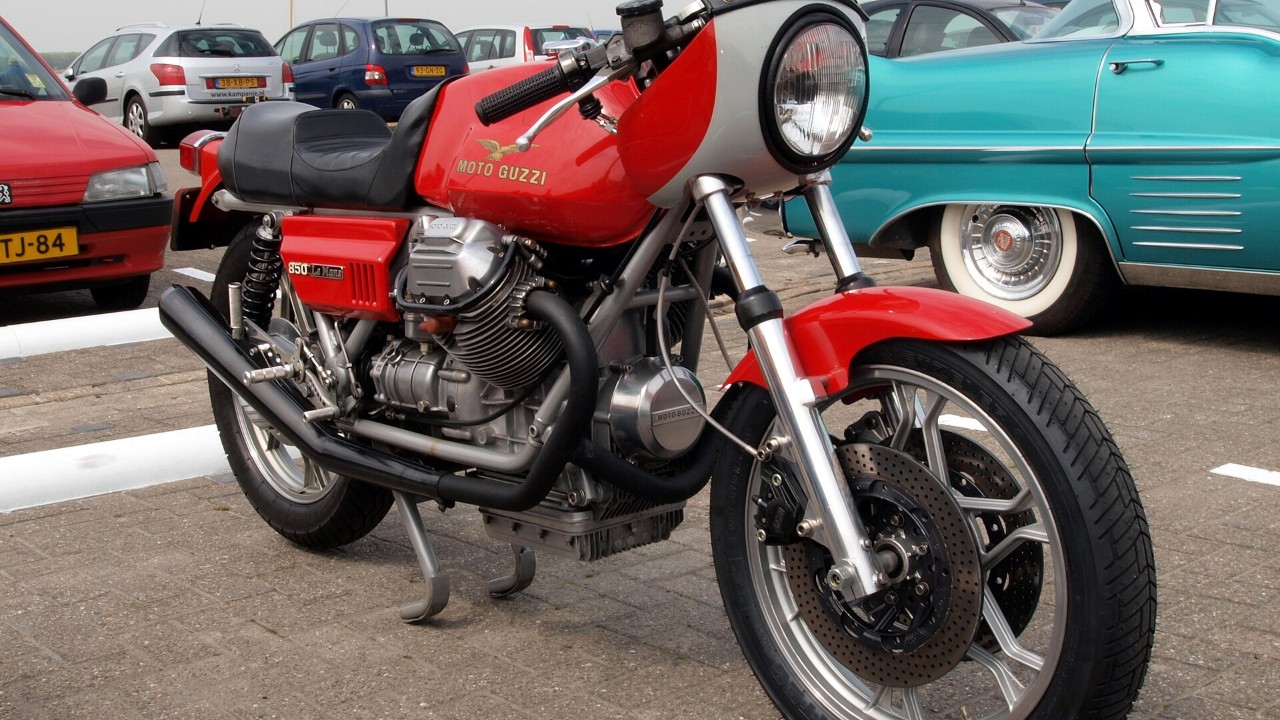
Guzzi showed the 850 Le Mans at the Milan show in November 1975 and began production in 1976. Its shape traced back to a racer that ran at the 1971 Bol d’Or endurance race. The road version wore a small bikini fairing, a stepped seat and low bars.
According to Silodrome’s Le Mans history, the 844 cc V-twin breathed through 36 mm Dell’Orto pumper carburetors. Guzzi claimed 80 bhp, yet about 71 bhp reached the rear wheel. That was enough for roughly 130 mph. Its linked brakes were clever, because the foot pedal worked one front disc and the rear together. After about 2,000 bikes, a rectangular tail light replaced the round one, and roughly 4,000 more followed.
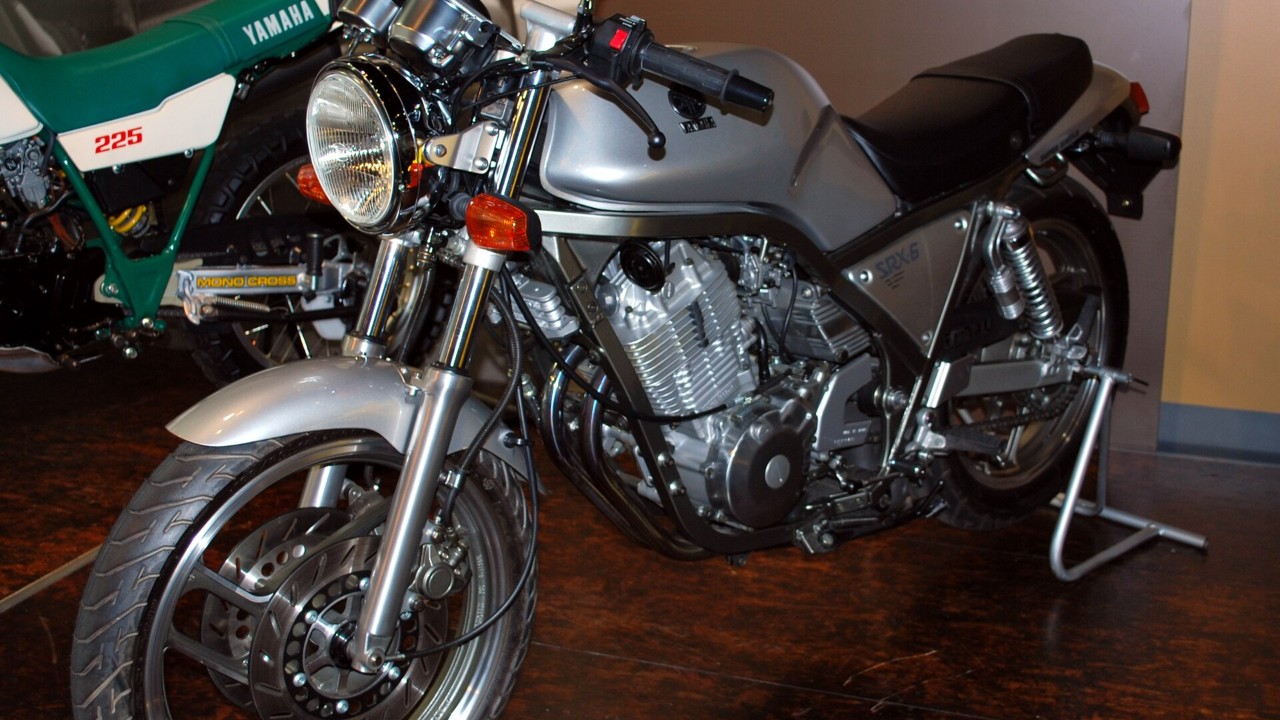
5. 1986 Yamaha SRX600

Yamaha designed this big single for Japan and Europe, then sent it to the United States almost as an afterthought. American buyers got it for 1986 only. Dealers then discounted the leftover stock, partly because a four-cylinder Radian 600 cost less.
Rider magazine’s retrospective describes a 595 cc four-valve single with a gear-driven counterbalancer, the part British singles never developed. It came with a kickstarter only and weighed just under 390 pounds. Twin front discs and a box-section frame gave it a sharper edge than its looks suggested. In our view, the Yamaha SRX600 is the purest café racer Japan sold here in the 1980s, and few riders noticed it then.
6. 1989–1990 Honda GB500 TT
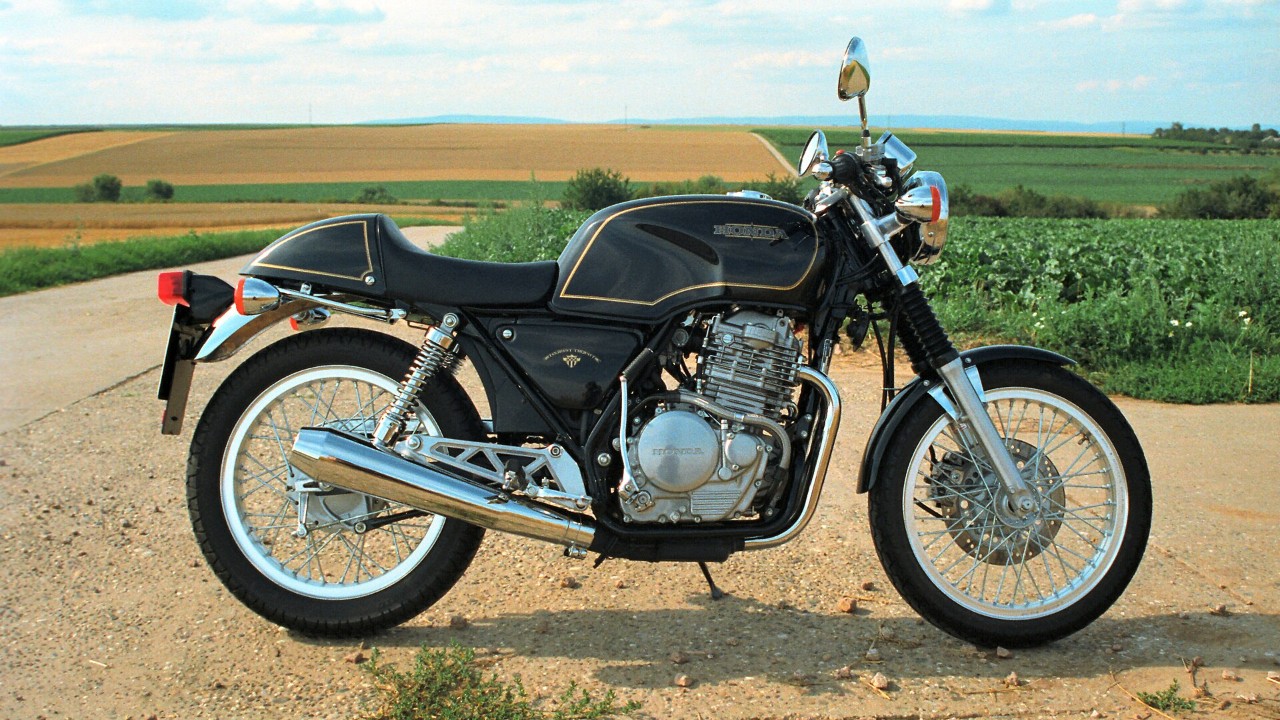
Honda borrowed the shape of the 1950s British singles for the GB500 Tourist Trophy. It came with a solo seat, clip-on bars, wire wheels and a faux-megaphone muffler. Still, the engine underneath was modern Honda hardware.
As Rider magazine explains, the single came from the 1983 XR500 dirt bike, with a dry sump and Honda’s Radial Four Valve head. A single 42 mm Keihin replaced the XR’s two carburetors. On the dyno it made 33 horsepower at 7,000 rpm, and it weighed 390 pounds fueled. It also had an electric starter, something a Gold Star owner never enjoyed. However, the bike never found its place in America, and Honda sold it for only two seasons.
7. 2004 Triumph Thruxton 900
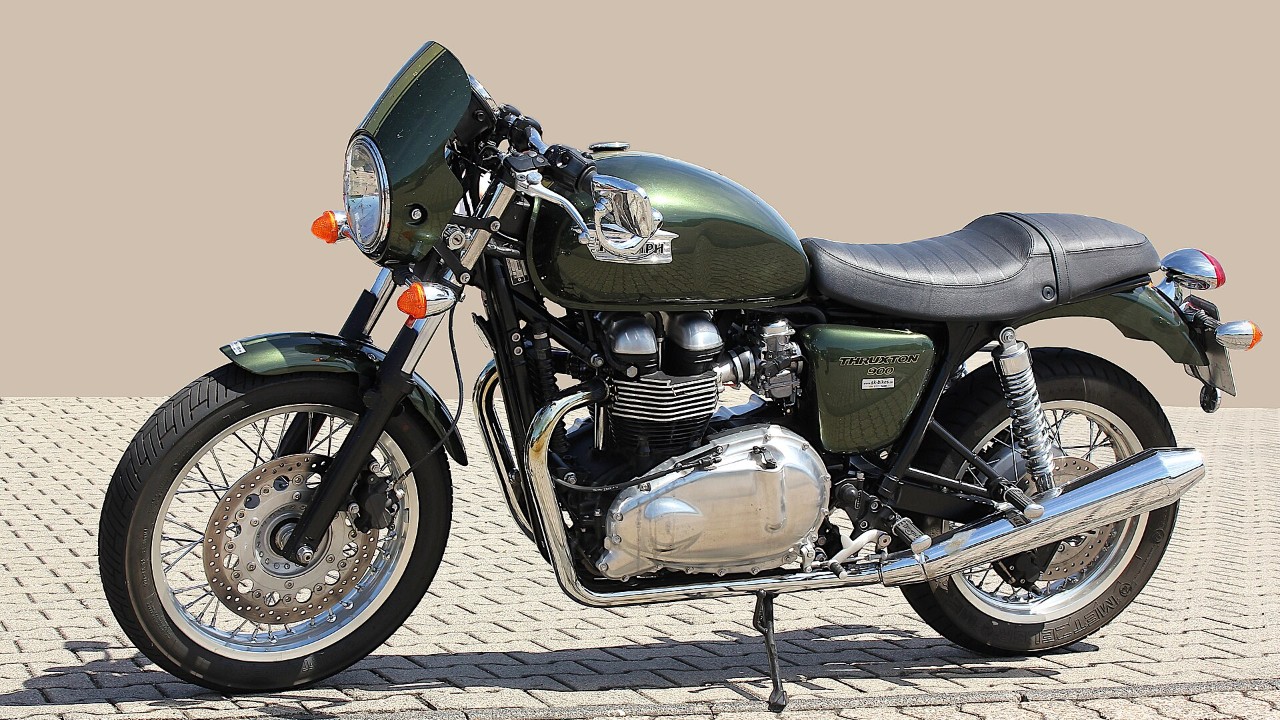
The Thruxton name comes from a circuit in Hampshire, England, which hosted a 500-mile production race. Triumph won it several times, including a podium sweep in 1969. For 2004, the Hinckley factory brought the name back on a café version of its new Bonneville.
Cycle World’s 2004 test found the 790 cc twin bored out to 865 cc. It made 69 bhp at 7,250 rpm, up from the Bonneville’s 61 bhp. Triumph added clip-on bars, rear-set controls and a cover shaped like a racing hump over the passenger pad. Meanwhile, claimed dry weight was 451 pounds. As a result, the testers saw well over 100 mph in top gear, the old café racers’ magic number.
More from Fast Lane Only