A GTO Tri-Power convertible from 1964 combines the first year of Pontiac’s muscle car with its hottest engine and its rarest body. The GTO itself started as a $295 option package on the LeMans that year. Buyers took 32,450 of them, and the muscle car era took off from there.
Over the next decade, Pontiac sold GTOs by the tens of thousands. In 1966 alone, it built 96,946, the best year the car ever had. However, hidden inside those big totals are option combinations that Pontiac built in tiny batches, plus a few late GTOs that buyers simply passed over.
These are our picks, the ten GTOs we think even seasoned collectors rarely get to see in the metal. Of course, the rarity calls are our opinion, while the production figures come from published build records and Hagerty, and where nobody has a firm count, we say so.
1. 1964 Pontiac GTO Tri-Power convertible
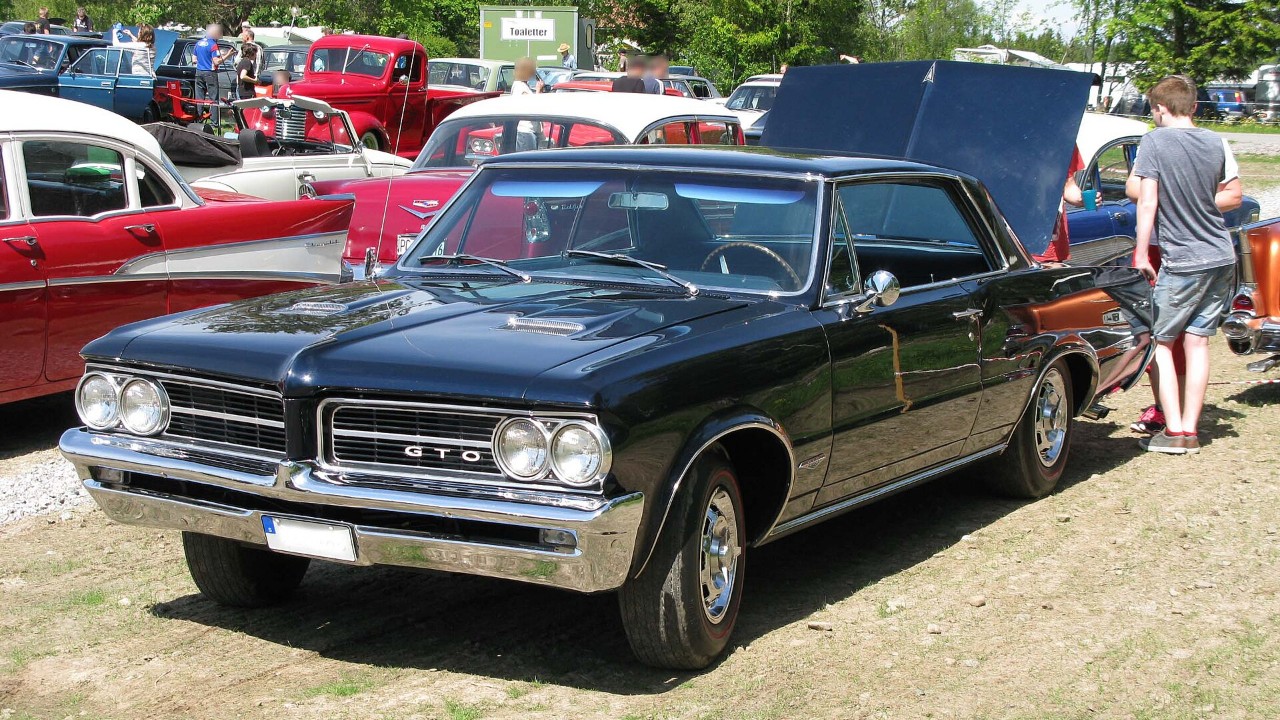
The first GTO came three ways: coupe, hardtop and convertible. However, the ragtop was the least common. According to web-cars’ 1964 GTO production tables, Pontiac built 6,644 convertibles, priced from $2,796, out of 32,450 GTOs. By comparison, hardtops led the way with 18,422 built, and coupes followed at 7,384. Meanwhile, only 8,245 cars of that total got the Tri-Power engine.
Tri-Power meant three Rochester two-barrel carburetors on the 389-cubic-inch V8. In 1964 trim, it made 348 hp, against 325 hp for the single four-barrel. A three-speed manual came standard, with a four-speed and a two-speed automatic on the options list. That 23-hp gap made Tri-Power the engine to have in the GTO’s first year, and the convertible the body to have it in.
Nobody has published a firm count of cars that combined the open body with the three carburetors. Still, both slices of the pie are small, and a first-year car with both is one we’d stop to look at every time. In our view, the 1964 GTO Tri-Power convertible is the purest version of the original idea: a midsize Pontiac with a big engine and the top down.
2. 1965 Pontiac GTO sports coupe

At first glance, the pillared coupe is the GTO most people forget. It was the cheapest GTO body, at $2,787. Yet buyers wanted hardtops. For 1965, web-cars lists 55,722 GTO hardtops and only 8,319 coupes, out of a total of 75,352. For comparison, web-cars lists the hardtop at $2,852 and the convertible at $3,093.
That’s a shame, because the coupe could have every bit of the hardware. Pontiac’s three-carburetor 389 was up to 360 hp for 1965, and 20,547 GTOs that year got it, against 54,805 with the 335-hp four-barrel. In other words, a Tri-Power sports coupe came from the smallest body and the smaller engine group at once.
Our take: the 1965 coupe is a sleeper among muscle cars. Most surviving 1965 GTOs at shows are hardtops or convertibles, so a real coupe stands out once you spot that pillar. If you’re looking for one, check the paperwork carefully to confirm it left the factory as a GTO. Pontiac offered a two-speed automatic, a three-speed manual and close- or wide-ratio four-speeds, so the combinations add up fast. After all, the genuine article is worth the hunt.
3. 1966 Pontiac GTO Tri-Power convertible
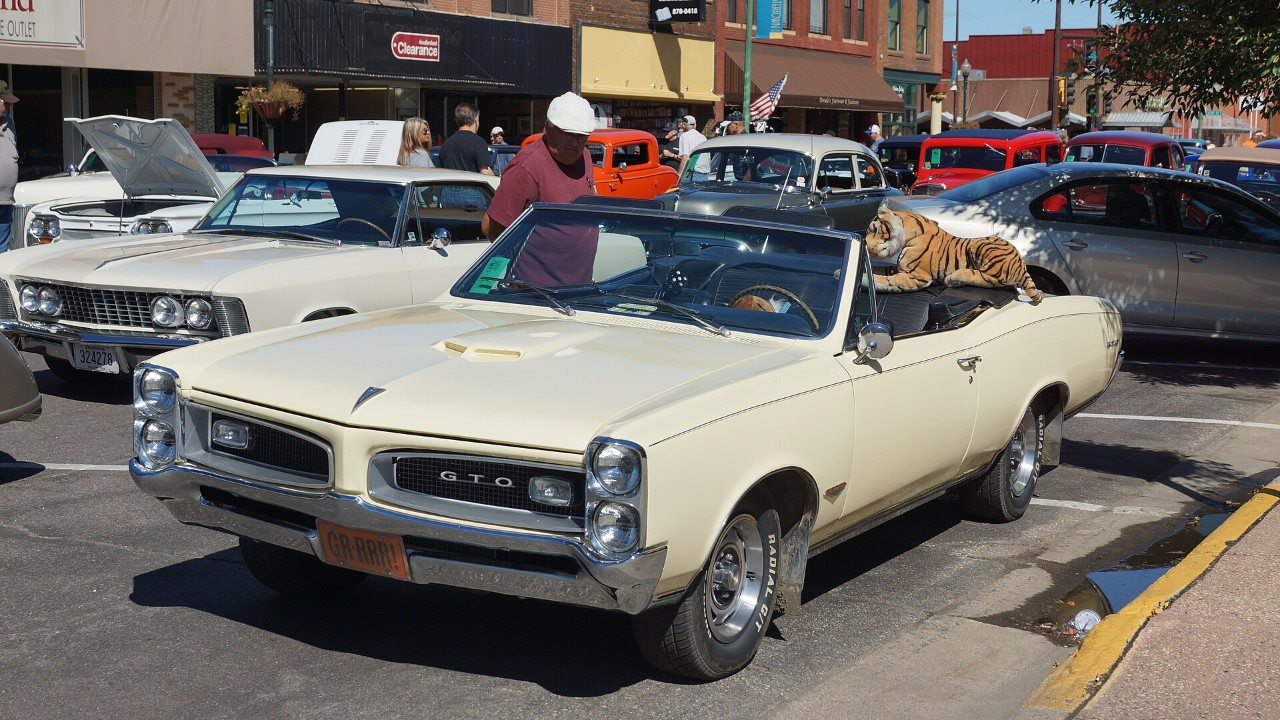
1966 was the GTO’s biggest year, with 96,946 cars built. However, it was also the end of something. According to web-cars’ 1966 figures, 19,045 GTOs got the 360-hp three-carburetor 389 that year.
For 1967, a GM-wide rule banned multiple carburetors on everything except the Corvette, so the Tri-Power disappeared. As a result, the 1966 GTO Tri-Power convertible was the last of its kind. Pontiac also offered an XS package with revised cam timing and air intake that year, and web-cars puts XS sales at about 185. Meanwhile, the single four-barrel 335-hp engine went into 77,901 cars, so the three-carb cars were outnumbered roughly four to one.
We’d argue the 1966 convertible is the sweet spot of the first-generation cars. You get the last Tri-Power setup, the peak year for GTO sales and the open-air sound of three carburetors. Of all the early GTOs, this is the one we’d pick for a summer night cruise. If you find one, check the engine’s date codes to make sure it’s the original. Web-cars lists the 1966 convertible’s base price at $3,082.
4. 1967 Pontiac GTO Ram Air
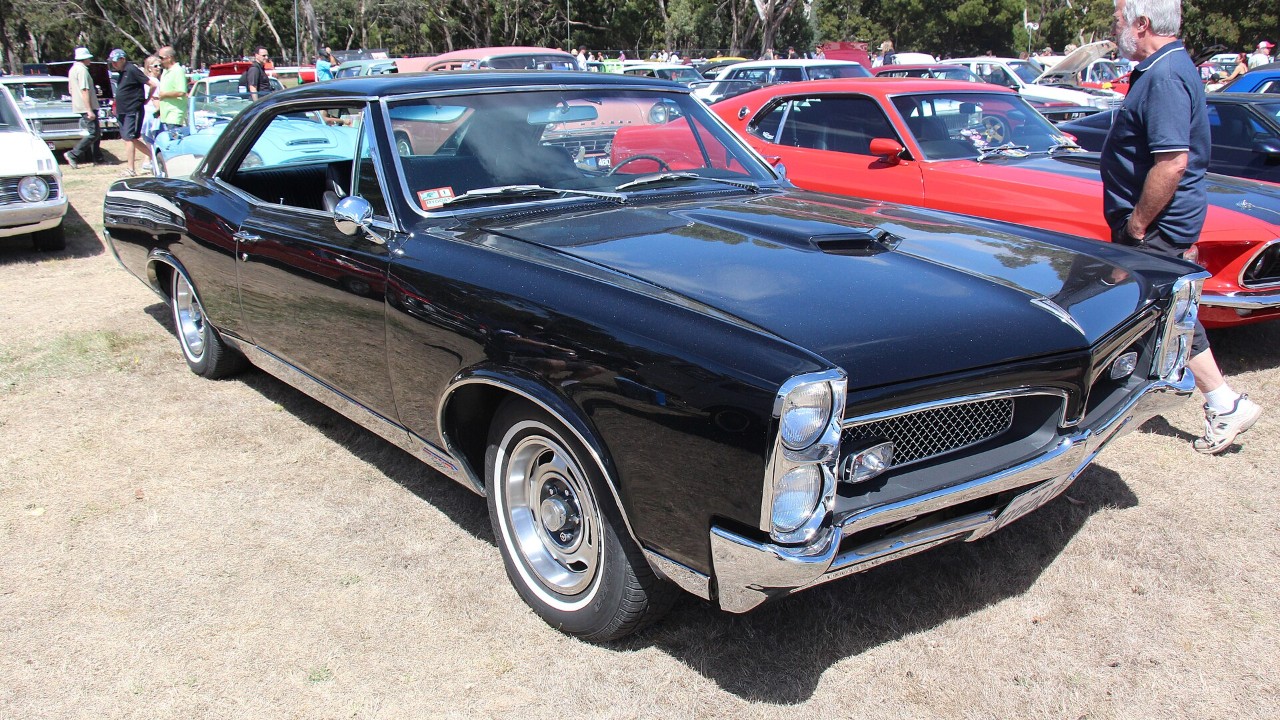
For 1967, the GTO’s engine grew to 400 cubic inches, and the top option became Ram Air. It fed cold air through hood scoops to a Quadra-Jet four-barrel. Pontiac also rated it at 360 hp. According to web-cars’ 1967 production tables, Pontiac built just 751 Ram Air cars out of 81,722 GTOs, under 1% of production.
Interestingly, the scoops didn’t work straight from the factory. Instead, a dealer-installed part made them functional. Then the car showed what it could do. Motor Trend’s January 1967 test ran a 14.21-second quarter mile at 102.97 mph on street tires, and quicker on racing rubber. Hot Rod’s May 1967 test clocked 14.50 seconds. Cars with a console could even get a Hurst dual-gate shifter. That year also brought GM’s three-speed Turbo Hydra-Matic in place of the old two-speed automatic.
Our take: the 1967 Ram Air is one of the hardest early GTOs to find, and it’s the one that set up everything Pontiac did with cold-air induction later. We’d love to see a real one at a show, though we’d want the paperwork in hand first. With only 751 built, proof matters.
5. 1968 Pontiac GTO Ram Air II
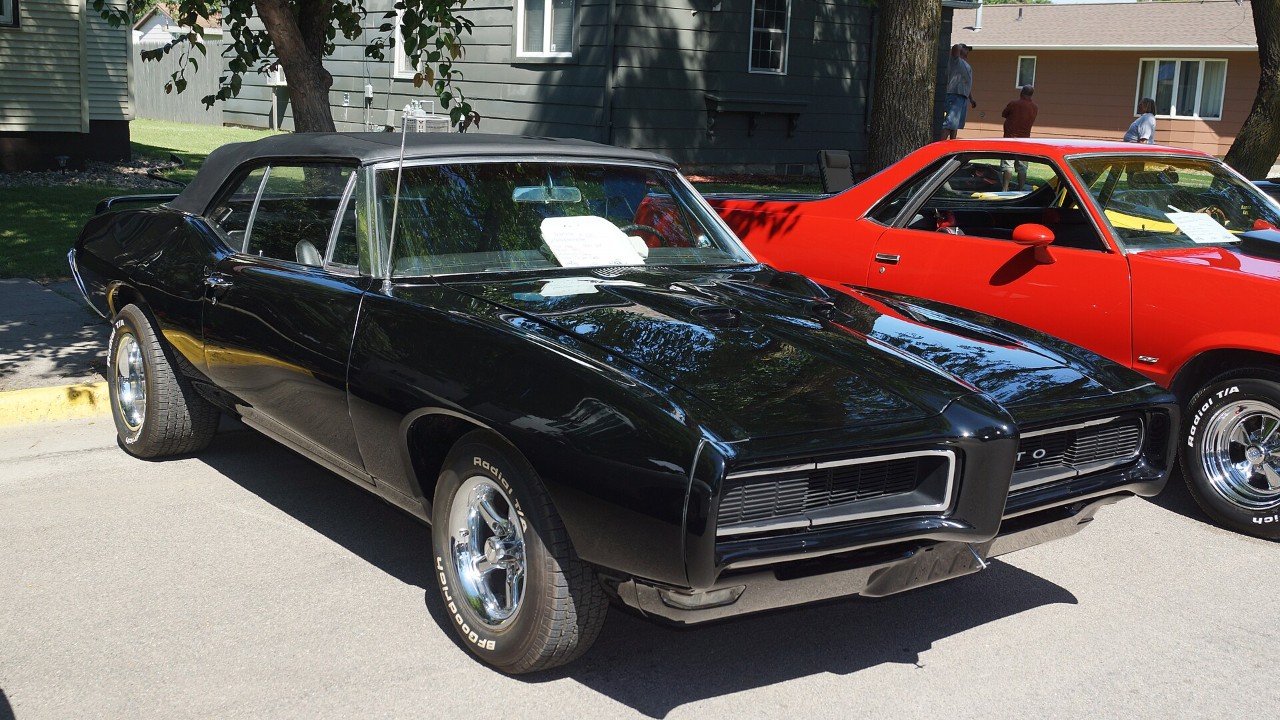
The 1968 GTO was all new, with rounded lines and a body-color Endura front bumper that shrugged off small dents. Hidden headlights were also optional. Then, in March 1968, Pontiac added the improved Ram Air II partway through the model year, as web-cars notes on its 1968 GTO page.
Even so, Ram Air was rare in any form that year. Web-cars counts 1,054 Ram Air GTOs for 1968, combining the early and late versions, out of 87,684 cars. Only 114 of those Ram Air cars were convertibles, and most buyers chose a manual, with 849 manual cars against 205 automatics. Motor Trend tested a Ram Air four-speed in February 1968 and ran 0-60 mph in 6.5 seconds.
We think the Ram Air II is the most interesting engine of the second-generation GTO. It arrived late, it lasted a short time and Pontiac built it in tiny numbers. Since the production figures don’t split the two Ram Air versions, we’d ask a seller for build documents before paying any premium. For more on Pontiac’s induction tricks, see our guide to factory cold-air systems by name.
6. 1969 Pontiac GTO 400 Ram Air
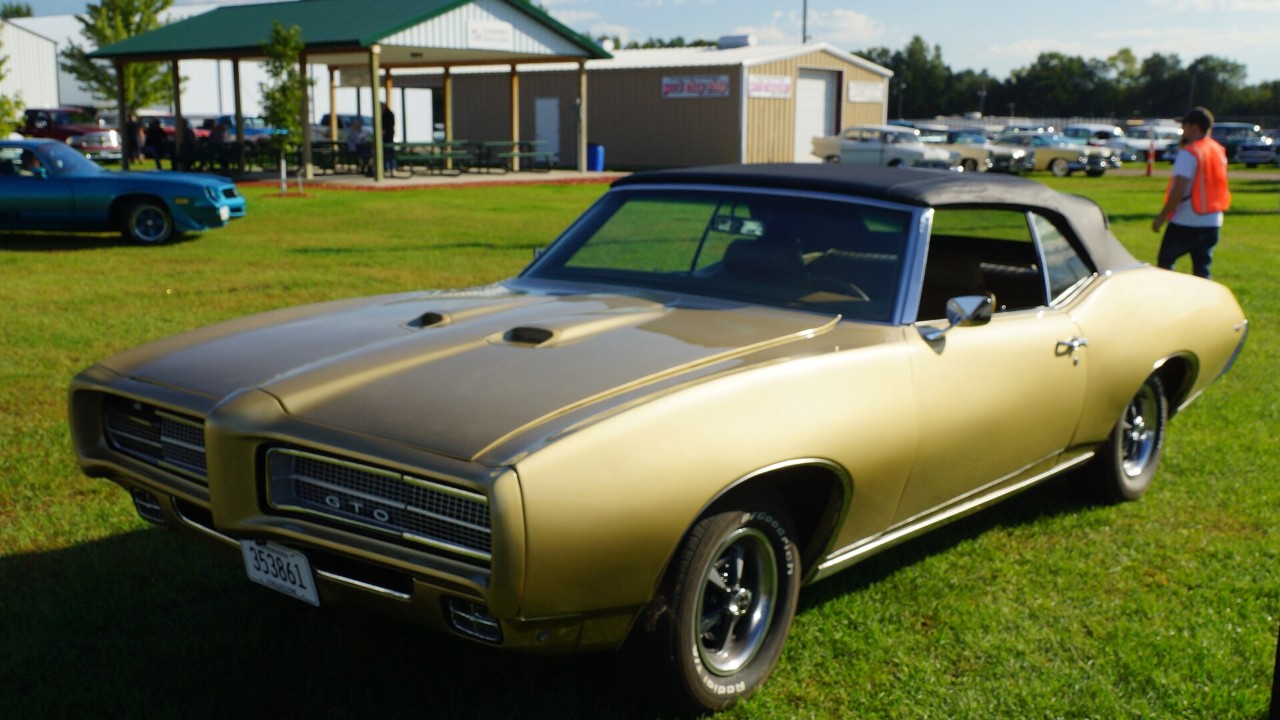
Many people call this engine the Ram Air III, but Pontiac itself never used that name. Instead, it called it the 400 Ram Air. For 1969, Pontiac rated it at 366 hp at 5,100 rpm. Meanwhile, the hotter Ram Air IV made 370 hp at 5,500 rpm, and you couldn’t order air conditioning with it. Car Life tested a Ram Air IV four-speed in March 1969 and ran 0-60 mph in 6.2 seconds.
Most 400 Ram Air engines went into hardtops and into the new Judge. As a result, that leaves the regular GTO convertible with Ram Air as the odd one out. Web-cars’ 1969 breakdown lists 249 manual and 113 automatic GTO convertibles with the engine, for 362 in all. The site’s 1969 totals don’t fully add up, so treat that count as close rather than exact.
Our take: a non-Judge 1969 Ram Air convertible is the quiet pick of a loud year. It has the same engine as a Judge without the stripes and wing. In our view, it’s the GTO for people who want the performance without the costume. We’d buy one with clear documentation and drive it, rather than lock it away.
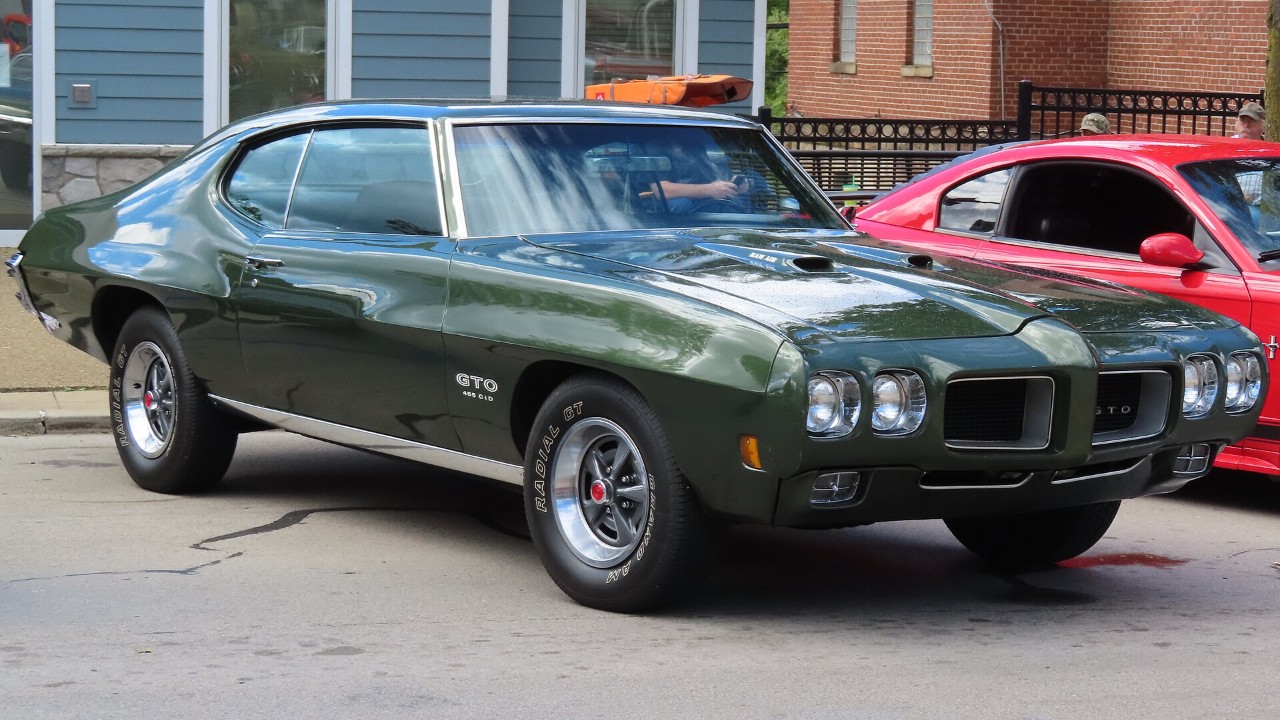
7. 1970 Pontiac GTO Vacuum Operated Exhaust
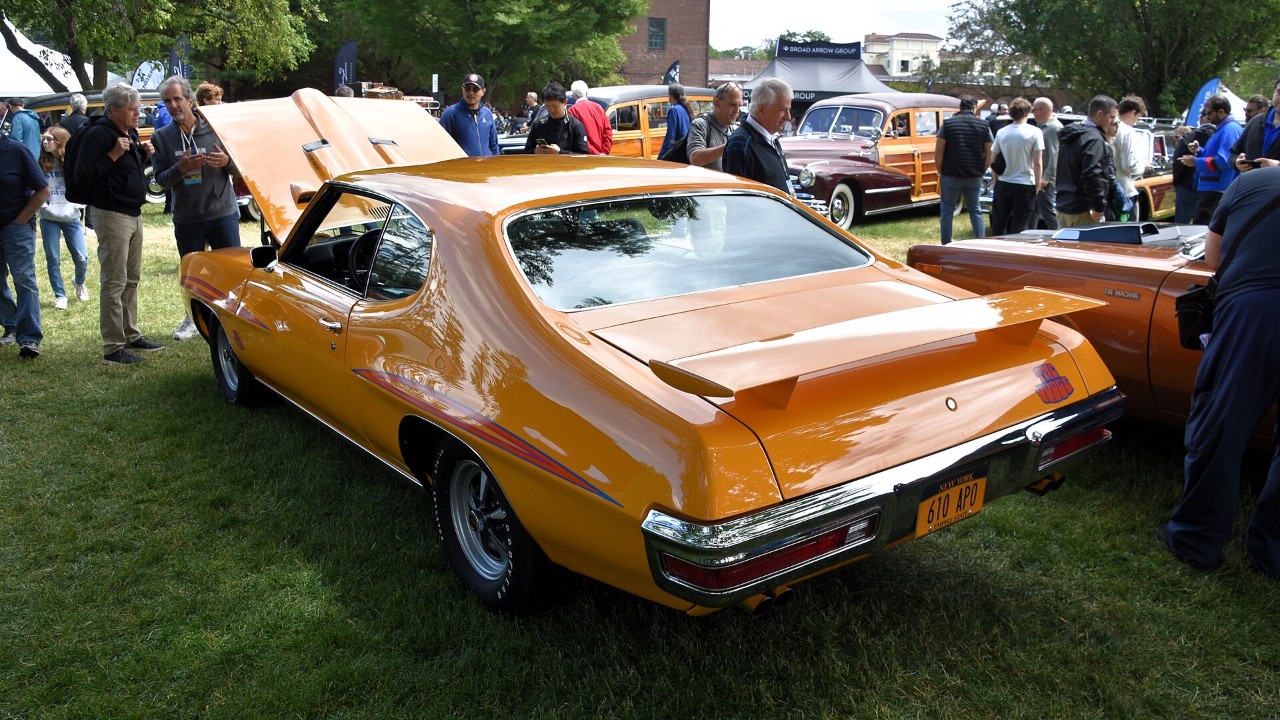
For 1970, Pontiac called the GTO “the Humbler,” and the Vacuum Operated Exhaust option backed that up. According to Hagerty’s history of the option, a driver pulled a control under the dash, and vacuum opened flaps on both mufflers. That roughly doubled the sound and improved airflow. The option, coded W-73, was a GTO exclusive.
However, Pontiac pulled it from the options list almost immediately. Officially, the reason was legal requirements in several states. Hagerty puts production at about 240 cars, while other counts put it near 233, split between 212 hardtops and 21 convertibles. Either way, only a couple of hundred left the factory. In fact, the GTO even had a TV commercial built around the feature.
We’d put the VOE car near the top of any rare-GTO wish list. It’s a factory exhaust cutout decades before modern cars made switchable exhausts normal. If you see a 1970 GTO with that pull knob under the dash, ask for documentation before you get excited. For the engines behind it, read our rundown of GTO engines from the 1964 389 to the 1974 350.
8. 1971 Pontiac GTO convertible
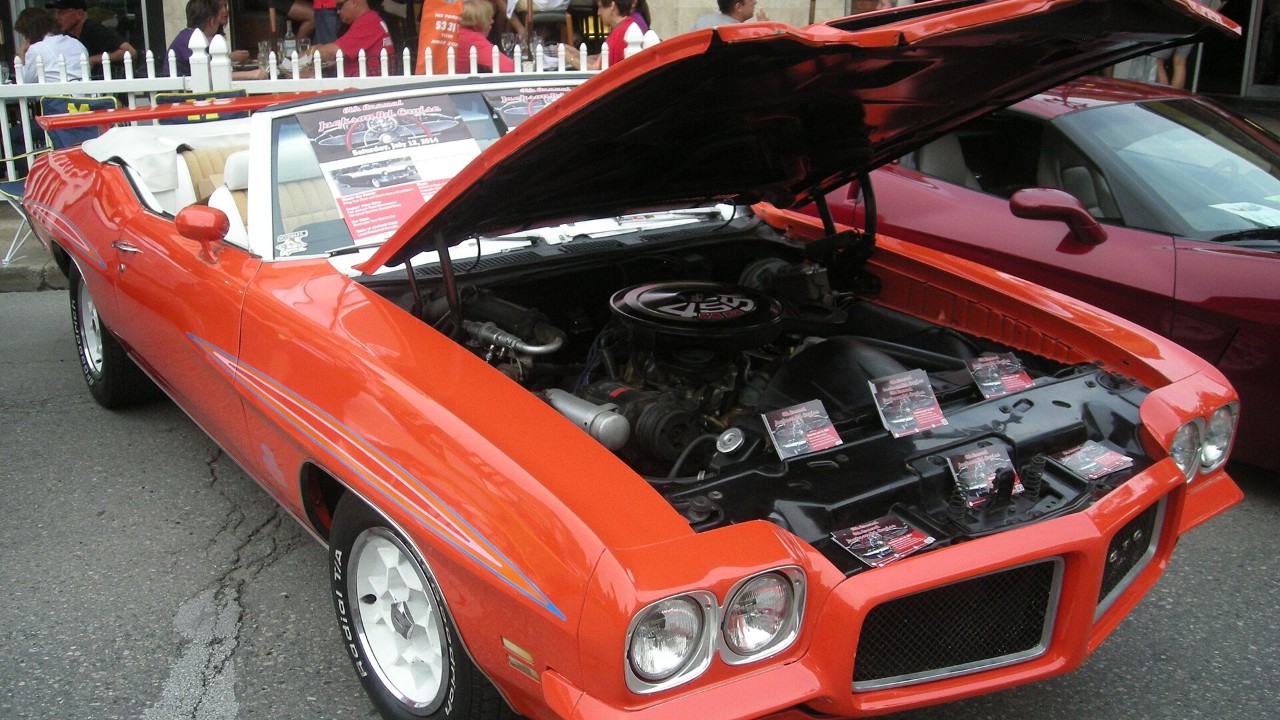
By 1971, pollution rules were cutting into power, and Pontiac built only 10,532 GTOs that year. Compression dropped for unleaded fuel, and power ratings moved toward the new net standard. The base 400 made 300 hp, or 255 net, and the 455 HO was rated at 335 hp, or 310 net.
As a result, the convertible became very scarce. According to web-cars’ 1971 production tables, Pontiac built 678 GTO convertibles in all, priced from $3,676, each with a hood that carried two big forward-facing air intakes. Other published counts put non-Judge convertibles at 661. Better yet, only 48 of the 1971 convertibles got the 455 HO, 21 with manual transmissions and 27 with automatics. The regular 455, rated at 325 hp, came only with an automatic. Also, web-cars notes that the Judge left the lineup during this period.
Our take: the 1971 convertible is easy to overlook because it came after the peak years. We’d argue that’s exactly why it’s worth finding. A 455 HO convertible with a manual is about as rare as these cars get, so a real one deserves a careful inspection and a lot of respect.
9. 1973 Pontiac GTO Colonnade

By 1973, the GTO was an option package on the LeMans again, now wearing GM’s new Colonnade body. Buyers didn’t bite, though. According to web-cars’ 1973 GTO page, Pontiac built only 4,806. New five-mph bumper rules forced big bumpers onto both ends, which didn’t help its looks.
The engines were modest, and both ran an 8:1 compression ratio. The 400 made 230 hp, and the 455 made 250 hp, but only with an automatic. In the end, most buyers chose the Sport Coupe, with 4,312 built. By comparison, the plain Coupe accounted for just 494 cars. Of those, only 25 had the 455. The year before, Pontiac had built 5,811 GTOs, so the 1973 total marked another drop.
We think the 1973 GTO gets far less respect than it deserves. It sold fewer copies than even the 1974 Ventura GTO that followed it, and you almost never see one at a show. If you find a 455 Coupe, you’re looking at one of 25. Think of it as the GTO’s forgotten late chapter. In our view, that alone makes it worth a closer look.
10. 1974 Pontiac GTO Ventura

For its final year, the GTO moved to the compact Ventura. According to web-cars’ 1974 GTO page, it used a 350-cubic-inch V8 rated at 200 hp, the only small-block GTO until 2004. A “shaker” hood scoop came standard, and the engine ran a low 7.6:1 compression ratio. Buyers could also choose a manual or an automatic. The coupe cost $3,173, and the hatchback cost $3,313.
The little GTO was quicker than its reputation. Cars magazine tested one in May 1974 and ran 0-60 mph in 7.7 seconds and the quarter mile in 15.72 seconds at 88 mph. Pontiac built 7,058 in all, including 5,335 coupes and 1,723 hatchbacks. Sales kept falling as performance dropped and new safety and pollution rules took hold.
Our take: the Ventura GTO is the end of the line, and that alone makes it worth saving. It’s simple and fun, with a standard shaker scoop and a small-block that’s easy to live with. Yet most people forget it ever existed. According to web-cars, it was also the last GTO Pontiac built until the name returned for 2004.
More from Fast Lane Only